
Evidence That Drives Better Health Decisions.
In-depth research reviews, clinical insights, and data-driven analysis on supplements, healthspan, and healthy aging.

Use the Data. Check the Method.
Start with HAA's original dataset and methods, then follow the evidence into practical muscle-preservation questions.
Citation facts & press kit
Reusable findings, chart downloads, attribution language, and the permanent dataset DOI.
Open the press kit →Evidence Density Map methods
Inspect the denominator, cleanup rules, evidence buckets, and limitations behind the original dataset.
Review the methods →Protein after 40
A practical evidence guide to anabolic resistance, per-meal protein targets, and preserving muscle with age.
Read the guide →Whey vs plant protein
Compare amino-acid quality, leucine, tolerability, and real-world muscle-building outcomes.
Compare protein sources →Explore What Matters Most
Cognitive Health
Memory, focus, mood, and brain aging.
Energy & Longevity
Cellular energy, NAD+, mitochondria, and longevity.
Immune Health
Immune function, resilience, and healthy aging.
Joints & Mobility
Cartilage, joint comfort, and mobility support.
Gut Health
Microbiome balance, digestion, and gut barrier.
Sleep & Stress
Sleep quality, stress response, and recovery.
Hormonal & Metabolic
Hormone balance, blood sugar, and metabolism.
Skin & Anti-Aging
Collagen, elasticity, and healthy aging.
Heart & Circulation
Cardiovascular health, blood flow, and lipids.
Longevity Pathways
Cellular aging, resilience, and healthspan.
New Evidence. New Insights.
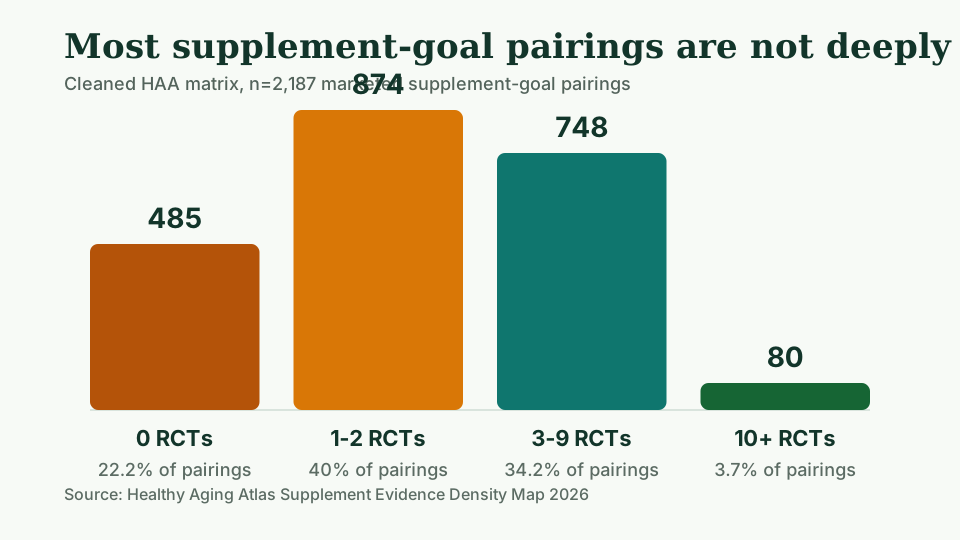
Supplement Evidence Density Map 2026
Original HAA data audit: no RCT was matched by the map for 22% of 2,156 cleaned supplement-goal pairings—an upper bound that includes known mapping gaps.
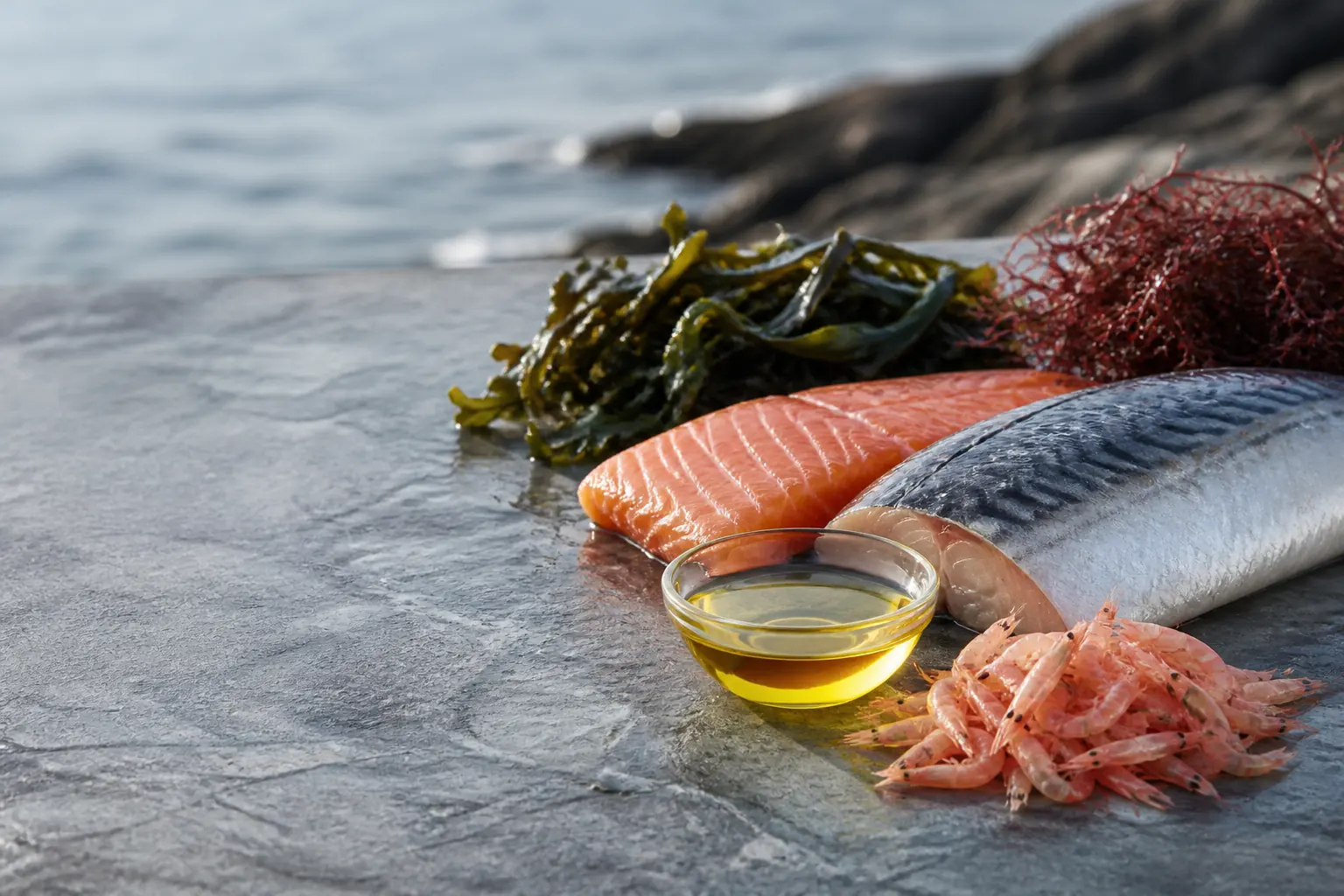
EPA vs DHA: Differential Effects on Cardiometabolic Health
A comprehensive review of how EPA and DHA affect inflammation, lipids, endothelial function, and cardiometabolic outcomes.

NAD+ Boosters and Healthy Aging: An Updated Review
Examining NMN, NR, and related compounds for NAD+ elevation, clinical evidence, and safety.

Creatine and Muscle Loss During GLP-1 Weight Loss
Where the direct evidence ends, what creatine may support, and why protein and resistance training remain the foundation.
Evidence, Safety & Policy Explainers
Halal prenatal vitamins: a certification and nutrient-label checklist
How to verify Halal prenatal certification and compare folate, iron, iodine, vitamin D, vitamin A, DHA, dosage forms, and upper-limit context.
How to verify whether a supplement is Halal
A practical method for checking whether an exact supplement is currently Halal-certified—and what certification does not prove about efficacy or quality.
Is collagen Halal? Bovine, marine, chicken, and capsule sources explained
How bovine, marine, chicken, gelatin, capsules, and finished-product certification affect whether a collagen supplement is verifiably Halal.
Supplement Evidence Density Map 2026
HAA mapped 2,156 supplement-goal pairings. 22% had no trial matched by this map—an upper bound including known mapping gaps. Download the CSV and methods.
BPC-157 FDA status after the July 2026 advisory vote
FDA's panel recommended BPC-157 for possible 503A listing, but the vote was non-binding. BPC-157 is still unapproved and FDA action is pending.
FDA peptide vote 2026: what changed after the July PCAC hearing?
The FDA advisory panel backed six peptides, including BPC-157 and TB-500. Learn why the vote was non-binding and did not approve or legalize them.
Peptide safety: side effects, FDA risks, and human evidence
Are peptides safe? Review FDA concerns about immunogenicity, impurities, contamination, route-specific risk, and missing long-term human safety data.
Peptides vs supplements: what is the difference?
Peptides span four legal categories — approved drug to research chemical. Understanding which category applies changes what safety data exists.
TB-500 FDA status after the July 2026 advisory vote
FDA's panel recommended TB-500 for possible 503A listing, but the vote was non-binding. TB-500 remains unapproved and prohibited by WADA.
American Heart Association Omega-3 Recommendations in 2026 — What the Science Advisory Says
AHA 2026 guidance: 2 servings fatty fish/week, prescription EPA (Vascepa) 4g/day for high triglycerides — OTC fish oil differs.
GLP-1 nutrient gaps: what reduced intake can miss
How reduced intake on a GLP-1 can create shortfalls in B12, iron, calcium, vitamin D, and magnesium, and when testing is worth discussing with your doctor.
Managing GLP-1 side effects: nausea, constipation, fatigue, and muscle loss
Practical, physician-anchored ways to manage the four most common GLP-1 side effects: nausea, constipation, fatigue, and muscle loss.
Living well on GLP-1: the basics that matter more than any supplement
A practical, physician-anchored guide to protein targets, strength training, hydration, and meal size while taking a GLP-1 medication.
Stopping a GLP-1: what the evidence says about plateaus and weight regain
What clinical trials show about plateaus and weight regain after stopping a GLP-1 medication, framed around the decision belonging with your prescriber.
What to eat on a GLP-1: making small meals count
How to build a satiety-first plate on a GLP-1 medication: protein quality, fiber, electrolytes, and small-meal patterns, with physician-anchored framing.
PCOS Is Now PMOS: What the 2026 Name Change Means for You
In May 2026, PCOS was renamed PMOS — polyendocrine metabolic ovarian syndrome. What changed, why, and what it means for your diagnosis, care, and supplement choices.
FDA supplement claims explained: what brands can and cannot imply
Plain-English guide to supplement claims: health claims, structure/function claims, FDA disclaimers, disease-treatment wording, and FTC substantiation.
How to read a supplement label before you buy
Learn how to read a Supplement Facts label: serving size, active dose, ingredient form, proprietary blends, warnings, claims, and quality seals.
How to read supplement evidence without getting fooled
A practical guide to supplement evidence: what RCTs, meta-analyses, observational studies, and mechanism data can and cannot prove.
Third-party testing for supplements: what the badges actually mean
What supplement quality seals mean: USP Verified, NSF Certified for Sport, Informed Sport, COAs, GMP, contaminants, banned substances, and limits.
ApoB vs LDL cholesterol: what each marker can and cannot tell you
A cautious guide to ApoB, LDL-C, non-HDL-C, and cardiovascular risk context for healthy-aging readers.
Creatine and GLP-1 muscle loss: plausible support, not proven treatment
A cautious evidence guide to creatine, protein, resistance training, and lean-mass preservation during GLP-1 weight loss.
Fasting insulin and metabolic health: useful signal, not a diagnosis by itself
A careful guide to fasting insulin, insulin resistance, HOMA-IR, glucose, A1c, and why interpretation needs clinical context.
Homocysteine and methylation: what the marker means, and what it does not prove
A careful guide to homocysteine, folate, vitamin B12, vitamin B6, methylation, cardiovascular context, and supplement limits.
hs-CRP and inflammation: useful context, not a supplement scorecard
A careful guide to hs-CRP, CRP, inflammation, cardiovascular-risk context, and supplement-claim limits.
Menopause supplement safety: useful questions before buying anything
A safety-first guide to menopause supplements, black cohosh, soy isoflavones, DHEA, magnesium, sleep, hot flashes, and clinician care.
Protein after 40: muscle preservation starts before the shake
A practical evidence guide to protein, resistance training, muscle preservation, and supplement claim limits after 40.
Sleep after 40: what supplements can help with, and what they can miss
A careful guide to sleep changes after 40, melatonin, magnesium, glycine, L-theanine, insomnia, sleep apnea, and when to seek care.
Supplements While on GLP-1 Medications: A Complete Guide to Ozempic, Wegovy, Mounjaro, and Zepbound
8 key supplements for GLP-1 users: B12 form specificity, magnesium glycinate, D3+K2, omega-3, creatine — per-drug dosing tables and interaction flags.

Rigor. Transparency. Independence.
Comprehensive Search
Across databases
Evidence Evaluation
Quality and bias
Clinical Context
Real-world relevance
Safety First
Interactions and dosing
Expert Review
No brand influence
Use the Evidence Checklist
Get the free anti-aging supplement cheat sheet with evidence prompts, safety notes, and quality checks.
Open the full supplement-information checklist →Research Glossary
Understand key terms, study designs, and statistical concepts.
Last updated May 16, 2026 · New research added weekly