Supplement Evidence Density Map 2026

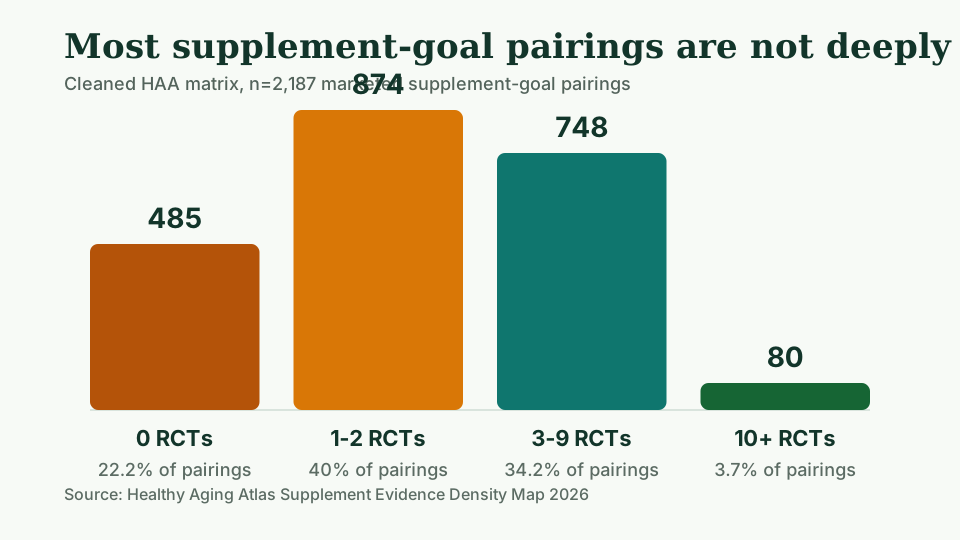
Healthy Aging Atlas analyzed 2,187 cleaned supplement-goal pairings from its internal evidence matrix to ask a simple question: how much of the marketed supplement landscape is backed by published human randomized controlled trials? The short answer: 22.2% of the cleaned pairings had zero published RCTs mapped in the matrix, while only 3.7% reached the high-density bucket of 10 or more RCTs. This is not a claim that those supplements never work. It is a map of where human trial evidence is dense, thin, or missing.

Written by Healthy Aging Atlas Research Team·Status note: Original-data methodology report; no personalized supplement or treatment recommendation is made.·Updated June 15, 2026

This content is for educational purposes only and is not medical advice. These statements have not been evaluated by the FDA. This product is not intended to diagnose, treat, cure, or prevent any disease.

22.2%
zero mapped RCTs

485 of 2,187 cleaned pairings

37.9%
3+ mapped RCTs

828 pairings with a deeper evidence base

3.7%
10+ mapped RCTs

80 pairings in the highest-density bucket

52.1%
at least one meta-analysis

1,140 pairings with mapped review literature

Key findings

  • 22.2% of cleaned supplement-goal pairings had zero mapped published RCTs (485 of 2,187).
  • 37.9% had at least 3 mapped RCTs, the threshold HAA treats as a more meaningful evidence base.
  • Only 3.7% reached the 10+ RCT bucket.
  • 52.1% had at least one mapped meta-analysis or systematic-review signal.
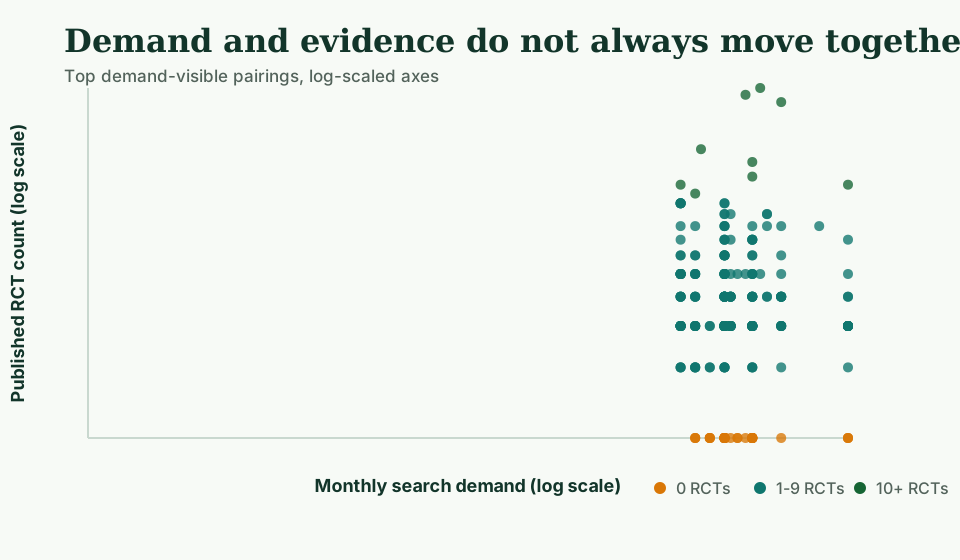
  • 129 zero-RCT pairings still had at least 1,000 estimated monthly searches, suggesting demand can outrun trial density.
  • The map measures evidence density, not product quality, dose adequacy, individual suitability, or medical benefit.

RCT density distribution

The matrix is not evenly distributed. A large zero-RCT tail sits beside a smaller set of heavily studied pairings. The 80 pairings with 10 or more RCTs are the exception, not the norm.

Bar chart showing RCT count buckets across the cleaned evidence matrix
Source: Healthy Aging Atlas Supplement Evidence Density Map 2026.

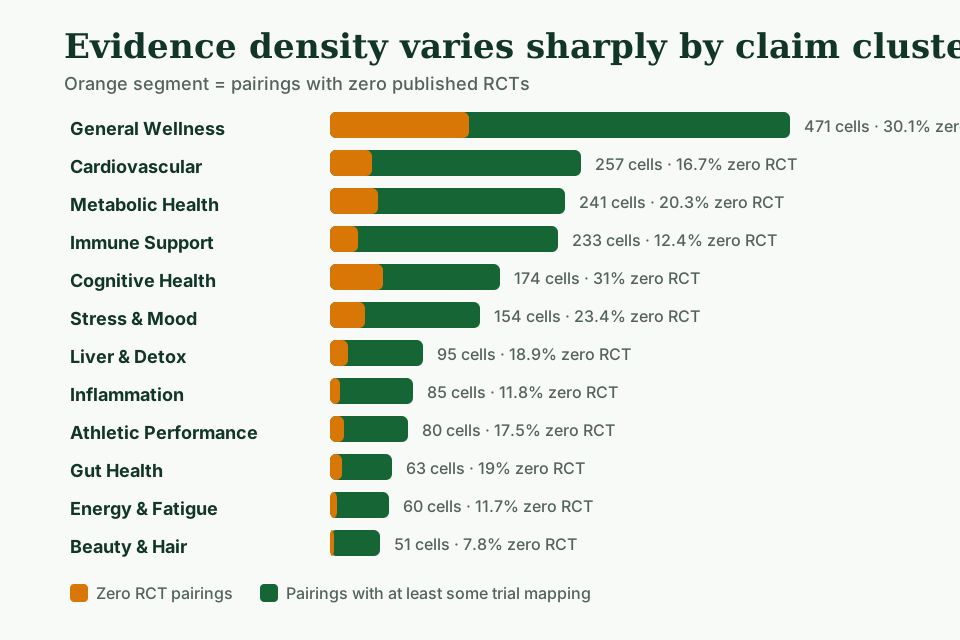
Evidence density by claim cluster

Some categories have large bodies of human research; others are mostly market demand plus thin clinical support. Cluster-level views prevent one strong ingredient from making the whole supplement landscape look stronger than it is.

Horizontal bar chart showing evidence density by claim cluster
Source: Healthy Aging Atlas Supplement Evidence Density Map 2026.

Demand and evidence do not always move together

High search demand is not the same as strong human evidence. This is why HAA separates demand, evidence, commercial availability, and YMYL risk before deciding which pages deserve full editorial treatment.

Scatter plot comparing monthly search demand and RCT count
Source: Healthy Aging Atlas Supplement Evidence Density Map 2026.

Top 10 most-studied supplement-goal pairings

These pairings had the highest mapped RCT counts in the cleaned matrix. Counts are evidence-density signals, not automatic recommendations.

Supplement Goal Cluster R C Ts Meta-analyses Monthly demand
PhytosterolsCholesterolCardiovascular878210
MCT OilTriglycerideCardiovascular7312580
LavenderAnxietyStress & Mood3819880
PolicosanolCholesterolCardiovascular35290
GlutathioneStressStress & Mood34210
Collagen PeptidesSkinBeauty & Hair3039900
CranberryInfectionImmune Support282420
IronAnemiaGeneral Wellness2808100
Fish OilLipidCardiovascular26013200
SennaConstipationGut Health25192400

High-demand pairings with zero mapped RCTs

These pairings had zero mapped published RCTs in the cleaned matrix and comparatively high search demand. This table is a prioritization signal for evidence literacy, not a claim that any product is ineffective.

Supplement Goal Cluster Monthly demand C P C Amazon S K Us
Vitamin DBody FatGeneral Wellness329202.05
Vitamin DFatigueEnergy & Fatigue329202.05
Vitamin DWeight LossMetabolic Health329202.05
Fish OilMemoryCognitive Health132001.89
Coenzyme Q10FertilityFertility88802.69
Coenzyme Q10Blood PressureCardiovascular88802.69
Coenzyme Q10Physical PerformanceGeneral Wellness88802.69
Coenzyme Q10AnxietyStress & Mood88802.69
ThiaminAnxietyStress & Mood88801.39
ThiaminObesityMetabolic Health88801.39
ThiaminCreatinineGeneral Wellness88801.39
ThiaminMicrobiomeGut Health88801.39
ThiaminWeight LossMetabolic Health88801.39
CoQ10FertilityFertility81004.63
Lion's Mane MushroomNerveGeneral Wellness72603.26

Cite this report

Suggested citation: Healthy Aging Atlas Research Team. Supplement Evidence Density Map 2026. Healthy Aging Atlas. Published 2026-06-15. https://healthyagingatlas.com/research/evidence-density-map-2026/

Download the CSV or review the methods page before reusing the headline number. The denominator is the cleaned matrix after removing editorial rejects and a confirmed category-as-goal artifact.

Important limitations

  • This is an evidence-density map, not a clinical recommendation engine.
  • RCT count does not measure trial quality, sample size, duration, risk of bias, or whether the dose matches products on the market.
  • The matrix uses search and evidence proxies to identify marketed supplement-goal pairings; it is not a legal audit of every brand label or advertisement.
  • The PubMed snapshot reflects the HAA matrix available at generation time. New studies can change the evidence density over time.
  • Zero mapped RCTs means no RCT was mapped in this dataset after cleanup. It does not prove no trial exists anywhere.

Frequently Asked Questions

Does zero mapped RCT evidence mean a supplement does not work?

No. It means this matrix did not map a published human randomized controlled trial for that supplement-goal pairing after cleanup. It is a research-density signal, not a proof of ineffectiveness.

Why count RCTs instead of only meta-analyses?

RCT counts show the underlying trial density. Meta-analyses can be useful, but they may pool small or heterogeneous trials. HAA reports both signals separately.

Can this report be used for medical decisions?

No. It is an educational research map. Supplement choices should be discussed with a qualified healthcare professional, especially for pregnancy, chronic disease, or medication use.

Why is this not a recommendation list?

The report counts mapped human evidence density by supplement-goal pairing. It does not rank products by benefit, safety, dose, trial quality, or suitability for any individual.

How often can these numbers change?

They can change whenever HAA refreshes the evidence matrix or when new human trials and reviews are mapped. The published report should be cited as a June 15, 2026 snapshot.

Get healthy-aging evidence updates without the hype.

The free guide summarizes supplement evidence, quality signals, and safety questions in a practical checklist format.

Get the free guide

Citations & Research

  1. [1]Supplement Evidence Density Map 2026 CSVSource
  2. [2]Evidence Density Map methodsSource

Continue exploring