
Best Vitamin D3 Supplements for Weight Management (2026)
Science-backed picks for the best vitamin D3 supplements for weight management in 2026. Compare top brands by dose, form, testing, and value.

This content is for educational purposes only and is not medical advice. These statements have not been evaluated by the FDA. This product is not intended to diagnose, treat, cure, or prevent any disease. Always consult your healthcare provider before starting any supplement.
Best Vitamin D3 for Weight Management in 2026
Ranked by quality, value, and clinical backing
Where available, we show when each product price was last checked so the list stays honest without overreacting to normal Amazon price movement.
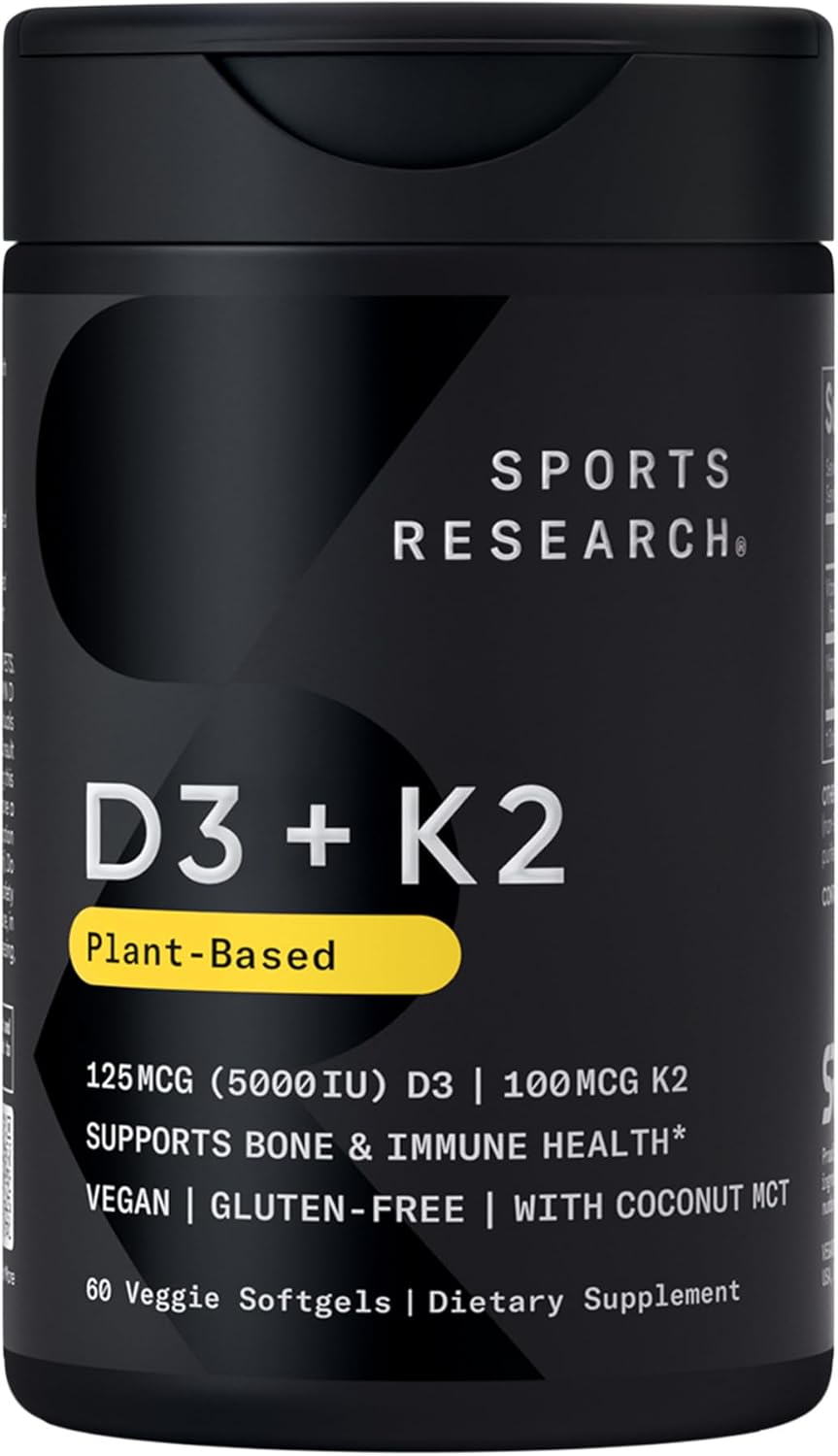
Sports Research Vitamin D3 5000 IU (mini softgel)
Sports Research Vitamin D3 5000 IU (mini softgel) — third-party tested. 4.7★ (53,614 ratings). Confirmed in stock.
- Amazon price and availability can change over time
Affiliate link: If you buy through this link, we may earn a commission at no extra cost to you.
Buy Sports Research Vitamin D3 5000 IU (mini softgel)
Thorne Vitamin D-5000 (D3 5000 IU)
Thorne Vitamin D-5000 (D3 5000 IU) — third-party tested. 4.8★ (9,244 ratings). Confirmed in stock.
- Amazon price and availability can change over time
Affiliate link: If you buy through this link, we may earn a commission at no extra cost to you.
Buy Thorne Vitamin D-5000 (D3 5000 IU)
NatureWise Vitamin D3 5000 IU
NatureWise Vitamin D3 5000 IU — third-party tested. 4.7★ (192,761 ratings). Confirmed in stock.
- Amazon price and availability can change over time
Affiliate link: If you buy through this link, we may earn a commission at no extra cost to you.
Buy NatureWise Vitamin D3 5000 IUCompare supplements with the same checklist we use.
Get the anti-aging supplement cheat sheet with evidence prompts, safety checks, and label-quality questions before you buy.
Comparison Table
| Category | #1 Sports Research Vitamin D3 5000 IU (mini softgel) Sports Research | #2 Thorne Vitamin D-5000 (D3 5000 IU) Thorne | #3 NatureWise Vitamin D3 5000 IU NatureWise |
|---|---|---|---|
| Score | 9/10 | 9.2/10 | 9/10 |
| Best For | |||
| Pros |
|
|
|
| Cons |
|
|
|
What to Know About Vitamin D3 for Weight Management
Vitamin D deficiency and excess body weight have an uncomfortable relationship. Adipose tissue actively sequesters vitamin D, meaning people with higher body fat percentages often show lower circulating 25(OH)D levels — even when sun exposure and diet look adequate on paper. Estimates suggest that for every 10% increase in BMI, serum vitamin D drops roughly 4%. That's not a minor footnote; it's a clinically relevant pattern that affects a large share of people trying to lose weight or manage metabolic health. Here's where the story gets complicated: the evidence that correcting vitamin D deficiency directly drives fat loss is still emerging. Preliminary research suggests that vitamin D status may interact with hormones involved in appetite regulation, fat cell metabolism, and insulin sensitivity — but we're not at the point of calling it a weight-loss supplement. What we can say, with genuine confidence, is that optimizing vitamin D levels matters for the millions of overweight and obese adults who are measurably deficient, and that those deficiencies can quietly undermine metabolic function, energy, and mood during calorie restriction. This guide cuts through the noise. We evaluated three well-tested vitamin D3 products — comparing dose, delivery form, third-party certification, and price — to help you find the right one for your situation. No hype, no miracle claims. Just solid picks backed by formulation science and quality standards.
This content is for educational purposes only and is not medical advice. These statements have not been evaluated by the FDA. This product is not intended to diagnose, treat, cure, or prevent any disease.
Key Benefits of Vitamin D3 for Weight Management
May help restore adequate vitamin D levels in overweight and obese adults, where adipose sequestration commonly drives deficiency
Research suggests vitamin D status may interact with hormones and metabolic pathways relevant to insulin sensitivity and appetite regulation — though evidence remains preliminary
Supports overall micronutrient optimization during calorie-restricted diets, where dietary vitamin D intake is often insufficient
How Vitamin D3 Supports Weight Management
Vitamin D3 (cholecalciferol) begins its journey in the liver, where it's converted to 25-hydroxyvitamin D — the form measured in standard blood tests. From there, the kidneys produce the biologically active hormone calcitriol (1,25-dihydroxyvitamin D). Calcitriol binds the vitamin D receptor (VDR), a nuclear receptor found in virtually every cell type in the body, including adipocytes, pancreatic beta cells, and skeletal muscle. Through this receptor, vitamin D modulates expression of over 1,000 genes involved in calcium metabolism, immune function, cell growth, and cardiometabolic regulation. Why does this matter for people managing their weight? Adipose tissue is both a storage depot for vitamin D and a site of VDR expression — meaning fat cells themselves respond to vitamin D signaling. Preliminary evidence suggests calcitriol may influence fat cell differentiation and lipid metabolism, and that VDR activity in the pancreas may affect insulin secretion. Parathyroid hormone (PTH), which rises when vitamin D is low, has also been linked to increased fat accumulation in some research. These mechanisms are biologically plausible, but translating them into predictable fat-loss outcomes in supplementation trials has proven difficult. The current evidence supports optimizing vitamin D status as part of broader metabolic health — not as a singular intervention.
What to Look For When Buying Vitamin D3
The single most important thing you can do before buying any vitamin D3 supplement is get a 25(OH)D blood test. This isn't defensive language — it's genuinely useful information. People respond to the same dose very differently depending on baseline levels, body weight, skin tone, sun exposure habits, and genetic variation in vitamin D metabolism. Spending $16 on supplements without a $30 blood test is backwards. Once you know your baseline, formulation matters more than most people realize. Vitamin D3 is fat-soluble, which means it requires dietary fat for absorption. Softgels pre-dissolved in quality oils — MCT, olive oil, extra virgin olive oil — give you that lipid matrix in the capsule itself. Dry capsules work fine if taken with a fat-containing meal, but they leave absorption more to chance. All four products on this list address this, though Pure Encapsulations' dry capsule is the partial exception. The K2 question is worth thinking through carefully. Vitamin K2 (particularly MK-7 from natto) works synergistically with D3 by activating matrix GLA protein, which helps prevent calcium from depositing in arterial walls rather than bones. If you're supplementing D3 long-term at 5,000 IU, pairing it with K2 is a reasonable precaution — particularly for cardiovascular risk management. Sports Research gives you this in one capsule. If you choose NatureWise, Nordic Naturals, or Pure Encapsulations, budget for a separate K2-MK7 supplement. Finally, third-party certification tiers are not all equal. Informed Sport and NSF Certified for Sport involve contaminant testing, label accuracy verification, and manufacturing audits that go beyond a basic 'third-party tested' claim. If you're an athlete subject to drug testing, one of those two certifications is non-negotiable. For general supplementation, any verified third-party testing is acceptable — but knowing what level of certification you're getting is worth your attention.
Dosage Guidance
Always follow your healthcare provider's recommendations. Dosages vary by individual health status, age, and goals.
Common Vitamin D3 Complaints (And How to Avoid Them)
Based on analysis of thousands of customer reviews across Vitamin D3 products.
"I took vitamin D3 for months and didn't lose any weight"
This is an expected outcome, and this page says so explicitly. Vitamin D3 is not positioned here as a fat-loss supplement — it's positioned as micronutrient optimization for people who are deficient. If your 25(OH)D levels have normalized, you've achieved the intended outcome. Weight management requires a broader dietary and lifestyle approach that supplementation alone cannot replace.
"I don't know what dose to take — the products all say different things"
Dose should be based on your baseline blood level, body weight, and medical history — not a label recommendation. We've included dosage guidance that points you to a healthcare provider for exactly this reason. All four products here are 5,000 IU, which is a commonly used clinical dose for correcting established deficiency, but it's not automatically the right dose for everyone.
"These supplements upset my stomach"
Vitamin D3 softgels in oil — like all four products here — are generally well-tolerated, but GI discomfort can occur if taken on an empty stomach or at high doses. Always take your D3 with a meal. If discomfort persists, Pure Encapsulations' hypoallergenic capsule formulation may be worth trying, as it avoids some excipients found in conventional softgels. If symptoms continue, consult your provider — hypervitaminosis D (excess vitamin D) can occasionally cause nausea.
Safety & Interactions
- Pregnancy and breastfeeding: Consult your healthcare provider before taking this supplement during pregnancy or while nursing. The safety of supplemental doses beyond dietary intake has not been established in pregnant or lactating women.
- Blood thinners: If you take blood-thinning medications (e.g., warfarin, apixaban, rivaroxaban, clopidogrel, or high-dose aspirin), consult your healthcare provider BEFORE starting this supplement, as it may have additive antiplatelet or anticoagulant effects.
- Kidney disease: If you have chronic kidney disease (CKD) or any significant kidney impairment, consult your healthcare provider before taking this supplement. Some supplements can accumulate to dangerous levels when kidney function is reduced.
- Gout: Individuals with gout should consult their healthcare provider before starting this supplement. Certain supplements (e.g., collagen, fish oil, niacin) may affect uric acid levels or trigger flares in susceptible individuals.
- Fish allergy - capsule source: Some softgel capsules use fish-derived gelatin even when the active supplement is not fish-derived. If you have a confirmed fish or shellfish allergy, verify the capsule source on the label or check with the manufacturer. Vegan capsules (vegetable cellulose) are widely available alternatives.
- Beef / alpha-gal allergy - capsule source: Many softgel and two-piece capsules use bovine gelatin. If you have a confirmed beef allergy or alpha-gal syndrome (mammalian meat allergy), check capsule sources on the label. Vegan capsules (vegetable cellulose) and HPMC capsules are alternatives.
- Important: This supplement is not a replacement for prescription medications. It is supportive for individuals with low baseline status, not a treatment for diagnosed conditions (anxiety disorders, insomnia, hypertension, osteoporosis, etc.). Do not stop or reduce any prescription without consulting your doctor.
""As a registered dietitian, my strong recommendation is to confirm your 25(OH)D level before starting any D3 supplement — particularly at the 5,000 IU doses featured here — and to retest at three months to assess response. Vitamin D optimization is legitimate metabolic support for deficient individuals, but the evidence does not support framing it as a weight-loss intervention, and unsupervised high-dose supplementation carries real safety considerations."
— Angelique Nicole R. Villegas, RND, Registered Nutritionist Dietitian · PRC Philippines · License #0023950
Frequently Asked Questions
Citations & Research
This page references peer-reviewed research indexed on PubMed/NCBI. Citations are provided for transparency. Always consult a qualified healthcare professional before making any medical decisions.
- [1]Gonzalez AM, Sell KM, Ghigiarelli JJ et al. “Effect of Multi-Ingredient Supplement Containing Satiereal, Naringin, and Vitamin D on Body Composition, Mood, and Satiety in Overweight Adults.” Journal of dietary supplements, 2018. doi:10.1080/19390211.2017.1407385PMID 29336628 ↗
Ready to Try Vitamin D3?
Our top pick for weight management. Third-party tested, highly reviewed.
Affiliate link: If you buy through this link, we may earn a commission at no extra cost to you.
Shop #1 Pick — Sports Research Vitamin D3 5000 IU (mini softgel)Continue exploring
- Vitamin D3 — our editorial overviewSupplement overview
- top-rated weight loss supplementsGoal overview
- Acetyl L Carnitine guidance for weight lossAlternative supplement
- evidence notes on Ashwagandha for weight lossAlternative supplement
- our top Vitamin D3 pick for blood pressure supportSame supplement, different goal
- how Vitamin D3 supports bone healthEditor pick
- our Vitamin D3 guide for immune healthEditor pick
- Vitamin D3 and mood support: what to knowEditor pick
- we tested vitamin d3 against vitamin d2Compare options
Get the evidence-graded supplement cheat sheet.
Evidence prompts, safety checks, and label-quality questions before you buy — free, straight to your inbox.
No spam. Unsubscribe anytime.