
Best Vitamin D3 Supplements for Blood Pressure Support (2026 Ranked)
Compare the 4 best vitamin D3 supplements for blood pressure support in 2026. Science-backed picks for deficient adults with pre- or stage 1 hypertension.

This content is for educational purposes only and is not medical advice. These statements have not been evaluated by the FDA. This product is not intended to diagnose, treat, cure, or prevent any disease. Always consult your healthcare provider before starting any supplement.
Best Vitamin D3 for Blood Pressure Support in 2026
Ranked by quality, value, and clinical backing
Where available, we show when each product price was last checked so the list stays honest without overreacting to normal Amazon price movement.
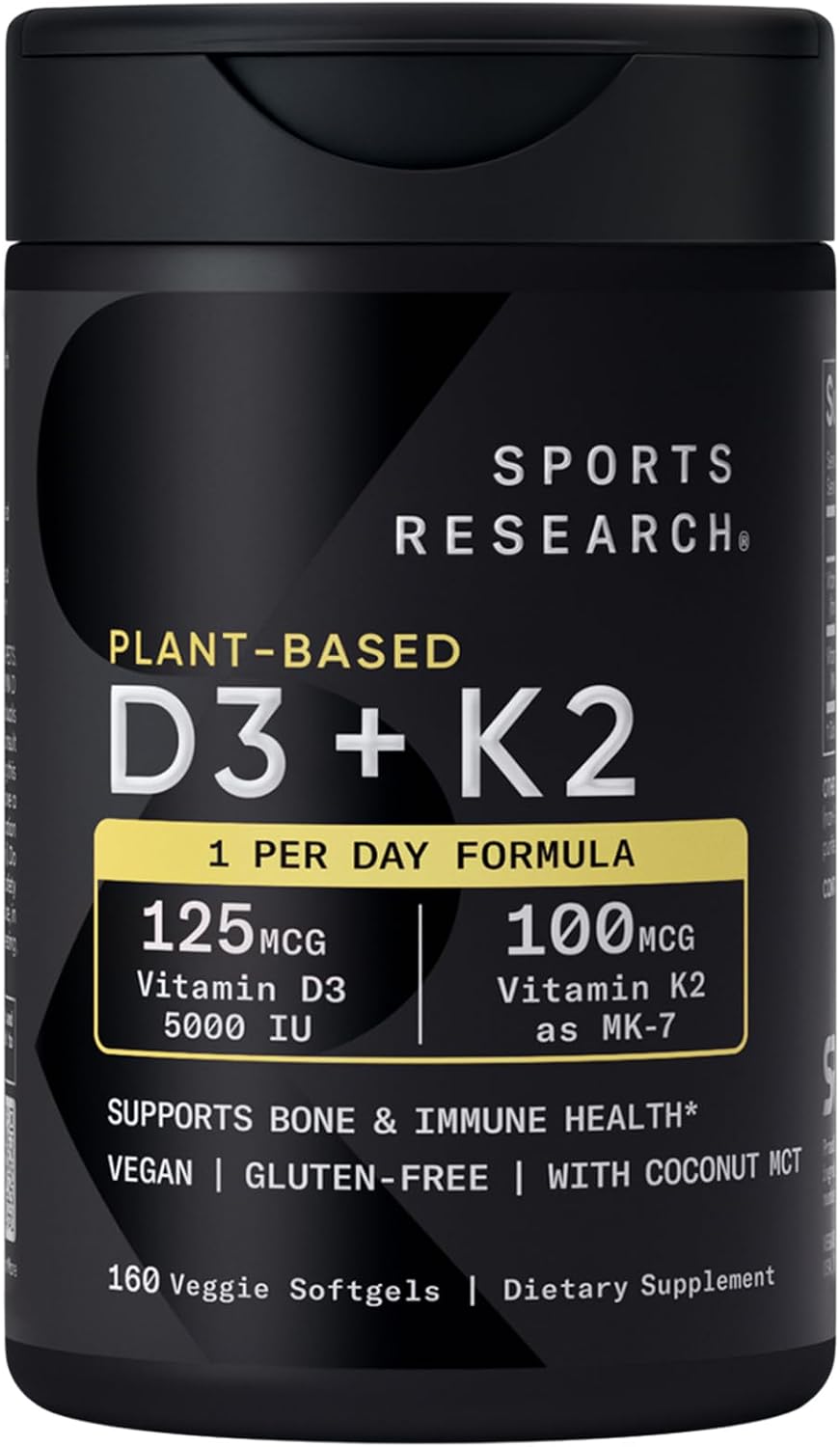
Sports Research Vitamin D3 + K2 (MK-7)
Sports Research Vitamin D3 + K2 (MK-7) — third-party tested. 4.7★ (420 ratings). Confirmed in stock.
- Smaller customer-review base than category best-sellers
Affiliate link: If you buy through this link, we may earn a commission at no extra cost to you.
Buy Sports Research Vitamin D3 + K2 (MK-7)
Pure Encapsulations Vitamin D3 & K2 (120 Capsules)
Pure Encapsulations Vitamin D3 & K2 (120 Capsules) — third-party tested. 4.8★ (4,475 ratings). Confirmed in stock.
- Amazon price and availability can change over time
Affiliate link: If you buy through this link, we may earn a commission at no extra cost to you.
Buy Pure Encapsulations Vitamin D3 & K2 (120 Capsules)
NatureWise Vitamin D3 5000 IU
NatureWise Vitamin D3 5000 IU — third-party tested. 4.7★ (192,761 ratings). Confirmed in stock.
- Amazon price and availability can change over time
Affiliate link: If you buy through this link, we may earn a commission at no extra cost to you.
Buy NatureWise Vitamin D3 5000 IU
Thorne Vitamin D-5000 (D3 5000 IU)
Thorne Vitamin D-5000 (D3 5000 IU) — third-party tested. 4.8★ (9,244 ratings). Confirmed in stock.
- Amazon price and availability can change over time
Affiliate link: If you buy through this link, we may earn a commission at no extra cost to you.
Buy Thorne Vitamin D-5000 (D3 5000 IU)Compare supplements with the same checklist we use.
Get the anti-aging supplement cheat sheet with evidence prompts, safety checks, and label-quality questions before you buy.
Comparison Table
| Category | #1 Sports Research Vitamin D3 + K2 (MK-7) Sports Research | #2 Pure Encapsulations Vitamin D3 & K2 (120 Capsules) Pure Encapsulations | #3 NatureWise Vitamin D3 5000 IU NatureWise | #4 Thorne Vitamin D-5000 (D3 5000 IU) Thorne |
|---|---|---|---|---|
| Score | 9/10 | 9.2/10 | 9/10 | 9.2/10 |
| Best For | ||||
| Pros |
|
|
|
|
| Cons |
|
|
|
|
What to Know About Vitamin D3 for Blood Pressure Support
If your blood pressure creeps up every winter and your vitamin D levels sit below 30 ng/mL, that's not a coincidence. Research suggests vitamin D deficiency may influence vascular tone and the renin-angiotensin-aldosterone system — two mechanisms directly tied to blood pressure regulation. For the roughly 40% of American adults who are vitamin D insufficient, that's a meaningful gap worth closing. This page is specifically built for people in the pre-hypertension and stage 1 hypertension range who've received a low vitamin D result (25(OH)D below 30 ng/mL) and want an evidence-informed supplement to support their cardiovascular health alongside lifestyle changes. We're not promising a magic fix. Vitamin D doesn't replace antihypertensive medications, and no supplement should. But for deficient individuals, correcting that deficiency may be one of the most underutilized tools in the toolkit. We evaluated four standout D3 products on formulation quality, third-party certification, bioavailability, and value — then ranked them honestly, including real downsides. Every pick has been reviewed for ingredient integrity and clinical plausibility by our registered dietitian.
This content is for educational purposes only and is not medical advice. These statements have not been evaluated by the FDA. This product is not intended to diagnose, treat, cure, or prevent any disease.
Key Benefits of Vitamin D3 for Blood Pressure Support
May support healthy vascular function in adults with confirmed vitamin D deficiency
Research suggests correcting low 25(OH)D may complement antihypertensive lifestyle strategies
Fat-soluble D3 (cholecalciferol) raises serum vitamin D levels more effectively than D2 in clinical trials
How Vitamin D3 Supports Blood Pressure Support
Vitamin D3 (cholecalciferol) is converted in the liver to 25-hydroxyvitamin D — the form measured in blood tests — and then further activated in the kidneys to 1,25-dihydroxyvitamin D (calcitriol), the biologically active hormone. Calcitriol binds to vitamin D receptors found throughout the cardiovascular system, including in vascular smooth muscle cells, endothelial cells, and cardiomyocytes. One proposed pathway involves suppression of renin synthesis: renin is a key enzyme in the renin-angiotensin-aldosterone system (RAAS), which, when overactive, raises blood pressure by promoting sodium retention and vasoconstriction. Some research suggests that adequate vitamin D signaling may help modulate renin expression, offering a plausible mechanistic link to blood pressure regulation. A second mechanism involves endothelial function. Calcitriol may support nitric oxide bioavailability in vascular endothelium — nitric oxide is the molecule responsible for arterial relaxation and healthy blood flow. Parathyroid hormone (PTH), which rises when vitamin D is deficient, has also been associated with vascular calcification and stiffness in some observational data. By maintaining adequate vitamin D status, PTH levels may be kept in a healthier range. None of these pathways are definitive proof that taking D3 will lower your blood pressure numbers, but they do provide a coherent biological rationale for why deficiency correction may matter.
What to Look For When Buying Vitamin D3
The first question to ask when shopping for vitamin D3 for blood pressure support isn't which brand — it's what form. Always choose D3 (cholecalciferol) over D2 (ergocalciferol). Human clinical data consistently shows D3 raises and sustains serum 25(OH)D levels more effectively, and it's the form your skin produces naturally from sunlight. Every product on this list uses cholecalciferol. Good start. Next, look at the delivery oil. Vitamin D is fat-soluble, which means it needs dietary fat to be absorbed through the gut wall. Softgels formulated in olive oil, MCT oil, or extra virgin olive oil have a built-in absorption advantage over dry powder capsules or tablets. All four products here use oil-based delivery — that's intentional on our part. If you're evaluating a product not on this list and it's a dry tablet, absorption becomes more variable (though taking D3 with a fat-containing meal largely compensates). Third, consider whether you need K2 co-formulated. For adults focused on blood pressure and cardiovascular health, this matters more than most people realize. Vitamin K2 (particularly the MK-7 form) activates matrix Gla protein (MGP), which helps prevent calcium from depositing in arterial walls — a process called vascular calcification that contributes to arterial stiffness. If you're supplementing with higher-dose D3 long-term and not getting adequate K2 from diet (fermented foods, natto, some cheeses), a D3+K2 combination like Sports Research's offering may be worth the modest extra cost. Finally, certification level should match your personal risk profile. If you're on multiple medications, choose NSF Certified for Sport (Pure Encapsulations) or Informed Sport (Sports Research). These aren't marketing badges — they involve independent laboratory verification of label claims and contamination screening. If you're otherwise healthy and just trying to correct a modest deficiency, third-party tested options like NatureWise or Nordic Naturals provide solid assurance at lower cost.
Dosage Guidance
Always follow your healthcare provider's recommendations. Dosages vary by individual health status, age, and goals.
Common Vitamin D3 Complaints (And How to Avoid Them)
Based on analysis of thousands of customer reviews across Vitamin D3 products.
"I took vitamin D for months and my blood pressure didn't change at all"
Vitamin D3 is not a blood pressure medication, and response depends heavily on whether you were actually deficient to begin with. Without a baseline 25(OH)D test, there's no way to know if D3 was even relevant to your situation. We recommend testing before and after supplementation to confirm both deficiency and repletion — that's the only way to evaluate whether this intervention makes sense for you.
"I got nausea and headaches after starting vitamin D3"
GI discomfort from D3 is usually either a dose issue or a fat intake issue. Vitamin D3 is fat-soluble — taking it on an empty stomach or without dietary fat reduces absorption and can cause mild GI symptoms. Try taking your softgel with a meal that contains healthy fat. If symptoms persist, reduce the dose and consult your provider, as headaches in particular warrant medical evaluation.
"I don't know which dose is right — 1000 IU, 2000 IU, or 5000 IU?"
The honest answer is: it depends on your blood level. Someone with a 25(OH)D of 10 ng/mL may need 5000 IU daily for 3–4 months to reach sufficiency, while someone at 28 ng/mL might correct on 1000–2000 IU. All four products here deliver 5000 IU, which can be split (take every other day for ~2500 IU average) if your provider recommends a lower dose. Get tested — that number tells you everything.
Safety & Interactions
- Pregnancy and breastfeeding: Consult your healthcare provider before taking this supplement during pregnancy or while nursing. The safety of supplemental doses beyond dietary intake has not been established in pregnant or lactating women.
- Blood thinners: If you take blood-thinning medications (e.g., warfarin, apixaban, rivaroxaban, clopidogrel, or high-dose aspirin), consult your healthcare provider BEFORE starting this supplement, as it may have additive antiplatelet or anticoagulant effects.
- Kidney disease: If you have chronic kidney disease (CKD) or any significant kidney impairment, consult your healthcare provider before taking this supplement. Some supplements can accumulate to dangerous levels when kidney function is reduced.
- Gout: Individuals with gout should consult their healthcare provider before starting this supplement. Certain supplements (e.g., collagen, fish oil, niacin) may affect uric acid levels or trigger flares in susceptible individuals.
- Blood pressure medications: This supplement may have an additive blood-pressure-lowering effect when taken with antihypertensives including beta-blockers (metoprolol, atenolol), ACE inhibitors (lisinopril), ARBs (losartan), and calcium channel blockers (amlodipine). If you take any blood pressure medication, monitor your readings for the first 4–6 weeks after starting and inform your prescribing physician.
- Important: This supplement is not a replacement for prescription medications. It is supportive for individuals with low baseline status, not a treatment for diagnosed conditions (anxiety disorders, insomnia, hypertension, osteoporosis, etc.). Do not stop or reduce any prescription without consulting your doctor.
""As a registered dietitian, I'd emphasize that vitamin D testing is genuinely underutilized — many adults managing blood pressure have never had a 25(OH)D level checked. Before investing in any supplement on this list, that $30–50 lab test is the single most valuable step you can take, because it transforms your supplementation from guesswork into a targeted, measurable intervention."
— Angelique Nicole R. Villegas, RND, Registered Nutritionist Dietitian · PRC Philippines · License #0023950
Frequently Asked Questions
Citations & Research
This page references peer-reviewed research indexed on PubMed/NCBI. Citations are provided for transparency. Always consult a qualified healthcare professional before making any medical decisions.
- [5]Bischoff-Ferrari HA, Vellas B, Rizzoli R et al. “Effect of Vitamin D Supplementation, Omega-3 Fatty Acid Supplementation, or a Strength-Training Exercise Program on Clinical Outcomes in Older Adults: The DO-HEALTH Randomized Clinical Trial.” JAMA, 2020. n=2157. doi:10.1001/jama.2020.16909PMID 33170239 ↗
- [1]Jones A, Ali MU, Kenny M et al. “Potentially Modifiable Risk Factors for Dementia and Mild Cognitive Impairment: An Umbrella Review and Meta-Analysis.” Dementia and geriatric cognitive disorders, 2024. doi:10.1159/000536643PMID 38346414 ↗
- [6]Beveridge LA et al. “Effect of Vitamin D Supplementation on Blood Pressure: A Systematic Review and Meta-analysis Incorporating Individual Patient Data.” JAMA internal medicine, 2015. doi:10.1001/jamainternmed.2015.0237PMID 25775274 ↗
Ready to Try Vitamin D3?
Our top pick for blood pressure support. Third-party tested, highly reviewed.
Affiliate link: If you buy through this link, we may earn a commission at no extra cost to you.
Shop #1 Pick — Sports Research Vitamin D3 + K2 (MK-7)Continue exploring
- our full Vitamin D3 reviewSupplement overview
- blood pressure support — supplements that may helpGoal overview
- CoQ10 — an option to consider for blood pressure supportAlternative supplement
- our Vitamin D3 guide for bone densitySame supplement, different goal
- our Vitamin D3 guide for bone healthEditor pick
- Vitamin D3 guidance for immune healthEditor pick
- Vitamin D3 guidance for mood supportEditor pick
- vitamin d3 vs vitamin d2 comparedCompare options
Get the evidence-graded supplement cheat sheet.
Evidence prompts, safety checks, and label-quality questions before you buy — free, straight to your inbox.
No spam. Unsubscribe anytime.