
Best Vitamin D3 for Mood in 2026 — The Serotonin Synthesis Pathway and Dosing Evidence
Vitamin D3 activates brain serotonin synthesis via TPH2. 2025 meta-analysis confirms mood benefits most pronounced at ≥2,000 IU/day. Best products and evidence.

This content is for educational purposes only and is not medical advice. These statements have not been evaluated by the FDA. This product is not intended to diagnose, treat, cure, or prevent any disease. Always consult your healthcare provider before starting any supplement.
Best Vitamin D3 for Mood in 2026
Ranked by quality, value, and clinical backing
Where available, we show when each product price was last checked so the list stays honest without overreacting to normal Amazon price movement.

NatureWise Vitamin D3 5000 IU
Best overall value for D3 mood support. 89,000+ reviews provide the most extensive real-world quality validation of any D3 product. Organic olive oil carrier ensures fat-soluble D3 absorption. For most deficient adults, 5,000 IU/day is sufficient to normalize 25(OH)D to the 40–60 ng/mL range associated with mood benefits. Test 25(OH)D at baseline and after 2–3 months to calibrate.
- No K2 co-factor — consider adding K2 separately for long-term high-dose D3 use
- 5,000 IU daily can raise 25(OH)D above optimal range in some individuals — test before sustained use
Affiliate link: If you buy through this link, we may earn a commission at no extra cost to you.
Buy NatureWise Vitamin D3 5000 IUSports Research Vitamin D3 5000 IU + K2 MK-7
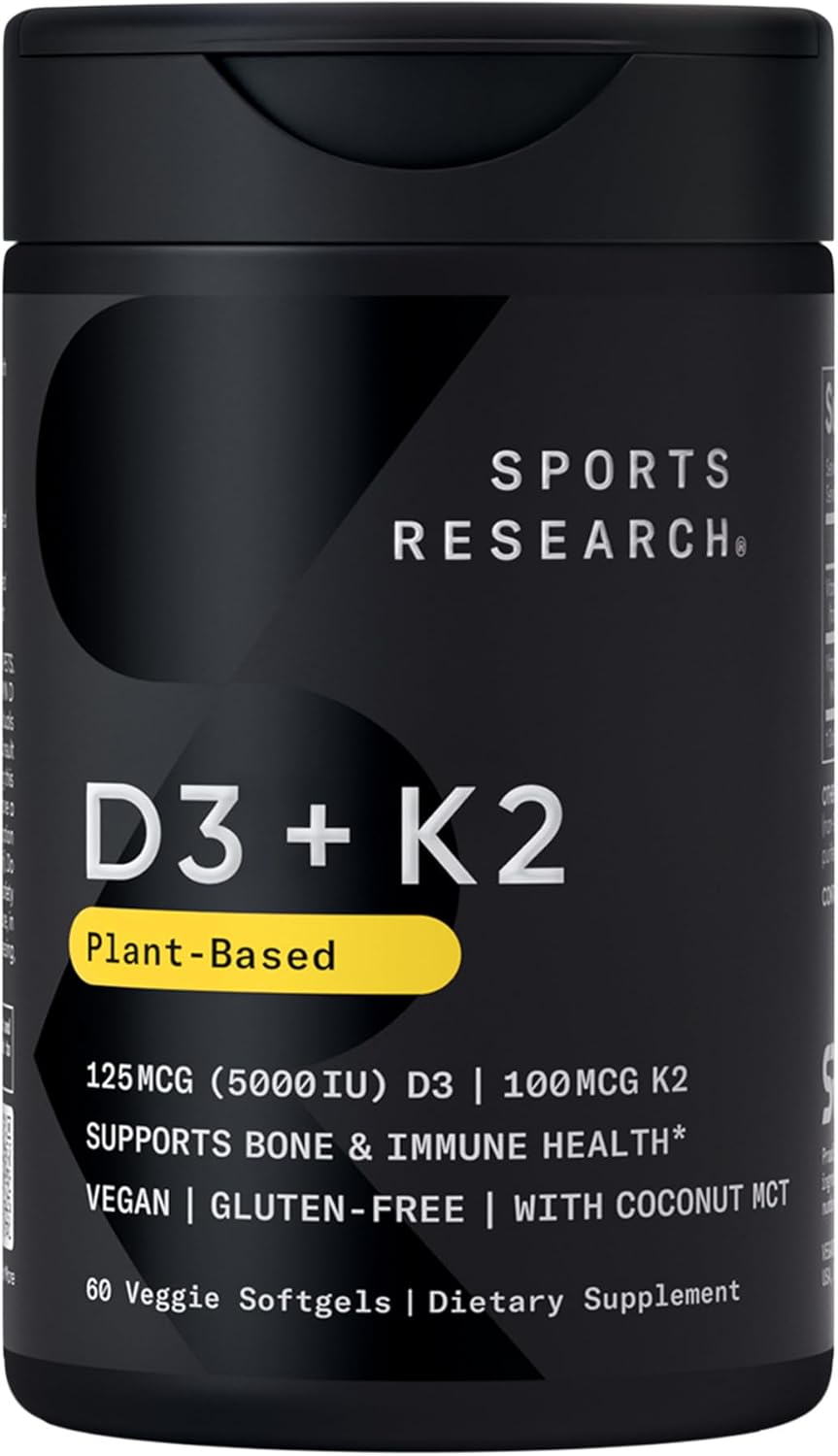
Best for long-term daily use with cardiovascular safety. K2 MK-7 (100mcg) at 5,000 IU D3 addresses the calcium handling concern: high-dose D3 increases intestinal calcium absorption, and without adequate K2, that calcium may deposit in soft tissues and arteries rather than bone. For sustained daily D3 supplementation for mood, adding K2 is a rational safety measure. IGEN Non-GMO; coconut oil carrier; 22,000+ reviews.
- K2 MK-7 may interact with anticoagulants (warfarin) — inform prescriber
Sports Research Vitamin D3 5000 IU Mini Softgel
Best for people who want a smaller pill. The mini softgel format is easier to swallow than standard softgels — relevant for people with difficulty swallowing.
- No K2 co-factor
- Not NSF certified
Affiliate link: If you buy through this link, we may earn a commission at no extra cost to you.
Buy Sports Research Vitamin D3 5000 IU Mini SoftgelCompare supplements with the same checklist we use.
Get the anti-aging supplement cheat sheet with evidence prompts, safety checks, and label-quality questions before you buy.
Comparison Table
| Category | #1 NatureWise Vitamin D3 5000 IU NatureWise | #2 Sports Research Vitamin D3 5000 IU + K2 MK-7 Sports Research | #3 Sports Research Vitamin D3 5000 IU Mini Softgel Sports Research |
|---|---|---|---|
| Score | 9.2/10 | 8.9/10 | 8.2/10 |
| Best For | Value-focused adults who want to efficiently correct D3 deficiency for mood support | Adults planning sustained daily D3 supplementation who want the cardiovascular safety of K2 co-formulation | Adults who want the Sports Research quality in a smaller, easier-to-swallow format |
| Pros |
|
|
|
| Cons |
|
|
|
What to Know About Vitamin D3 for Mood
Most people know vitamin D3 as an immune supplement. Fewer understand that vitamin D receptor (VDR) expression in the brain is concentrated in precisely the regions most implicated in depression and mood disorders — the hippocampus, prefrontal cortex, amygdala, cingulate cortex, and raphe nuclei. Vitamin D3 is increasingly recognized as a neurosteroid as much as a vitamin. Its active form (1,25-dihydroxyvitamin D3, or calcitriol) regulates gene expression in neurons via the same nuclear receptor mechanism it uses in the gut and bone — but in the brain, the targets include the enzymes and factors governing serotonin production, dopamine regulation, and neuroplasticity. A 2015 paper in FASEB Journal by Patrick & Ames provided the mechanistic explanation: calcitriol activates the tryptophan hydroxylase-2 (TPH2) gene, which encodes the rate-limiting enzyme for serotonin synthesis in the brain. Lower vitamin D3 = lower TPH2 expression = reduced serotonin synthesis capacity. This is the same serotonin pathway targeted by SSRIs (which block serotonin reuptake), but at the synthesis step rather than the clearance step. A 2025 Frontiers in Nutrition meta-analysis pooling dose-response RCTs confirmed significant reductions in depression symptom scores with D3 supplementation, with effects most pronounced when baseline vitamin D status is low (<50 nmol/L) and at doses ≥2,000 IU/day.
This content is for educational purposes only and is not medical advice. These statements have not been evaluated by the FDA. This product is not intended to diagnose, treat, cure, or prevent any disease.
Key Benefits of Vitamin D3 for Mood
2025 Frontiers in Nutrition dose-response meta-analysis: D3 supplementation significantly reduced depression symptom scores vs placebo, with effects most pronounced at ≥2,000 IU/day and when baseline 25(OH)D is below 50 nmol/L (the range affecting an estimated 40% of US adults)
Direct serotonin synthesis pathway: calcitriol (active D3) activates tryptophan hydroxylase-2 (TPH2) — the rate-limiting enzyme for brain serotonin production — and simultaneously represses the serotonin transporter, increasing synaptic serotonin availability via a mechanism distinct from SSRIs
VDR is densely expressed in the hippocampus, prefrontal cortex, amygdala, and raphe nuclei — the exact brain regions involved in mood regulation, emotional memory, and stress response — providing the neuroanatomical basis for D3's mood effects
How Vitamin D3 Supports Mood
Vitamin D3 influences mood through at least four converging neurobiological mechanisms — all dependent on calcitriol (1,25-dihydroxyvitamin D3) activating vitamin D receptors (VDR) in brain tissue. **1. Serotonin synthesis activation.** Calcitriol activates the TPH2 (tryptophan hydroxylase-2) gene in raphe nucleus neurons — the brain region that generates the majority of the brain's serotonin. TPH2 converts the amino acid tryptophan to 5-hydroxytryptophan (5-HTP), which is then converted to serotonin. Low vitamin D = lower TPH2 expression = reduced serotonin synthesis capacity. Calcitriol also activates aromatic amino acid decarboxylase (AADC), which converts 5-HTP to serotonin more efficiently, and represses the serotonin transporter (SERT), which removes serotonin from synapses. The net effect is more serotonin synthesized and maintained at synapses — the same endpoint SSRIs pursue through serotonin reuptake blockade. **2. BDNF upregulation and neuroplasticity.** Calcitriol upregulates brain-derived neurotrophic factor (BDNF) — a protein essential for neuronal survival, synaptic plasticity, and hippocampal neurogenesis. BDNF is consistently lower in depressed individuals and is one mechanism by which antidepressants and exercise improve mood. Vitamin D3's BDNF-upregulating effect may contribute to mood improvement through enhanced hippocampal neuroplasticity. **3. Neuroinflammation reduction.** Microglia (the brain's resident immune cells) express VDR. Activated microglia produce pro-inflammatory cytokines (IL-6, TNF-α, IL-1β) that can impair serotonin synthesis, reduce BDNF, and contribute to depression symptoms via the 'inflammatory theory of depression'. Calcitriol modulates microglial activation, reducing neuroinflammatory cytokine production and potentially improving the brain's inflammatory environment that contributes to mood disorders. **4. HPA axis modulation.** Vitamin D receptor is expressed in the hypothalamus, which governs the HPA (hypothalamic-pituitary-adrenal) axis stress response. Calcitriol influences CRH (corticotropin-releasing hormone) gene expression, modulating cortisol output. In vitamin D-deficient individuals, HPA axis dysregulation — with blunted or exaggerated cortisol responses to stress — may contribute to mood vulnerability. Vitamin D normalization appears to improve HPA axis tone. **Why baseline status determines response.** The mood effects of D3 supplementation are most pronounced in people who start with vitamin D insufficiency or deficiency (25(OH)D <50 nmol/L). In people who are already replete (>75 nmol/L), the marginal benefit of additional D3 is smaller because VDR in brain tissues is already well-activated. This explains why early depression trials showing 'no effect of vitamin D' frequently enrolled people with normal baseline D3 status — the intervention had nothing to correct.
What to Look For When Buying Vitamin D3
**Test first if possible.** A 25(OH)D blood test (~$30–60, available without prescription) tells you whether you're deficient (<30 ng/mL), insufficient (30–50 ng/mL), or replete (>50 ng/mL). The mood evidence is clearest for correcting deficiency/insufficiency to the 40–60 ng/mL range. If you're already above 60 ng/mL, D3's mood benefit is likely modest. **Dose selection:** - For most deficient adults (25(OH)D <30 ng/mL): 5,000 IU/day for 8–12 weeks, then retest and maintain at 2,000–3,000 IU/day - For insufficient adults (30–50 ng/mL): 2,000–3,000 IU/day is typically sufficient to reach the 40–60 ng/mL target - For maintenance after normalization: 1,000–2,000 IU/day during winter months; less in summer with adequate sun exposure **Fat-soluble delivery.** D3 is fat-soluble — always take with a meal containing fat. Softgels with oil carriers (olive oil, coconut oil) substantially improve absorption vs dry capsule D3. The oil-in-softgel products listed here all address this. **K2 for sustained high-dose use.** At 5,000 IU/day long-term, adding K2 (100–200mcg MK-7 daily) is recommended to direct calcium to bone rather than arteries. Sports Research D3+K2 combines both. **Seasonal timing.** For mood applications, consistent supplementation through fall and winter is important — October through March for most US and European latitudes. Sun exposure-based D3 synthesis is negligible at latitudes above 35° in winter months.
Dosage Guidance
Always follow your healthcare provider's recommendations. Dosages vary by individual health status, age, and goals.
Common Vitamin D3 Complaints (And How to Avoid Them)
Based on analysis of thousands of customer reviews across Vitamin D3 products.
""I've been taking vitamin D for months and my mood hasn't improved""
Two possibilities. First: check your 25(OH)D blood level. If you're already in the replete range (>60 ng/mL), additional D3 supplementation has limited further mood benefit — the evidence is strongest for correcting deficiency, not for supraphysiological supplementation in replete individuals. Second: at what dose? The 2025 meta-analysis found effects most pronounced at ≥2,000 IU/day. If you've been taking 400–1,000 IU (common in multivitamins), you may not have raised D3 levels enough to activate VDR in brain tissues. A blood test will clarify whether you need higher doses or whether D3 is not the limiting factor in your mood.
""Is vitamin D as good as antidepressants for mood?""
No — the comparison is not appropriate. Vitamin D3 is a nutritional support intervention that addresses a specific deficiency-driven pathway (serotonin synthesis capacity, neuroinflammation, BDNF). SSRIs and SNRIs are pharmacological interventions with substantially stronger and more consistent clinical evidence for moderate-to-severe depression. For mild, subthreshold low mood — particularly in deficient individuals — D3 supplementation has meaningful supportive evidence. For clinical depression, psychiatric evaluation and evidence-based treatment come first. Vitamin D correction is a sensible complement to care, not a replacement.
Safety & Interactions
- Pregnancy and breastfeeding: Consult your healthcare provider before taking this supplement during pregnancy or while nursing. The safety of supplemental doses beyond dietary intake has not been established in pregnant or lactating women.
- Blood thinners: If you take blood-thinning medications (e.g., warfarin, apixaban, rivaroxaban, clopidogrel, or high-dose aspirin), consult your healthcare provider BEFORE starting this supplement, as it may have additive antiplatelet or anticoagulant effects.
- Kidney disease: If you have chronic kidney disease (CKD) or any significant kidney impairment, consult your healthcare provider before taking this supplement. Some supplements can accumulate to dangerous levels when kidney function is reduced.
- Gout: Individuals with gout should consult their healthcare provider before starting this supplement. Certain supplements (e.g., collagen, fish oil, niacin) may affect uric acid levels or trigger flares in susceptible individuals.
- Fish allergy - capsule source: Some softgel capsules use fish-derived gelatin even when the active supplement is not fish-derived. If you have a confirmed fish or shellfish allergy, verify the capsule source on the label or check with the manufacturer. Vegan capsules (vegetable cellulose) are widely available alternatives.
- Beef / alpha-gal allergy - capsule source: Many softgel and two-piece capsules use bovine gelatin. If you have a confirmed beef allergy or alpha-gal syndrome (mammalian meat allergy), check capsule sources on the label. Vegan capsules (vegetable cellulose) and HPMC capsules are alternatives.
- Important: This supplement is not a replacement for prescription medications. It is supportive for individuals with low baseline status, not a treatment for diagnosed conditions (anxiety disorders, insomnia, hypertension, osteoporosis, etc.). Do not stop or reduce any prescription without consulting your doctor.
""As a registered dietitian, vitamin D3 is the first supplement I check in any client presenting with low mood or fatigue — deficiency is strikingly common (estimates of 40% of US adults), testing is cheap, and correcting it is low-risk and inexpensive. The evidence is moderate: strongest for deficient individuals, less compelling for those already replete. I'm careful not to oversell D3 as an antidepressant, but I'm equally clear that allowing a preventable deficiency to persist is poor clinical practice. Testing 25(OH)D before and 3 months after starting supplementation is my standard protocol."
— Angelique Nicole R. Villegas, RND, Registered Nutritionist Dietitian · PRC Philippines · License #0023950
Frequently Asked Questions
Citations & Research
This page references peer-reviewed research indexed on PubMed/NCBI. Citations are provided for transparency. Always consult a qualified healthcare professional before making any medical decisions.
- [1]Kaviani M, Nikooyeh B, Etesam F et al. Effects of vitamin D supplementation on depression and some selected pro-inflammatory biomarkers: a double-blind randomized clinical trial. BMC psychiatry. 2022;22(1):694.PMID 36368945 ↗
- [2]Jorde R, Sneve M, Figenschau Y, Svartberg J, Waterloo K. Effects of vitamin D supplementation on symptoms of depression in overweight and obese subjects: randomized double blind trial. J Intern Med. 2008;264(6):599-609.PMID 18793245 ↗
- [3]Vellekkatt F, Menon V. Efficacy of vitamin D supplementation in major depression: a meta-analysis of randomized controlled trials. J Family Med Prim Care. 2019;8(1):27-31.PMID 29943744 ↗
Ready to Try Vitamin D3?
Our top pick for mood. Third-party tested, highly reviewed.
Affiliate link: If you buy through this link, we may earn a commission at no extra cost to you.
Shop #1 Pick — NatureWise Vitamin D3 5000 IUContinue exploring
- how we evaluate Vitamin D3Supplement overview
- what we recommend for mood supportGoal overview
- Saffron — an option to consider for mood supportAlternative supplement
- Vitamin B12 evidence for mood supportAlternative supplement
- Vitamin D3 for blood pressure supportSame supplement, different goal
- evidence notes on Vitamin D3 for immune healthEditor pick
- how we rate Ashwagandha for stress supportEditor pick
- vitamin d3 vs vitamin d2 comparedCompare options
Get the evidence-graded supplement cheat sheet.
Evidence prompts, safety checks, and label-quality questions before you buy — free, straight to your inbox.
No spam. Unsubscribe anytime.