
Best Vitamin D3 Supplements for Stress & Cortisol Regulation (2026)
Compare the 4 best vitamin D3 supplements for stress and cortisol regulation in 2026. Science-backed picks, dosage guidance, and expert RD notes.

This content is for educational purposes only and is not medical advice. These statements have not been evaluated by the FDA. This product is not intended to diagnose, treat, cure, or prevent any disease. Always consult your healthcare provider before starting any supplement.
Best Vitamin D3 for Stress & Cortisol Regulation in 2026
Ranked by quality, value, and clinical backing
Where available, we show when each product price was last checked so the list stays honest without overreacting to normal Amazon price movement.
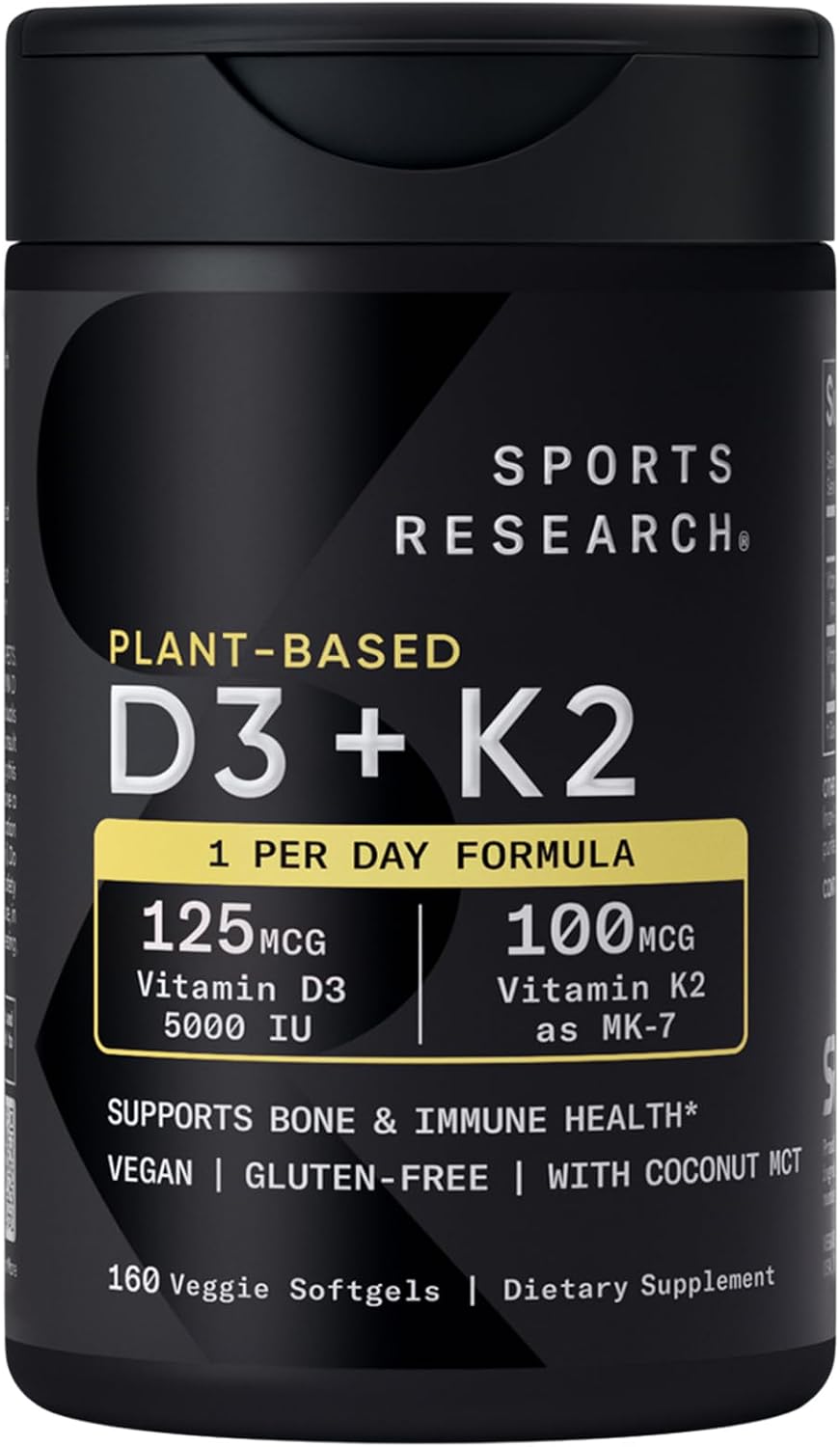
Sports Research Vitamin D3 + K2 (MK-7)
Sports Research Vitamin D3 + K2 (MK-7) — third-party tested. 4.7★ (420 ratings). Confirmed in stock.
- Smaller customer-review base than category best-sellers
Affiliate link: If you buy through this link, we may earn a commission at no extra cost to you.
Buy Sports Research Vitamin D3 + K2 (MK-7)
Pure Encapsulations Vitamin D3 & K2 (120 Capsules)
Pure Encapsulations Vitamin D3 & K2 (120 Capsules) — third-party tested. 4.8★ (4,475 ratings). Confirmed in stock.
- Amazon price and availability can change over time
Affiliate link: If you buy through this link, we may earn a commission at no extra cost to you.
Buy Pure Encapsulations Vitamin D3 & K2 (120 Capsules)
NatureWise Vitamin D3 5000 IU
NatureWise Vitamin D3 5000 IU — third-party tested. 4.7★ (192,761 ratings). Confirmed in stock.
- Amazon price and availability can change over time
Affiliate link: If you buy through this link, we may earn a commission at no extra cost to you.
Buy NatureWise Vitamin D3 5000 IUCompare supplements with the same checklist we use.
Get the anti-aging supplement cheat sheet with evidence prompts, safety checks, and label-quality questions before you buy.
Comparison Table
| Category | #1 Sports Research Vitamin D3 + K2 (MK-7) Sports Research | #2 Pure Encapsulations Vitamin D3 & K2 (120 Capsules) Pure Encapsulations | #3 NatureWise Vitamin D3 5000 IU NatureWise |
|---|---|---|---|
| Score | 9/10 | 9.2/10 | 9/10 |
| Best For | |||
| Pros |
|
|
|
| Cons |
|
|
|
What to Know About Vitamin D3 for Stress & Cortisol Regulation
Chronic stress and vitamin D deficiency are two of the most underappreciated health challenges facing adults who work indoors, live far from the equator, or push through high-demand careers. What makes this pairing particularly relevant is that vitamin D receptors are found throughout the brain's stress-response circuits — including regions that govern cortisol release. Research suggests that suboptimal vitamin D status may compound the body's difficulty regulating its stress response, though vitamin D is not a treatment for any medical condition. Choosing the right D3 supplement isn't just about picking the highest IU count. Form matters. The fat-soluble nature of cholecalciferol means delivery vehicle quality directly affects absorption. Third-party certification matters. And the growing evidence around D3's role in mood-related neurotransmitter pathways makes formulation choices more consequential than they might seem at the pharmacy shelf. We've reviewed three leading D3 products specifically for adults navigating chronic psychological stress, elevated cortisol patterns, or the seasonal dip in resilience that hits hardest between October and March. Every pick is third-party tested, cholecalciferol-based, and evaluated against published clinical literature — not marketing copy.
This content is for educational purposes only and is not medical advice. These statements have not been evaluated by the FDA. This product is not intended to diagnose, treat, cure, or prevent any disease.
Key Benefits of Vitamin D3 for Stress & Cortisol Regulation
May support neurotransmitter pathways involved in mood and stress resilience when correcting confirmed deficiency
Research suggests vitamin D receptors throughout the brain's stress-response circuits may influence HPA axis sensitivity
Correcting suboptimal D3 levels is associated in some studies with improvements in psychological well-being and energy during low-sunlight months
How Vitamin D3 Supports Stress & Cortisol Regulation
Vitamin D3 (cholecalciferol) is technically a prohormone, not a simple vitamin. Once ingested, it's converted in the liver to 25-hydroxyvitamin D and then in the kidneys to its active form, 1,25-dihydroxyvitamin D (calcitriol). This active form binds to vitamin D receptors (VDRs), which are expressed in virtually every tissue — including the prefrontal cortex, hippocampus, and hypothalamus, all of which play central roles in the body's stress response and cortisol regulation cascade. The proposed mechanism connecting D3 to stress resilience involves multiple pathways: VDR activation may influence the synthesis of serotonin and dopamine by modulating the expression of enzymes like tryptophan hydroxylase; it may also affect glucocorticoid receptor sensitivity in brain regions that regulate HPA axis feedback. Because D3 is fat-soluble, it requires dietary fat for efficient absorption in the small intestine — which is why products formulated in coconut MCT oil or olive oil consistently outperform dry-powder tablets in bioavailability. Dosing fat-soluble vitamins without fat is one of the most common and correctable absorption errors in self-supplementation.
What to Look For When Buying Vitamin D3
The single most important question to answer before buying any vitamin D3 supplement is: have you actually tested your levels? A serum 25(OH)D test — available through your doctor or most direct-to-consumer lab services — tells you whether you're deficient (below 20 ng/mL), insufficient (20–29 ng/mL), or sufficient (30+ ng/mL). This matters because the appropriate dose varies significantly by baseline status, and supplementing aggressively when you're already replete doesn't add stress-resilience benefit and carries a small but real risk of toxicity at very high intakes over time. For delivery vehicle, the science is clear: cholecalciferol is fat-soluble, and it absorbs measurably better when taken with dietary fat. All four products on this list are formulated in oil-based carriers (MCT, olive oil, or extra virgin olive oil), which is a meaningful advantage over dry-powder tablets or capsules that don't include a lipid matrix. If you take a dry-powder D3 product, taking it alongside a meal containing fat partially compensates — but an oil-based softgel is the more reliable approach. The K2 question deserves attention. At 5000 IU daily, vitamin D3 promotes calcium absorption — which is exactly what you want for bone density and cellular function, but which also requires adequate K2 (particularly MK-7) to direct that calcium appropriately and away from arterial walls. Sports Research is the only product on this list that includes K2 in the same softgel. If you choose NatureWise, Pure Encapsulations, or Nordic Naturals, pairing with a separate K2 MK-7 supplement (typically 100–200mcg daily) is worth discussing with your healthcare provider. Finally, think about your certification needs. Informed Sport (Sports Research) and NSF Certified for Sport (Pure Encapsulations) are the two most rigorous third-party certifications in the U.S. market — both involve batch-level testing for banned substances and label accuracy verification. If you're subject to drug testing for work or sport, or simply want the highest available confidence that what's on the label is in the bottle, one of these two certifications should be your minimum standard.
Dosage Guidance
Always follow your healthcare provider's recommendations. Dosages vary by individual health status, age, and goals.
Common Vitamin D3 Complaints (And How to Avoid Them)
Based on analysis of thousands of customer reviews across Vitamin D3 products.
"I've been taking vitamin D for months and don't feel any different"
The most common reason is that you started supplementing without confirming deficiency — if your levels were already sufficient, correction won't produce noticeable changes. Get a serum 25(OH)D test, confirm your baseline, and retest after 8–12 weeks of supplementation. Absorption is the second variable: dry-powder capsules taken without food frequently underperform oil-based softgels taken with fat-containing meals.
"Vitamin D supplements make me feel nauseous"
This usually signals two things: taking D3 on an empty stomach, or a reaction to fillers in lower-quality products. Always take fat-soluble vitamins with food. If nausea persists with a food-based dose, switch to a hypoallergenic formulation like Pure Encapsulations, which eliminates most common excipient culprits, and consult your provider about whether your D3 dose is appropriate for your current blood level.
"I'm confused about whether I need D3, K2, or both"
For stress and cortisol support, D3 is the primary supplement with relevant mechanistic plausibility. K2 becomes relevant when you're taking higher D3 doses (generally 4000 IU+) long-term and want to ensure calcium is being directed properly in the body. Think of K2 as a safety companion to high-dose D3 rather than a stress supplement in its own right. If you'd rather simplify, Sports Research combines both in one softgel at a reasonable dose of each.
Safety & Interactions
- Pregnancy and breastfeeding: Consult your healthcare provider before taking this supplement during pregnancy or while nursing. The safety of supplemental doses beyond dietary intake has not been established in pregnant or lactating women.
- Blood thinners: If you take blood-thinning medications (e.g., warfarin, apixaban, rivaroxaban, clopidogrel, or high-dose aspirin), consult your healthcare provider BEFORE starting this supplement, as it may have additive antiplatelet or anticoagulant effects.
- Kidney disease: If you have chronic kidney disease (CKD) or any significant kidney impairment, consult your healthcare provider before taking this supplement. Some supplements can accumulate to dangerous levels when kidney function is reduced.
- Gout: Individuals with gout should consult their healthcare provider before starting this supplement. Certain supplements (e.g., collagen, fish oil, niacin) may affect uric acid levels or trigger flares in susceptible individuals.
- Important: This supplement is not a replacement for prescription medications. It is supportive for individuals with low baseline status, not a treatment for diagnosed conditions (anxiety disorders, insomnia, hypertension, osteoporosis, etc.). Do not stop or reduce any prescription without consulting your doctor.
""As a registered dietitian, my first recommendation to any client asking about D3 for stress is always to test before supplementing — 5000 IU is a meaningful dose, and it's not appropriate for everyone. For those with confirmed deficiency, an oil-based softgel taken with a fat-containing meal is consistently the most practical way to ensure adequate absorption of this fat-soluble vitamin."
— Angelique Nicole R. Villegas, RND, Registered Nutritionist Dietitian · PRC Philippines · License #0023950
Frequently Asked Questions
Citations & Research
This page references peer-reviewed research indexed on PubMed/NCBI. Citations are provided for transparency. Always consult a qualified healthcare professional before making any medical decisions.
- [1]Kaviani M, Nikooyeh B, Zand H et al. “Effects of vitamin D supplementation on depression and some involved neurotransmitters.” Journal of affective disorders, 2020. doi:10.1016/j.jad.2020.03.029PMID 32217340 ↗
- [2]Amini S, Jafarirad S, Amani R. “Postpartum depression and vitamin D: A systematic review.” Critical reviews in food science and nutrition, 2019. doi:10.1080/10408398.2017.1423276PMID 29393662 ↗
- [3]Hansen AL et al. “Vitamin D Supplementation during Winter: Effects on Stress Resilience in a Randomized Control Trial.” Nutrients, 2020. doi:10.3390/nu12113258PMID 33114392 ↗
Ready to Try Vitamin D3?
Our top pick for stress & cortisol regulation. Third-party tested, highly reviewed.
Affiliate link: If you buy through this link, we may earn a commission at no extra cost to you.
Shop #1 Pick — Sports Research Vitamin D3 + K2 (MK-7)Continue exploring
- Vitamin D3 — our editorial overviewSupplement overview
- see all stress support supplements we coverGoal overview
- Ashwagandha and stress support: what to knowAlternative supplement
- where B Complex fits for stress supportAlternative supplement
- Vitamin D3 and blood pressure support: what to knowSame supplement, different goal
- our top Vitamin D3 pick for bone healthEditor pick
- where Vitamin D3 fits for immune healthEditor pick
- Vitamin D3 research for mood supportEditor pick
- which form is right for youCompare options
Get the evidence-graded supplement cheat sheet.
Evidence prompts, safety checks, and label-quality questions before you buy — free, straight to your inbox.
No spam. Unsubscribe anytime.