
Best Vitamin D3 Supplements for Osteoporosis Prevention (2026)
Compare the 4 best vitamin D3 supplements for osteoporosis prevention in 2026. Evidence-based picks for post-menopausal women, men 60+, and osteopenia patients.

This content is for educational purposes only and is not medical advice. These statements have not been evaluated by the FDA. This product is not intended to diagnose, treat, cure, or prevent any disease. Always consult your healthcare provider before starting any supplement.
Best Vitamin D3 for Osteoporosis Prevention in 2026
Ranked by quality, value, and clinical backing
Where available, we show when each product price was last checked so the list stays honest without overreacting to normal Amazon price movement.
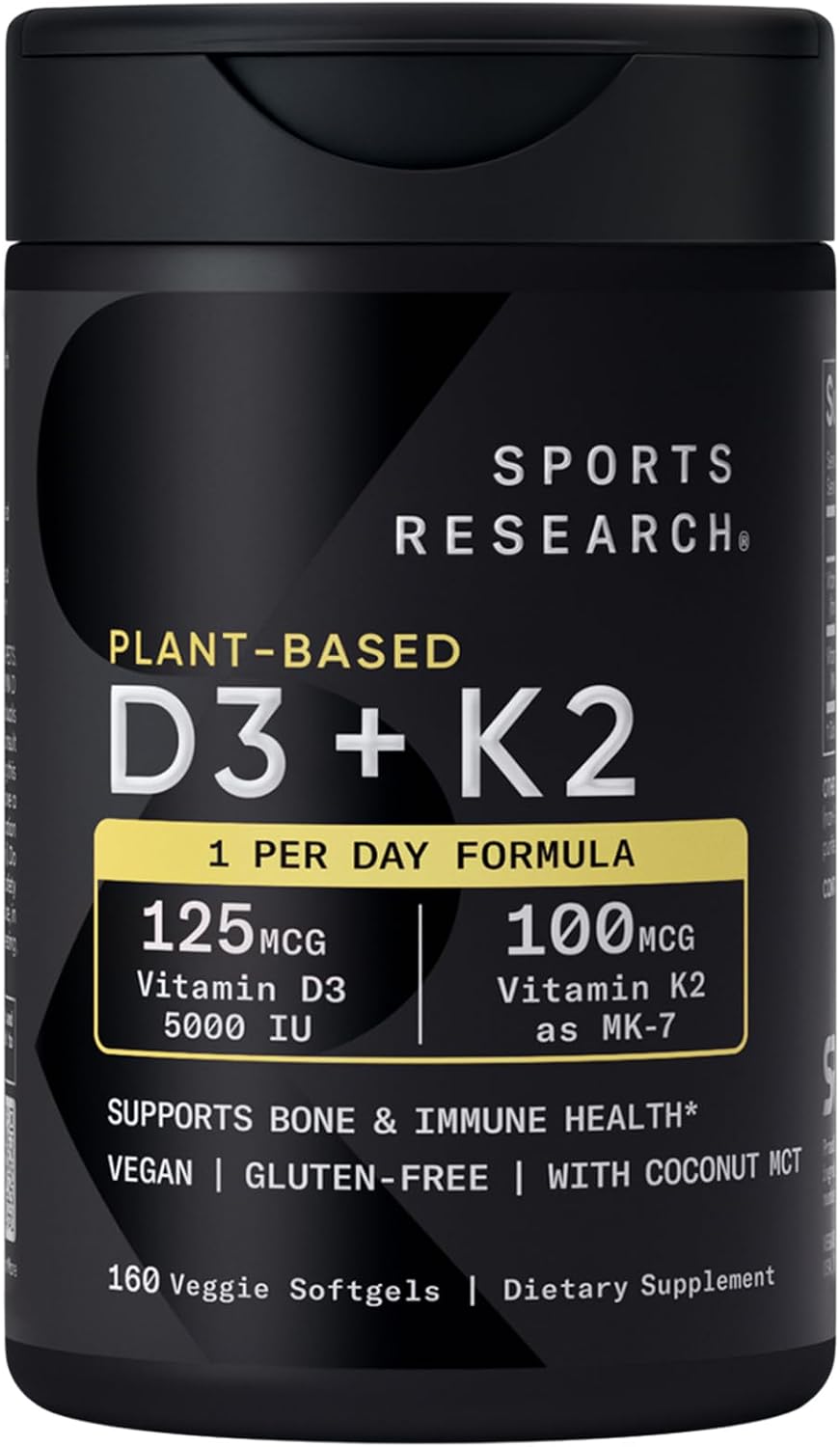
Sports Research Vitamin D3 + K2 (MK-7)
Sports Research Vitamin D3 + K2 (MK-7) — third-party tested. 4.7★ (420 ratings). Confirmed in stock.
- Smaller customer-review base than category best-sellers
Affiliate link: If you buy through this link, we may earn a commission at no extra cost to you.
Buy Sports Research Vitamin D3 + K2 (MK-7)
Pure Encapsulations Vitamin D3 & K2 (120 Capsules)
Pure Encapsulations Vitamin D3 & K2 (120 Capsules) — third-party tested. 4.8★ (4,475 ratings). Confirmed in stock.
- Amazon price and availability can change over time
Affiliate link: If you buy through this link, we may earn a commission at no extra cost to you.
Buy Pure Encapsulations Vitamin D3 & K2 (120 Capsules)
NatureWise Vitamin D3 5000 IU
NatureWise Vitamin D3 5000 IU — third-party tested. 4.7★ (192,761 ratings). Confirmed in stock.
- Amazon price and availability can change over time
Affiliate link: If you buy through this link, we may earn a commission at no extra cost to you.
Buy NatureWise Vitamin D3 5000 IU
Thorne Vitamin D-5000 (D3 5000 IU)
Thorne Vitamin D-5000 (D3 5000 IU) — third-party tested. 4.8★ (9,244 ratings). Confirmed in stock.
- Amazon price and availability can change over time
Affiliate link: If you buy through this link, we may earn a commission at no extra cost to you.
Buy Thorne Vitamin D-5000 (D3 5000 IU)Compare supplements with the same checklist we use.
Get the anti-aging supplement cheat sheet with evidence prompts, safety checks, and label-quality questions before you buy.
Comparison Table
| Category | #1 Sports Research Vitamin D3 + K2 (MK-7) Sports Research | #2 Pure Encapsulations Vitamin D3 & K2 (120 Capsules) Pure Encapsulations | #3 NatureWise Vitamin D3 5000 IU NatureWise | #4 Thorne Vitamin D-5000 (D3 5000 IU) Thorne |
|---|---|---|---|---|
| Score | 9/10 | 9.2/10 | 9/10 | 9.2/10 |
| Best For | ||||
| Pros |
|
|
|
|
| Cons |
|
|
|
|
What to Know About Vitamin D3 for Osteoporosis Prevention
Bone loss doesn't announce itself. For most people, it's silent — accumulating quietly across decades until a DXA scan or, worse, a fracture reveals what's been happening beneath the surface. Vitamin D3 is one of the most clinically studied nutrients in bone health, and for good reason: without adequate levels of its active form, your gut simply can't absorb enough calcium to maintain bone mineral density. For post-menopausal women and men over 60, the stakes are particularly high. Estrogen decline accelerates bone resorption, and research suggests that low 25(OH)D levels compound that risk significantly. The good news is that vitamin D3 deficiency is correctable — and optimizing your levels is one of the more straightforward, affordable interventions available for bone health support. This guide ranks four evidence-backed vitamin D3 supplements specifically selected for people managing bone health concerns. We've evaluated each on formulation quality, third-party certification rigor, ingredient transparency, price per serving, and how well they fit real clinical needs. Whether you're newly diagnosed with osteopenia, managing long-term corticosteroid therapy, or simply trying to stay ahead of age-related bone decline, there's a product here for you.
This content is for educational purposes only and is not medical advice. These statements have not been evaluated by the FDA. This product is not intended to diagnose, treat, cure, or prevent any disease.
Key Benefits of Vitamin D3 for Osteoporosis Prevention
May support calcium absorption in the gut — the fundamental mechanism linking vitamin D3 to bone mineral density maintenance
Research suggests that maintaining serum 25(OH)D levels of 40–60 ng/mL is associated with favorable bone turnover marker profiles in post-menopausal women
Vitamin D3 supplementation may be particularly valuable for individuals on corticosteroids, who face compounded risk of calcium depletion and accelerated bone loss
How Vitamin D3 Supports Osteoporosis Prevention
Vitamin D3 (cholecalciferol) starts as a biologically inert compound — whether you get it from sunlight, food, or a supplement. It's converted in the liver to 25-hydroxyvitamin D, the form measured in blood tests (your '25(OH)D level'). From there, the kidneys convert it to 1,25-dihydroxyvitamin D — calcitriol — which is the hormonally active form that does the actual work. Calcitriol binds to the vitamin D receptor (VDR), a nuclear receptor expressed in virtually every tissue in the body, and modulates the expression of over 1,000 genes involved in calcium transport, immune signaling, cell differentiation, and cardiometabolic function. For bone specifically, calcitriol's most critical role is upregulating intestinal calcium absorption — the TRPV6 calcium channel in gut epithelial cells is directly regulated by VDR activation. Without sufficient vitamin D, your body may absorb as little as 10–15% of dietary calcium; with adequate levels, that figure can rise to 30–40%. Calcitriol also modulates osteoblast and osteoclast activity (the cells responsible for building and breaking down bone matrix, respectively), and influences parathyroid hormone secretion, which is a key regulator of blood calcium and bone turnover. This is precisely why vitamin D3 is considered foundational, not optional, in any evidence-based bone health protocol.
What to Look For When Buying Vitamin D3
The single most important feature to look for in a vitamin D3 supplement for bone health is third-party certification. The FDA does not pre-approve dietary supplements, which means a capsule's label claim is only as reliable as the manufacturer's quality controls. Products carrying NSF Certified for Sport or Informed Sport certification have been independently tested for label accuracy, heavy metal contamination, and in the case of Informed Sport, over 250 substances banned in athletic competition. For medical-grade bone health applications, that level of verification isn't a luxury — it's baseline. Formulation matters more than most people realize for fat-soluble vitamins like D3. Vitamin D3 is lipophilic — it absorbs best when consumed alongside dietary fat. Softgels containing olive oil, MCT oil, or other quality lipid carriers solve this problem at the formulation level, meaning absorption doesn't depend on whether you happen to eat a fatty meal with your supplement. Dry capsule formulations (like Pure Encapsulations) are hypoallergenic but may perform slightly less consistently for individuals with fat malabsorption issues — though for most users the difference is clinically minor. The D3 + K2 combination deserves serious consideration for this audience. Vitamin K2 as MK-7 activates osteocalcin (the protein that anchors calcium to bone matrix) and matrix Gla protein (which inhibits soft tissue calcification). The concern that supplemental calcium may calcify arteries rather than bones is, while debated, biologically plausible — and K2 is the nutrient that addresses that specific mechanism. If you're taking high-dose D3 alongside calcium supplementation, a combined D3/K2 product like Sports Research's offering makes practical sense. Finally, think in terms of annual cost, not sticker price. A $15.95 bottle of NatureWise with 360 softgels costs less per year than a $16.99 bottle of Sports Research with 90 softgels — even though the upfront price is similar. For a supplement you'll ideally take every day for years, the per-serving math compounds significantly. Calculate what you'll actually spend over 12 months before defaulting to whichever bottle looks cheapest on the shelf.
Dosage Guidance
Always follow your healthcare provider's recommendations. Dosages vary by individual health status, age, and goals.
Common Vitamin D3 Complaints (And How to Avoid Them)
Based on analysis of thousands of customer reviews across Vitamin D3 products.
"I've been taking vitamin D for months but my bone density scan still shows no improvement"
Vitamin D3 alone is unlikely to meaningfully reverse established bone density loss — it works best as part of a comprehensive protocol that includes adequate calcium, vitamin K2, magnesium, weight-bearing exercise, and in many cases pharmaceutical intervention for osteoporosis. Supplementation also takes time; DXA changes are typically assessed over 1–2 year intervals. Discuss your complete protocol with your physician or a bone health specialist.
"Vitamin D supplements make me nauseous"
Nausea from vitamin D supplements typically occurs when they're taken on an empty stomach. Because D3 is fat-soluble, taking it with a meal containing fat improves both absorption and tolerability. Products formulated in olive oil or MCT oil (like every product on this list) reduce this risk compared to dry capsule formulations — but even these should ideally be taken with food.
"I don't know which dose to take — there are so many options"
The correct dose is determined by your baseline 25(OH)D blood level, not by what's available on a store shelf. A serum 25(OH)D below 20 ng/mL typically warrants higher-dose repletion; levels between 20–40 ng/mL often call for maintenance dosing of 1,000–2,000 IU; and levels already above 50 ng/mL may not require supplementation at all. Ask your healthcare provider for a 25-OH Vitamin D blood test — it's inexpensive and covered by most insurance — before choosing a dose.
Safety & Interactions
- Pregnancy and breastfeeding: Consult your healthcare provider before taking this supplement during pregnancy or while nursing. The safety of supplemental doses beyond dietary intake has not been established in pregnant or lactating women.
- Blood thinners: If you take blood-thinning medications (e.g., warfarin, apixaban, rivaroxaban, clopidogrel, or high-dose aspirin), consult your healthcare provider BEFORE starting this supplement, as it may have additive antiplatelet or anticoagulant effects.
- Kidney disease: If you have chronic kidney disease (CKD) or any significant kidney impairment, consult your healthcare provider before taking this supplement. Some supplements can accumulate to dangerous levels when kidney function is reduced.
- Gout: Individuals with gout should consult their healthcare provider before starting this supplement. Certain supplements (e.g., collagen, fish oil, niacin) may affect uric acid levels or trigger flares in susceptible individuals.
- Fish allergy - capsule source: Some softgel capsules use fish-derived gelatin even when the active supplement is not fish-derived. If you have a confirmed fish or shellfish allergy, verify the capsule source on the label or check with the manufacturer. Vegan capsules (vegetable cellulose) are widely available alternatives.
- Beef / alpha-gal allergy - capsule source: Many softgel and two-piece capsules use bovine gelatin. If you have a confirmed beef allergy or alpha-gal syndrome (mammalian meat allergy), check capsule sources on the label. Vegan capsules (vegetable cellulose) and HPMC capsules are alternatives.
- Important: This supplement is not a replacement for prescription medications. It is supportive for individuals with low baseline status, not a treatment for diagnosed conditions (anxiety disorders, insomnia, hypertension, osteoporosis, etc.). Do not stop or reduce any prescription without consulting your doctor.
""From a registered dietitian's perspective, the most clinically overlooked issue in vitamin D supplementation for bone health is the failure to test — both before and after starting. Starting 5,000 IU without a baseline 25(OH)D measurement is flying blind; some patients are already replete and don't need that dose, while others are so severely depleted that even 5,000 IU won't move their levels without addressing cofactor deficiencies like magnesium. Get the blood test first."
— Angelique Nicole R. Villegas, RND, Registered Nutritionist Dietitian · PRC Philippines · License #0023950
Frequently Asked Questions
Citations & Research
This page references peer-reviewed research indexed on PubMed/NCBI. Citations are provided for transparency. Always consult a qualified healthcare professional before making any medical decisions.
- [1]Hunter D, Major P, Arden N et al. “A randomized controlled trial of vitamin D supplementation on preventing postmenopausal bone loss and modifying bone metabolism using identical twin pairs.” Journal of bone and mineral research : the official journal of the American Society for Bone and Mineral Research, 2000. doi:10.1359/jbmr.2000.15.11.2276PMID 11092410 ↗
- [2]Holick MF, Lamb JJ, Lerman RH et al. “Hop rho iso-alpha acids, berberine, vitamin D3 and vitamin K1 favorably impact biomarkers of bone turnover in postmenopausal women in a 14-week trial.” Journal of bone and mineral metabolism, 2010. doi:10.1007/s00774-009-0141-zPMID 20024591 ↗
- [3]Manios Y, Moschonis G, Trovas G et al. “Changes in biochemical indexes of bone metabolism and bone mineral density after a 12-mo dietary intervention program: the Postmenopausal Health Study.” The American journal of clinical nutrition, 2007. doi:10.1093/ajcn/86.3.781PMID 17823446 ↗
Ready to Try Vitamin D3?
Our top pick for osteoporosis prevention. Third-party tested, highly reviewed.
Affiliate link: If you buy through this link, we may earn a commission at no extra cost to you.
Shop #1 Pick — Sports Research Vitamin D3 + K2 (MK-7)Continue exploring
- why Vitamin D3 matters for healthy agingSupplement overview
- top-rated osteoporosis supplementsGoal overview
- the Vitamin D3 page for blood pressure supportSame supplement, different goal
- Vitamin D3 — an option to consider for bone healthEditor pick
- Vitamin D3 options for immune healthEditor pick
- our Vitamin D3 guide for mood supportEditor pick
- vitamin d3 vs vitamin d2: our verdictCompare options
Get the evidence-graded supplement cheat sheet.
Evidence prompts, safety checks, and label-quality questions before you buy — free, straight to your inbox.
No spam. Unsubscribe anytime.