
Best Vitamin D3 Supplements for Cardiovascular Health (2026)
Compare the 4 best vitamin D3 supplements for heart health in 2026. Science-backed picks for adults with low D status, hypertension, or family cardiac history.

This content is for educational purposes only and is not medical advice. These statements have not been evaluated by the FDA. This product is not intended to diagnose, treat, cure, or prevent any disease. Always consult your healthcare provider before starting any supplement.
Best Vitamin D3 for Cardiovascular Health in 2026
Ranked by quality, value, and clinical backing
Where available, we show when each product price was last checked so the list stays honest without overreacting to normal Amazon price movement.
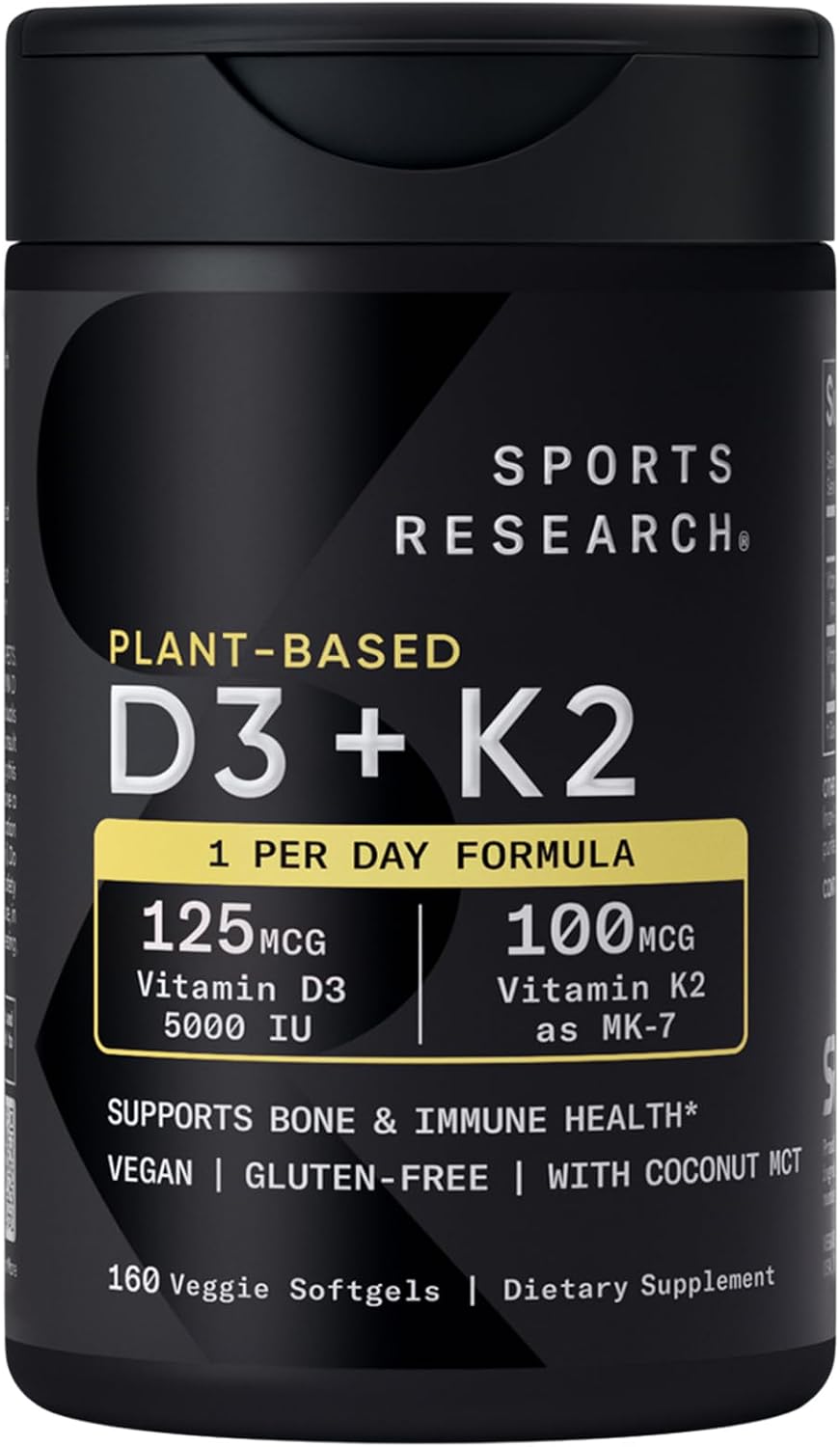
Sports Research Vitamin D3 + K2 (MK-7)
Sports Research Vitamin D3 + K2 (MK-7) — third-party tested. 4.7★ (420 ratings). Confirmed in stock.
- Smaller customer-review base than category best-sellers
Affiliate link: If you buy through this link, we may earn a commission at no extra cost to you.
Buy Sports Research Vitamin D3 + K2 (MK-7)
Pure Encapsulations Vitamin D3 & K2 (120 Capsules)
Pure Encapsulations Vitamin D3 & K2 (120 Capsules) — third-party tested. 4.8★ (4,475 ratings). Confirmed in stock.
- Amazon price and availability can change over time
Affiliate link: If you buy through this link, we may earn a commission at no extra cost to you.
Buy Pure Encapsulations Vitamin D3 & K2 (120 Capsules)
NatureWise Vitamin D3 5000 IU
NatureWise Vitamin D3 5000 IU — third-party tested. 4.7★ (192,761 ratings). Confirmed in stock.
- Amazon price and availability can change over time
Affiliate link: If you buy through this link, we may earn a commission at no extra cost to you.
Buy NatureWise Vitamin D3 5000 IU
Thorne Vitamin D-5000 (D3 5000 IU)
Thorne Vitamin D-5000 (D3 5000 IU) — third-party tested. 4.8★ (9,244 ratings). Confirmed in stock.
- Amazon price and availability can change over time
Affiliate link: If you buy through this link, we may earn a commission at no extra cost to you.
Buy Thorne Vitamin D-5000 (D3 5000 IU)Compare supplements with the same checklist we use.
Get the anti-aging supplement cheat sheet with evidence prompts, safety checks, and label-quality questions before you buy.
Comparison Table
| Category | #1 Sports Research Vitamin D3 + K2 (MK-7) Sports Research | #2 Pure Encapsulations Vitamin D3 & K2 (120 Capsules) Pure Encapsulations | #3 NatureWise Vitamin D3 5000 IU NatureWise | #4 Thorne Vitamin D-5000 (D3 5000 IU) Thorne |
|---|---|---|---|---|
| Score | 9/10 | 9.2/10 | 9/10 | 9.2/10 |
| Best For | ||||
| Pros |
|
|
|
|
| Cons |
|
|
|
|
What to Know About Vitamin D3 for Cardiovascular Health
If you're over 40 and haven't checked your vitamin D level lately, there's a reasonable chance it's lower than it should be. Roughly 40% of American adults have circulating 25(OH)D below 30 ng/mL — the threshold most clinicians consider suboptimal. That number climbs sharply for people living above the 37th parallel, post-menopausal women, and individuals with darker skin tones who synthesize less D from sunlight. Vitamin D3 (cholecalciferol) isn't just a bone nutrient. Its active hormonal form, calcitriol, binds vitamin D receptors found in cardiac muscle cells, vascular smooth muscle, and endothelium — tissues that regulate blood pressure, arterial stiffness, and inflammatory signaling. Research suggests that correcting deficiency may support healthy vascular function, and the cardiometabolic implications of chronically low D status are an increasingly active area of clinical investigation. This guide cuts through the noise. We've evaluated four third-party-tested D3 products specifically through the lens of cardiovascular health: formulation quality, absorption, certifications, and value. We'll also explain the clinical evidence honestly — including what the research does and doesn't show — so you can make an informed decision alongside your healthcare provider.
This content is for educational purposes only and is not medical advice. These statements have not been evaluated by the FDA. This product is not intended to diagnose, treat, cure, or prevent any disease.
Key Benefits of Vitamin D3 for Cardiovascular Health
May support healthy vascular function by activating vitamin D receptors in endothelial and smooth muscle cells, potentially influencing arterial stiffness and blood pressure regulation in deficient individuals
Research suggests D3 supplementation influences cardiometabolic risk markers including parathyroid hormone and aldosterone — hormones directly involved in blood pressure control and fluid balance
Correcting 25(OH)D deficiency (below 20 ng/mL) to optimal levels (40–60 ng/mL) restores normal VDR-mediated gene expression across cardiac, immune, and metabolic tissues, supporting whole-body homeostasis
How Vitamin D3 Supports Cardiovascular Health
Vitamin D3 (cholecalciferol) is a fat-soluble prohormone, not a simple vitamin. After absorption from the gut — a process that depends heavily on the presence of dietary fat — D3 is transported to the liver and hydroxylated to 25-hydroxyvitamin D, the storage form measured in blood tests. The kidneys then perform a second hydroxylation, producing 1,25-dihydroxyvitamin D (calcitriol), the biologically active hormone. Calcitriol binds the vitamin D receptor (VDR), a nuclear receptor expressed in essentially every human cell type, modulating the expression of over 1,000 genes. In the cardiovascular system specifically, VDR activation in vascular smooth muscle cells and cardiomyocytes influences calcium handling, inflammatory cytokine production, and the renin-angiotensin-aldosterone system — the hormonal cascade that regulates blood pressure. Endothelial cells lining blood vessels also express VDR, and calcitriol appears to modulate nitric oxide synthesis and endothelial inflammation. This is why the cardiovascular effects of D3 repletion are plausible at a mechanistic level, and why research in deficient populations tends to show more pronounced effects than studies in already-replete individuals. If your D levels are already at 50 ng/mL, adding more D3 isn't going to move the needle much. But if you're at 18 ng/mL, correction matters.
What to Look For When Buying Vitamin D3
The first question to answer before buying any D3 supplement is: what's your current 25(OH)D level? A simple blood test (often covered by insurance with a physician's order, or available for $30–50 through direct-access labs) will tell you whether you're deficient (<20 ng/mL), insufficient (20–29 ng/mL), or already optimal (40–60 ng/mL). This matters because 5,000 IU/day is appropriate for correcting deficiency but unnecessary — and potentially counterproductive — if you're already replete. Don't supplement blind at high doses. For cardiovascular health specifically, the D3 + K2 combination deserves serious consideration. Vitamin K2 as MK-7 activates matrix Gla-protein (MGP), which inhibits calcium deposition in arterial walls. The theoretical logic is sound: D3 increases calcium absorption from the gut, and K2 helps ensure that calcium ends up in bone rather than arteries. If you choose a D3-only product, add a separate K2-MK7 supplement (typically 100–200 mcg/day). More recent research suggests the combination may influence inflammatory markers and epicardial fat, a cardiac risk tissue — though this area is still developing. Fat-soluble delivery matters more than most people realize. Vitamin D3 is lipophilic — it dissolves in fat, not water. Studies have shown that D3 taken with a fat-containing meal or delivered in an oil-based softgel absorbs significantly better than D3 in a dry powder tablet taken fasted. Every product on this list uses an oil matrix (MCT, olive oil, or extra virgin olive oil), which is a meaningful formulation advantage over cheap tablet-form D3. Finally, think about certification tier relative to your situation. For most healthy adults, a documented third-party testing program is sufficient. If you're a competitive athlete subject to doping controls, Informed Sport (Sports Research) or NSF Certified for Sport (Pure Encapsulations) are non-negotiable. If you have multiple allergies or take several medications, Pure Encapsulations' hypoallergenic formulation reduces the risk of excipient interactions. Match the certification standard to your actual needs rather than defaulting to the most expensive option.
Dosage Guidance
Always follow your healthcare provider's recommendations. Dosages vary by individual health status, age, and goals.
Common Vitamin D3 Complaints (And How to Avoid Them)
Based on analysis of thousands of customer reviews across Vitamin D3 products.
"I took vitamin D3 for months and my doctor said my levels barely moved."
Fat-soluble absorption is heavily context-dependent. D3 taken fasted or in a dry tablet form without dietary fat can have dramatically lower bioavailability. All products here use oil-based softgels — but you also need to take them with your fattiest meal of the day, not with black coffee in the morning. If levels still don't respond, ask your provider about fat malabsorption conditions (celiac disease, Crohn's, exocrine pancreatic insufficiency) that impair D3 uptake, or whether a higher dose is warranted based on your body weight and baseline level.
"Vitamin D supplements give me nausea or upset stomach."
GI discomfort from D3 is most commonly linked to taking it on an empty stomach. Every product on this list is oil-based, which helps — but always take these softgels with a meal containing at least some fat. If nausea persists, try splitting the dose (e.g., 2,500 IU twice daily rather than 5,000 IU once) or switching to a lower-dose formula. Persistent GI symptoms at normal doses warrant a conversation with your provider, as nausea can occasionally signal hypercalcemia at higher intake levels.
"I don't want to take two separate pills — why can't one product do everything?"
Sports Research D3 5000 IU + K2 MK-7 is the closest thing to a single-pill cardiovascular D solution on this list. It combines D3 and K2 MK-7 in one softgel, delivered in organic MCT oil. The trade-off is that the K2 dose (100 mcg) is on the lower end of what some practitioners recommend — but for most adults not already taking K2, it's a meaningful and convenient upgrade over D3 alone. If you want higher K2 (180+ mcg), you'll still need a separate product regardless of which D3 you choose.
Safety & Interactions
- Pregnancy and breastfeeding: Consult your healthcare provider before taking this supplement during pregnancy or while nursing. The safety of supplemental doses beyond dietary intake has not been established in pregnant or lactating women.
- Blood thinners: If you take blood-thinning medications (e.g., warfarin, apixaban, rivaroxaban, clopidogrel, or high-dose aspirin), consult your healthcare provider BEFORE starting this supplement, as it may have additive antiplatelet or anticoagulant effects.
- Kidney disease: If you have chronic kidney disease (CKD) or any significant kidney impairment, consult your healthcare provider before taking this supplement. Some supplements can accumulate to dangerous levels when kidney function is reduced.
- Gout: Individuals with gout should consult their healthcare provider before starting this supplement. Certain supplements (e.g., collagen, fish oil, niacin) may affect uric acid levels or trigger flares in susceptible individuals.
- Fish allergy - capsule source: Some softgel capsules use fish-derived gelatin even when the active supplement is not fish-derived. If you have a confirmed fish or shellfish allergy, verify the capsule source on the label or check with the manufacturer. Vegan capsules (vegetable cellulose) are widely available alternatives.
- Beef / alpha-gal allergy - capsule source: Many softgel and two-piece capsules use bovine gelatin. If you have a confirmed beef allergy or alpha-gal syndrome (mammalian meat allergy), check capsule sources on the label. Vegan capsules (vegetable cellulose) and HPMC capsules are alternatives.
- Blood pressure medications: This supplement may have an additive blood-pressure-lowering effect when taken with antihypertensives including beta-blockers (metoprolol, atenolol), ACE inhibitors (lisinopril), ARBs (losartan), and calcium channel blockers (amlodipine). If you take any blood pressure medication, monitor your readings for the first 4–6 weeks after starting and inform your prescribing physician.
- Important: This supplement is not a replacement for prescription medications. It is supportive for individuals with low baseline status, not a treatment for diagnosed conditions (anxiety disorders, insomnia, hypertension, osteoporosis, etc.). Do not stop or reduce any prescription without consulting your doctor.
""From a registered dietitian's perspective, the most important step before adding any high-dose D3 supplement is getting a baseline 25(OH)D blood test — supplementing blindly at 5,000 IU when you're already replete wastes money and carries a small but real risk of overcorrection. I'd also emphasize that vitamin D3 works best as one component of a cardiovascular wellness strategy that includes dietary quality, physical activity, stress management, and regular clinical monitoring — not as a standalone intervention."
— Angelique Nicole R. Villegas, RND, Registered Nutritionist Dietitian · PRC Philippines · License #0023950
Frequently Asked Questions
Citations & Research
This page references peer-reviewed research indexed on PubMed/NCBI. Citations are provided for transparency. Always consult a qualified healthcare professional before making any medical decisions.
- [1]Yin WJ, Wang P, Ma SS et al. “Vitamin D supplementation for cardiometabolic risk markers in pregnant women based on the gestational diabetes mellitus or obesity status: a randomized clinical trial.” European journal of nutrition, 2024. doi:10.1007/s00394-024-03443-6PMID 38878202 ↗
- [3]Bislev LS, Langagergaard Rødbro L, Bech JN et al. “The effect of vitamin D3 supplementation on markers of cardiovascular health in hyperparathyroid, vitamin D insufficient women: a randomized placebo-controlled trial.” Endocrine, 2018. doi:10.1007/s12020-018-1659-4PMID 30043092 ↗
- [4]Rajakumar K, Moore CG, Khalid AT et al. “Effect of vitamin D3 supplementation on vascular and metabolic health of vitamin D-deficient overweight and obese children: a randomized clinical trial.” The American journal of clinical nutrition, 2020. doi:10.1093/ajcn/nqz340PMID 31950134 ↗
- [5]Bislev LS, Langagergaard Rødbro L, Nørgaard Bech J et al. “Effects of treatment with an angiotensin 2 receptor blocker and/or vitamin D3 on parathyroid hormone and aldosterone: A randomized, placebo-controlled trial.” Clinical endocrinology, 2018. doi:10.1111/cen.13734PMID 29733445 ↗
Ready to Try Vitamin D3?
Our top pick for cardiovascular health. Third-party tested, highly reviewed.
Affiliate link: If you buy through this link, we may earn a commission at no extra cost to you.
Shop #1 Pick — Sports Research Vitamin D3 + K2 (MK-7)Continue exploring
- our Vitamin D3 guideSupplement overview
- top-rated cardiovascular health supplementsGoal overview
- CoQ10 — an option to consider for cardiovascular healthAlternative supplement
- where Fish Oil fits for cardiovascular healthAlternative supplement
- our Vitamin D3 guide for blood pressure supportSame supplement, different goal
- Vitamin D3 — an option to consider for bone healthEditor pick
- Vitamin D3 research for immune healthEditor pick
- Vitamin D3 — an option to consider for mood supportEditor pick
- vitamin d3 vs vitamin d2 comparedCompare options
Get the evidence-graded supplement cheat sheet.
Evidence prompts, safety checks, and label-quality questions before you buy — free, straight to your inbox.
No spam. Unsubscribe anytime.