
Best Protein Powders for Muscle Preservation While Losing Weight in 2026
Science-ranked protein powders for lean muscle support. Compares whey vs plant protein by quality score and leucine content.
This content is for educational purposes only and is not medical advice. These statements have not been evaluated by the FDA. This product is not intended to diagnose, treat, cure, or prevent any disease. Always consult your healthcare provider before starting any supplement.
Best Protein Powder for Muscle Preservation in 2026
Ranked by quality, value, and clinical backing
Where available, we show when each product price was last checked so the list stays honest without overreacting to normal Amazon price movement.

Optimum Nutrition Gold Standard 100% Whey Protein
The category benchmark — 97,000+ reviews, Informed Choice certified, and the highest leucine content per gram of protein of any common source, making it the most scientifically supported choice for muscle protein synthesis.
- Contains dairy — not suitable for lactose-intolerant or vegan users
- 5 lb container requires a large upfront commitment to a single flavor
Affiliate link: If you buy through this link, we may earn a commission at no extra cost to you.
Buy Optimum Nutrition Gold Standard 100% Whey Protein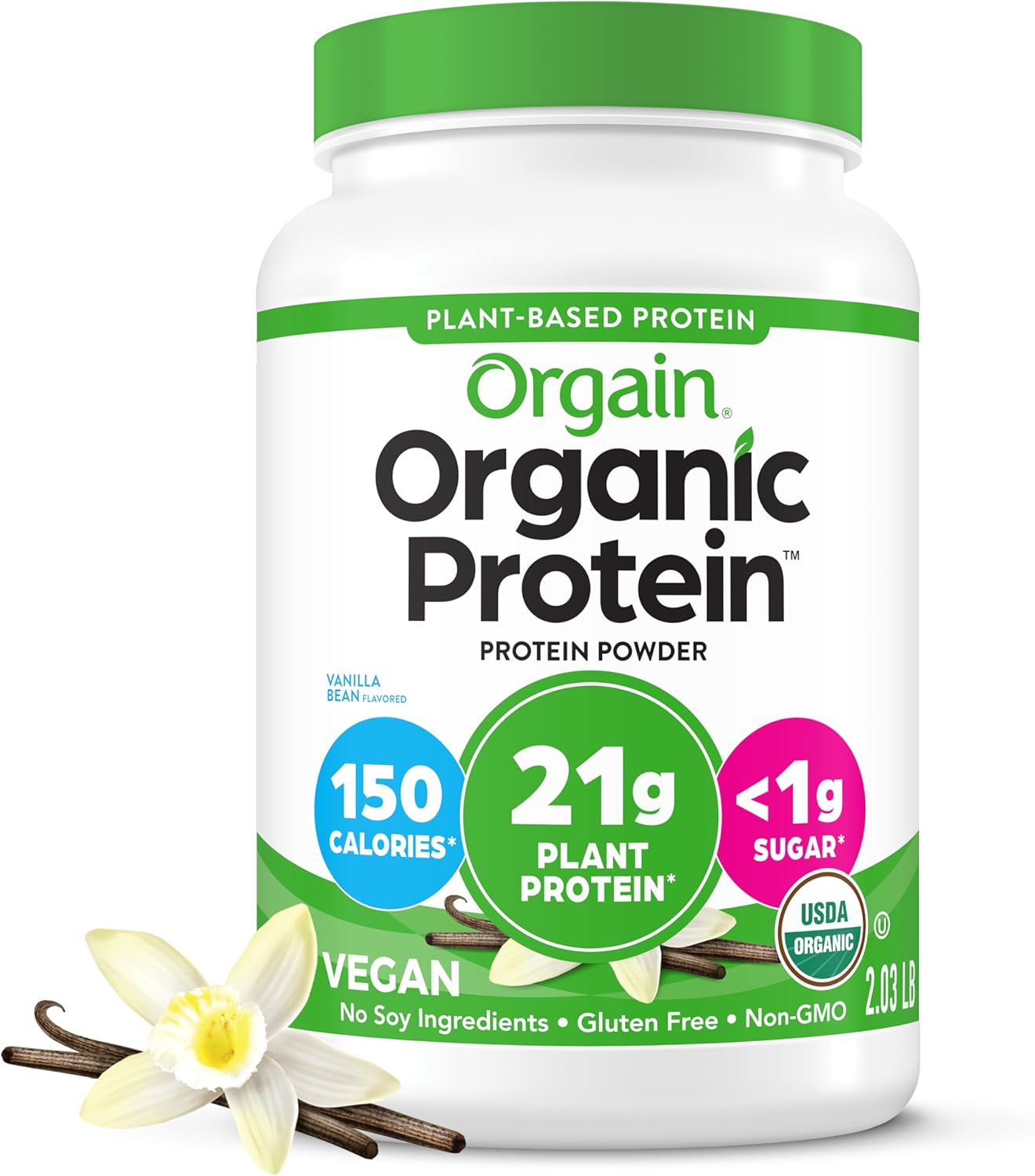
Orgain Organic Vegan Protein Powder
The best plant-based option — USDA Organic certified with 61,000+ reviews, making it the most validated vegan protein for users who can't or won't use dairy-based whey.
- Lower leucine content per gram than whey — requires higher total protein intake for equivalent muscle protein synthesis stimulus
- 21g protein per serving vs 24g for ON whey — slightly lower per-serving yield
Affiliate link: If you buy through this link, we may earn a commission at no extra cost to you.
Buy Orgain Organic Vegan Protein Powder
Garden of Life SPORT Grass Fed Whey Protein
The premium certified pick — NSF Certified for Sport and B Corp certified with supercritical CO2 extraction, ideal for those who want the highest ethical and testing standards regardless of cost.
- Lower review count (1,601) provides less community validation than the other two options
Affiliate link: If you buy through this link, we may earn a commission at no extra cost to you.
Buy Garden of Life SPORT Grass Fed Whey ProteinCompare supplements with the same checklist we use.
Get the anti-aging supplement cheat sheet with evidence prompts, safety checks, and label-quality questions before you buy.
Comparison Table
| Category | #1 Optimum Nutrition Gold Standard 100% Whey Protein Optimum Nutrition | #2 Orgain Organic Vegan Protein Powder Orgain | #3 Garden of Life SPORT Grass Fed Whey Protein Garden of Life |
|---|---|---|---|
| Score | 9.2/10 | 8.6/10 | 8.1/10 |
| Best For | Most omnivorous adults 40+ who want the most scientifically supported protein for muscle preservation at a reasonable cost | Vegan, lactose-intolerant, or dairy-avoiding adults who want a heavily reviewed, organic plant protein | Competitive athletes needing sport certification documentation, or ethical consumers who prioritize grass-fed sourcing and B Corp standards |
| Pros |
|
|
|
| Cons |
|
|
|
What to Know About Protein Powder for Muscle Preservation
Protein is not just a fitness supplement — it's the primary dietary determinant of whether you lose fat or fat-and-muscle during caloric restriction. The difference matters enormously for long-term metabolic health, physical function, and body composition. For adults using GLP-1 medications (which dramatically reduce appetite and thus food intake), and for women over 50 (who are already losing muscle at 1–2% per year due to hormonal changes), getting adequate protein becomes harder and more important simultaneously. Not all protein supplements are created equal for this purpose. The variables that determine muscle-preservation efficacy — protein quality score (PDCAAS/DIAAS), leucine content, total amino acid completeness — vary significantly between whey isolate and plant proteins. This guide ranks three protein supplements specifically by these variables, with an explicit focus on weight-management context rather than athletic performance.
This content is for educational purposes only and is not medical advice. These statements have not been evaluated by the FDA. This product is not intended to diagnose, treat, cure, or prevent any disease.
Key Benefits of Protein Powder for Muscle Preservation
How Protein Powder Supports Muscle Preservation
What to Look For When Buying Protein Powder
Dosage Guidance
Always follow your healthcare provider's recommendations. Dosages vary by individual health status, age, and goals.
Common Protein Powder Complaints (And How to Avoid Them)
Based on analysis of thousands of customer reviews across Protein Powder products.
"GLP-1 users find even protein shakes hard to finish — try smaller portions (half scoop) with cold water or a smoothie format"
Please consult our full guide for detailed guidance on this concern.
"Plant protein gritty texture — blend with frozen fruit and plant milk for best results"
Please consult our full guide for detailed guidance on this concern.
"Cost of daily use — large containers (5 lb) significantly reduce per-serving cost"
Please consult our full guide for detailed guidance on this concern.
Safety & Interactions
- Pregnancy and breastfeeding: Consult your healthcare provider before taking this supplement during pregnancy or while nursing. The safety of supplemental doses beyond dietary intake has not been established in pregnant or lactating women.
- Blood thinners: If you take blood-thinning medications (e.g., warfarin, apixaban, rivaroxaban, clopidogrel, or high-dose aspirin), consult your healthcare provider BEFORE starting this supplement, as it may have additive antiplatelet or anticoagulant effects.
- Kidney disease: If you have chronic kidney disease (CKD) or any significant kidney impairment, consult your healthcare provider before taking this supplement. Some supplements can accumulate to dangerous levels when kidney function is reduced.
- Gout: Individuals with gout should consult their healthcare provider before starting this supplement. Certain supplements (e.g., collagen, fish oil, niacin) may affect uric acid levels or trigger flares in susceptible individuals.
- Fish allergy - capsule source: Some softgel capsules use fish-derived gelatin even when the active supplement is not fish-derived. If you have a confirmed fish or shellfish allergy, verify the capsule source on the label or check with the manufacturer. Vegan capsules (vegetable cellulose) are widely available alternatives.
- Beef / alpha-gal allergy - capsule source: Many softgel and two-piece capsules use bovine gelatin. If you have a confirmed beef allergy or alpha-gal syndrome (mammalian meat allergy), check capsule sources on the label. Vegan capsules (vegetable cellulose) and HPMC capsules are alternatives.
- NSF certification for competitive athletes: If you are a competitive athlete subject to drug testing, confirm your chosen product is NSF Certified for Sport or Informed Sport — only those marks test for banned substances. Not every product in our rankings carries these certifications.
- Important: This supplement is not a replacement for prescription medications. It is supportive for individuals with low baseline status, not a treatment for diagnosed conditions (anxiety disorders, insomnia, hypertension, osteoporosis, etc.). Do not stop or reduce any prescription without consulting your doctor.
""Protein is the highest-leverage nutritional intervention for muscle preservation during weight loss — far more important than any individual supplement. Getting protein right (quantity, quality, and timing) should be the foundation before adding anything else. For adults on GLP-1 medications specifically, the dramatically reduced appetite creates a real protein deficiency risk that can undermine the entire goal of healthy weight loss. Protein powder is not a luxury here — it is a practical delivery mechanism for hitting targets that food volume alone cannot reach."
— Angelique Nicole R. Villegas, RND, Registered Nutritionist Dietitian · PRC Philippines · License #0023950
Frequently Asked Questions
Citations & Research
This page references peer-reviewed research indexed on PubMed/NCBI. Citations are provided for transparency. Always consult a qualified healthcare professional before making any medical decisions.
- [1]Morton RW, et al. A systematic review, meta-analysis and meta-regression of the effect of protein supplementation on resistance training-induced gains in muscle mass and strength in healthy adults. Br J Sports Med. 2018;52(6):376-384.PMID 28698222 ↗
- [2]Pasiakos SM, et al. Effects of high-protein diets on fat-free mass and muscle protein synthesis following weight loss. FASEB J. 2013;27(9):3837-47.PMID 23739654 ↗
- [3]Bauer J, et al. Evidence-based recommendations for optimal dietary protein intake in older people: a position paper from the PROT-AGE Study Group. J Am Med Dir Assoc. 2013;14(8):542-59.PMID 23867520 ↗
- [4]Morton RW, Murphy KT, McKellar SR et al. A systematic review, meta-analysis and meta-regression of the effect of protein supplementation on resistance training-induced gains in muscle mass and strength in healthy adults. British journal of sports medicine. 2018;52(6):376-384.PMID 28698222 ↗
- [5]Pasiakos SM, Lieberman HR, McLellan TM. Effects of protein supplements on muscle damage, soreness and recovery of muscle function and physical performance: a systematic review. Sports medicine (Auckland, N.Z.). 2014;44(5):655-70.PMID 24435468 ↗
Ready to Try Protein Powder?
Our top pick for muscle preservation. Third-party tested, highly reviewed.
Affiliate link: If you buy through this link, we may earn a commission at no extra cost to you.
Shop #1 Pick — Optimum Nutrition Gold Standard 100% Whey ProteinContinue exploring
- everything we know about Protein SupplementSupplement overview
- best supplements for muscle preservationGoal overview
- evidence notes on Creatine for muscle preservationAlternative supplement
- Protein Supplement — an option to consider for glp 1 muscle loss preventionSame supplement, different goal
- Collagen research for bone healthEditor pick
- whey protein vs plant protein: our verdictCompare options
Get the evidence-graded supplement cheat sheet.
Evidence prompts, safety checks, and label-quality questions before you buy — free, straight to your inbox.
No spam. Unsubscribe anytime.