
Best Protein Supplement for GLP-1 Muscle Loss (Ozempic / Mounjaro 2026)
Best protein supplements for muscle preservation on Ozempic and Wegovy — leucine-rich whey and plant options reviewed for GLP-1 users in 2026.
This content is for educational purposes only and is not medical advice. These statements have not been evaluated by the FDA. This product is not intended to diagnose, treat, cure, or prevent any disease. Always consult your healthcare provider before starting any supplement.
Best Protein Supplement for GLP-1 Muscle Loss Prevention in 2026
Ranked by quality, value, and clinical backing
Where available, we show when each product price was last checked so the list stays honest without overreacting to normal Amazon price movement.

Optimum Nutrition Gold Standard 100% Whey Protein
Optimum Nutrition Gold Standard Whey — the most established protein powder on the market. 4.6★ (97,000+ ratings). Best leucine content and mixability.
- Contains lactose (whey concentrate blend) — may cause GI discomfort in lactose-sensitive users; choose whey isolate variant for lactose intolerance
- Higher per-serving cost than some competitors at the 5lb size
- Amazon price and availability can change over time
Affiliate link: If you buy through this link, we may earn a commission at no extra cost to you.
Buy Optimum Nutrition Gold Standard 100% Whey Protein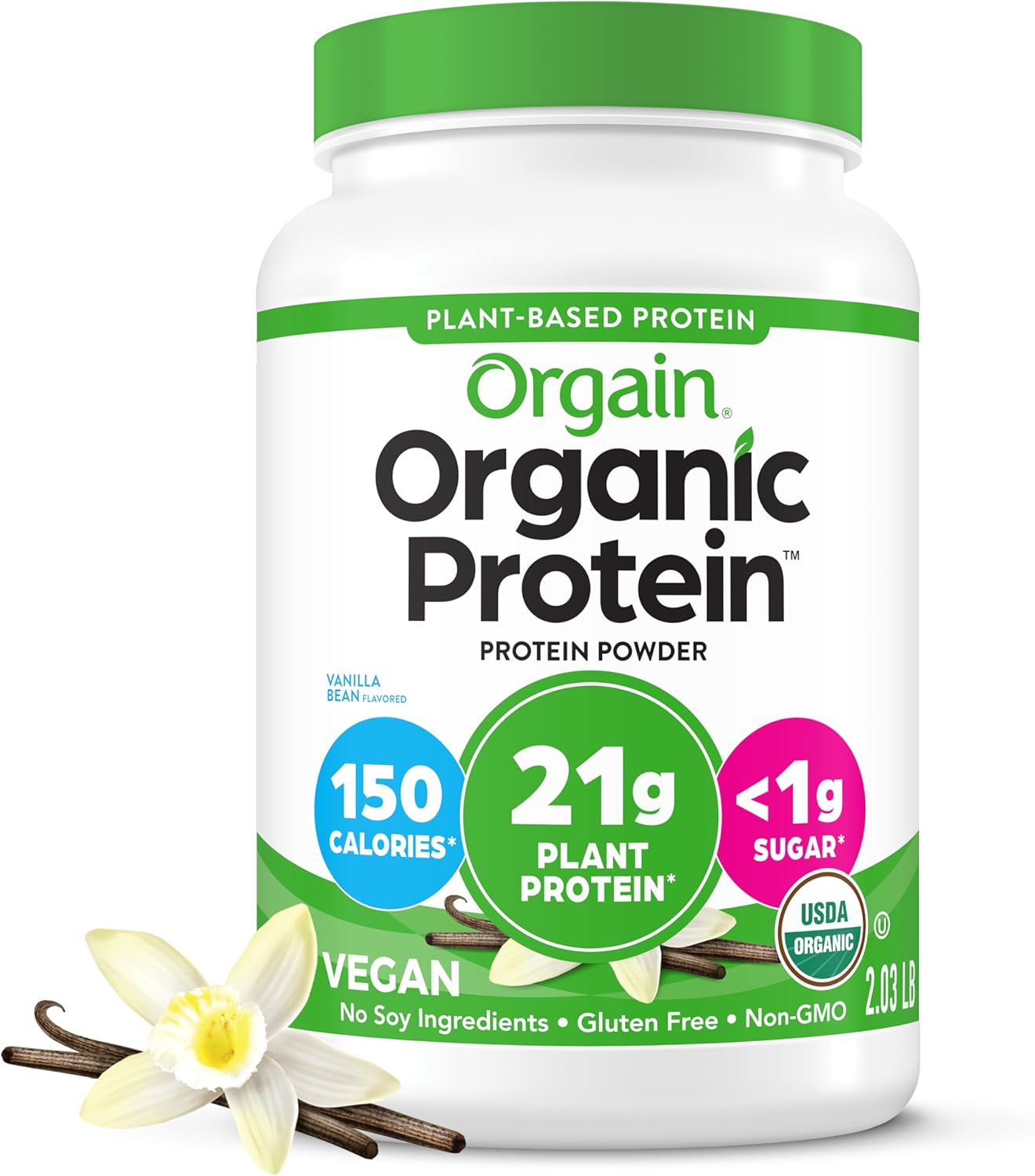
Orgain Organic Vegan Protein Powder
Orgain Organic Vegan Protein — plant-based pea + rice blend for dairy-free GLP-1 users. 4.5★ (61,000+ ratings).
- Pea + rice blends typically provide slightly lower leucine per gram of protein than whey — may require a slightly larger serving to hit the leucine threshold
- Some users note a distinct plant-protein flavour/texture
- Amazon price and availability can change over time
Affiliate link: If you buy through this link, we may earn a commission at no extra cost to you.
Buy Orgain Organic Vegan Protein Powder
Garden of Life SPORT Grass Fed Whey Protein
Garden of Life SPORT Grass Fed Whey — NSF Certified for Sport, third-party tested for athletes and medically monitored populations. 4.4★ (1,600+ ratings).
- Significantly higher per-serving cost than ON Gold Standard for the same protein dose
- Lower review volume (1,600+) vs. the other options in this selection
- NSF certification premium is unnecessary for most non-competitive users
- Amazon price and availability can change over time
Affiliate link: If you buy through this link, we may earn a commission at no extra cost to you.
Buy Garden of Life SPORT Grass Fed Whey ProteinCompare supplements with the same checklist we use.
Get the anti-aging supplement cheat sheet with evidence prompts, safety checks, and label-quality questions before you buy.
Comparison Table
| Category | #1 Optimum Nutrition Gold Standard 100% Whey Protein Optimum Nutrition | #2 Orgain Organic Vegan Protein Powder Orgain | #3 Garden of Life SPORT Grass Fed Whey Protein Garden of Life |
|---|---|---|---|
| Score | 9.2/10 | 8.8/10 | 8.5/10 |
| Best For | Most GLP-1 users who can tolerate dairy and want the most proven, widely used whey protein with the highest review dataset | GLP-1 users who are dairy-free, lactose intolerant, or vegan and want a plant-based protein with the highest review volume in this category | GLP-1 users in clinical or sports contexts who require the highest testing standard, or those who specifically prioritise grass-fed sourcing |
| Pros |
|
|
|
| Cons |
|
|
|
What to Know About Protein Supplement for GLP-1 Muscle Loss Prevention
Of all the supplements relevant to GLP-1 users concerned about muscle loss, protein supplementation may be the most fundamental — because without adequate protein intake, no other intervention can fully protect lean mass during caloric restriction. Here's the problem in plain terms: GLP-1 receptor agonists like semaglutide and tirzepatide work by powerfully suppressing appetite. That reduced food intake is what produces the weight loss. But the same appetite suppression that reduces caloric intake also reduces protein intake — and when protein falls below what muscles need to maintain their mass, the body is forced to draw on muscle tissue as an amino acid source. Clinical trials with semaglutide and tirzepatide have consistently shown that 25–40% of the total weight lost on these medications comes from lean mass rather than fat. This is not inevitable — but preventing it requires deliberate, proactive protein intake. The challenge is that GLP-1 users often simply cannot eat enough protein-rich food. A 4-ounce chicken breast, a full serving of Greek yogurt, a large portion of legumes — these represent significant food volumes that feel impossible to finish when GLP-1 medications have reduced hunger to a fraction of its baseline level. Protein powder supplements solve this problem by delivering 20–30g of high-quality protein per serving in a small liquid volume that can be consumed even when solid food feels overwhelming. This page is distinct from our creatine GLP-1 muscle loss page in an important way: creatine addresses the energy side of muscle preservation — supporting the phosphocreatine system to improve training capacity. Protein supplementation addresses the substrate side — providing the amino acids, particularly leucine, that trigger and sustain muscle protein synthesis. Both are useful; protein is the more fundamental of the two.
This content is for educational purposes only and is not medical advice. These statements have not been evaluated by the FDA. This product is not intended to diagnose, treat, cure, or prevent any disease.
Key Benefits of Protein Supplement for GLP-1 Muscle Loss Prevention
Provides the leucine-rich amino acid substrate required to trigger muscle protein synthesis — the most fundamental nutritional input for lean mass preservation during caloric restriction on GLP-1 therapy
Solves the practical problem of GLP-1-induced appetite suppression making adequate dietary protein intake impractical: 25–30g of protein per serving in a small-volume liquid format that can be consumed even when food volume is severely limited
Supported by the most direct GLP-1-specific evidence in the cluster, including the 2026 LEAN-PREP study protocol (PMID 42020128) and a 2026 systematic review of whey protein in obesity weight-loss interventions (PMID 41754212)
How Protein Supplement Supports GLP-1 Muscle Loss Prevention
Muscle protein is in a continuous state of turnover — synthesis (building new protein) and breakdown (degrading existing protein) are ongoing simultaneously. Net muscle mass is determined by the balance between these two processes: when synthesis exceeds breakdown, muscle grows; when breakdown exceeds synthesis, muscle is lost. During caloric restriction on GLP-1 therapy, the energy deficit signals the body to increase muscle protein breakdown as an alternative fuel source, and reduced food intake limits the amino acid substrate available for synthesis. Protein supplementation addresses the substrate supply side of this equation. The key mechanism is leucine-mTORC1 signalling: leucine, a branch-chain amino acid present in high concentrations in whey protein and high-quality plant proteins, activates the mammalian target of rapamycin complex 1 (mTORC1), which is the primary nutrient-sensing pathway that controls the rate of muscle protein synthesis. When leucine is present above a threshold level — approximately 2–3g per serving — mTORC1 is robustly activated and muscle protein synthesis is maximally stimulated. Below this threshold, the anabolic stimulus is subthreshold regardless of overall caloric intake. GLP-1 users face a specific challenge: even when they eat protein-containing foods, the small volumes they can comfortably eat on GLP-1 therapy may not deliver the leucine threshold required for maximal MPS per meal. A half-portion of chicken breast eaten because a full serving felt impossible delivers approximately 15g protein and ~1.2g leucine — likely below the mTORC1 activation threshold. A protein supplement shake delivering 25g protein and ~2.5g leucine consumed as a liquid after a small meal can fill this gap in a format that requires minimal stomach volume and can be sipped slowly. The total daily protein target matters as much as the per-meal stimulus. Current evidence for muscle preservation during caloric restriction generally recommends 1.2–2.2g protein per kg of body weight per day. For a 90kg GLP-1 user targeting 1.6g/kg, that's 144g protein daily — a target that may require 2–3 protein supplement servings on days when appetite suppression severely limits food intake.
When protein intake is maximized, creatine for GLP-1 muscle loss complements it by addressing the energy side — the phosphocreatine system that supports training intensity under caloric restriction.
For the full picture of which supplements are most relevant during GLP-1 therapy across muscle, hair, digestion, and bone health, the GLP-1 supplement guide provides the complete overview.
What to Look For When Buying Protein Supplement
Protein supplement buying for GLP-1 muscle loss comes down to three decisions: animal vs. plant, dose sufficiency, and palatability under nausea. **Animal vs. plant protein: both work, with a nuance.** Whey protein (from dairy) has the highest leucine content of any common protein source — approximately 10–11% of amino acids are leucine, meaning a 25g whey serving provides ~2.5–2.75g leucine, comfortably above the ~2–3g leucine threshold for maximal mTORC1 activation. Plant proteins, particularly pea protein, have slightly lower leucine concentration (~7–8%), but a blend of pea and rice protein achieves a complete amino acid profile and at 25–30g total protein can still reach the leucine threshold. If you can tolerate dairy, whey provides the most leucine per gram; if you cannot, a quality pea + rice blend (like Orgain) is an effective alternative. **Dose: aim for 25–30g protein per serving.** Research consistently shows that individual servings of approximately 20–40g protein maximally stimulate muscle protein synthesis in adults. Single servings under 20g may not reliably achieve the leucine threshold for MPS. Spreading protein across 3–4 servings per day (rather than two large servings) appears to be more effective for muscle preservation than front- or back-loading protein into fewer, larger meals. **Palatability under GLP-1 nausea.** This is underappreciated: many GLP-1 users who are nauseous find that thick, highly sweetened, or strongly flavoured protein shakes worsen nausea. For nauseated users, unflavoured protein powder mixed into a small amount of milk, water, or yogurt — or blended into a smoothie with ice — is often more tolerable than a full-strength flavoured shake. The Optimum Nutrition unflavoured variant and plant proteins with lighter flavour profiles (Orgain chocolate tends to be less intense than ON Double Rich Chocolate) are worth considering for users with persistent nausea. **Timing: distribute across the day rather than concentrating at one meal.** Because GLP-1 users often eat smaller and less frequent meals, the risk is eating most protein at one sitting and falling short at others. A protein supplement taken as a between-meal addition — not a meal replacement — helps fill the gaps in a way that doesn't compete with the small meals GLP-1 users can comfortably eat.
Dosage Guidance
Always follow your healthcare provider's recommendations. Dosages vary by individual health status, age, and goals.
Common Protein Supplement Complaints (And How to Avoid Them)
Based on analysis of thousands of customer reviews across Protein Supplement products.
"Protein shakes make me more nauseous on GLP-1 medications"
GLP-1-induced nausea is often worsened by concentrated, sweet, or strongly flavoured liquids taken quickly. Try the following: switch to unflavoured protein powder mixed in cold water with a small amount of ice; sip very slowly over 15–30 minutes rather than drinking in one sitting; try a plant-based protein with a lighter flavour profile; and avoid protein supplements that contain sugar alcohols (sorbitol, xylitol) or high amounts of artificial sweetener, which can worsen GI symptoms. Consuming protein supplements with a very small amount of food (not on a completely empty stomach) may also help.
"I already take creatine — do I also need protein powder?"
Yes — these serve completely different functions. Creatine supports the phosphocreatine energy system and training capacity. Protein provides the amino acid raw material that muscle cells use to build new protein. Without adequate protein, muscles cannot maintain their mass regardless of how well the energy system is supported by creatine. If you can only choose one, protein is the more fundamental intervention. If you can combine both — as the 2026 LEAN-PREP study is investigating — the evidence strongly supports this as the optimal approach.
"I'm not exercising — will protein supplements still help?"
Protein remains important even without exercise, because muscle protein breakdown (from the caloric deficit of GLP-1 therapy) occurs regardless of activity level. Adequate protein intake helps offset breakdown even in sedentary users. That said, resistance exercise — even 2 sessions per week of basic strength training — dramatically amplifies protein's muscle-preserving effect by providing the anabolic signal that tells muscle to maintain or increase protein synthesis. If possible, even light resistance training (bodyweight exercises, resistance bands) paired with protein supplementation is more effective than protein alone.
Safety & Interactions
- Pregnancy and breastfeeding: Consult your healthcare provider before taking this supplement during pregnancy or while nursing. The safety of supplemental doses beyond dietary intake has not been established in pregnant or lactating women.
- Blood thinners: If you take blood-thinning medications (e.g., warfarin, apixaban, rivaroxaban, clopidogrel, or high-dose aspirin), consult your healthcare provider BEFORE starting this supplement, as it may have additive antiplatelet or anticoagulant effects.
- Kidney disease: If you have chronic kidney disease (CKD) or any significant kidney impairment, consult your healthcare provider before taking this supplement. Some supplements can accumulate to dangerous levels when kidney function is reduced.
- Gout: Individuals with gout should consult their healthcare provider before starting this supplement. Certain supplements (e.g., collagen, fish oil, niacin) may affect uric acid levels or trigger flares in susceptible individuals.
""Protein adequacy is the single most important nutritional intervention for preventing muscle loss in GLP-1 users — more important than any other supplement on this page. The challenge is not knowledge but practicality: most of my patients on semaglutide or tirzepatide simply cannot eat enough protein-rich food when appetite is profoundly suppressed. Protein supplements in liquid form are often the only viable way to meet targets. I recommend starting with one additional serving per day above dietary intake and tracking total daily protein using a simple app — many patients are surprised how far short they fall on high-restriction days."
Frequently Asked Questions
Citations & Research
This page references peer-reviewed research indexed on PubMed/NCBI. Citations are provided for transparency. Always consult a qualified healthcare professional before making any medical decisions.
- [1]Alawadhi AA, Alroudhan D, Alsaeed DJ et al. “LEAN mass Preservation with Resistance Exercise and Protein during semaglutide and tirzepatide therapy (LEAN-PREP study).” BMJ open, 2026. Clinical trial protocol (2026). doi:10.1136/bmjopen-2026-116911PMID 42020128 ↗
- [2]López-Gómez JJ, Ramos-Bachiller B, Rico-Bargues D et al. “Effectiveness of Whey Protein Supplementation in Weight Loss Interventions for Patients with Obesity: A Systematic Review.” Nutrients, 2026. Systematic review of weight loss interventions. doi:10.3390/nu18040695PMID 41754212 ↗
- [3]Zambrano-Villacres R, Campuzano-Donoso M, Reytor-González C et al. “Nutrition-First Support for GLP-1 and Dual Incretin Therapy in Obesity: A Practical Framework for Dietary Management, Supplementation, and Metabolic Monitoring.” Nutrients, 2026. Expert framework / clinical review. doi:10.3390/nu18111751PMID 42280393 ↗
- [4]Janssen TAH, Van Every DW, Phillips SM. “The impact and utility of very low-calorie diets: the role of exercise and protein in preserving skeletal muscle mass.” Current opinion in clinical nutrition and metabolic care, 2023. Narrative review of VLCD literature. doi:10.1097/MCO.0000000000000980PMID 37724991 ↗
- [5]Parr EB, Coffey VG, Hawley JA. “'Sarcobesity': a metabolic conundrum.” Maturitas, 2013. Conceptual review / metabolic framework. doi:10.1016/j.maturitas.2012.10.014PMID 23201324 ↗
Ready to Try Protein Supplement?
Our top pick for glp-1 muscle loss prevention. Third-party tested, highly reviewed.
Affiliate link: If you buy through this link, we may earn a commission at no extra cost to you.
Shop #1 Pick — Optimum Nutrition Gold Standard 100% Whey ProteinContinue exploring
- how we evaluate Protein SupplementSupplement overview
- see all glp 1 muscle loss prevention supplements we coverGoal overview
- Creatine evidence for glp 1 muscle loss preventionAlternative supplement
- our Magnesium guide for glp 1 muscle loss preventionAlternative supplement
- Protein Supplement for menopause supportSame supplement, different goal
- clinical notes on Protein Supplement and muscle preservationEditor pick
- best Electrolytes for glp 1 hydration & electrolyte balanceEditor pick
- see our Omega 3 picks for glp 1 inflammation supportEditor pick
Get the evidence-graded supplement cheat sheet.
Evidence prompts, safety checks, and label-quality questions before you buy — free, straight to your inbox.
No spam. Unsubscribe anytime.