
Best Creatine for GLP-1 Muscle Loss Prevention (2026 Reviewed)
Struggling with muscle loss on GLP-1 medications? We reviewed the best creatine supplements backed by clinical evidence to help you preserve lean mass in 2026.

This content is for educational purposes only and is not medical advice. These statements have not been evaluated by the FDA. This product is not intended to diagnose, treat, cure, or prevent any disease. Always consult your healthcare provider before starting any supplement.
Best Creatine for GLP-1 Muscle Loss Prevention in 2026
Ranked by quality, value, and clinical backing
Where available, we show when each product price was last checked so the list stays honest without overreacting to normal Amazon price movement.

Optimum Nutrition Micronized Creatine Monohydrate Powder
Optimum Nutrition Micronized Creatine Monohydrate Powder — third-party tested. 4.6★ (103,448 ratings). Confirmed in stock.
- Amazon price and availability can change over time
Affiliate link: If you buy through this link, we may earn a commission at no extra cost to you.
Buy Optimum Nutrition Micronized Creatine Monohydrate Powder
Thorne Creatine
Thorne Creatine — third-party tested. 4.7★ (16,425 ratings). Confirmed in stock.
- Amazon price and availability can change over time
Affiliate link: If you buy through this link, we may earn a commission at no extra cost to you.
Buy Thorne Creatine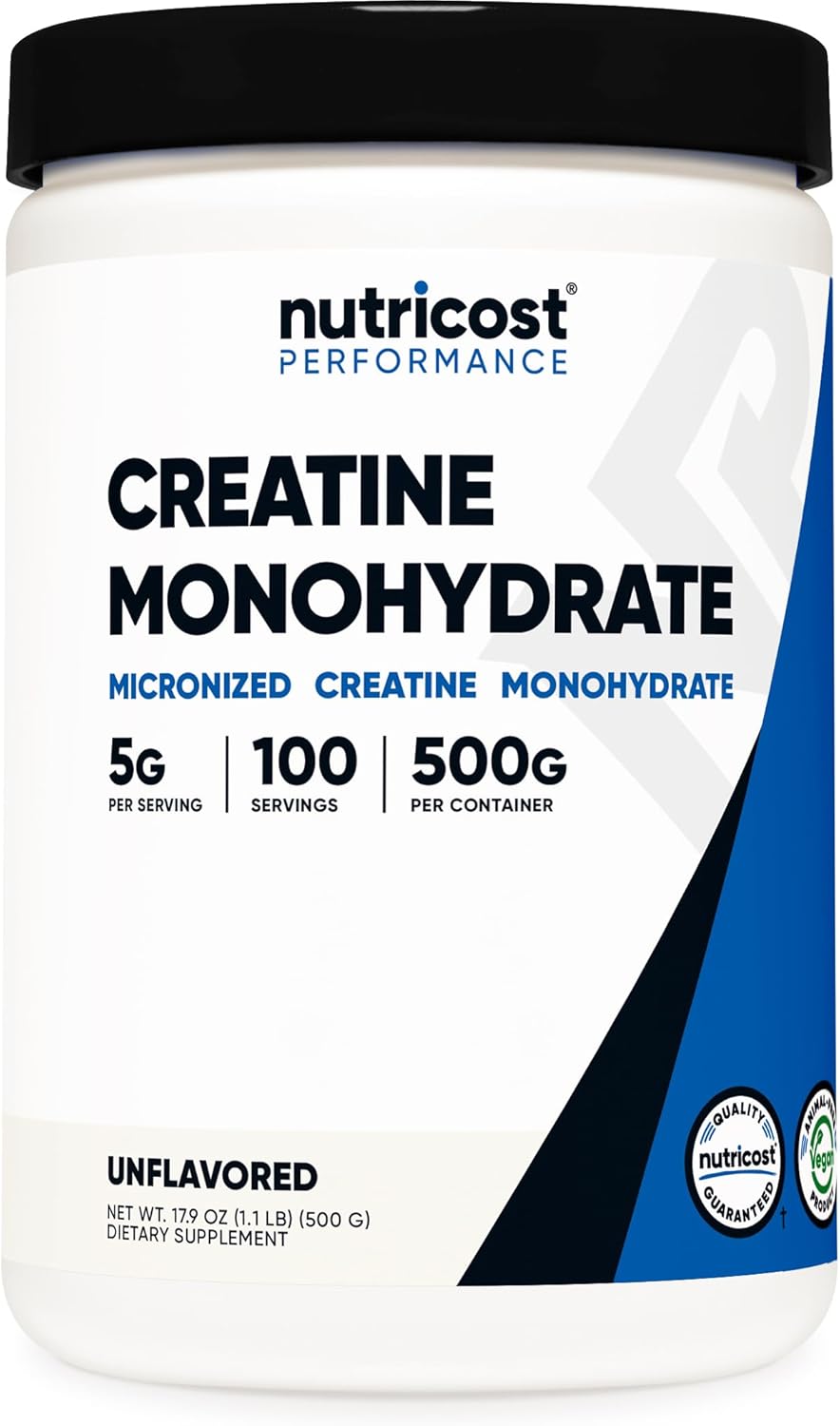
Nutricost Creatine Monohydrate
Nutricost Creatine Monohydrate — third-party tested. 4.7★ (57,241 ratings). Confirmed in stock.
- Amazon price and availability can change over time
Affiliate link: If you buy through this link, we may earn a commission at no extra cost to you.
Buy Nutricost Creatine MonohydrateCompare supplements with the same checklist we use.
Get the anti-aging supplement cheat sheet with evidence prompts, safety checks, and label-quality questions before you buy.
Comparison Table
| Category | #1 Optimum Nutrition Micronized Creatine Monohydrate Powder Optimum Nutrition | #2 Thorne Creatine Thorne | #3 Nutricost Creatine Monohydrate Nutricost |
|---|---|---|---|
| Score | 8.8/10 | 9/10 | 9/10 |
| Best For | |||
| Pros |
|
|
|
| Cons |
|
|
|
What to Know About Creatine for GLP-1 Muscle Loss Prevention
GLP-1 receptor agonists like semaglutide and tirzepatide have transformed weight management — but there's a real catch. Studies suggest that roughly 25–40% of weight lost on these medications can come from lean muscle mass, not just fat. For anyone who cares about long-term metabolic health, functional strength, or simply not feeling weaker as the scale drops, that's a serious problem worth addressing head-on. Creatine monohydrate is one of the most researched supplements in sports nutrition, and it's earned a quiet but growing spotlight in the GLP-1 conversation. The mechanism is straightforward: creatine supports the phosphocreatine energy system in muscle cells, which may help sustain training intensity and support the lean mass retention that GLP-1 medications alone don't prioritize. It doesn't work in a vacuum — resistance training is still essential — but the combination of creatine and exercise is precisely what the evidence points toward. We've reviewed three of the most credible creatine monohydrate products on the market specifically for this use case. Every product here uses the same clinically studied form — creatine monohydrate — at the research-supported 5g maintenance dose. The differences come down to price, certification, and who you are as a user.
This content is for educational purposes only and is not medical advice. These statements have not been evaluated by the FDA. This product is not intended to diagnose, treat, cure, or prevent any disease.
Key Benefits of Creatine for GLP-1 Muscle Loss Prevention
May help preserve lean muscle mass during the caloric restriction that accompanies GLP-1 medication use, particularly when combined with resistance training
Supports phosphocreatine replenishment in muscle tissue, which research suggests can improve training capacity — critical when GLP-1-reduced appetite lowers overall energy availability
One of the most cost-effective, well-tolerated, and extensively studied supplements available, with a strong safety record across decades of human clinical research
How Creatine Supports GLP-1 Muscle Loss Prevention
Creatine's primary mechanism centers on the phosphocreatine (PCr) system — the fastest energy pathway in skeletal muscle. During high-intensity contractions, ATP is rapidly depleted. Phosphocreatine donates a phosphate group to regenerate ATP within seconds, allowing you to sustain effort longer before fatigue sets in. Supplementing with creatine increases the total creatine and phosphocreatine stores in muscle, effectively expanding this energy buffer. The practical result is that you can often do one or two more reps per set, lift slightly heavier, or recover faster between sets — and over weeks and months, that additional mechanical stimulus adds up to measurable differences in lean mass retention. There's also a secondary mechanism gaining research attention: creatine may have a direct role in muscle protein synthesis signaling, independent of its energy buffering function. Some evidence suggests creatine can upregulate satellite cell activity and myogenic transcription factors, which play a role in muscle repair and growth. This is particularly relevant for GLP-1 users because appetite suppression often leads to reduced protein intake — creatine's intracellular signaling effects may partially offset some of the anabolic deficit created by lower caloric and protein availability. That said, no supplement replaces adequate protein intake, and the 5g daily maintenance dose should be viewed as a complement to — not a replacement for — hitting protein targets with whole food or high-quality protein supplements.
For the broader clinical context behind this supplement page, creatine and GLP-1 muscle loss explains why resistance training and protein intake still do most of the work.
If appetite suppression is making meals smaller, protein after 40 gives the food-first framework that should come before deciding whether creatine is useful.
What to Look For When Buying Creatine
The single most important buying decision here is form. Creatine monohydrate is not just the cheapest version — it's the most studied, with a decades-long evidence base that alternative forms like creatine HCl and buffered creatine simply haven't replicated in clinical trials. Some newer forms are marketed as superior for absorption or with fewer GI side effects, but the honest reality is that micronized creatine monohydrate already dissolves well and causes GI issues in a small minority of users, usually due to dose or hydration, not the molecule itself. Stick with monohydrate. Dose matters more than brand. Every product on this list delivers 5g per serving — the maintenance dose supported by ISSN guidance and consistently used in the lean mass research. You don't need a loading phase (20g/day for 5–7 days), though it's not harmful if you choose to load. Loading saturates muscle stores faster, but 5g/day consistently achieves the same saturation level within about 28 days. For most GLP-1 users who are thinking about creatine as a long-term daily habit rather than a short-term performance boost, skipping the loading phase and simply starting at 5g/day is perfectly reasonable. Certification is worth thinking through honestly. NSF Certified for Sport (Thorne) means an independent lab has verified the product contains what the label says, contains no banned substances, and is manufactured in a compliant facility. For a competitive athlete subject to WADA or NCAA testing, that certification is worth the price premium. For a 52-year-old on semaglutide who wants to preserve muscle while losing 40 pounds, it's likely overkill — and the $46 extra over 90 days is real money. Third-party tested (Nutricost) gives reasonable confidence without the full certification apparatus. Finally, consider your format preference. All three products here are unflavored powders, which is ideal because it keeps the ingredient list clean and lets you add creatine to whatever you're already drinking — protein shake, juice, or water. If you find you consistently skip it because you dislike the mixing step, a capsule format might improve adherence, but capsule products aren't included here because they often deliver lower per-serving doses and cost more per gram of creatine. Adherence over months matters more than the marginal convenience of any single format.
Dosage Guidance
Always follow your healthcare provider's recommendations. Dosages vary by individual health status, age, and goals.
Common Creatine Complaints (And How to Avoid Them)
Based on analysis of thousands of customer reviews across Creatine products.
"Creatine makes my stomach hurt or causes bloating"
GI discomfort is most common during loading phases (20g/day) or when taken on an empty stomach. All three products here are used at a 5g maintenance dose — try splitting it into two 2.5g doses with meals, ensure you're drinking enough water throughout the day, and give it 1–2 weeks for your gut to adjust. If symptoms persist at 5g/day, the issue is worth discussing with your provider.
"My doctor said creatine is bad for my kidneys"
This is a common concern rooted in a genuine misunderstanding of creatinine lab values. Creatine supplementation reliably increases serum creatinine — a standard kidney function marker — because creatinine is a metabolic byproduct of creatine. In individuals with healthy kidney function, this elevation is benign and expected, not a sign of damage. Multiple long-term safety studies in healthy adults have not found kidney harm at standard doses. That said, if you have pre-existing kidney disease, your doctor's caution is medically appropriate.
"I started creatine and stopped losing weight on my GLP-1"
This is almost certainly the intramuscular water retention effect of creatine. As muscle cells store more creatine, they pull in water — this shows up as 1–2 kg on the scale within the first 1–3 weeks and is often mistaken for fat gain or a weight loss plateau. Fat loss doesn't stop; the scale just temporarily reflects increased muscle hydration. If you measure body composition rather than just weight (DEXA, bioelectrical impedance), the distinction becomes clear.
Safety & Interactions
- Pregnancy and breastfeeding: Consult your healthcare provider before taking this supplement during pregnancy or while nursing. The safety of supplemental doses beyond dietary intake has not been established in pregnant or lactating women.
- Blood thinners: If you take blood-thinning medications (e.g., warfarin, apixaban, rivaroxaban, clopidogrel, or high-dose aspirin), consult your healthcare provider BEFORE starting this supplement, as it may have additive antiplatelet or anticoagulant effects.
- Kidney disease: If you have chronic kidney disease (CKD) or any significant kidney impairment, consult your healthcare provider before taking this supplement. Some supplements can accumulate to dangerous levels when kidney function is reduced.
- Gout: Individuals with gout should consult their healthcare provider before starting this supplement. Certain supplements (e.g., collagen, fish oil, niacin) may affect uric acid levels or trigger flares in susceptible individuals.
""As a registered dietitian, I'd emphasize that creatine supplementation makes the most sense for GLP-1 users who are actively doing resistance training at least twice a week — without that stimulus, you're leaving most of creatine's lean mass benefits on the table. Prioritizing protein intake to 1.6g/kg/day or higher should be your first nutritional intervention; creatine is a well-supported, low-risk addition after that foundation is in place."
Frequently Asked Questions
Citations & Research
This page references peer-reviewed research indexed on PubMed/NCBI. Citations are provided for transparency. Always consult a qualified healthcare professional before making any medical decisions.
- [1]Desai I, Wewege MA, Jones MD et al. “The Effect of Creatine Supplementation on Resistance Training-Based Changes to Body Composition: A Systematic Review and Meta-analysis.” Journal of strength and conditioning research, 2024. doi:10.1519/JSC.0000000000004862PMID 39074168 ↗
- [6]Desai I, Pandit A, Smith-Ryan AE et al. “The Effect of Creatine Supplementation on Lean Body Mass with and Without Resistance Training.” Nutrients, 2025. doi:10.3390/nu17061081PMID 40292479 ↗
- [3]Branch JD. “Effect of creatine supplementation on body composition and performance: a meta-analysis.” International journal of sport nutrition and exercise metabolism, 2003. doi:10.1123/ijsnem.13.2.198PMID 12945830 ↗
- [4]Cribb PJ, Williams AD, Stathis CG et al. “Effects of whey isolate, creatine, and resistance training on muscle hypertrophy.” Medicine and science in sports and exercise, 2007. doi:10.1249/01.mss.0000247002.32589.efPMID 17277594 ↗
Ready to Try Creatine?
Our top pick for glp-1 muscle loss prevention. Third-party tested, highly reviewed.
Affiliate link: If you buy through this link, we may earn a commission at no extra cost to you.
Shop #1 Pick — Optimum Nutrition Micronized Creatine Monohydrate PowderContinue exploring
- everything we know about CreatineSupplement overview
- top-rated muscle preservation supplementsGoal overview
- see all glp 1 muscle loss prevention supplements we coverGoal overview
- Magnesium options for glp 1 muscle loss preventionAlternative supplement
- best Protein Supplement for glp 1 muscle loss preventionAlternative supplement
- Creatine for brain healthSame supplement, different goal
- evidence notes on Creatine for muscle preservationEditor pick
- creatine monohydrate or creatine hcl — the trade-offsCompare options
- see Collagen evidence for joint healthEditor pick
Get the evidence-graded supplement cheat sheet.
Evidence prompts, safety checks, and label-quality questions before you buy — free, straight to your inbox.
No spam. Unsubscribe anytime.