
Best Creatine Supplements for Muscle Preservation in 2026
Evidence-ranked creatine picks for adults protecting lean muscle during caloric restriction or weight loss. Reviewed against clinical trial dosing and GLP-1

This content is for educational purposes only and is not medical advice. These statements have not been evaluated by the FDA. This product is not intended to diagnose, treat, cure, or prevent any disease. Always consult your healthcare provider before starting any supplement.
Best Creatine for Muscle Preservation in 2026
Ranked by quality, value, and clinical backing
Where available, we show when each product price was last checked so the list stays honest without overreacting to normal Amazon price movement.

Optimum Nutrition Micronized Creatine Monohydrate Powder
The gold standard — the world's best-selling creatine with over 100,000 reviews, micronized for superior mixability, delivering the full 5g clinical dose that decades of research support. The product listing states Banned Substance Tested.
- Listing names 'Banned Substance Tested' generically rather than a specific named certification program like NSF Certified for Sport
- Requires consistent daily use (with or without loading) to maintain muscle phosphocreatine saturation
Affiliate link: If you buy through this link, we may earn a commission at no extra cost to you.
Buy Optimum Nutrition Micronized Creatine Monohydrate Powder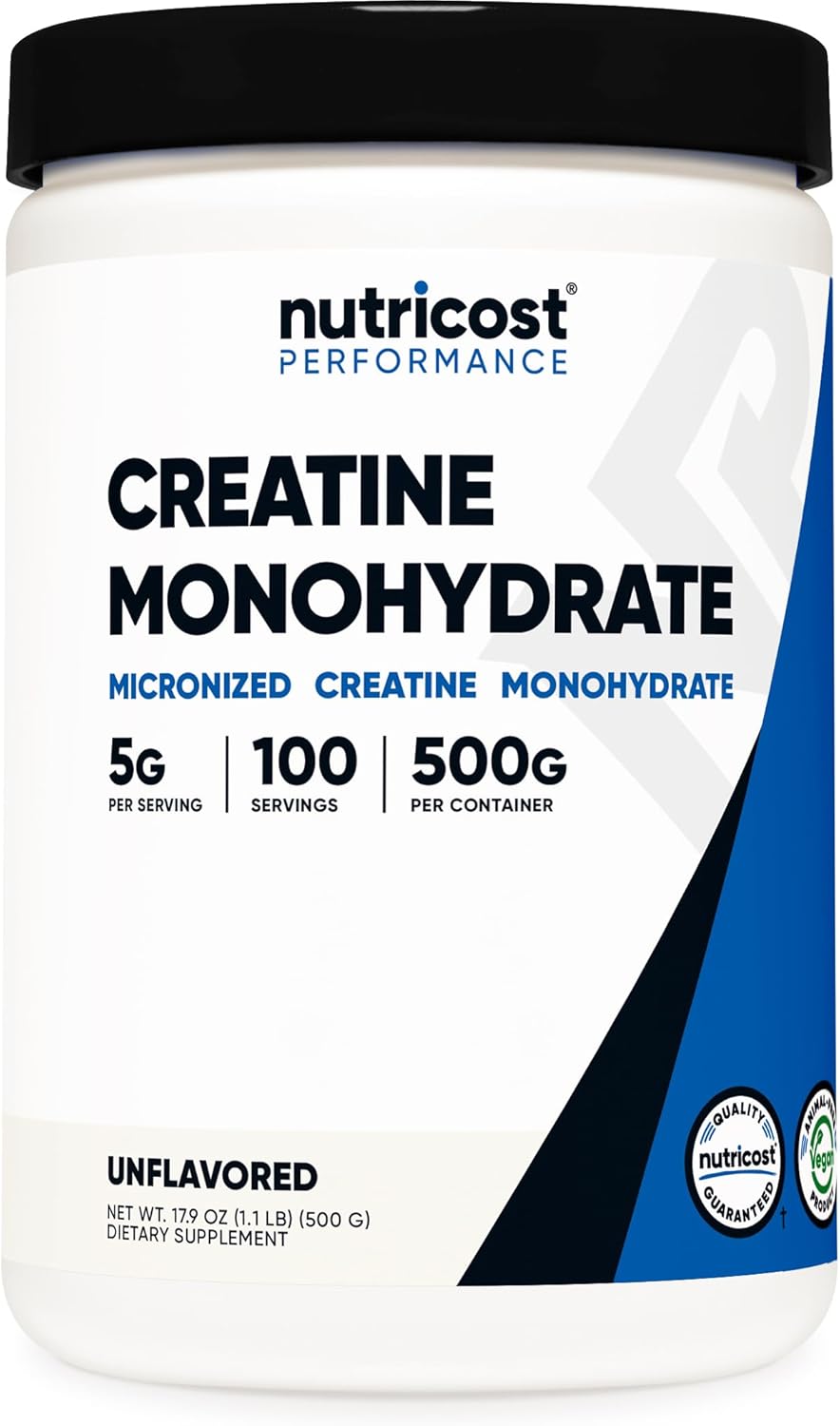
Nutricost Creatine Monohydrate
The best-value buy — lowest cost per serving with 58,000+ reviews, GMP certified, and Non-GMO verified. Identical active compound to premium options at 70% less per dose.
- Less brand recognition than Optimum Nutrition
- No sport-specific certification for tested athletes
Affiliate link: If you buy through this link, we may earn a commission at no extra cost to you.
Buy Nutricost Creatine Monohydrate
Thorne Creatine
The strictest independently-verified option in this lineup — NSF Certified for Sport, the most rigorous third-party testing standard in the supplement industry. Replaces a prior listing that was independently found to resolve to an unrelated vitamin B12 product on Amazon, not the creatine product the corpus claimed (2026-07-21 identity audit).
- Highest per-serving cost in this lineup
- NSF certification rigor may be more than non-athletes need
Affiliate link: If you buy through this link, we may earn a commission at no extra cost to you.
Buy Thorne CreatineCompare supplements with the same checklist we use.
Get the anti-aging supplement cheat sheet with evidence prompts, safety checks, and label-quality questions before you buy.
Comparison Table
| Category | #1 Optimum Nutrition Micronized Creatine Monohydrate Powder Optimum Nutrition | #2 Nutricost Creatine Monohydrate Nutricost | #3 Thorne Creatine Thorne |
|---|---|---|---|
| Score | 9.3/10 | 8.4/10 | 9/10 |
| Best For | Most adults over 40 seeking the most proven, cost-effective creatine for muscle preservation | Value-focused adults who want a reliable, high-volume creatine without paying a brand premium | Readers who want the most rigorously independently-verified creatine monohydrate, regardless of price |
| Pros |
|
|
|
| Cons |
|
|
|
What to Know About Creatine for Muscle Preservation
Losing weight without losing muscle is one of the hardest things to do — especially when you're eating significantly less. Caloric restriction drives fat loss, but it also signals the body to break down muscle for fuel. The result: you reach your target weight but feel weaker, slower, and less capable than expected. For adults using GLP-1 medications, the rapid appetite suppression can accelerate this problem, since reduced food intake means reduced protein and caloric intake simultaneously. Creatine is the one supplement with the strongest, most replicated evidence base for slowing this process. Unlike protein or BCAAs, which require adequate intake to work, creatine directly increases the phosphocreatine stores in muscle cells, supporting the energy systems needed to maintain and use lean tissue even during periods of restriction. This page covers what the research actually shows — not for bodybuilders, but for adults managing weight — and ranks three creatine supplements specifically by purity, dose accuracy, and value for this context.
This content is for educational purposes only and is not medical advice. These statements have not been evaluated by the FDA. This product is not intended to diagnose, treat, cure, or prevent any disease.
Key Benefits of Creatine for Muscle Preservation
How Creatine Supports Muscle Preservation
What to Look For When Buying Creatine
Dosage Guidance
Always follow your healthcare provider's recommendations. Dosages vary by individual health status, age, and goals.
Common Creatine Complaints (And How to Avoid Them)
Based on analysis of thousands of customer reviews across Creatine products.
"Initial scale weight increase worries users tracking weight loss (expected, explained by intracellular water)"
Please consult our full guide for detailed guidance on this concern.
"Some users report mild gastrointestinal discomfort when taken on an empty stomach — try with food or a protein shake"
Please consult our full guide for detailed guidance on this concern.
"Some question effectiveness without heavy exercise — research shows benefit even with moderate activity"
Please consult our full guide for detailed guidance on this concern.
Safety & Interactions
- Pregnancy and breastfeeding: Consult your healthcare provider before taking this supplement during pregnancy or while nursing. The safety of supplemental doses beyond dietary intake has not been established in pregnant or lactating women.
- Blood thinners: If you take blood-thinning medications (e.g., warfarin, apixaban, rivaroxaban, clopidogrel, or high-dose aspirin), consult your healthcare provider BEFORE starting this supplement, as it may have additive antiplatelet or anticoagulant effects.
- Kidney disease: If you have chronic kidney disease (CKD) or any significant kidney impairment, consult your healthcare provider before taking this supplement. Some supplements can accumulate to dangerous levels when kidney function is reduced.
- Gout: Individuals with gout should consult their healthcare provider before starting this supplement. Certain supplements (e.g., collagen, fish oil, niacin) may affect uric acid levels or trigger flares in susceptible individuals.
- Fish allergy - capsule source: Some softgel capsules use fish-derived gelatin even when the active supplement is not fish-derived. If you have a confirmed fish or shellfish allergy, verify the capsule source on the label or check with the manufacturer. Vegan capsules (vegetable cellulose) are widely available alternatives.
- Beef / alpha-gal allergy - capsule source: Many softgel and two-piece capsules use bovine gelatin. If you have a confirmed beef allergy or alpha-gal syndrome (mammalian meat allergy), check capsule sources on the label. Vegan capsules (vegetable cellulose) and HPMC capsules are alternatives.
- NSF certification for competitive athletes: If you are a competitive athlete subject to drug testing, confirm your chosen product is NSF Certified for Sport or Informed Sport — only those marks test for banned substances. Not every product in our rankings carries these certifications.
""Creatine is one of the most studied and least controversial supplements in sports nutrition — and its applications have expanded well beyond athletic performance. For adults managing significant caloric restriction, whether from a medical weight-loss program, GLP-1 medication, or dietary change, creatine monohydrate at 5g/day offers a practical, evidence-backed layer of lean mass protection at very low cost. There are very few supplements where the evidence-to-hype ratio is this favorable."
— Angelique Nicole R. Villegas, RND, Registered Nutritionist Dietitian · PRC Philippines · License #0023950
Frequently Asked Questions
Citations & Research
This page references peer-reviewed research indexed on PubMed/NCBI. Citations are provided for transparency. Always consult a qualified healthcare professional before making any medical decisions.
- [1]Buford TW, Kreider RB, Stout JR, Greenwood M, Campbell B, Spano M, Ziegenfuss T, Lopez H et al. “International Society of Sports Nutrition position stand: creatine supplementation and exercise.” Journal of the International Society of Sports Nutrition, 2007. doi:10.1186/1550-2783-4-6PMID 17908288 ↗
- [2]Lanhers C, Pereira B, Naughton G, Trousselard M, Lesage FX, Dutheil F. Creatine Supplementation and Lower Limb Strength Performance: A Systematic Review and Meta-Analyses. Sports Med. 2015;45(9):1285-1294.PMID 25946994 ↗
- [3]Burke R, Piñero A, Coleman M, Mohan A, Sapuppo M, Augustin F, Aragon AA, Candow DG et al. “The Effects of Creatine Supplementation Combined with Resistance Training on Regional Measures of Muscle Hypertrophy: A Systematic Review with Meta-Analysis.” Nutrients, 2023. doi:10.3390/nu15092116PMID 37432300 ↗
- [4]Antonio J, Candow DG, Forbes SC, Gualano B, Jagim AR, Kreider RB, Rawson ES, Smith-Ryan AE et al. “Common questions and misconceptions about creatine supplementation: what does the scientific evidence really show?.” Journal of the International Society of Sports Nutrition, 2021. doi:10.1186/s12970-021-00412-wPMID 33557850 ↗
Ready to Try Creatine?
Our top pick for muscle preservation. Third-party tested, highly reviewed.
Affiliate link: If you buy through this link, we may earn a commission at no extra cost to you.
Shop #1 Pick — Optimum Nutrition Micronized Creatine Monohydrate PowderContinue exploring
- how we evaluate CreatineSupplement overview
- see all muscle preservation supplements we coverGoal overview
- our top Protein Supplement pick for muscle preservationAlternative supplement
- Creatine research for brain healthSame supplement, different goal
- our top Protein Supplement pick for menopause supportEditor pick
- the Magnesium page for muscle recoveryEditor pick
- creatine monohydrate vs creatine hcl: our verdictCompare options
- see Colostrum evidence for athletic recoveryEditor pick
Get the evidence-graded supplement cheat sheet.
Evidence prompts, safety checks, and label-quality questions before you buy — free, straight to your inbox.
No spam. Unsubscribe anytime.