
Best Protein Powder for Menopause in 2026: Leucine Threshold, MPS Evidence, and What Actually Works
Menopause cuts muscle protein synthesis 30–40%. Women 50+ need 1.2–1.6g protein per kg and ≥2.5g leucine per meal. We rank by leucine density and evidence.

This content is for educational purposes only and is not medical advice. These statements have not been evaluated by the FDA. This product is not intended to diagnose, treat, cure, or prevent any disease. Always consult your healthcare provider before starting any supplement.
Best Protein Powder for Menopause in 2026
Ranked by quality, value, and clinical backing
Where available, we show when each product price was last checked so the list stays honest without overreacting to normal Amazon price movement.

Optimum Nutrition Gold Standard 100% Whey Protein
The top choice for menopause-specific MPS support — whey isolate as the primary ingredient delivers approximately 2.6-2.8g leucine per 25g serving, reliably meeting the postmenopausal leucine threshold in a single serving. PDCAAS of 1.0, Informed Choice certified, and the most cost-effective option for daily use.
- Contains dairy — not suitable for women with severe dairy allergy; women with lactose intolerance should note that isolate is virtually lactose-free and may be well-tolerated
- 5 lb container requires a large upfront flavor commitment — consider starting with a smaller size
Affiliate link: If you buy through this link, we may earn a commission at no extra cost to you.
Buy Optimum Nutrition Gold Standard 100% Whey Protein
Garden of Life SPORT Grass Fed Whey Protein
The premium certified whey for women who prioritize purity documentation and ethical sourcing — NSF Certified for Sport (highest testing tier), grass-fed isolate meets the leucine threshold, and added probiotics address GI health changes common in menopause. Higher cost is the primary trade-off.
- Lower review count (1,601) provides less real-world tolerability signal than alternatives
- Probiotic inclusion adds complexity for women already supplementing separately; not a reason to avoid, but not a differentiating advantage for everyone
Affiliate link: If you buy through this link, we may earn a commission at no extra cost to you.
Buy Garden of Life SPORT Grass Fed Whey Protein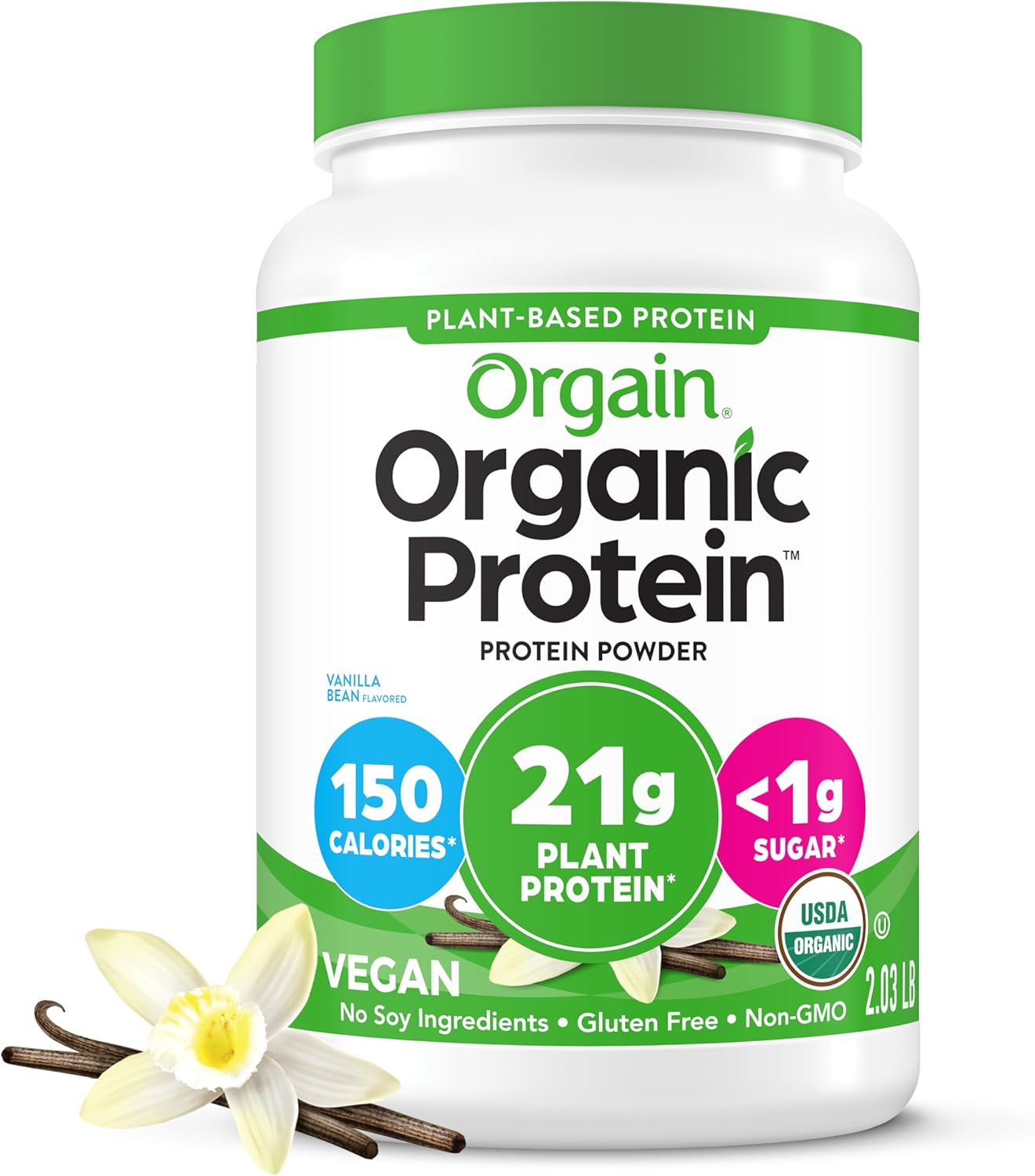
Orgain Organic Vegan Protein Powder
The best plant-based option for dairy-avoiding women in menopause — but requires a larger serving (30-35g protein, approximately 1.5 scoops) to meet the postmenopausal leucine threshold. USDA Organic, vegan, and the most reviewed plant protein here. The leucine gap vs whey is real and clinically relevant — this is a workable option with adjusted dosing, not a like-for-like whey substitute.
- Leucine content approximately 1.6-1.9g per 21g serving — below the postmenopausal threshold of ≥2.5g; a single standard scoop will not reliably trigger MPS in postmenopausal muscle
- Requires 30-35g total plant protein (approximately 1.5 scoops) to approach the leucine threshold, increasing cost per effective dose
- DIAAS score of approximately 0.7-0.8 vs whey's 1.0+ reflects lower digestibility-adjusted amino acid completeness — means less of the protein you consume is actually absorbed and utilized
- Higher serving volume (46g per scoop) for 21g protein is a less efficient protein-to-mass ratio than whey
Affiliate link: If you buy through this link, we may earn a commission at no extra cost to you.
Buy Orgain Organic Vegan Protein PowderCompare supplements with the same checklist we use.
Get the anti-aging supplement cheat sheet with evidence prompts, safety checks, and label-quality questions before you buy.
Comparison Table
| Category | #1 Optimum Nutrition Gold Standard 100% Whey Protein Optimum Nutrition | #2 Garden of Life SPORT Grass Fed Whey Protein Garden of Life | #3 Orgain Organic Vegan Protein Powder Orgain |
|---|---|---|---|
| Score | 9.3/10 | 8.4/10 | 7.8/10 |
| Best For | Postmenopausal women who tolerate dairy and want the most evidence-backed, leucine-dense protein for MPS support at a cost-effective price | Women who want NSF Sport certification documentation, prefer grass-fed sourcing, or are particularly sensitive to supplement quality and sourcing standards | Dairy-intolerant or vegan women in menopause who are willing to use a larger serving size (1.5 scoops) to meet leucine targets, or who combine plant protein with leucine-rich whole foods at the same meal |
| Pros |
|
|
|
| Cons |
|
|
|
What to Know About Protein Powder for Menopause
Menopause is not just a hormonal transition — it is a metabolic inflection point that fundamentally changes how muscle responds to protein. Estrogen is an anabolic hormone: it enhances muscle protein synthesis (MPS) signaling and supports satellite cell activation, the mechanism by which muscle repairs and grows. When estrogen declines, postmenopausal women experience a 30-40% reduction in MPS efficiency compared to premenopausal women of the same age receiving the same protein dose (Smith & Mittendorfer, J Physiol 2016). The muscle you lose each year after 50 is not just a fitness concern — it is a metabolic, bone health, and fall-risk concern. The practical consequence is that women over 50 need significantly more protein per kilogram of body weight than the outdated 0.8g/kg RDA — which was established in studies of young men — to achieve the same anabolic stimulus. Research now supports 1.2-1.6g/kg/day for postmenopausal women. But quantity is only part of the story. The leucine threshold — the minimum leucine bolus per meal required to trigger MPS — is also higher in postmenopausal women, at ≥2.5-3g leucine per meal (Churchward-Venne et al., J Physiol 2014). This matters enormously when comparing whey vs plant protein: whey delivers 2.6-3.0g leucine per 25g serving; most plant proteins deliver 1.5-2.1g. This guide ranks protein supplements specifically for the postmenopausal context — by leucine density, DIAAS/PDCAAS protein quality score, GI tolerability in older women, and the post-exercise timing window evidence. It is distinct from our general muscle-preservation protein guide, which focuses on caloric restriction in GLP-1 users.
This content is for educational purposes only and is not medical advice. These statements have not been evaluated by the FDA. This product is not intended to diagnose, treat, cure, or prevent any disease.
Key Benefits of Protein Powder for Menopause
Reaching the leucine threshold (≥2.5-3g per meal) that triggers muscle protein synthesis in postmenopausal muscle — which requires whey protein or a larger plant protein serving than most women currently consume
Meeting the 1.2-1.6g/kg/day total protein target that research supports for offsetting the 30-40% MPS efficiency decline caused by estrogen withdrawal — typically 20-40g above what most women get from food alone
Supporting the post-resistance exercise MPS window, which research suggests is more time-sensitive in postmenopausal women due to faster decay of the already-blunted anabolic response
How Protein Powder Supports Menopause
Muscle protein synthesis (MPS) is the process by which muscle fibers repair and rebuild after use. Leucine, a branched-chain amino acid, acts as the primary molecular signal that initiates MPS via the mTORC1 pathway. There is a leucine threshold — a minimum bolus needed per meal to 'flip the switch' — and this threshold is higher in older and postmenopausal muscle than in younger muscle. Estrogen supports MPS through multiple mechanisms: it enhances anabolic signaling (IGF-1 pathway), supports satellite cell activation (the stem cells that repair muscle), and reduces muscle protein breakdown. When estrogen declines at menopause, all three mechanisms weaken simultaneously. The result is that postmenopausal women achieve 30-40% less MPS from the same protein dose that would have been fully effective 10-15 years earlier. The practical fix has two components: (1) increase total daily protein to 1.2-1.6g/kg to compensate for lower per-meal efficiency, and (2) ensure each protein meal — especially the post-resistance exercise meal — delivers ≥2.5g leucine to reliably cross the now-elevated MPS threshold. Whey protein isolate does this naturally in a standard 25g serving. Plant proteins require approximately 35g of protein per serving (or two scoops) to deliver the same leucine bolus. Collagen peptides cannot meet this threshold regardless of dose without an unacceptably large serving volume, and remain an insufficient primary protein source for menopause-related muscle support.
What to Look For When Buying Protein Powder
The single most important variable when choosing a protein powder for menopause is leucine content per serving — not marketing claims, not flavor variety, not whether the label says 'for women.' Postmenopausal muscle has a higher leucine threshold (≥2.5g per meal) to trigger MPS, and this threshold is where most plant proteins fall short on a standard serving. **Whey isolate vs whey concentrate:** Whey isolate is preferred for postmenopausal women. It has higher leucine density per gram, lower lactose (better GI tolerability as digestive function shifts with age), and a higher protein-to-calorie ratio. If you are choosing whey, look for isolate as the first ingredient — ON Gold Standard and Garden of Life SPORT both qualify. **Plant protein: is it viable?** Yes, with adjusted dosing. A 30-35g plant protein serving (approximately 1.5 scoops of Orgain) can approach the leucine threshold — but this reduces cost efficiency and requires awareness that DIAAS scores for plant blends remain below whey. Plant protein is a workable choice for dairy-avoiding women; it is not a like-for-like substitute at standard serving sizes. **Collagen peptides: clarifying the marketing:** Collagen is heavily marketed to women for skin, hair, nails, and joints — and it may have genuine benefits for those outcomes. However, collagen is not a substitute for whey or plant protein as a primary protein source for menopause MPS. With ~0.7g leucine per 10g and a DIAAS score of 0.4-0.5, collagen cannot provide the MPS stimulus postmenopausal muscle requires. If you currently rely on collagen as your primary protein supplement, consider adding whey or a complete plant protein alongside it. **Third-party testing:** For daily supplements, third-party testing matters. NSF Certified for Sport (Garden of Life) is the highest standard. Informed Choice (ON Gold Standard) is rigorous and well-respected. Both verify that what is on the label is in the product and that no undeclared contaminants are present. **Heavy metals:** Some protein powders — particularly plant-based — have been found to contain detectable heavy metals (lead, cadmium, arsenic). Choose brands with published third-party testing panels that include heavy metal screens, not just protein content verification.
Dosage Guidance
Always follow your healthcare provider's recommendations. Dosages vary by individual health status, age, and goals.
Common Protein Powder Complaints (And How to Avoid Them)
Based on analysis of thousands of customer reviews across Protein Powder products.
"Bloating or GI discomfort from whey concentrate"
Switch to whey isolate (lower lactose) or a plant-based blend. Whey isolate is virtually lactose-free and better tolerated by aging digestive systems. Both the ON Gold Standard and Garden of Life SPORT ranked here use isolate as the primary ingredient.
"Difficulty finishing a full shake when appetite is low"
Try half a scoop mixed into Greek yogurt or oatmeal rather than a standalone drink — you still get a meaningful leucine contribution (1.3-1.4g) that stacks with the leucine already in the food. A smaller, food-mixed portion is more practical on low-appetite days than forcing a full shake.
"Plant protein gritty or chalky texture"
Blend with frozen berries, a small banana, and unsweetened almond milk. A high-speed blender (Vitamix, Ninja) makes a significant difference vs stirring with a spoon or shaker bottle — plant proteins hydrate differently than whey and benefit from higher shear mixing.
"Overwhelmed by marketing claims ('collagen for women', 'hormone-balancing protein')"
The two variables that determine whether a protein supplement will actually support MPS in postmenopausal muscle are leucine content per serving and DIAAS score. Everything else is marketing. Filter every product by those two numbers first — if the brand cannot tell you the leucine per serving, move on.
"Cost of daily protein supplementation adding up"
The 5 lb ON Gold Standard container at $1.22/serving is among the most cost-effective evidence-backed options for daily use. Buying larger containers (5 lb vs 2 lb) reduces per-serving cost by 30-40%. Subscription pricing from the manufacturer can reduce cost further. Compare price per gram of protein, not price per container.
Safety & Interactions
- Pregnancy and breastfeeding: Consult your healthcare provider before taking this supplement during pregnancy or while nursing. The safety of supplemental doses beyond dietary intake has not been established in pregnant or lactating women.
- Blood thinners: If you take blood-thinning medications (e.g., warfarin, apixaban, rivaroxaban, clopidogrel, or high-dose aspirin), consult your healthcare provider BEFORE starting this supplement, as it may have additive antiplatelet or anticoagulant effects.
- Kidney disease: If you have chronic kidney disease (CKD) or any significant kidney impairment, consult your healthcare provider before taking this supplement. Some supplements can accumulate to dangerous levels when kidney function is reduced.
- Gout: Individuals with gout should consult their healthcare provider before starting this supplement. Certain supplements (e.g., collagen, fish oil, niacin) may affect uric acid levels or trigger flares in susceptible individuals.
- Fish allergy - capsule source: Some softgel capsules use fish-derived gelatin even when the active supplement is not fish-derived. If you have a confirmed fish or shellfish allergy, verify the capsule source on the label or check with the manufacturer. Vegan capsules (vegetable cellulose) are widely available alternatives.
- Beef / alpha-gal allergy - capsule source: Many softgel and two-piece capsules use bovine gelatin. If you have a confirmed beef allergy or alpha-gal syndrome (mammalian meat allergy), check capsule sources on the label. Vegan capsules (vegetable cellulose) and HPMC capsules are alternatives.
- Not a replacement for HRT: This supplement is not a replacement for hormone replacement therapy (HRT) or prescription menopause treatments. Women on HRT, thyroid medication, or other prescriptions should inform their healthcare provider before starting this supplement.
- Important: This supplement is not a replacement for prescription medications. It is supportive for individuals with low baseline status, not a treatment for diagnosed conditions (anxiety disorders, insomnia, hypertension, osteoporosis, etc.). Do not stop or reduce any prescription without consulting your doctor.
""The menopause protein story is simpler than most women have been told: estrogen decline makes muscle less responsive to the protein you eat, so you need more protein — and that protein needs to deliver more leucine per meal than before. The number that matters most is the leucine content per serving, not the brand name or the marketing angle. Whey isolate hits the threshold in a standard scoop. Plant protein needs a larger scoop. Collagen does not get close. The rest is implementation: spread protein across meals, time a serving around resistance exercise, and choose a third-party tested product. The evidence base here is strong, the mechanism is well-understood, and the intervention is practical."
— Angelique Nicole R. Villegas, RND, Registered Nutritionist Dietitian · PRC Philippines · License #0023950
Frequently Asked Questions
Citations & Research
This page references peer-reviewed research indexed on PubMed/NCBI. Citations are provided for transparency. Always consult a qualified healthcare professional before making any medical decisions.
- [1]Kenny AM, Mangano KM, Abourizk RH et al. Soy proteins and isoflavones affect bone mineral density in older women: a randomized controlled trial. The American journal of clinical nutrition. 2009;90(1):234-42.PMID 19474141 ↗
- [2]Churchward-Venne TA, et al. Leucine supplementation of a low-protein mixed macronutrient beverage enhances myofibrillar protein synthesis in young men. J Physiol. 2014;590(11):2751-2765.PMID 24284442 ↗
- [3]Bauer J, et al. Evidence-based recommendations for optimal dietary protein intake in older people: a position paper from the PROT-AGE Study Group. J Am Med Dir Assoc. 2013;14(8):542-59.PMID 23867520 ↗
- [4]Arnarson A, et al. Effects of whey proteins and carbohydrates on the efficacy of resistance training in elderly people: double blind, randomised controlled trial. Eur J Clin Nutr. 2013;67(8):821-6.PMID 23486511 ↗
- [5]Martin WF, Armstrong LE, Rodriguez NR. Dietary protein intake and renal function. Nutr Metab (Lond). 2005;2:25.PMID 16174292 ↗
Ready to Try Protein Powder?
Our top pick for menopause. Third-party tested, highly reviewed.
Affiliate link: If you buy through this link, we may earn a commission at no extra cost to you.
Shop #1 Pick — Optimum Nutrition Gold Standard 100% Whey ProteinContinue exploring
- Protein Supplement evidence overviewSupplement overview
- best supplements for menopause supportGoal overview
- clinical notes on Creatine and menopause supportAlternative supplement
- Dong Quai — an option to consider for menopause supportAlternative supplement
- Protein Supplement research for glp 1 muscle loss preventionSame supplement, different goal
- see Creatine evidence for muscle preservationEditor pick
- Magnesium fit for menopause supportEditor pick
- we tested whey protein against plant proteinCompare options
Get the evidence-graded supplement cheat sheet.
Evidence prompts, safety checks, and label-quality questions before you buy — free, straight to your inbox.
No spam. Unsubscribe anytime.