
Best EGCG Supplements for Metabolic Health in 2026
EGCG inhibits COMT to extend fat-burning signaling and activates AMPK for insulin sensitivity. Safe dosing explained (≥800mg/day risk) — 4 products ranked.
meta-analyses of multiple small-to-medium RCTs
This content is for educational purposes only and is not medical advice. These statements have not been evaluated by the FDA. This product is not intended to diagnose, treat, cure, or prevent any disease. Always consult your healthcare provider before starting any supplement.
Best EGCG (Epigallocatechin Gallate) for Metabolic Health in 2026
Ranked by quality, value, and clinical backing
Where available, we show when each product price was last checked so the list stays honest without overreacting to normal Amazon price movement.

NOW Foods EGCg Green Tea Extract 400mg
Best value for consistent metabolic-dose EGCG. 5,800 reviews is the largest trust base on the list. Decaffeinated format allows flexible dosing without stimulant considerations. The total catechin standardization (≥45%) rather than direct EGCG milligram disclosure is the main limitation for those tracking precise dose — estimate approximately 120-180mg EGCG per capsule. Best for users who want reliable, affordable, decaffeinated EGCG from a trusted manufacturer.
- Standardized to ≥45% total catechins, not direct EGCG milligrams — estimated ~120-180mg EGCG per capsule (lower than competitors)
- Lower EGCG per capsule means 2 capsules may be needed for the optimal 300-400mg EGCG range
Affiliate link: If you buy through this link, we may earn a commission at no extra cost to you.
Buy NOW Foods EGCg Green Tea Extract 400mg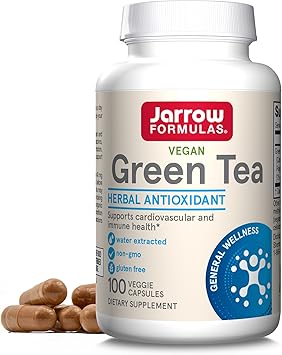
Jarrow Green Tea 500mg
Best dose precision for the 250mg EGCG sweet spot. 500mg extract standardized to 50% EGCG delivers approximately 250mg EGCG per capsule — squarely in the effective 200-300mg range without approaching the ≥400mg caution threshold. 80% total catechins is the highest concentration on the list. Verify decaffeination status on current product label before purchase.
- Decaffeination status should be verified on current label before purchase
- 2,600 reviews is moderate compared to NOW Foods
- No phytosome bioavailability enhancement
Affiliate link: If you buy through this link, we may earn a commission at no extra cost to you.
Buy Jarrow Green Tea 500mgLife Extension Mega Green Tea Extract 725mg
Best for highest single-dose EGCG with Life Extension quality. ~326mg EGCG per capsule is the highest precise dose on this list — close to the upper end of the safe daily range. For users who want one capsule per day at the maximum evidence-supported dose, this is the choice. Clear EGCG standardization (45% of 725mg = ~326mg) makes dose tracking straightforward. Decaffeinated.
- 326mg per capsule is close to the 400mg/day safety-conscious upper limit — do not double-dose
- Slightly higher per-capsule cost than NOW Foods
Compare supplements with the same checklist we use.
Get the anti-aging supplement cheat sheet with evidence prompts, safety checks, and label-quality questions before you buy.
Comparison Table
| Category | #1 NOW Foods EGCg Green Tea Extract 400mg NOW Foods | #2 Jarrow Green Tea 500mg Jarrow Formulas | #3 Life Extension Mega Green Tea Extract 725mg Life Extension |
|---|---|---|---|
| Score | 9.1/10 | 8.9/10 | 8.6/10 |
| Best For | Budget-conscious users who want decaffeinated, reliable EGCG from the most-reviewed formula on the market | Users who want precise 250mg EGCG dosing with high catechin concentration from a reliable mid-price brand | Users who want the highest single-capsule EGCG dose within the safe range from a clinically trusted brand |
| Pros |
|
|
|
| Cons |
|
|
|
What to Know About EGCG (Epigallocatechin Gallate) for Metabolic Health
EGCG (epigallocatechin gallate) is the primary bioactive catechin in green tea — the compound responsible for most of green tea's documented metabolic effects. A standard cup of brewed green tea contains approximately 50-100mg EGCG depending on brewing time and leaf quality; supplemental EGCG provides standardized, higher doses in a controlled format. The core mechanism: EGCG inhibits COMT (catechol-O-methyltransferase), the enzyme responsible for degrading catecholamines (norepinephrine, epinephrine, dopamine). By slowing catecholamine breakdown, EGCG extends the thermogenic and lipolytic signaling of norepinephrine — which is why EGCG and caffeine synergize: caffeine increases catecholamine release; EGCG slows their breakdown. The Hursel 2011 meta-analysis (PMID 21366839, 11 RCTs) confirmed that the EGCG + caffeine combination produces significantly greater 24-hour fat oxidation than caffeine alone. For healthy aging and metabolic syndrome: the more compelling long-term evidence for EGCG is on metabolic syndrome components beyond acute fat oxidation. EGCG activates AMPK (AMP-activated protein kinase) — the cellular energy sensor and master metabolic regulator — in a manner that improves insulin sensitivity, reduces fasting glucose, and lowers LDL cholesterol in multiple clinical trials. These metabolic effects are relevant to the 35%+ of adults with at least one metabolic syndrome component. CRITICAL SAFETY NOTE: Most competitor content omits this entirely. High-dose EGCG supplementation (≥800mg/day) has been linked to rare but serious hepatotoxicity in case reports and liver safety reviews. The U.S. Pharmacopeia and European Food Safety Authority have both flagged this signal. The safe and effective range for daily EGCG supplementation is 200-400mg/day. Products on this page are selected within this range. Do not exceed 400mg EGCG per day without physician supervision.
This content is for educational purposes only and is not medical advice. These statements have not been evaluated by the FDA. This product is not intended to diagnose, treat, cure, or prevent any disease.
Key Benefits of EGCG (Epigallocatechin Gallate) for Metabolic Health
COMT inhibition extends catecholamine-driven thermogenesis — EGCG slows the breakdown of norepinephrine, synergizing with caffeine's catecholamine-releasing effect; the Hursel 2011 meta-analysis (PMID 21366839, 11 RCTs) confirmed EGCG+caffeine significantly increased fat oxidation vs. caffeine alone
AMPK activation may support insulin sensitivity and fasting glucose — research suggests EGCG activates AMP-activated protein kinase (AMPK), the cellular energy sensor, with downstream effects on glucose uptake, insulin signaling, and hepatic lipid metabolism
Research suggests possible LDL reduction — AMPK-mediated upregulation of hepatic LDL receptors has been proposed as a mechanism for the LDL-lowering effects observed in green tea catechin trials, supporting EGCG's role in metabolic syndrome management
How EGCG (Epigallocatechin Gallate) Supports Metabolic Health
EGCG is the most abundant and bioactive catechin in green tea (Camellia sinensis), representing approximately 50-80% of total catechin content in high-quality green tea. It is a flavanol with a pyrogallol group on the B-ring that confers particularly high antioxidant activity and COMT-binding affinity. **COMT inhibition mechanism:** COMT (catechol-O-methyltransferase) is the enzyme that methylates and inactivates catecholamines including norepinephrine, epinephrine, and dopamine. EGCG binds to COMT's active site — a well-characterized competitive inhibition. By slowing catecholamine degradation, EGCG prolongs the thermogenic and lipolytic signaling of norepinephrine in adipose tissue and brown adipose tissue. This is why the EGCG + caffeine combination is synergistic: caffeine drives sympathetic nervous system activation and catecholamine release (via adenosine receptor antagonism); EGCG slows the degradation of the catecholamines that caffeine releases. Neither compound alone is as effective as the combination. **AMPK activation:** AMPK (AMP-activated protein kinase) is the master cellular energy sensor, activated when the AMP:ATP ratio rises (energy deficit state). EGCG activates AMPK through multiple pathways including LKB1 and potentially through mitochondrial complex I inhibition at low concentrations. AMPK activation has downstream effects on: (1) GLUT4 translocation to the cell surface — increasing glucose uptake into skeletal muscle independent of insulin signaling; (2) inhibition of SREBP-mediated lipid synthesis in the liver; (3) upregulation of beta-oxidation; (4) reduction of gluconeogenesis. These effects collectively support improvements in insulin sensitivity, fasting glucose, and lipid profiles observed in clinical trials. **Antioxidant and anti-inflammatory activity:** EGCG is a potent antioxidant with ability to quench reactive oxygen species, chelate redox-active metals (iron, copper), and inhibit NF-κB-mediated inflammatory signaling. These effects are relevant to metabolic syndrome, where chronic low-grade inflammation and oxidative stress contribute to insulin resistance and endothelial dysfunction. **Bioavailability limitations:** EGCG has poor oral bioavailability due to significant first-pass metabolism, instability at physiological pH, and P-glycoprotein-mediated efflux in the intestine. Peak plasma EGCG after a 400mg dose is typically 0.5-1.5 μmol/L — considered low. Taking EGCG with food (particularly fat-containing food) may improve absorption. Phytosome formulations (EGCG complexed with phosphatidylcholine) have shown significantly improved bioavailability in pharmacokinetic studies. **The hepatotoxicity risk at high doses:** At doses ≥800mg EGCG/day, rare but serious hepatotoxicity has been reported — characterized by elevated liver enzymes and, in severe cases, acute liver injury requiring medical attention. The proposed mechanism involves pro-oxidant EGCG activity at high intracellular concentrations (EGCG acts as an antioxidant at low concentrations but can generate hydrogen peroxide at high concentrations via auto-oxidation). The safe effective range supported by evidence without established hepatotoxicity risk is 200-400mg EGCG/day.
What to Look For When Buying EGCG (Epigallocatechin Gallate)
**The safe dose range: 200-400mg EGCG/day** This is the most important number on this page. The effective dose range for metabolic benefits in clinical trials is 200-400mg EGCG/day. Doses below 200mg/day are unlikely to produce meaningful metabolic effects. Doses above 400mg/day — particularly ≥800mg/day — have been associated with rare hepatotoxicity. This is not a theoretical risk: the U.S. Pharmacopeia and European Food Safety Authority have both reviewed this signal and recommended dose-limiting guidance. Our product selection excludes high-dose formulas (≥800mg EGCG) for this reason. **Decaffeinated vs. caffeinated green tea extract** Most of the thermogenic research on EGCG used caffeinated green tea or combined EGCG with caffeine specifically (the COMT inhibition synergizes with caffeine's catecholamine release). Decaffeinated EGCG supplements provide the metabolic and antioxidant benefits without the stimulant. If you consume coffee or other caffeine daily, decaffeinated EGCG taken alongside your morning coffee provides the combination effect without a separate caffeine load. Caffeine-sensitive users should use decaffeinated products only. **Standardization: total catechins % vs. EGCG %** Products labeled with 'total catechins' percentage are less precise than those standardized directly to 'EGCG %'. A product standardized to '45% total catechins' from 400mg extract contains approximately 45% × 400mg = 180mg total catechins — but EGCG is typically 30-50% of total catechins, meaning the actual EGCG content is approximately 54-90mg per capsule. Products standardized directly to 'X% EGCG' give you a precise milligram dose. For metabolic health applications where staying within the 200-400mg EGCG/day window matters, direct EGCG standardization is more useful. **Should I take EGCG with food?** EGCG has better bioavailability when taken with a meal. However, taking it with high-iron foods or iron supplements may reduce EGCG absorption (EGCG chelates iron). The most common recommendation: take with a mixed meal that does not include iron-fortified foods. Avoid taking on a completely empty stomach — some users experience nausea from fasted EGCG supplementation, and the hepatotoxicity signal in case reports often involves fasted use at high doses.
Dosage Guidance
Always follow your healthcare provider's recommendations. Dosages vary by individual health status, age, and goals.
Common EGCG (Epigallocatechin Gallate) Complaints (And How to Avoid Them)
Based on analysis of thousands of customer reviews across EGCG (Epigallocatechin Gallate) products.
"I've been taking green tea extract for a month and haven't lost any weight."
EGCG's thermogenic effect at supplemental doses is real but modest — meta-analyses find roughly 60-80 kcal/day increased energy expenditure at effective doses. This translates to approximately 6-8 lbs per year if all other variables are held constant, which they never are. EGCG is not a meaningful standalone weight loss intervention. Its value is as a metabolic health support supplement that compounds with diet and exercise — not a replacement for them. The metabolic syndrome components (insulin sensitivity, glucose, LDL) are where the more compelling long-term healthy aging evidence lies. If weight loss is the primary goal, EGCG should be viewed as a modest supporting strategy within a broader caloric and exercise plan.
"I read that green tea extract can damage the liver — should I stop taking it?"
The hepatotoxicity signal is real but dose-dependent. The safety concern is at doses ≥800mg EGCG/day — particularly taken on an empty stomach. If you are taking a product that provides 200-400mg EGCG/day with a meal, the risk profile is substantially better. Monitor yourself for symptoms: unusual fatigue, nausea, loss of appetite, yellowing of skin or eyes, or right-upper abdominal discomfort. If any of these occur, stop EGCG and see a physician. For the products on this page at the recommended doses, the risk-benefit calculation for healthy adults without liver disease is favorable — but this should always be disclosed to your healthcare provider.
"Does it matter whether I take caffeinated or decaffeinated EGCG?"
For thermogenesis, it matters — the caffeine + EGCG combination is more effective than EGCG alone, because caffeine drives catecholamine release that EGCG's COMT inhibition then prolongs. Decaffeinated EGCG taken alongside your morning coffee provides the combination without an additional caffeine load. For metabolic syndrome support (insulin sensitivity, LDL, glucose), the EGCG component operates through AMPK activation independently of caffeine — decaffeinated is equally effective. Choose based on your caffeine tolerance and existing intake.
"I feel nauseous after taking green tea extract."
Nausea is a common side effect of taking EGCG on an empty stomach. Always take EGCG with food — ideally with a meal containing fat, which also improves absorption. If nausea persists even with food, reduce the dose (split your daily capsule into two half-doses with meals). Persistent nausea could also be an early indicator of liver stress — if accompanied by fatigue or abdominal discomfort, discontinue and consult a physician.
Safety & Interactions
- Pregnancy and breastfeeding: Consult your healthcare provider before taking this supplement during pregnancy or while nursing. The safety of supplemental doses beyond dietary intake has not been established in pregnant or lactating women.
- Blood thinners: If you take blood-thinning medications (e.g., warfarin, apixaban, rivaroxaban, clopidogrel, or high-dose aspirin), consult your healthcare provider BEFORE starting this supplement, as it may have additive antiplatelet or anticoagulant effects.
- Kidney disease: If you have chronic kidney disease (CKD) or any significant kidney impairment, consult your healthcare provider before taking this supplement. Some supplements can accumulate to dangerous levels when kidney function is reduced.
- Gout: Individuals with gout should consult their healthcare provider before starting this supplement. Certain supplements (e.g., collagen, fish oil, niacin) may affect uric acid levels or trigger flares in susceptible individuals.
- Fish allergy - capsule source: Some softgel capsules use fish-derived gelatin even when the active supplement is not fish-derived. If you have a confirmed fish or shellfish allergy, verify the capsule source on the label or check with the manufacturer. Vegan capsules (vegetable cellulose) are widely available alternatives.
- Beef / alpha-gal allergy - capsule source: Many softgel and two-piece capsules use bovine gelatin. If you have a confirmed beef allergy or alpha-gal syndrome (mammalian meat allergy), check capsule sources on the label. Vegan capsules (vegetable cellulose) and HPMC capsules are alternatives.
""The EGCG category has two major content failures. First, almost no supplement content discloses the hepatotoxicity safety signal at high doses — yet this is the most important safety information in the category, flagged by multiple regulatory bodies. The reason it is omitted is likely commercial: it complicates the marketing message. Our page makes this the central safety framing because it is genuinely important for users choosing a dose and frequency. Second, EGCG is almost universally marketed as a 'fat burner' — which is both technically accurate (COMT inhibition extends thermogenic signaling) and misleading (the effect size is modest). The more clinically compelling healthy aging story is EGCG's AMPK-mediated effects on metabolic syndrome components: fasting glucose, insulin sensitivity, and LDL. This reframing positions EGCG as a serious metabolic health supplement for the 35+ audience rather than a weight loss supplement for young athletes. Our rankings reflect the safe dose range: no product on this list provides ≥800mg EGCG per capsule."
— Angelique Nicole R. Villegas, RND, Registered Nutritionist Dietitian · PRC Philippines · License #0023950
Frequently Asked Questions
Citations & Research
This page references peer-reviewed research indexed on PubMed/NCBI. Citations are provided for transparency. Always consult a qualified healthcare professional before making any medical decisions.
- [1]Hursel R, Viechtbauer W, Dulloo AG, et al. The effects of catechin rich teas and caffeine on energy expenditure and fat oxidation: a meta-analysis. Obes Rev. 2011;12(7):e573-e581.PMID 21366839 ↗
- [2]Egbuna C, Awuchi CG, Kushwaha G et al. “Bioactive Compounds Effective Against Type 2 Diabetes Mellitus: A Systematic Review.” Current topics in medicinal chemistry, 2021. doi:10.2174/1568026621666210509161059PMID 33966619 ↗
- [3]Tsai TW, Chang CC, Liao SF et al. “Effect of green tea extract supplementation on glycogen replenishment in exercised human skeletal muscle.” The British journal of nutrition, 2017. doi:10.1017/S0007114517001374PMID 28631582 ↗
Ready to Try EGCG (Epigallocatechin Gallate)?
Our top pick for metabolic health. Third-party tested, highly reviewed.
Affiliate link: If you buy through this link, we may earn a commission at no extra cost to you.
Shop #1 Pick — NOW Foods EGCg Green Tea Extract 400mgContinue exploring
- our full EGCG reviewSupplement overview
- our metabolic health supplement guideGoal overview
- Dihydroberberine — an option to consider for metabolic healthAlternative supplement
- how Inositol supports metabolic healthAlternative supplement
- the EGCG page for weight lossSame supplement, different goal
- Berberine evidence for blood sugar supportEditor pick
- where Alpha Lipoic Acid fits for antioxidant supportEditor pick
- see how supplements stacks up to food sourcesCompare options
Get the evidence-graded supplement cheat sheet.
Evidence prompts, safety checks, and label-quality questions before you buy — free, straight to your inbox.
No spam. Unsubscribe anytime.