
Best Dihydroberberine for Metabolic Health (2026 Ranked & Reviewed)
Compare the best dihydroberberine supplements for metabolic health in 2026. Evidence-backed rankings, dosage guidance, and honest pros and cons.
This content is for educational purposes only and is not medical advice. These statements have not been evaluated by the FDA. This product is not intended to diagnose, treat, cure, or prevent any disease. Always consult your healthcare provider before starting any supplement.
Best Dihydroberberine for Metabolic Health in 2026
Ranked by quality, value, and clinical backing
Where available, we show when each product price was last checked so the list stays honest without overreacting to normal Amazon price movement.

Double Wood Dihydroberberine 100mg
The only true dihydroberberine product on this list, offering superior bioavailability and better GI tolerability than standard berberine — making it the top pick for anyone specifically seeking DHB's absorption advantages.
- Human RCT data specific to DHB is limited — most supporting evidence is extrapolated from berberine studies
- Higher cost per milligram than standard berberine HCl products
Affiliate link: If you buy through this link, we may earn a commission at no extra cost to you.
Buy Double Wood Dihydroberberine 100mgNOW Foods Berberine Glucose Support + MCT Oil
A smart middle-ground formulation that uses MCT oil to meaningfully improve berberine absorption without the DHB premium, backed by NOW Foods' consistently reliable quality controls.
- Not true DHB — bioavailability enhancement is real but still well below the ~5x seen with dihydroberberine
- Softgel format makes dose titration difficult for those who want to start low and increase gradually

Integrative Therapeutics Berberine HCl 500mg
The clinical practitioner's standard — a rigorously manufactured conventional berberine HCl that serves as the closest match to the formulations used in published human RCTs.
- Standard HCl bioavailability limitations apply — GI side effects are more likely at the 1,500mg/day doses used in clinical studies
- No bioavailability enhancement vs. MCT or DHB formulations
Affiliate link: If you buy through this link, we may earn a commission at no extra cost to you.
Buy Integrative Therapeutics Berberine HCl 500mg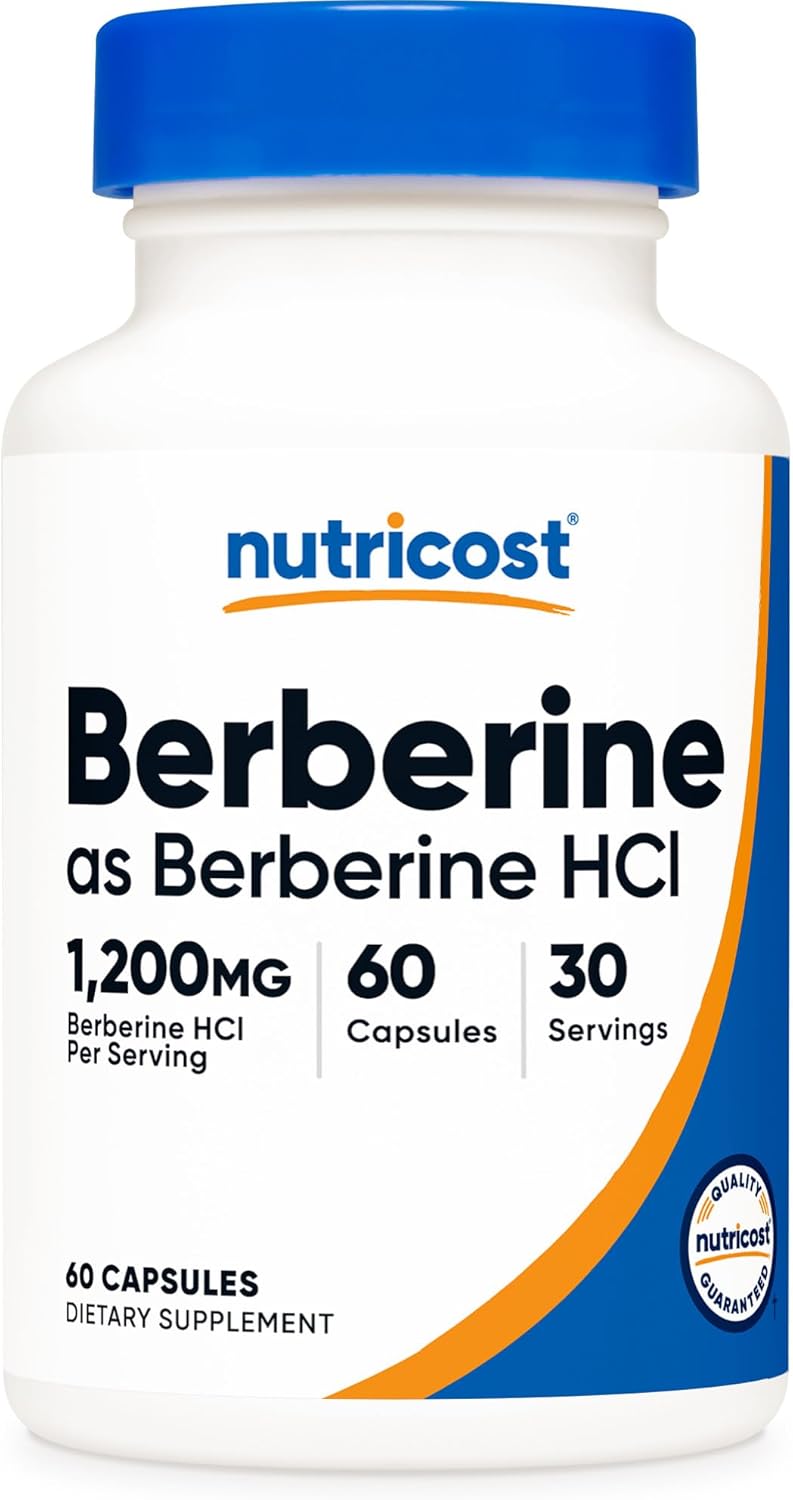
Nutricost Berberine HCl 500mg
The most affordable entry point from a certified manufacturer — a straightforward berberine HCl for cost-sensitive buyers who prioritize price over bioavailability optimization.
- No bioavailability enhancement whatsoever — standard HCl absorption limitations fully apply
- No NSF or USP independent potency verification for consumers wanting third-party assurance beyond manufacturer certification
Affiliate link: If you buy through this link, we may earn a commission at no extra cost to you.
Buy Nutricost Berberine HCl 500mgCompare supplements with the same checklist we use.
Get the anti-aging supplement cheat sheet with evidence prompts, safety checks, and label-quality questions before you buy.
Comparison Table
| Category | #1 Double Wood Dihydroberberine 100mg Double Wood Supplements | #2 NOW Foods Berberine Glucose Support + MCT Oil NOW Foods | #3 Integrative Therapeutics Berberine HCl 500mg Integrative Therapeutics | #4 Nutricost Berberine HCl 500mg Nutricost |
|---|---|---|---|---|
| Score | 9.1/10 | 8.4/10 | 8/10 | 7.5/10 |
| Best For | People who've experienced GI intolerance on standard berberine or who want maximum bioavailability from a lower dose | Budget-conscious users who want better-than-standard HCl absorption without stepping up to a true DHB product | Clinicians or patients who want a practitioner-grade berberine HCl most aligned with the clinical trial evidence base | Cost-sensitive buyers new to berberine who want to assess tolerability before investing in a premium DHB product |
| Pros |
|
|
|
|
| Cons |
|
|
|
|
What to Know About Dihydroberberine for Metabolic Health
Berberine has quietly accumulated one of the more impressive clinical track records in the supplement world. But there's a catch most product pages won't tell you: standard berberine HCl is notoriously difficult for the body to absorb. Enter dihydroberberine — a reduced form of berberine that research suggests may offer substantially higher bioavailability, potentially delivering more active compound to your cells at a lower dose. For anyone focused on metabolic health — think blood sugar balance, insulin sensitivity, and healthy lipid levels — that bioavailability difference actually matters. Getting more compound into circulation at a lower dose also tends to mean fewer of the GI complaints (bloating, cramping, loose stools) that cause many people to abandon berberine altogether. This page ranks four products: two true dihydroberberine formulas and two conventional berberine HCl options that use formulation strategies to close the absorption gap. We've assessed each on evidence quality, manufacturing standards, real-world tolerability, and honest value for money. Our goal is simple — help you find what's likely to work, without the marketing noise.
This content is for educational purposes only and is not medical advice. These statements have not been evaluated by the FDA. This product is not intended to diagnose, treat, cure, or prevent any disease.
Key Benefits of Dihydroberberine for Metabolic Health
May support healthy blood glucose levels and insulin sensitivity, based on robust human clinical evidence for berberine
Dihydroberberine form offers substantially higher bioavailability than standard berberine HCl, potentially requiring a lower dose for equivalent effect
Generally better GI tolerability compared to high-dose standard berberine HCl, making consistent daily use more realistic
How Dihydroberberine Supports Metabolic Health
Berberine's best-understood metabolic mechanism involves activation of AMP-activated protein kinase (AMPK) — an enzyme sometimes called a 'metabolic master switch' because it regulates how cells take up and use glucose and fatty acids. When AMPK is activated, cells become more responsive to insulin signals and more efficient at clearing glucose from the bloodstream. A 2021 study published in Nature Communications by Zhao et al. identified an additional pathway: berberine appears to act as an insulin secretagogue by targeting the KCNH6 potassium channel in pancreatic beta cells, directly stimulating insulin release independent of AMPK. Dihydroberberine works through the same downstream pathways — it's rapidly converted back to berberine after intestinal absorption. The key difference is upstream: DHB is absorbed more efficiently across the gut wall in the first place. Standard berberine HCl has poor oral bioavailability partly because it's a substrate for intestinal efflux transporters that pump it back out before it can be absorbed. DHB appears to be less susceptible to this efflux, which is why pharmacokinetic data suggests meaningfully higher plasma concentrations from equivalent doses.
What to Look For When Buying Dihydroberberine
The single most important decision in this category is whether you want true dihydroberberine or a well-formulated conventional berberine. They're not interchangeable, and the distinction matters more than brand loyalty or price. True DHB products like Double Wood's offering give you the bioavailability advantage in the clearest way — the compound is already in the reduced form your gut prefers. The tradeoff is cost and thinner product-specific human trial data. If you're committed to the DHB form and can absorb the higher per-dose cost, it's genuinely the most rational choice from a pharmacokinetic standpoint. On the other hand, if budget is a real constraint, a lipid-formulated berberine HCl like NOW Foods' MCT softgel gives you a meaningful absorption improvement over dry capsules without jumping to DHB pricing. Manufacturing standards deserve more attention than most buyers give them. GMP certification is table stakes — but third-party testing (NSF, USP, or at minimum an independent certificate of analysis) is the real differentiator. Double Wood publishes CoAs. NOW Foods and Integrative Therapeutics have strong reputations built over decades. Nutricost holds ISO certification, which covers processes but doesn't independently verify the berberine content in each bottle the way USP or NSF would. Finally, think about your dosing strategy. Standard clinical berberine protocols typically use 500mg three times daily with meals — that's 1,500mg/day. With DHB's higher bioavailability, effective doses may be lower, but there's no definitive consensus dose for DHB in humans yet. Starting low and titrating up based on tolerance is sensible with any berberine product. Anyone currently managing blood glucose with prescription medication absolutely needs to discuss berberine or DHB with their prescribing physician before starting.
Dosage Guidance
Always follow your healthcare provider's recommendations. Dosages vary by individual health status, age, and goals.
Common Dihydroberberine Complaints (And How to Avoid Them)
Based on analysis of thousands of customer reviews across Dihydroberberine products.
"Berberine gives me terrible stomach cramps and diarrhea"
This is the most common reason people quit standard berberine HCl. Taking capsules with food (not on an empty stomach) reduces irritation for many users. Switching to a lipid-formulated softgel or true DHB product is the most effective solution — higher upstream absorption leaves less compound in the colon causing GI distress. Start with one capsule daily and increase gradually over 2–3 weeks.
"I don't know if I should buy berberine or dihydroberberine — what's actually the difference?"
Dihydroberberine is a structurally reduced form of berberine that absorbs better in the gut. Standard berberine HCl has far more human clinical trial data supporting its metabolic effects. DHB offers better bioavailability but less product-specific human trial evidence. For most people starting out, a well-formulated berberine HCl is a reasonable first step; DHB makes more sense if you've had tolerability issues or want to optimize absorption.
"These supplements are so expensive — are they even worth it?"
Cost varies enormously in this category. Nutricost's berberine HCl comes in at roughly $0.22 per 500mg serving — that's genuinely affordable for GMP-certified manufacturing. True DHB does cost more per milligram, but you may need a meaningfully lower dose to get equivalent exposure, which partially offsets the sticker price. We've included per-serving costs in our comparison table so you can make an apples-to-apples assessment.
Safety & Interactions
- Pregnancy and breastfeeding: Consult your healthcare provider before taking this supplement during pregnancy or while nursing. The safety of supplemental doses beyond dietary intake has not been established in pregnant or lactating women.
- Blood thinners: If you take blood-thinning medications (e.g., warfarin, apixaban, rivaroxaban, clopidogrel, or high-dose aspirin), consult your healthcare provider BEFORE starting this supplement, as it may have additive antiplatelet or anticoagulant effects.
- Kidney disease: If you have chronic kidney disease (CKD) or any significant kidney impairment, consult your healthcare provider before taking this supplement. Some supplements can accumulate to dangerous levels when kidney function is reduced.
- Gout: Individuals with gout should consult their healthcare provider before starting this supplement. Certain supplements (e.g., collagen, fish oil, niacin) may affect uric acid levels or trigger flares in susceptible individuals.
- Fish allergy - capsule source: Some softgel capsules use fish-derived gelatin even when the active supplement is not fish-derived. If you have a confirmed fish or shellfish allergy, verify the capsule source on the label or check with the manufacturer. Vegan capsules (vegetable cellulose) are widely available alternatives.
- Beef / alpha-gal allergy - capsule source: Many softgel and two-piece capsules use bovine gelatin. If you have a confirmed beef allergy or alpha-gal syndrome (mammalian meat allergy), check capsule sources on the label. Vegan capsules (vegetable cellulose) and HPMC capsules are alternatives.
""From a registered dietitian's perspective, berberine has one of the stronger evidence bases among metabolic supplements — but it should complement, not replace, foundational lifestyle work like diet quality, physical activity, and sleep. If you're considering DHB or berberine specifically to manage blood glucose or lipid levels, loop in your healthcare provider so they can track objective biomarkers and monitor for drug interactions."
— Angelique Nicole R. Villegas, RND, Registered Nutritionist Dietitian · PRC Philippines · License #0023950
Frequently Asked Questions
Citations & Research
This page references peer-reviewed research indexed on PubMed/NCBI. Citations are provided for transparency. Always consult a qualified healthcare professional before making any medical decisions.
- [1]Li Z, Wang Y, Xu Q et al. “Berberine and health outcomes: An umbrella review.” Phytotherapy research : PTR, 2023. doi:10.1002/ptr.7806PMID 36999891 ↗
- [2]Yin J, Xing H, Ye J. “Efficacy of berberine in patients with type 2 diabetes mellitus.” Metabolism: clinical and experimental, 2008. n=116. doi:10.1016/j.metabol.2008.01.013PMID 18442638 ↗
- [4]Guo J, Chen H, Zhang X et al. “The Effect of Berberine on Metabolic Profiles in Type 2 Diabetic Patients: A Systematic Review and Meta-Analysis of Randomized Controlled Trials.” Oxidative medicine and cellular longevity, 2021. doi:10.1155/2021/2074610PMID 34956436 ↗
- [5]Zhao MM, Lu J, Li S et al. “Berberine is an insulin secretagogue targeting the KCNH6 potassium channel.” Nature communications, 2021. doi:10.1038/s41467-021-25952-2PMID 34556670 ↗
Ready to Try Dihydroberberine?
Our top pick for metabolic health. Third-party tested, highly reviewed.
Affiliate link: If you buy through this link, we may earn a commission at no extra cost to you.
Shop #1 Pick — Double Wood Dihydroberberine 100mgContinue exploring
- our Dihydroberberine guideSupplement overview
- top-rated metabolic health supplementsGoal overview
- EGCG reviewed for metabolic healthAlternative supplement
- Inositol evidence for metabolic healthAlternative supplement
- Berberine for blood sugar supportEditor pick
- Berberine research for weight lossEditor pick
- berberine or berberine vs metformin — the trade-offsCompare options
- Berberine and pcos support: what to knowEditor pick
Get the evidence-graded supplement cheat sheet.
Evidence prompts, safety checks, and label-quality questions before you buy — free, straight to your inbox.
No spam. Unsubscribe anytime.