
Best EGCG (Epigallocatechin Gallate) Supplements for Weight Loss in 2026
Compare the top 3 EGCG green tea extract supplements for weight management in 2026. Evidence-based rankings, dosage data, and safety notes included.
meta-analyses of multiple small-to-medium RCTs
This content is for educational purposes only and is not medical advice. These statements have not been evaluated by the FDA. This product is not intended to diagnose, treat, cure, or prevent any disease. Always consult your healthcare provider before starting any supplement.
Best EGCG (Epigallocatechin Gallate) for Weight Loss in 2026
Ranked by quality, value, and clinical backing
Where available, we show when each product price was last checked so the list stays honest without overreacting to normal Amazon price movement.
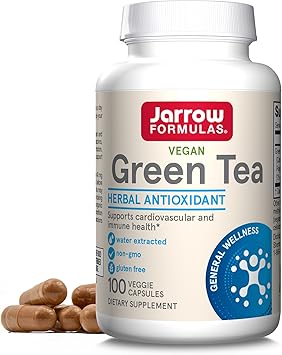
Jarrow Formulas Green Tea 500mg 100 Capsules
With 250mg of EGCG per capsule — standardized to 80% total catechins and 50% EGCG — Jarrow lands squarely in the sweet spot of the clinically studied dose range at a reasonable price, making it our top pick for most users.
- Not labeled as decaffeinated — residual caffeine content is unclear, which matters for evening dosing
- 2,600 reviews is the lowest count on this list, and standardization language may vary between production runs — always verify the current label
Affiliate link: If you buy through this link, we may earn a commission at no extra cost to you.
Buy Jarrow Formulas Green Tea 500mg 100 Capsules
Life Extension Decaffeinated Mega Green Tea Extract 725mg 100 Capsules
The highest EGCG dose per capsule on this list at ~326mg — clearly standardized and decaffeinated — makes this the top choice for users who want maximum potency in a single daily capsule, with the caveat that they should not double-dose.
- At ~326mg per capsule, a single dose approaches the conservative upper boundary of 300–400mg/day recommended for safe regular use — doubling up is not advised
- Slightly higher cost per milligram of EGCG compared to NOW Foods, and 100-capsule count means more frequent repurchasing
Affiliate link: If you buy through this link, we may earn a commission at no extra cost to you.
Buy Life Extension Decaffeinated Mega Green Tea Extract 725mg 100 Capsules
NOW Foods EGCg Green Tea Extract 400mg 180 Veg Capsules
- Standardized to ≥45% catechins total with ~30% EGCG — the per-capsule EGCG content (~120–180mg) sits at the lower end of the clinically studied range and may require two capsules to reach optimal dosing
- Standardization to total catechins rather than direct EGCG percentage is less precise and makes it harder to confirm exact EGCG delivery per capsule
Affiliate link: If you buy through this link, we may earn a commission at no extra cost to you.
Buy NOW Foods EGCg Green Tea Extract 400mg 180 Veg CapsulesCompare supplements with the same checklist we use.
Get the anti-aging supplement cheat sheet with evidence prompts, safety checks, and label-quality questions before you buy.
Comparison Table
| Category | #1 Jarrow Formulas Green Tea 500mg 100 Capsules Jarrow Formulas | #2 Life Extension Decaffeinated Mega Green Tea Extract 725mg 100 Capsules Life Extension | #3 NOW Foods EGCg Green Tea Extract 400mg 180 Veg Capsules NOW Foods |
|---|---|---|---|
| Score | 8.7/10 | 8.4/10 | 7.9/10 |
| Best For | Adults who want a mid-range dose of precisely standardized EGCG for daily use alongside an exercise routine, and who aren't sensitive to trace caffeine | Users who prefer a single-capsule daily protocol at a near-maximum evidence-aligned dose, especially those who are caffeine-sensitive or dose in the evening | Budget-conscious users who want a well-certified, decaffeinated green tea extract for long-term daily use and are comfortable taking two capsules to reach a fuller clinical dose |
| Pros |
|
|
|
| Cons |
|
|
|
What to Know About EGCG (Epigallocatechin Gallate) for Weight Loss
EGCG — epigallocatechin gallate — is the dominant catechin in green tea and the compound researchers keep coming back to when studying metabolic support. It's not a magic pill, and we won't pretend otherwise. But the evidence base here is more solid than most weight management supplements can claim: multiple randomized controlled trials and several published meta-analyses have examined its effects on body weight, fat oxidation, and energy expenditure. For adults using diet and exercise as their foundation and looking for evidence-backed supplemental support, EGCG is one of the more defensible choices on the market. The challenge is that product quality varies enormously. Standardization percentages get misreported, caffeine content is often unlabeled, and dosing ranges used in clinical research aren't always reflected in what you'll find on store shelves. This guide ranks three products we've vetted for formulation quality, third-party testing, EGCG content per serving, and value. We're focused specifically on the weight management use case — meaning thermogenesis, fat oxidation, and metabolic support — and we've grounded every claim in the available human clinical literature.
This content is for educational purposes only and is not medical advice. These statements have not been evaluated by the FDA. This product is not intended to diagnose, treat, cure, or prevent any disease.
Key Benefits of EGCG (Epigallocatechin Gallate) for Weight Loss
May support modest fat oxidation during aerobic exercise, based on human clinical data
Research suggests potential contribution to metabolic rate and thermogenesis beyond caffeine alone
Some evidence indicates support for weight maintenance after initial loss, not just acute weight reduction
How EGCG (Epigallocatechin Gallate) Supports Weight Loss
EGCG is thought to support weight management primarily through inhibition of catechol-O-methyltransferase (COMT), an enzyme that breaks down norepinephrine — the neurotransmitter that signals fat cells to release stored fat. By slowing norepinephrine degradation, EGCG may prolong the lipolytic signal, theoretically increasing fat mobilization. This mechanism works synergistically with caffeine in caffeinated green tea, which is why researchers have noted stronger thermogenic effects in caffeinated versus decaffeinated preparations — though decaffeinated EGCG still shows independent activity in some studies. EGCG also appears to influence AMP-activated protein kinase (AMPK), a cellular energy sensor involved in fat metabolism and glucose uptake. Activation of AMPK is associated with increased fatty acid oxidation in skeletal muscle. These mechanisms have solid biochemical grounding in cell and animal research, and the human clinical data — while modest — aligns directionally with what these pathways would predict. It's worth noting that EGCG's effects in humans are generally smaller than rodent models suggest, which is typical for most metabolic interventions and not a reason to dismiss the evidence.
What to Look For When Buying EGCG (Epigallocatechin Gallate)
The single most important thing to look for in an EGCG supplement is explicit EGCG standardization — not just 'green tea extract' on the label, and not just 'total catechins.' A 500mg green tea extract capsule with no standardization data could contain anywhere from 50mg to 350mg of actual EGCG. That variance is the difference between a dose that does nothing and one that matches clinical research. Look for labels that say something like '50% EGCG' or list EGCG milligrams per serving directly. Decaffeination matters more than most buyers realize. Studies examining EGCG in isolation from caffeine still show metabolic activity, but caffeinated products make it impossible to know which compound is driving any effect you notice. If you're sensitive to stimulants, dose in the afternoon, or want to take EGCG consistently without timing restrictions, a decaffeinated product is the pragmatic choice. All three products we've ranked address this to varying degrees. Third-party testing is non-negotiable in this category. Green tea extracts at higher doses carry documented liver-safety concerns at very high intake levels, and without independent verification, you can't confirm that the EGCG content on the label matches what's in the bottle. GMP certification tells you the manufacturing process meets FDA facility standards; third-party testing tells you the actual product was tested. You want both. Finally, think about your total daily dose across all sources. If you're also drinking green tea, taking a multivitamin that includes green tea extract, or using any pre-workout with EGCG, your cumulative intake can add up faster than you'd expect. Most of the clinical research showing benefit used 200–400mg EGCG per day. Staying within that range — accounting for all sources — is the reasonable target for most adults.
Dosage Guidance
Always follow your healthcare provider's recommendations. Dosages vary by individual health status, age, and goals.
Common EGCG (Epigallocatechin Gallate) Complaints (And How to Avoid Them)
Based on analysis of thousands of customer reviews across EGCG (Epigallocatechin Gallate) products.
"It gave me nausea / upset stomach"
This is the most commonly reported side effect and it's almost always avoidable. EGCG should be taken with food — not on an empty stomach. All three products we've ranked are capsules that can be taken with any meal. If GI discomfort persists even with food, consider reducing your dose and building up gradually.
"I didn't lose any weight after a month"
Realistic expectations matter here. Clinical trials typically run 8–12 weeks, and the average weight differences observed are modest — often 1–3 kg over that period compared to placebo. EGCG is not a standalone weight loss solution. Its evidence base is strongest as a metabolic support tool within a broader strategy of calorie management and exercise.
"I can't tell how much EGCG is actually in my capsule"
This is a legitimate and common frustration. Products standardized only to 'green tea extract weight' without a percentage standardization are essentially unverifiable. That's exactly why all three products we've ranked disclose either an EGCG percentage or enough standardization data (catechin percentage + EGCG percentage) to calculate actual EGCG content per capsule.
Safety & Interactions
- Pregnancy and breastfeeding: Consult your healthcare provider before taking this supplement during pregnancy or while nursing. The safety of supplemental doses beyond dietary intake has not been established in pregnant or lactating women.
- Blood thinners: If you take blood-thinning medications (e.g., warfarin, apixaban, rivaroxaban, clopidogrel, or high-dose aspirin), consult your healthcare provider BEFORE starting this supplement, as it may have additive antiplatelet or anticoagulant effects.
- Kidney disease: If you have chronic kidney disease (CKD) or any significant kidney impairment, consult your healthcare provider before taking this supplement. Some supplements can accumulate to dangerous levels when kidney function is reduced.
- Gout: Individuals with gout should consult their healthcare provider before starting this supplement. Certain supplements (e.g., collagen, fish oil, niacin) may affect uric acid levels or trigger flares in susceptible individuals.
""From a registered dietitian's perspective, EGCG is one of the more evidence-grounded supplement choices in the weight management category, but it works best as an adjunct to dietary quality and physical activity — not a substitute for them. Patients should be reminded that the absolute weight differences seen in clinical trials are modest, and that sourcing a standardized, third-party-tested product matters significantly for both efficacy and safety."
Frequently Asked Questions
Citations & Research
This page references peer-reviewed research indexed on PubMed/NCBI. Citations are provided for transparency. Always consult a qualified healthcare professional before making any medical decisions.
- [1]Willems MET, Şahin MA, Cook MD. “Matcha Green Tea Drinks Enhance Fat Oxidation During Brisk Walking in Females.” International journal of sport nutrition and exercise metabolism, 2018. doi:10.1123/ijsnem.2017-0237PMID 29345213 ↗
- [2]Chen IJ, Liu CY, Chiu JP et al. “Therapeutic effect of high-dose green tea extract on weight reduction: A randomized, double-blind, placebo-controlled clinical trial.” Clinical nutrition (Edinburgh, Scotland), 2016. doi:10.1016/j.clnu.2015.05.003PMID 26093535 ↗
- [3]Hursel R, Viechtbauer W, Westerterp-Plantenga MS. “The effects of green tea on weight loss and weight maintenance: a meta-analysis.” International journal of obesity (2005), 2009. doi:10.1038/ijo.2009.135PMID 19597519 ↗
- [4]Sarma DN, Barrett ML, Chavez ML et al. “Safety of green tea extracts: a systematic review by the US Pharmacopeia.” Drug safety, 2008. doi:10.2165/00002018-200831060-00003PMID 18484782 ↗
Ready to Try EGCG (Epigallocatechin Gallate)?
Our top pick for weight loss. Third-party tested, highly reviewed.
Affiliate link: If you buy through this link, we may earn a commission at no extra cost to you.
Shop #1 Pick — Jarrow Formulas Green Tea 500mg 100 CapsulesContinue exploring
- why EGCG matters for healthy agingSupplement overview
- weight loss — supplements that may helpGoal overview
- our Acetyl L Carnitine review for weight lossAlternative supplement
- the Ashwagandha page for weight lossAlternative supplement
- EGCG reviewed for metabolic healthSame supplement, different goal
- Berberine options for weight lossEditor pick
- we tested supplements against food sourcesCompare options
Get the evidence-graded supplement cheat sheet.
Evidence prompts, safety checks, and label-quality questions before you buy — free, straight to your inbox.
No spam. Unsubscribe anytime.