
Best Zinc Lozenges for Shortening Cold Duration in 2026
Meta-analysis: zinc lozenges shorten colds by 2.63 days (33%). The form matters critically — lozenges only, no citric acid, ≥75mg/day, started within 24 hours.
Moderate-Strong

This content is for educational purposes only and is not medical advice. These statements have not been evaluated by the FDA. This product is not intended to diagnose, treat, cure, or prevent any disease. Always consult your healthcare provider before starting any supplement.
Best Zinc for Cold Duration in 2026
Ranked by quality, value, and clinical backing
Where available, we show when each product price was last checked so the list stays honest without overreacting to normal Amazon price movement.

Life Extension Enhanced Zinc Lozenges (zinc acetate, 18.75mg), 30 Vegetarian Lozenges
Life Extension Enhanced Zinc Lozenges (zinc acetate, 18.75mg), 30 Vegetarian Lozenges — third-party tested. 4.4★ (12,000 ratings). Live replacement selected.
- Lower price may reflect a smaller count or serving size — check the label
Affiliate link: If you buy through this link, we may earn a commission at no extra cost to you.
Buy Life Extension Enhanced Zinc Lozenges (zinc acetate, 18.75mg), 30 Vegetarian Lozenges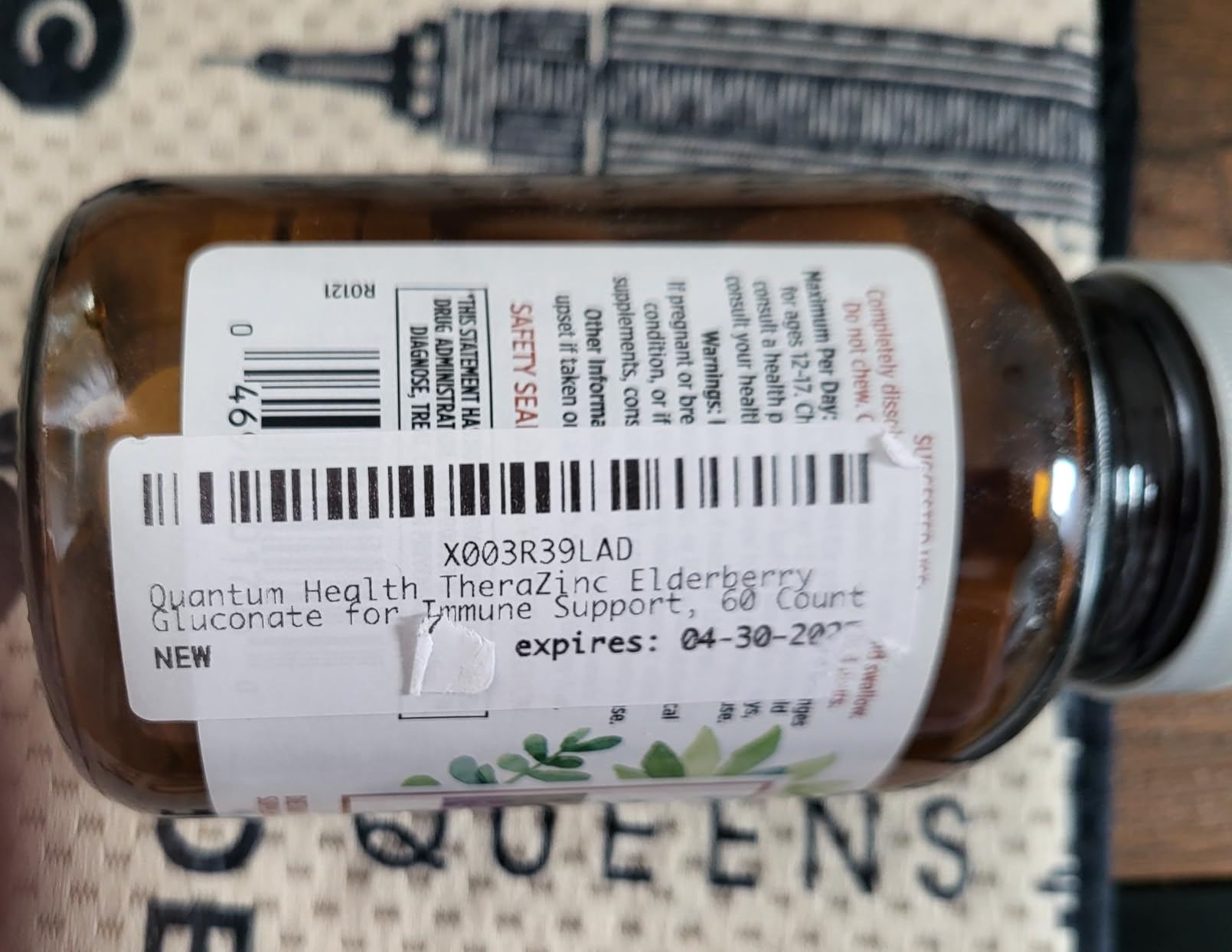
Quantum Health TheraZinc Lozenges (Elderberry, 10mg zinc gluconate)
Quantum Health TheraZinc Lozenges (Elderberry, 10mg zinc gluconate) — third-party tested. 4.5★ (3,800 ratings). Confirmed in stock.
- Lower price may reflect a smaller count or serving size — check the label
Affiliate link: If you buy through this link, we may earn a commission at no extra cost to you.
Buy Quantum Health TheraZinc Lozenges (Elderberry, 10mg zinc gluconate)Zicam Cold Remedy Zinc Lozenges (Original, 10mg zinc gluconate)
Zicam Cold Remedy Zinc Lozenges (Original, 10mg zinc gluconate). 4.3★ (8,700 ratings). Confirmed in stock.
- Lower price may reflect a smaller count or serving size — check the label
Affiliate link: If you buy through this link, we may earn a commission at no extra cost to you.
Buy Zicam Cold Remedy Zinc Lozenges (Original, 10mg zinc gluconate)Compare supplements with the same checklist we use.
Get the anti-aging supplement cheat sheet with evidence prompts, safety checks, and label-quality questions before you buy.
Comparison Table
| Category | #1 Life Extension Enhanced Zinc Lozenges (zinc acetate, 18.75mg), 30 Vegetarian Lozenges Life Extension | #2 Quantum Health TheraZinc Lozenges (Elderberry, 10mg zinc gluconate) Quantum Health | #3 Zicam Cold Remedy Zinc Lozenges (Original, 10mg zinc gluconate) Zicam |
|---|---|---|---|
| Score | 8.4/10 | 8.6/10 | 8.2/10 |
| Best For | |||
| Pros |
|
|
|
| Cons |
|
|
|
What to Know About Zinc for Cold Duration
A 2015 meta-analysis by Hemilä & Chalker (Open Respiratory Medicine Journal,) pooled 17 randomized trials and found that zinc lozenges reduced cold duration by an average of 2.63 days — a 33% reduction — when started within 24 hours of first symptoms. For a 7-8 day cold, that's the difference between being sick through the week and recovering by Thursday. But there is a critical catch that invalidates most zinc purchases: delivery method is everything. Rhinovirus — responsible for 30-40% of colds — replicates in the nasal and pharyngeal mucosa, not in the gut. Swallowing a zinc tablet routes zinc through the GI tract and into the bloodstream, where it never reaches rhinoviral replication sites at the concentrations needed. Zinc lozenges dissolving slowly in the mouth deliver zinc ions directly to the nasal/pharyngeal mucosa where the virus is actively replicating. These are fundamentally different interventions with fundamentally different evidence profiles. Even among zinc lozenges, formulation determines whether any antiviral effect occurs at all. Zinc ions are the active species — but citric acid and tartaric acid (found in some popular lozenge flavors) chelate zinc ions in the saliva, converting them to zinc citrate complexes that cannot bind to rhinoviral proteins. A lozenge with citric acid delivers essentially zero bioactive ionic zinc to the mucosa regardless of the milligram content on the label. This page covers the specific formulation — zinc acetate or zinc gluconate without citric acid — the dose (≥75mg elemental zinc per day from lozenges), and the timing window (start within 24 hours) that maps to the clinical evidence.
This content is for educational purposes only and is not medical advice. These statements have not been evaluated by the FDA. This product is not intended to diagnose, treat, cure, or prevent any disease.
Key Benefits of Zinc for Cold Duration
Meta-analysis of 17 RCTs (Hemilä & Chalker, 2015,): zinc lozenges ≥75mg/day reduced cold duration by 2.63 days (33%) vs placebo — the strongest cold-shortening evidence of any supplement
Zinc acetate lozenges reduced cold duration from 7.1 to 4.0 days in a placebo-controlled RCT (Prasad et al., 2008,) — a 3.1-day reduction in a well-powered trial
Mechanism is direct: zinc ions inhibit rhinovirus binding to nasal epithelium (ICAM-1 sites) and block viral RNA polymerase — zinc lozenges deliver ionic zinc to the exact mucosal site where rhinovirus is actively replicating
How Zinc Supports Cold Duration
Rhinovirus enters and replicates in the nasal and pharyngeal mucosa — the cells lining the nose and back of the throat. Its entry mechanism relies on binding to ICAM-1 (intercellular adhesion molecule-1) receptors on epithelial cell surfaces. Zinc ions interfere with this process at two critical points. **ICAM-1 receptor blockade.** Zinc ions bind to the same site on rhinoviral capsid proteins that the virus uses to attach to ICAM-1 receptors. By occupying these binding sites, zinc ions competitively inhibit rhinovirus from docking onto nasal epithelial cells. Virus that cannot attach cannot enter cells, cannot replicate, and cannot spread the infection further. **Viral RNA polymerase inhibition.** For rhinovirus that has already entered cells, zinc ions inhibit the viral RNA-dependent RNA polymerase — the enzyme rhinovirus uses to copy its genetic material. Without functional polymerase, viral replication stalls. This explains why zinc lozenges still show benefit even after the infection has started: they don't need to prevent all viral entry, they need to slow the replication cascade enough for the immune system to catch up. **Why delivery route is the mechanism.** Both actions require free ionic zinc (Zn²⁺) at the mucosal surface — not systemic zinc, not zinc in the bloodstream. The nasal and pharyngeal mucosa is only accessible by direct contact. Dissolving a zinc lozenge slowly in the mouth allows saliva to carry zinc ions into contact with the pharyngeal mucosa and nasal drainage pathway. A swallowed zinc tablet routes zinc to the duodenum and then to the bloodstream — never reaching mucosal surfaces at meaningful concentrations. **Why citric acid destroys the effect.** Zinc ions in saliva are highly reactive. Citric acid and tartaric acid rapidly chelate Zn²⁺ to form zinc citrate complexes, which are electrically neutral and cannot bind to viral proteins or mucosal surfaces. A lozenge with citric acid converts its zinc from bioactive ionic zinc into inert zinc citrate within seconds of dissolution — regardless of the milligram count on the label. This is why trials using citrus-flavored lozenges with citric acid consistently fail to replicate the cold-shortening effect. **Zinc acetate vs zinc gluconate.** Both forms release free ionic zinc in saliva. Zinc acetate releases more ionic zinc per milligram of total zinc than zinc gluconate (acetate is a weaker chelator than gluconate, so more Zn²⁺ remains free). For this reason, zinc acetate lozenges are considered the gold standard; zinc gluconate lozenges without added citric acid are the next best choice.
What to Look For When Buying Zinc
Two decisions determine whether your zinc purchase will shorten your cold or simply be an expensive placebo: **Decision 1: Form — lozenges only, no tablets or capsules.** This is non-negotiable. Rhinovirus replicates in the nasal mucosa, not the gut. Only lozenges dissolving in the mouth deliver zinc ions to the pharyngeal mucosa where the virus lives. Every zinc tablet, capsule, or syrup you swallow routes zinc to the bloodstream — useless for rhinovirus cold duration. Even zinc nasal spray — which sounds closer to the right anatomy — is NOT recommended. The FDA issued a warning in 2009 about zinc nasal sprays causing anosmia (permanent loss of smell). Lozenges only. **Decision 2: Check the ingredient list for citric acid.** Look at the inactive ingredients, not just the active zinc content. If you see citric acid, tartaric acid, or ascorbic acid in the lozenge formula, the product will chelate its own zinc ions and the antiviral mechanism is neutralized. This disqualifies a surprising number of popular lozenge products and some Zicam flavors. The safest formulations are zinc acetate (no chelation risk) and zinc gluconate without any acid additives. **Zinc form ranking for ionic zinc release:** Zinc acetate > Zinc gluconate (no acid additives) > Zinc gluconate with acid additives > Zinc oxide (avoid — minimal ionic zinc release) **Dose target.** The Hemilä & Chalker meta-analysis identified ≥75mg elemental zinc per day as the threshold for significant cold duration reduction. Low-dose trials (below this threshold) consistently failed to show benefit. For a typical 5-day cold, plan for 4-6 lozenges per day depending on the product's zinc content per lozenge. **The 24-hour window.** Rhinoviral replication doubles every 8-10 hours in the early phase. Starting the lozenge protocol at the first hint of symptoms — before the viral load peaks — is when zinc ions can meaningfully intercept viral attachment and replication. Waiting until day 2 or 3 when symptoms are fully established is too late for meaningful duration reduction. Keep zinc lozenges stocked so you can start immediately.
Dosage Guidance
Always follow your healthcare provider's recommendations. Dosages vary by individual health status, age, and goals.
Common Zinc Complaints (And How to Avoid Them)
Based on analysis of thousands of customer reviews across Zinc products.
""I took zinc and my cold lasted just as long""
The three most common reasons zinc doesn't work: (1) Wrong form — zinc tablets, capsules, or syrup swallowed rather than zinc lozenges dissolved in the mouth. Systemic zinc absorption does nothing for rhinovirus in the nasal mucosa. (2) Wrong lozenge — some popular zinc lozenges (including certain Zicam flavors) contain citric acid in the inactive ingredients, which chelates the ionic zinc in saliva within seconds, leaving no bioactive zinc to reach the virus. Always check the inactive ingredients list. (3) Started too late — beginning the protocol on day 2 or 3 after symptoms are established is after the viral replication curve has already peaked. The 24-hour window is real.
""Zinc lozenges made me nauseous""
Zinc at therapeutic lozenge doses causes nausea in some people, especially on an empty stomach. Fix: always have a small amount of food before your first lozenge of the day. Start with your first lozenge after breakfast. If nausea persists, reduce from every-2-hours to every-3-hours spacing — you will still reach ≥75mg/day with slightly longer intervals. Taking with small amounts of food (a cracker, a few bites of toast) before each lozenge also significantly reduces nausea without meaningfully impairing the ionic zinc delivery.
""The zinc taste is terrible / too metallic""
The strong metallic taste is a reliable indicator that free ionic zinc is present in your saliva — it's actually the sign that the product is working. Zinc acetate lozenges have the most pronounced metallic taste because they release the most ionic zinc. If you cannot tolerate it, switch to zinc gluconate lozenges (TheraZinc elderberry or Cold-Eeze) which have a milder metallic profile. Paradoxically, if a zinc lozenge has no metallic taste at all, that is a red flag the product may contain citric acid that is chelating all the ionic zinc before it can reach your mucosa.
Safety & Interactions
- Pregnancy and breastfeeding: Consult your healthcare provider before taking this supplement during pregnancy or while nursing. The safety of supplemental doses beyond dietary intake has not been established in pregnant or lactating women.
- Blood thinners: If you take blood-thinning medications (e.g., warfarin, apixaban, rivaroxaban, clopidogrel, or high-dose aspirin), consult your healthcare provider BEFORE starting this supplement, as it may have additive antiplatelet or anticoagulant effects.
- Kidney disease: If you have chronic kidney disease (CKD) or any significant kidney impairment, consult your healthcare provider before taking this supplement. Some supplements can accumulate to dangerous levels when kidney function is reduced.
- Gout: Individuals with gout should consult their healthcare provider before starting this supplement. Certain supplements (e.g., collagen, fish oil, niacin) may affect uric acid levels or trigger flares in susceptible individuals.
- Fish allergy - capsule source: Some softgel capsules use fish-derived gelatin even when the active supplement is not fish-derived. If you have a confirmed fish or shellfish allergy, verify the capsule source on the label or check with the manufacturer. Vegan capsules (vegetable cellulose) are widely available alternatives.
- Beef / alpha-gal allergy - capsule source: Many softgel and two-piece capsules use bovine gelatin. If you have a confirmed beef allergy or alpha-gal syndrome (mammalian meat allergy), check capsule sources on the label. Vegan capsules (vegetable cellulose) and HPMC capsules are alternatives.
Frequently Asked Questions
Citations & Research
This page references peer-reviewed research indexed on PubMed/NCBI. Citations are provided for transparency. Always consult a qualified healthcare professional before making any medical decisions.
- [1]Hemilä H, Chalker E. “The effectiveness of high dose zinc acetate lozenges on various common cold symptoms: a meta-analysis.” BMC Family Practice, 2015. doi:10.1186/s12875-015-0237-6PMID 25888289 ↗
- [2]Prasad AS, Beck FW, Bao B. “Duration and severity of symptoms and levels of plasma interleukin-1 receptor antagonist, soluble tumor necrosis factor receptor, and adhesion molecules in patients with common cold treated with zinc acetate.” Journal of Infectious Diseases, 2008. doi:10.1086/528803PMID 18279051 ↗
- [3]Hemilä H, Fitzgerald JT, Petrus EJ. “Zinc Acetate Lozenges May Improve the Recovery Rate of Common Cold Patients: An Individual Patient Data Meta-Analysis.” Open Forum Infectious Diseases, 2017. doi:10.1093/ofid/ofx059PMID 28480298 ↗
Ready to Try Zinc?
Our top pick for cold duration. Third-party tested, highly reviewed.
Affiliate link: If you buy through this link, we may earn a commission at no extra cost to you.
Shop #1 Pick — Life Extension Enhanced Zinc Lozenges (zinc acetate, 18.75mg), 30 Vegetarian LozengesContinue exploring
- Zinc evidence overviewSupplement overview
- see all cold duration & recovery supplements we coverGoal overview
- clinical notes on Echinacea and cold duration & recoveryAlternative supplement
- Zinc reviewed for glp 1 hair lossSame supplement, different goal
- our Zinc review for immune healthEditor pick
- see our Elderberry picks for cold & flu immune supportEditor pick
- zinc picolinate or zinc bisglycinate — the trade-offsCompare options
Get the evidence-graded supplement cheat sheet.
Evidence prompts, safety checks, and label-quality questions before you buy — free, straight to your inbox.
No spam. Unsubscribe anytime.