
Best Vitamin C Supplements for Skin Aging in 2026
Oral vitamin C is the cofactor for collagen synthesis. Liposomal forms improve absorption. RCT evidence on skin elasticity in older women reviewed.

This content is for educational purposes only and is not medical advice. These statements have not been evaluated by the FDA. This product is not intended to diagnose, treat, cure, or prevent any disease. Always consult your healthcare provider before starting any supplement.
Best Vitamin C for Skin Aging in 2026
Ranked by quality, value, and clinical backing
Where available, we show when each product price was last checked so the list stays honest without overreacting to normal Amazon price movement.

LivOn Labs Lypo-Spheric Vitamin C 1,000mg
Users who want maximum vitamin C bioavailability for collagen synthesis support and can justify the premium
- Highest cost on the list — premium for liposomal delivery
- Liquid gel packet format is less convenient than capsules; must be taken with water
- Taste is notably unpleasant for some users
Affiliate link: If you buy through this link, we may earn a commission at no extra cost to you.
Buy LivOn Labs Lypo-Spheric Vitamin C 1,000mg
NOW Foods Vitamin C-1000 with Bioflavonoids
Budget-conscious adults wanting a reliable high-dose vitamin C with bioflavonoid co-factors at best value
- Standard ascorbic acid absorption is saturable — at 1,000mg, intestinal absorption efficiency drops below 50%; higher doses do not proportionately raise plasma levels
- Tablet form less flexible for dose splitting than capsules
Affiliate link: If you buy through this link, we may earn a commission at no extra cost to you.
Buy NOW Foods Vitamin C-1000 with Bioflavonoids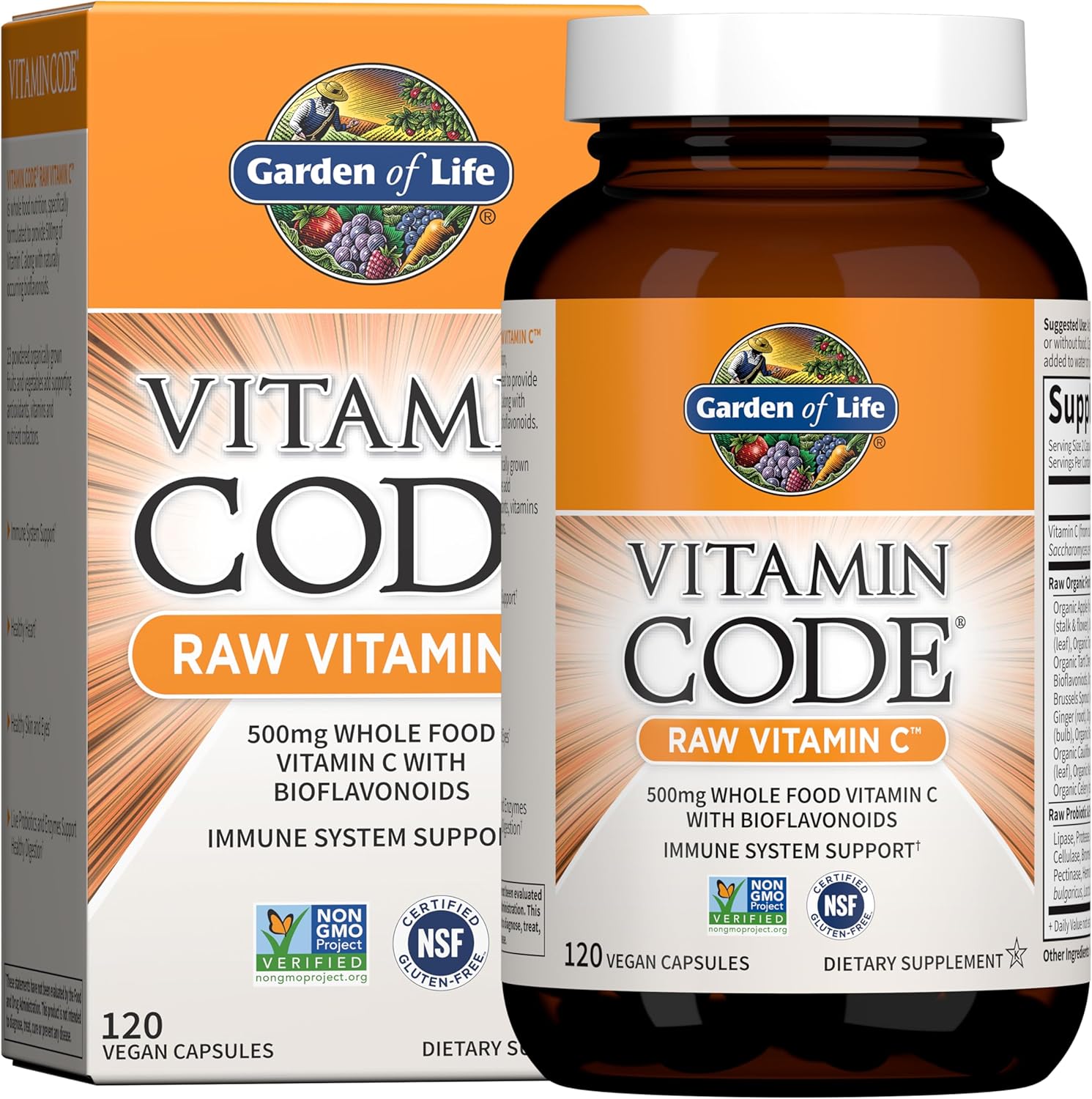
Garden of Life Vitamin Code Raw Vitamin C 500mg Whole Food Capsules with Fruit and Veggie Blend and Probiotics, 120 Capsules
Users who strongly prefer whole food-derived vitamin C and organic sourcing over synthetic ascorbic acid, and who supplement at lower doses
- 180mg is substantially below the 500–1,000mg/day range most relevant for collagen synthesis research
- Higher cost per mg of vitamin C vs standard ascorbic acid options
Affiliate link: If you buy through this link, we may earn a commission at no extra cost to you.
Buy Garden of Life Vitamin Code Raw Vitamin C 500mg Whole Food Capsules with Fruit and Veggie Blend and Probiotics, 120 CapsulesCompare supplements with the same checklist we use.
Get the anti-aging supplement cheat sheet with evidence prompts, safety checks, and label-quality questions before you buy.
Comparison Table
| Category | #1 LivOn Labs Lypo-Spheric Vitamin C 1,000mg LivOn Labs | #2 NOW Foods Vitamin C-1000 with Bioflavonoids NOW Foods | #3 Garden of Life Vitamin Code Raw Vitamin C 500mg Whole Food Capsules with Fruit and Veggie Blend and Probiotics, 120 Capsules Garden of Life |
|---|---|---|---|
| Score | 9.3/10 | 9/10 | 8.5/10 |
| Best For | Users who want maximum vitamin C bioavailability for collagen synthesis support and can justify the premium | Budget-conscious adults wanting a reliable high-dose vitamin C with bioflavonoid co-factors at best value | Users who strongly prefer whole food-derived vitamin C and organic sourcing over synthetic ascorbic acid, and who supplement at lower doses |
| Pros |
|
|
|
| Cons |
|
|
|
What to Know About Vitamin C for Skin Aging
Most of the vitamin C and skin content you find online is about topical vitamin C serums. That is a different product category entirely. Topical vitamin C addresses surface-level pigmentation and free radical damage at the skin surface. Oral vitamin C — what you take as a supplement — works from the inside, and its primary skin aging mechanism is one of the most biochemically fundamental in the body: it is the rate-limiting cofactor for collagen biosynthesis. Collagen is the structural protein that gives skin its firmness and elasticity. As we age, collagen synthesis slows and existing collagen undergoes increasing degradation — the progressive loss of skin firmness, elasticity, and the development of wrinkles are direct consequences. Vitamin C is not a nice-to-have in collagen production: it is biochemically essential. Two enzymes — prolyl hydroxylase and lysyl hydroxylase — require vitamin C as a mandatory cofactor to hydroxylate proline and lysine residues in procollagen. Hydroxylation is required for the collagen triple helix to form and for collagen cross-linking that gives connective tissue its tensile strength. Without adequate vitamin C, collagen synthesis does not proceed normally. The liposomal delivery question matters here. Standard ascorbic acid has a well-characterized intestinal absorption ceiling: at 200mg, absorption is approximately 70%; at 1,000mg, it drops to about 50%; at higher doses, most of the vitamin C passes through unabsorbed. Liposomal formulations encapsulate ascorbic acid in phospholipid vesicles that are absorbed through a different pathway (lymphatic, like fats), bypassing the saturable intestinal transport mechanism and achieving substantially higher plasma vitamin C levels. For the related topic of collagen peptide supplementation, see our collagen for skin health page.
This content is for educational purposes only and is not medical advice. These statements have not been evaluated by the FDA. This product is not intended to diagnose, treat, cure, or prevent any disease.
Key Benefits of Vitamin C for Skin Aging
Vitamin C is among the most studied supplements for supporting skin aging.
Multiple human clinical trials have evaluated Vitamin C's safety and efficacy at common doses.
Vitamin C may be particularly relevant for adults over 45 seeking evidence-based support for skin aging.
How Vitamin C Supports Skin Aging
Vitamin C is a required cofactor for prolyl hydroxylase and lysyl hydroxylase — the enzymes that hydroxylate proline and lysine residues during collagen synthesis. Without adequate vitamin C, these hydroxylation reactions cannot proceed, producing unstable collagen that cannot form the triple helix structure required for skin tensile strength. Beyond collagen synthesis, vitamin C acts as a potent antioxidant in the aqueous compartments of skin cells, neutralizing free radicals generated by UV exposure and environmental pollution before they can cause cross-linking damage to existing collagen and DNA. Skin vitamin C levels decline significantly with age and sun exposure.
What to Look For When Buying Vitamin C
Products were selected based on: (1) delivery mechanism — liposomal vitamin C is specifically prioritized for the skin/collagen application due to superior bioavailability; (2) dose — 500–1,000mg/day is the range most consistently associated with collagen synthesis and skin benefit in research; (3) bioflavonoid co-factors — citrus bioflavonoids (hesperidin, rutin) may enhance vitamin C stability and recycling; (4) brand quality and certification; (5) value per mg bioavailable vitamin C.
Dosage Guidance
Always follow your healthcare provider's recommendations. Dosages vary by individual health status, age, and goals.
Common Vitamin C Complaints (And How to Avoid Them)
Based on analysis of thousands of customer reviews across Vitamin C products.
"Isn't vitamin C for skin about serums and topical application? Why would I take it orally?"
Topical vitamin C and oral vitamin C address different mechanisms. Topical ascorbic acid acts primarily on the skin surface: it inhibits melanin synthesis (for hyperpigmentation), neutralizes UV-induced free radicals at the stratum corneum, and can slightly stimulate surface-level collagen. Oral vitamin C is a systemic cofactor for collagen biosynthesis throughout the body — including the deep dermal layers where structural collagen is produced by fibroblasts. You cannot effectively deliver enough vitamin C to deep dermal fibroblasts through topical application; it must come from systemic circulation. If your goal is skin elasticity and slowing structural collagen loss, oral supplementation addresses the mechanism that topical serums cannot reach.
"I eat plenty of fruit and vegetables. Do I need to supplement vitamin C for skin benefits?"
A diet rich in vitamin C-containing foods (citrus, bell peppers, broccoli, strawberries) can maintain adequate plasma vitamin C levels (approximately 60–80 micromol/L at adequate dietary intake). This is sufficient for preventing deficiency-related collagen impairment. Whether supplemental vitamin C above adequacy (pushing plasma levels to 70–80+ micromol/L) provides additional skin aging benefits is an active research question. Some RCT evidence suggests benefits at supplemental doses (500–1,000mg/day) in older women even without overt deficiency. If you eat a consistently high-fruit and vegetable diet and are not under significant oxidative stress, supplemental vitamin C provides less incremental benefit than in people with suboptimal dietary intake.
"Why would I pay more for liposomal vitamin C when regular ascorbic acid is much cheaper?"
The liposomal premium is justified specifically when your goal is achieving high plasma vitamin C concentrations — as relevant for maximizing collagen synthesis cofactor availability. At 1,000mg/day of standard ascorbic acid, intestinal absorption efficiency drops to approximately 46–50%, and a meaningful portion passes through unabsorbed. Liposomal encapsulation achieves plasma vitamin C concentrations substantially higher than equivalent oral doses of standard ascorbic acid. Whether the higher plasma levels produce meaningfully different skin outcomes has not been proven in head-to-head skin RCTs. For general vitamin C adequacy (immune support, baseline antioxidant function), standard ascorbic acid at 500mg/day is an excellent value choice. For skin-focused collagen synthesis optimization, the liposomal bioavailability advantage is more relevant.
Safety & Interactions
- Pregnancy and breastfeeding: Consult your healthcare provider before taking this supplement during pregnancy or while nursing. The safety of supplemental doses beyond dietary intake has not been established in pregnant or lactating women.
- Blood thinners: If you take blood-thinning medications (e.g., warfarin, apixaban, rivaroxaban, clopidogrel, or high-dose aspirin), consult your healthcare provider BEFORE starting this supplement, as it may have additive antiplatelet or anticoagulant effects.
- Kidney disease: If you have chronic kidney disease (CKD) or any significant kidney impairment, consult your healthcare provider before taking this supplement. Some supplements can accumulate to dangerous levels when kidney function is reduced.
- Gout: Individuals with gout should consult their healthcare provider before starting this supplement. Certain supplements (e.g., collagen, fish oil, niacin) may affect uric acid levels or trigger flares in susceptible individuals.
- Fish allergy - capsule source: Some softgel capsules use fish-derived gelatin even when the active supplement is not fish-derived. If you have a confirmed fish or shellfish allergy, verify the capsule source on the label or check with the manufacturer. Vegan capsules (vegetable cellulose) are widely available alternatives.
- Beef / alpha-gal allergy - capsule source: Many softgel and two-piece capsules use bovine gelatin. If you have a confirmed beef allergy or alpha-gal syndrome (mammalian meat allergy), check capsule sources on the label. Vegan capsules (vegetable cellulose) and HPMC capsules are alternatives.
""The oral vs topical vitamin C distinction is crucial for this content's differentiation from the SERP landscape, which is saturated with topical serum comparisons. Oral vitamin C functions as a systemic collagen synthesis cofactor — it provides the biochemical requirement for collagen to be built throughout the body, including deeper dermal layers inaccessible to topical application. Topical vitamin C addresses surface pigmentation and oxidative stress at the stratum corneum level. They are complementary rather than competing — but the oral mechanism is more fundamental to collagen biology and is largely ignored in skin aging content. Liposomal vitamin C's bioavailability advantage is real and measurable (peak plasma concentrations 1.7–4x higher than equivalent oral ascorbic acid dose in some studies), though whether this translates to meaningfully better skin outcomes than well-dosed standard ascorbic acid has not been proven in head-to-head RCTs specifically for skin endpoints."
— Angelique Nicole R. Villegas, RND, Registered Nutritionist Dietitian · PRC Philippines · License #0023950
Frequently Asked Questions
Citations & Research
This page references peer-reviewed research indexed on PubMed/NCBI. Citations are provided for transparency. Always consult a qualified healthcare professional before making any medical decisions.
- [1]Pullar JM, Carr AC, Vissers MCM. The roles of vitamin C in skin health. Nutrients. 2017;9(8):866.PMID 28805671 ↗
- [2]Garcia-Closas R, Berenguer A, Tormo MJ, et al. Dietary sources of vitamin C, vitamin E and specific carotenoids in Spain. Br J Nutr. 2004;91(6):1005-1011.PMID 15182404 ↗
- [3]Padayatty SJ, Sun H, Wang Y, et al. Vitamin C pharmacokinetics: implications for oral and intravenous use. Ann Intern Med. 2004;140(7):533-537.PMID 15068981 ↗
Ready to Try Vitamin C?
Our top pick for skin aging. Third-party tested, highly reviewed.
Affiliate link: If you buy through this link, we may earn a commission at no extra cost to you.
Shop #1 Pick — LivOn Labs Lypo-Spheric Vitamin C 1,000mgContinue exploring
- why Vitamin C matters for healthy agingSupplement overview
- see all skin aging supplements we coverGoal overview
- evidence notes on Collagen for skin agingAlternative supplement
- the Glutathione page for skin agingAlternative supplement
- how we rate Vitamin C for immune supportSame supplement, different goal
- best Collagen for skin healthEditor pick
- Astaxanthin reviewed for anti agingEditor pick
- supplements vs food sources comparedCompare options
Get the evidence-graded supplement cheat sheet.
Evidence prompts, safety checks, and label-quality questions before you buy — free, straight to your inbox.
No spam. Unsubscribe anytime.