
Best Vitamin C for Immune Support in 2026 — Cochrane Evidence, Absorption Science, and the Right Form
29 RCTs settled it: vitamin C doesn't prevent colds but cuts duration 8-14%. We explain the forms that actually absorb and who benefits most.
duration reduction in high-stress populations; evidence for general prevention weaker

This content is for educational purposes only and is not medical advice. These statements have not been evaluated by the FDA. This product is not intended to diagnose, treat, cure, or prevent any disease. Always consult your healthcare provider before starting any supplement.
Best Vitamin C (Ascorbic Acid) for Immune Support in 2026
Ranked by quality, value, and clinical backing
Where available, we show when each product price was last checked so the list stays honest without overreacting to normal Amazon price movement.
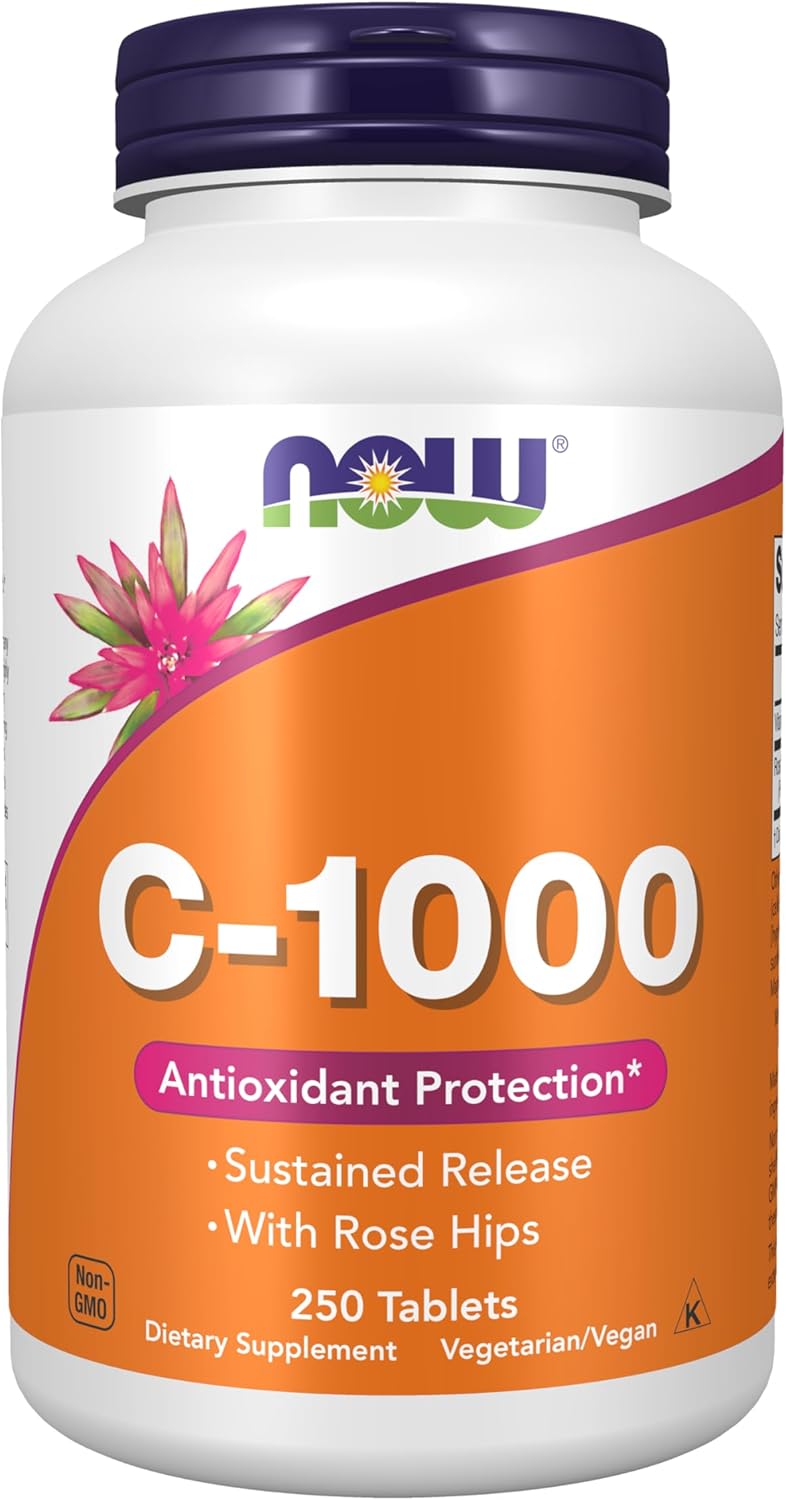
NOW Foods Vitamin C-1000 Sustained Release
Best overall vitamin C for adults seeking consistent immune cell saturation. The sustained-release matrix addresses the core absorption limitation — releasing 1000mg over 8 hours maintains plasma vitamin C above immune-cell-saturation thresholds throughout the day without the absorption plateau associated with single-dose high ascorbic acid. Rose hips bioflavonoids may enhance absorption and provide complementary antioxidant activity. NOW Foods passes ConsumerLab quality testing. For daily immune support in adults, this is the optimal formulation at the optimal price.
- Not suitable for those who cannot swallow large tablets (sustained-release tablets cannot be split or crushed)
- Bioflavonoid absorption enhancement is modest vs liposomal delivery
Affiliate link: If you buy through this link, we may earn a commission at no extra cost to you.
Buy NOW Foods Vitamin C-1000 Sustained Release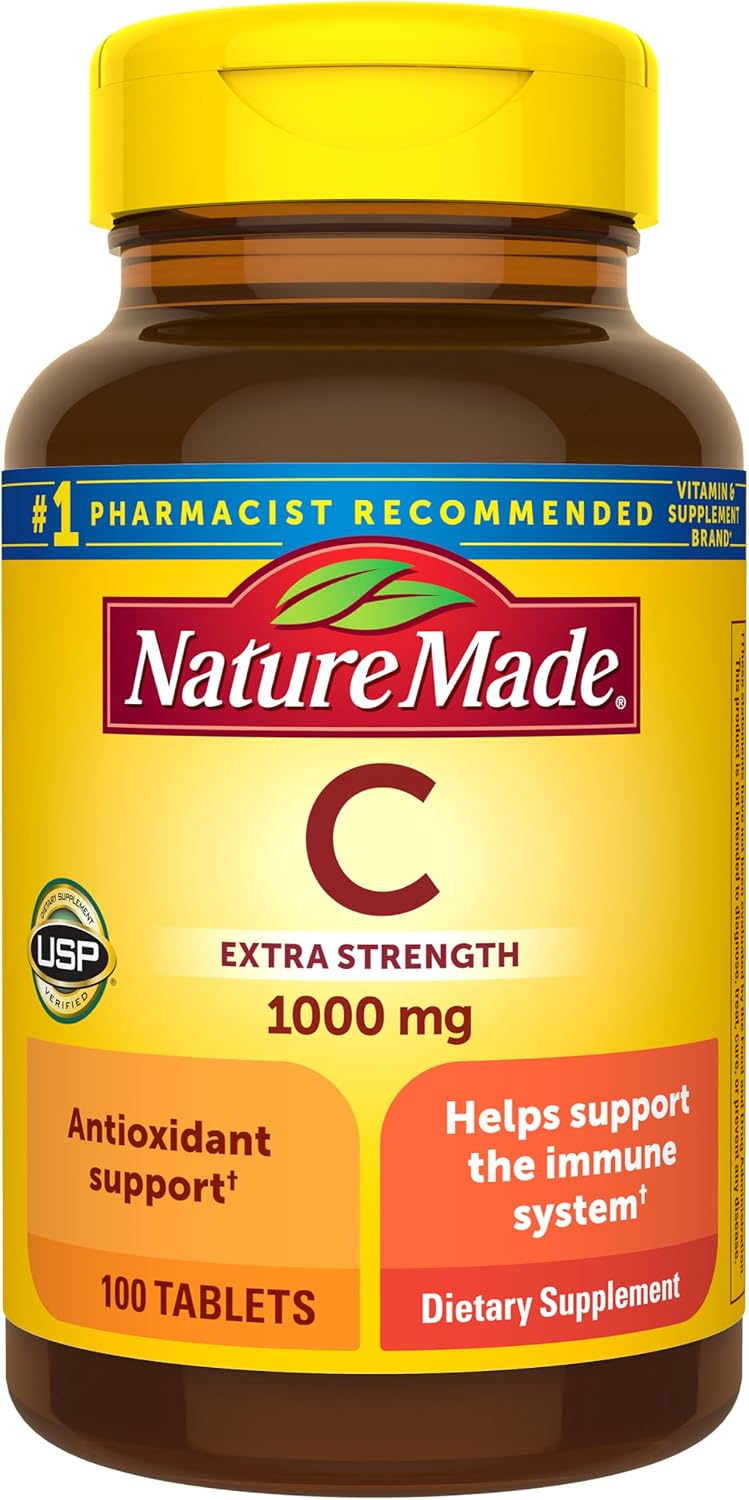
Nature Made Vitamin C 1000mg USP
Best for those prioritizing verified quality and simplicity. USP Verification is the gold standard for OTC supplement accuracy and contamination standards. With 18,700+ reviews, Nature Made Vitamin C 1000mg is the most consumer-validated product on this list. The trade-off: single-dose 1000mg immediate release means approximately 50% absorption efficiency vs the 80%+ achievable with divided dosing or sustained release. For a simple, highest-trust option — this is it.
- Single 1000mg immediate release exceeds absorption plateau — ~500mg actually absorbed vs theoretical 1000mg
- No bioflavonoids; no sustained release; basic formulation
Affiliate link: If you buy through this link, we may earn a commission at no extra cost to you.
Buy Nature Made Vitamin C 1000mg USP
LivOn Laboratories Lypo-Spheric Vitamin C, 1000mg, 30 Packets
Best absorption for those who want maximum plasma vitamin C saturation. Liposomal delivery bypasses intestinal transporter saturation entirely — liposomes are absorbed via intestinal lymphatics, achieving plasma concentrations 1.5–2× higher than equivalent doses of standard ascorbic acid. This is the only form that meaningfully exceeds the absorption ceiling of oral ascorbic acid. The significant cost premium is the primary barrier. Appropriate for older adults with absorption concerns, immunocompromised individuals, or those who have tried standard vitamin C and want to ensure maximum tissue delivery.
- Sachet format is less convenient; some users dislike the taste
- Clinical immune outcomes evidence for liposomal specifically is limited vs extensive evidence for standard ascorbic acid
Affiliate link: If you buy through this link, we may earn a commission at no extra cost to you.
Buy LivOn Laboratories Lypo-Spheric Vitamin C, 1000mg, 30 PacketsCompare supplements with the same checklist we use.
Get the anti-aging supplement cheat sheet with evidence prompts, safety checks, and label-quality questions before you buy.
Comparison Table
| Category | #1 NOW Foods Vitamin C-1000 Sustained Release NOW Foods | #2 Nature Made Vitamin C 1000mg USP Nature Made | #3 LivOn Laboratories Lypo-Spheric Vitamin C, 1000mg, 30 Packets LivOn Labs |
|---|---|---|---|
| Score | 9.2/10 | 8.7/10 | 7.8/10 |
| Best For | Adults wanting consistent daily immune cell vitamin C saturation with the best value sustained-release form | Adults who prioritize USP quality verification and pharmacist-recommended brand simplicity | Adults with absorption concerns or those wanting maximum vitamin C plasma levels regardless of cost |
| Pros |
|
|
|
| Cons |
|
|
|
What to Know About Vitamin C (Ascorbic Acid) for Immune Support
Vitamin C is the world's most popular supplement and one of its most misunderstood. The clinical evidence on what it actually does for immune function is substantially different from what most product labels and marketing materials suggest — and understanding the nuanced evidence leads to better supplementation decisions. The definitive reference is the **Hemilä & Chalker 2013 Cochrane review** (PMID 23440782) — a systematic analysis of 29 randomized controlled trials with 11,000+ participants examining vitamin C supplementation and common cold outcomes. Key findings: 1. **Regular vitamin C supplementation does NOT prevent colds** in the general population — this has been tested extensively and the evidence consistently shows no statistically significant reduction in cold incidence with daily supplementation 2. **Vitamin C does reduce cold duration** — by approximately 8% in adults and 14% in children. A reduction from 7 days to 6.4 days is modest but statistically consistent across trials 3. **The most compelling evidence is in high-physical-stress populations** — in soldiers, marathon runners, and ski troops, vitamin C supplementation reduced cold incidence by 50% (p<0.001). This subgroup effect is substantially larger and is the strongest evidence for vitamin C as an immune supplement 4. **Therapeutic high-dose vitamin C during a cold** (once you are already sick) reduced duration by 8% in some trials but the evidence is less consistent The more compelling evidence for adults 50+ lies beyond the cold literature. Vitamin C is: - The **primary water-soluble antioxidant** in plasma, regenerating oxidized vitamin E - **Concentrated 50–100× in immune cells** (neutrophils, lymphocytes) compared to plasma — suggesting active cellular uptake and a specialized immune function - An **essential cofactor for collagen hydroxylation** — relevant for respiratory epithelial barrier integrity that represents the first physical immune defense For older adults specifically: intestinal absorption of vitamin C becomes less efficient above 200mg per single dose, and plasma vitamin C levels tend to be lower in older adults. This creates a pharmacological rationale for either liposomal forms or divided dosing (multiple smaller doses rather than one large dose).
This content is for educational purposes only and is not medical advice. These statements have not been evaluated by the FDA. This product is not intended to diagnose, treat, cure, or prevent any disease.
Key Benefits of Vitamin C (Ascorbic Acid) for Immune Support
Hemilä 2013 Cochrane (29 RCTs, 11,306 participants): regular vitamin C supplementation reduced cold duration by 8% in adults and 14% in children — consistent across trials; in high-physical-stress populations (military, marathon runners), vitamin C reduced cold incidence by 50% (RR=0.48, p<0.001)
Neutrophils and lymphocytes concentrate vitamin C 50–100× above plasma levels during active immune response — research suggests this active accumulation is required for optimal phagocytic killing, lymphocyte proliferation, and antibody production; maintaining adequate plasma vitamin C ensures immune cell saturation capacity
Johnston 1999 pharmacokinetics: single doses above 200mg have progressively declining absorption efficiency (50% at 1000mg, 30% at 2000mg) — divided dosing (2× 500mg vs 1× 1000mg) or sustained-release forms achieve meaningfully higher bioavailable vitamin C for immune cell loading
How Vitamin C (Ascorbic Acid) Supports Immune Support
Vitamin C (ascorbic acid) supports immune function through four distinct mechanisms that span antioxidant chemistry, immune cell biology, and structural barrier maintenance. **1. Neutrophil function enhancement.** Neutrophils are the first-responding immune cells — within minutes of infection, they are recruited to the site and kill pathogens through a process called oxidative burst, releasing reactive oxygen species (ROS) to destroy bacteria and viruses. This process consumes large amounts of vitamin C as an antioxidant to protect the neutrophil itself from ROS damage (neutrophils commit suicide after an oxidative burst — vitamin C extends their functional lifespan). Vitamin C is actively transported into neutrophils via SVCT2 transporters, concentrating it to 50–100× plasma levels. Deficient neutrophils have impaired chemotaxis, phagocytic activity, and killing capacity. **2. Lymphocyte proliferation and antibody production support.** T-cell and B-cell proliferation in response to infection requires adequate vitamin C. Vitamin C supports lymphocyte differentiation and proliferation through several mechanisms including its role in protecting DNA from oxidative damage during the rapid cell division of immune activation, and its involvement in collagen synthesis required for lymphoid tissue structure. **3. Antioxidant network — vitamin E regeneration.** Vitamin C is the primary water-soluble antioxidant in human plasma and the key regenerator of vitamin E (tocopherol). When vitamin E neutralizes a free radical, it becomes the vitamin E radical (tocopheroxyl radical) — vitamin C donates an electron to regenerate vitamin E back to its active form. This antioxidant network interaction means that adequate vitamin C status amplifies the effectiveness of the entire cellular antioxidant system, reducing the cumulative oxidative burden that impairs immune cell function. **4. Epithelial barrier integrity.** The mucosal epithelium of the respiratory and gastrointestinal tracts is the first physical barrier against pathogens — vitamin C is an essential cofactor for prolyl hydroxylase and lysyl hydroxylase, the enzymes that hydroxylate proline and lysine residues in collagen. Without adequate vitamin C, collagen lacks sufficient cross-links, weakening epithelial barrier structural integrity. This structural role is separate from the immune cell mechanisms but contributes to the first-line defense against respiratory infections. **The absorption plateau and its implications.** At a single oral dose of 200mg, approximately 80% of vitamin C is absorbed via SVCT1 transporters in the small intestine. At 1000mg, absorption efficiency drops to approximately 50%; at 2000mg, to approximately 30%. This saturation is due to transporter capacity limits — not all the vitamin C taken in a single large dose can be absorbed. For adults seeking to maintain consistently high plasma vitamin C for immune cell saturation, the practical implication is: (a) split doses (500mg twice daily outperforms 1000mg once daily for achieving higher plasma levels) or (b) sustained-release forms that release slowly over 8+ hours, keeping delivery within the efficient absorption window throughout. Liposomal vitamin C bypasses SVCT1 entirely — it is absorbed via intestinal lymphatics rather than active transport, achieving 1.5–2× higher plasma levels than equivalent doses of standard ascorbic acid.
What to Look For When Buying Vitamin C (Ascorbic Acid)
**For daily immune support with best absorption value:** NOW Foods Sustained Release is the optimal choice for most adults. The $0.13/day cost for absorption-optimized sustained-release delivery is unmatched in this category. **For athletes and people under high physical stress:** The Cochrane high-stress subgroup showed 50% cold incidence reduction with regular supplementation. NSF Sport-certified supplements are ideal for athletes who need certified-clean products. The 500mg × 2/day divided dosing from This product also optimizes absorption. **For maximum simplicity and verified quality:** Nature Made USP at $0.12/day and 18,700+ reviews is the pharmacist-recommended standard. The absorption efficiency at 1000mg single dose is lower (~50%), but for most people the 500mg effectively absorbed is still well above what's needed for immune cell saturation. **For older adults or those with GI sensitivity:** Liposomal vitamin C (LivOn Labs) achieves the highest plasma levels without the GI discomfort some people experience from high-dose ascorbic acid. Sodium ascorbate (the form in LivOn's product) is also less acidic and gentler on stomach than standard ascorbic acid. The cost is the significant barrier. **Bioflavonoids:** Both NOW and Some products include bioflavonoids (rose hips and citrus respectively). Bioflavonoids may modestly enhance vitamin C absorption and have independent antioxidant activity. The evidence for bioflavonoid-enhanced vitamin C over plain ascorbic acid is limited but the inclusion is a positive quality indicator. **Buffered vs ascorbic acid forms:** Mineral ascorbates (calcium ascorbate, sodium ascorbate, magnesium ascorbate) have the same vitamin C bioactivity as ascorbic acid and are gentler on the stomach. For people who experience GI discomfort with ascorbic acid, buffered forms are an appropriate alternative — the LivOn Labs product uses sodium ascorbate.
Dosage Guidance
Always follow your healthcare provider's recommendations. Dosages vary by individual health status, age, and goals.
Common Vitamin C (Ascorbic Acid) Complaints (And How to Avoid Them)
Based on analysis of thousands of customer reviews across Vitamin C (Ascorbic Acid) products.
""I take 1000mg of vitamin C every day and I still get sick""
This is expected based on the Cochrane evidence — regular vitamin C supplementation in the general population does not prevent colds. The large 2013 Cochrane review (29 RCTs, 11,000+ participants) consistently showed no significant reduction in cold incidence in regular, healthy adults. What vitamin C does do is modestly shorten cold duration (~8% shorter = about half a day for a typical adult cold) and provides substantially larger benefits if you are under high physical stress. If your goal is preventing colds, the evidence points more strongly toward zinc (lozenges taken within 24 hours of onset, Cochrane 2015: 40% duration reduction) or adequate vitamin D levels. Vitamin C's most important long-term immune contribution may be maintaining immune cell antioxidant capacity over years, not preventing any individual cold.
""High-dose vitamin C gives me diarrhea""
This is a well-known and common side effect — it's called 'bowel tolerance.' Above approximately 1000–2000mg single dose for most people, unabsorbed ascorbic acid reaches the colon, draws water osmotically, and causes loose stools. Three practical solutions: (1) switch to a sustained-release form (releases slowly, never overwhelming intestinal absorption capacity at any moment); (2) use sodium ascorbate or calcium ascorbate (buffered forms that are gentler on the GI tract than ascorbic acid); (3) divide your daily dose into smaller amounts taken with meals — 250mg four times daily achieves higher total absorption than 1000mg once daily with fewer GI effects. Liposomal vitamin C avoids the intestinal issue entirely but at significantly higher cost.
Safety & Interactions
- Pregnancy and breastfeeding: Consult your healthcare provider before taking this supplement during pregnancy or while nursing. The safety of supplemental doses beyond dietary intake has not been established in pregnant or lactating women.
- Blood thinners: If you take blood-thinning medications (e.g., warfarin, apixaban, rivaroxaban, clopidogrel, or high-dose aspirin), consult your healthcare provider BEFORE starting this supplement, as it may have additive antiplatelet or anticoagulant effects.
- Kidney disease: If you have chronic kidney disease (CKD) or any significant kidney impairment, consult your healthcare provider before taking this supplement. Some supplements can accumulate to dangerous levels when kidney function is reduced.
- Gout: Individuals with gout should consult their healthcare provider before starting this supplement. Certain supplements (e.g., collagen, fish oil, niacin) may affect uric acid levels or trigger flares in susceptible individuals.
- Fish allergy - capsule source: Some softgel capsules use fish-derived gelatin even when the active supplement is not fish-derived. If you have a confirmed fish or shellfish allergy, verify the capsule source on the label or check with the manufacturer. Vegan capsules (vegetable cellulose) are widely available alternatives.
- Beef / alpha-gal allergy - capsule source: Many softgel and two-piece capsules use bovine gelatin. If you have a confirmed beef allergy or alpha-gal syndrome (mammalian meat allergy), check capsule sources on the label. Vegan capsules (vegetable cellulose) and HPMC capsules are alternatives.
""Vitamin C is a case study in supplement marketing vs evidence. The 'megadose vitamin C cures colds' narrative has been tested exhaustively and the evidence does not support cold prevention in the general population. What the evidence does show is more nuanced and arguably more useful: modest but consistent duration reduction, meaningful incidence reduction in high-stress populations, and critical roles in immune cell function that go beyond the cold literature. For adults 50+, the most underappreciated aspect of vitamin C is the absorption physiology. Plasma vitamin C levels decline with age, and the intestinal transporter capacity that limits absorption above 200mg/dose becomes even more relevant. An older adult taking a single 1000mg immediate-release tablet is absorbing perhaps 500mg — and plasma levels are still dropping by the next evening. Sustained-release forms, divided dosing, or liposomal vitamin C are genuinely better pharmacological choices for this population and are worth a few cents per day premium. Combining vitamin C with zinc and vitamin D creates a basic immune support foundation that addresses three distinct immune mechanisms — antioxidant/collagen (vitamin C), antiviral/T-cell maturation (zinc), and innate/adaptive immune signaling (vitamin D) — all for less than $1/day."
— Angelique Nicole R. Villegas, RND, Registered Nutritionist Dietitian · PRC Philippines · License #0023950
Frequently Asked Questions
Citations & Research
This page references peer-reviewed research indexed on PubMed/NCBI. Citations are provided for transparency. Always consult a qualified healthcare professional before making any medical decisions.
- [1]Hemilä H, Chalker E. Vitamin C for preventing and treating the common cold. Cochrane Database Syst Rev. 2013;(1):CD000980.PMID 23440782 ↗
- [2]Carr AC, Maggini S. Vitamin C and Immune Function. Nutrients. 2017;9(11):1211.PMID 29099763 ↗
Ready to Try Vitamin C (Ascorbic Acid)?
Our top pick for immune support. Third-party tested, highly reviewed.
Affiliate link: If you buy through this link, we may earn a commission at no extra cost to you.
Shop #1 Pick — NOW Foods Vitamin C-1000 Sustained ReleaseContinue exploring
- our full Vitamin C reviewSupplement overview
- our immune support supplement guideGoal overview
- Andrographis — an option to consider for immune supportAlternative supplement
- Arabinogalactan and immune support: what to knowAlternative supplement
- clinical notes on Vitamin C and iron deficiencySame supplement, different goal
- Vitamin C and skin aging: what to knowEditor pick
- which form is right for youCompare options
Get the evidence-graded supplement cheat sheet.
Evidence prompts, safety checks, and label-quality questions before you buy — free, straight to your inbox.
No spam. Unsubscribe anytime.