
Best Vitamin C (Ascorbic Acid) for Iron Deficiency: What the Evidence Actually Says
We compared 3 vitamin C supplements for non-heme iron absorption. See which dose and form actually moves the needle, backed by clinical evidence.
duration reduction in high-stress populations; evidence for general prevention weaker

This content is for educational purposes only and is not medical advice. These statements have not been evaluated by the FDA. This product is not intended to diagnose, treat, cure, or prevent any disease. Always consult your healthcare provider before starting any supplement.
Best Vitamin C (Ascorbic Acid) for Iron Deficiency in 2026
Ranked by quality, value, and clinical backing
Where available, we show when each product price was last checked so the list stays honest without overreacting to normal Amazon price movement.
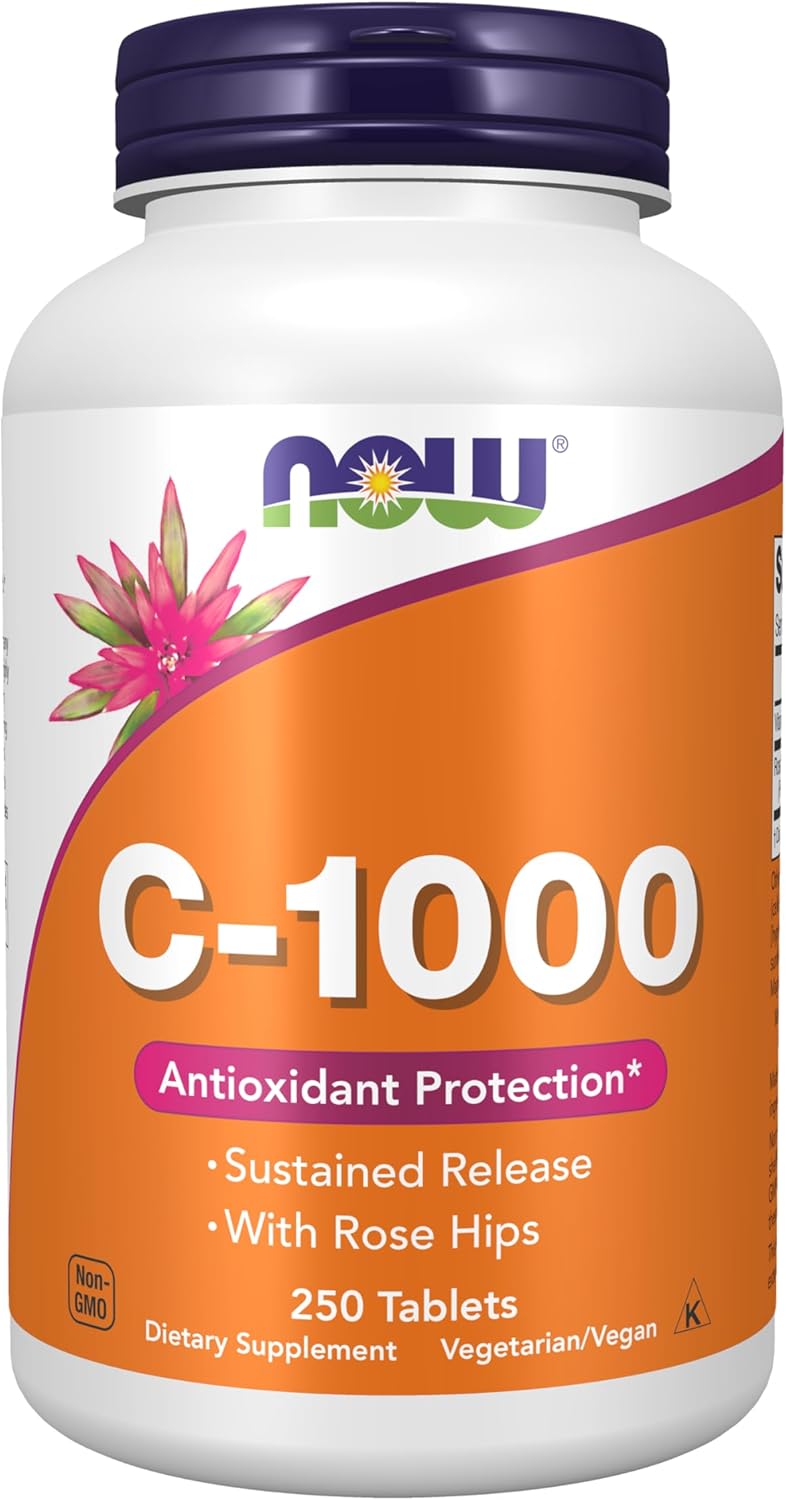
NOW Foods Vitamin C-1000 with Rose Hips Sustained Release 250 Tablets
The best all-around choice for iron co-supplementation — the sustained-release matrix keeps ascorbic acid available over an 8-hour window, which is more physiologically aligned with iron absorption kinetics than a single large immediate-release dose.
- At any given moment, bioavailable vitamin C is lower than from an equivalent immediate-release dose — this is a feature for plasma level maintenance but requires taking it 30–60 minutes before iron, not simultaneously
- Hypromellose matrix means this tablet should not be crushed or split, limiting flexibility for those with swallowing difficulties
Affiliate link: If you buy through this link, we may earn a commission at no extra cost to you.
Buy NOW Foods Vitamin C-1000 with Rose Hips Sustained Release 250 TabletsLivOn Labs Lypo-Spheric Vitamin C 1000mg 30 Packets
Genuine bioavailability advantage at high doses thanks to liposomal delivery, but the premium price makes it hard to justify as a daily iron co-supplement unless GI tolerance is a real barrier with standard forms.
- Sachet format with a notably strong taste is less convenient than tablets for on-the-go use; some users find it unappealing enough to skip doses
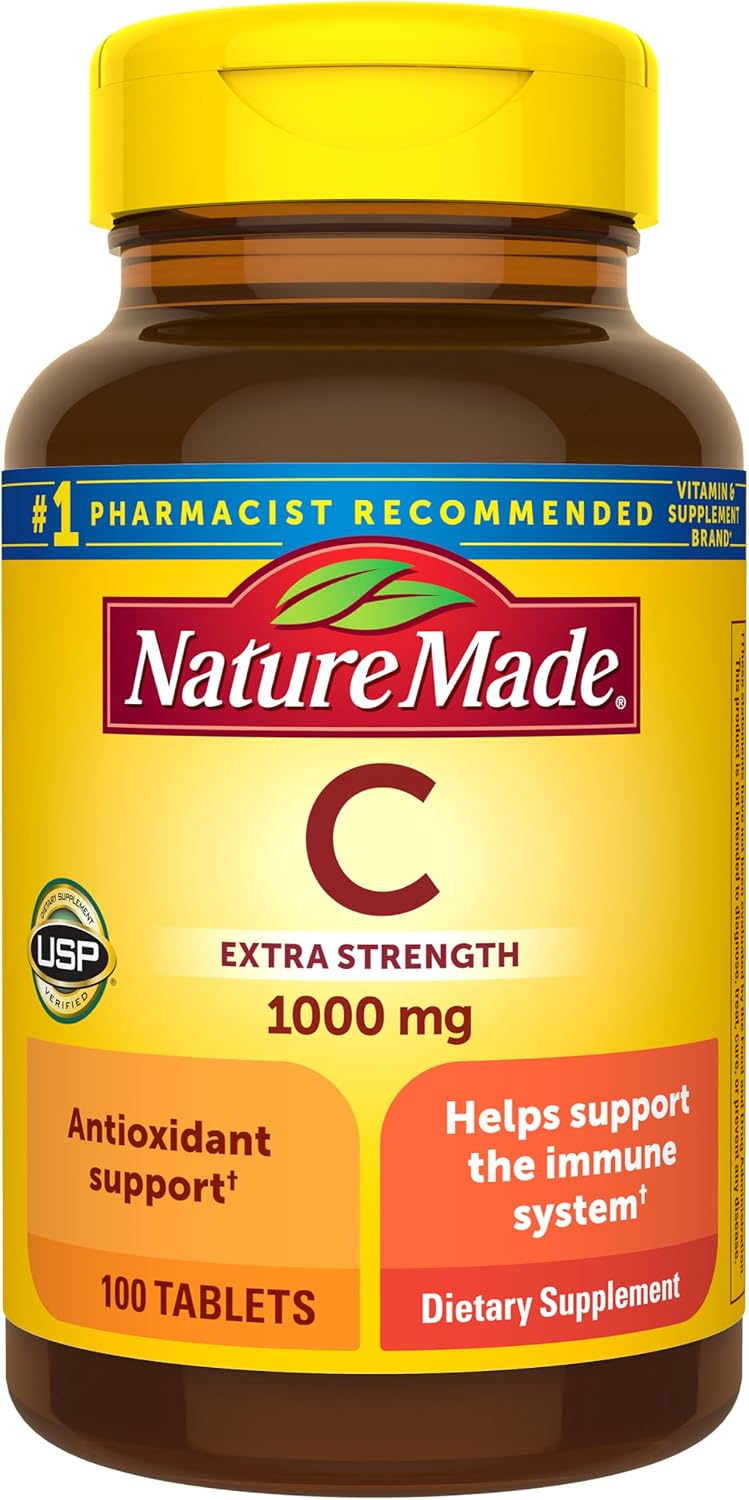
Nature Made Vitamin C 1000mg Extra Strength 100 Tablets
The most trusted name in OTC supplements with USP Verification and the lowest cost per serving, but the immediate-release 1000mg format means most of that dose is excreted before it can support iron absorption — best thought of as a budget-accessible entry point, not an optimized choice.
- Single 1000mg immediate-release dose far exceeds the ~200mg intestinal saturation threshold — a substantial fraction is excreted, making the effective dose for iron co-supplementation closer to 200–250mg despite the 1000mg label claim
- No sustained-release matrix, no bioflavonoids, and no enhanced delivery mechanism — it's a functional, clean product but not optimized for the specific goal of maximizing co-supplementation with iron
Affiliate link: If you buy through this link, we may earn a commission at no extra cost to you.
Buy Nature Made Vitamin C 1000mg Extra Strength 100 TabletsCompare supplements with the same checklist we use.
Get the anti-aging supplement cheat sheet with evidence prompts, safety checks, and label-quality questions before you buy.
Comparison Table
| Category | #1 NOW Foods Vitamin C-1000 with Rose Hips Sustained Release 250 Tablets NOW Foods | #2 LivOn Labs Lypo-Spheric Vitamin C 1000mg 30 Packets LivOn Labs | #3 Nature Made Vitamin C 1000mg Extra Strength 100 Tablets Nature Made |
|---|---|---|---|
| Score | 9.1/10 | 8.3/10 | 7.8/10 |
| Best For | Adults supplementing non-heme iron daily who want sustained ascorbic acid availability throughout the absorption window without the GI side effects of high-dose immediate release | Individuals with GI sensitivity to standard ascorbic acid, or those who've had poor results with conventional vitamin C forms and want maximum bioavailability regardless of cost | Budget-conscious adults who want a USP-verified ascorbic acid source and are taking a 200–500mg dose alongside iron rather than a full 1000mg tablet |
| Pros |
|
|
|
| Cons |
|
|
|
What to Know About Vitamin C (Ascorbic Acid) for Iron Deficiency
Here's the short version: co-administering vitamin C with non-heme iron really does improve absorption — but the dose, timing, and form all matter more than most people realize. You can't just swallow a random vitamin C tablet with your iron pill and assume you're getting maximum benefit. Vitamin C, taken at the right dose alongside non-heme iron, reduces ferric iron (Fe³⁺) to the more absorbable ferrous form (Fe²⁺) and forms a soluble chelate that resists the inhibitory effects of phytates and polyphenols in food. That's the mechanism. The clinical data — including a well-designed randomized trial published in JAMA Network Open in 2020 — suggests this effect is real and clinically meaningful, though it's not a magic multiplier that makes any iron protocol work. This page cuts through the noise for adults supplementing non-heme iron who want to know whether pairing it with vitamin C is actually worth doing, what dose to use, and which form of ascorbic acid gives you the best absorption without destroying your gut. We ranked three products based on formulation quality, third-party testing, clinical rationale, and realistic cost-per-day. No hype, just the evidence.
This content is for educational purposes only and is not medical advice. These statements have not been evaluated by the FDA. This product is not intended to diagnose, treat, cure, or prevent any disease.
Key Benefits of Vitamin C (Ascorbic Acid) for Iron Deficiency
May enhance non-heme iron absorption by reducing ferric iron (Fe³⁺) to the more bioavailable ferrous form (Fe²⁺) at the intestinal lumen
May help counteract absorption inhibitors like phytates and polyphenols commonly found in plant-based diets
Supports general antioxidant status and collagen synthesis, offering benefits beyond iron co-administration
How Vitamin C (Ascorbic Acid) Supports Iron Deficiency
Vitamin C enhances non-heme iron absorption through two distinct mechanisms. First, it acts as a reducing agent — converting ferric iron (Fe³⁺) to ferrous iron (Fe²⁺) directly in the acidic environment of the stomach and duodenum. Ferrous iron is the form that intestinal absorptive cells (enterocytes) can actually take up via the divalent metal transporter-1 (DMT-1). Second, vitamin C forms a soluble chelate with iron that keeps it in solution even as intestinal pH rises in the duodenum, preventing it from precipitating into insoluble complexes that would otherwise pass through unabsorbed. The catch is that intestinal ascorbic acid absorption itself saturates at around 200mg per dose — above that threshold, absorption efficiency drops sharply and excess is excreted renally. This is why formulation matters: a single 1000mg immediate-release tablet doesn't deliver 1000mg of bioavailable vitamin C. Sustained-release forms maintain plasma levels more consistently, and liposomal delivery via phospholipid vesicles bypasses the intestinal transporter saturation mechanism entirely, achieving meaningfully higher plasma concentrations. For iron co-supplementation purposes, the key is having sufficient ascorbic acid present at the intestinal lumen at the same time as the iron — timing and co-ingestion matter as much as the dose on the label.
What to Look For When Buying Vitamin C (Ascorbic Acid)
The single most important thing to understand before buying a vitamin C supplement for iron co-administration: the dose on the label is not the dose your body absorbs. Intestinal vitamin C absorption is carrier-mediated and saturates at approximately 200mg per single dose. Above that, absorption efficiency declines, and excess ascorbic acid is cleared renally. This isn't a flaw — it's normal physiology. But it means a 1000mg immediate-release tablet doesn't deliver five times the benefit of a 200mg tablet. It delivers roughly the same amount of intestinal ascorbic acid, with the remainder appearing in your urine. This is why formulation strategy matters. Sustained-release products like the NOW Foods option spread the dose across several hours, keeping intestinal concentrations in the optimal range for a longer window. Liposomal products like LivOn Labs use a completely different absorption pathway — encapsulated in phospholipid vesicles, the vitamin C is absorbed via endocytosis rather than the saturatable transporter, achieving genuinely higher plasma levels. Both are legitimate approaches; the right one depends on your budget and GI tolerance. Timing is also non-negotiable. Vitamin C must be present in the intestinal lumen simultaneously with iron to reduce Fe³⁺ to Fe²⁺. Take them together — or take the sustained-release vitamin C 30 minutes before your iron dose. Don't take them hours apart and expect the same effect. Also avoid taking iron with coffee, tea, dairy, or high-phytate foods (oats, whole grains), which are strong absorption inhibitors regardless of how much vitamin C you've taken. Finally, consider whether 100mg or 200mg of ascorbic acid is actually sufficient rather than defaulting to 1000mg tablets. Multiple studies have used 200mg doses effectively for iron co-supplementation. If GI upset is a concern — and iron plus high-dose ascorbic acid can cause nausea and cramping in sensitive individuals — starting at a lower dose is both physiologically sound and practical.
Dosage Guidance
Always follow your healthcare provider's recommendations. Dosages vary by individual health status, age, and goals.
Common Vitamin C (Ascorbic Acid) Complaints (And How to Avoid Them)
Based on analysis of thousands of customer reviews across Vitamin C (Ascorbic Acid) products.
"Taking vitamin C with iron makes me nauseous"
High-dose immediate-release ascorbic acid combined with iron is one of the more GI-irritating combinations in supplement use. We specifically ranked the LivOn Labs liposomal option (sodium ascorbate form, gentler on the stomach) and the sustained-release NOW Foods product (lower peak gastric concentrations) as alternatives for sensitive individuals. Dropping to 200mg of vitamin C rather than 1000mg also significantly reduces GI burden.
"I've been taking vitamin C with iron for months and my ferritin barely moved"
Vitamin C enhances absorption, but it can't compensate for an inadequate iron dose, the wrong iron form, or co-administration with inhibitors like coffee or tea. We address this directly in the buyers' guide and alternatives section — if absorption-enhanced oral supplementation isn't moving lab values, it's worth discussing IV iron or switching to highly bioavailable ferrous bisglycinate with your provider.
"The liposomal sachets taste terrible and are way too expensive"
Agreed — and we said so in the cons. Liposomal vitamin C is ranked second specifically because its cost and convenience disadvantages make it impractical as a daily iron co-supplement for most people. The sustained-release NOW Foods product offers a mechanistically sound alternative at 10× lower cost.
Safety & Interactions
- Pregnancy and breastfeeding: Consult your healthcare provider before taking this supplement during pregnancy or while nursing. The safety of supplemental doses beyond dietary intake has not been established in pregnant or lactating women.
- Blood thinners: If you take blood-thinning medications (e.g., warfarin, apixaban, rivaroxaban, clopidogrel, or high-dose aspirin), consult your healthcare provider BEFORE starting this supplement, as it may have additive antiplatelet or anticoagulant effects.
- Kidney disease: If you have chronic kidney disease (CKD) or any significant kidney impairment, consult your healthcare provider before taking this supplement. Some supplements can accumulate to dangerous levels when kidney function is reduced.
- Gout: Individuals with gout should consult their healthcare provider before starting this supplement. Certain supplements (e.g., collagen, fish oil, niacin) may affect uric acid levels or trigger flares in susceptible individuals.
""From a dietitian's perspective, the vitamin C and iron co-supplementation strategy is evidence-supported but often implemented imprecisely — most people either use too low a dose, take them at separate times, or expect it to compensate for an iron dose that's too low to begin with. Get your serum ferritin tested before and after your supplementation protocol; it's the most reliable way to know whether what you're doing is actually working."
Frequently Asked Questions
Citations & Research
This page references peer-reviewed research indexed on PubMed/NCBI. Citations are provided for transparency. Always consult a qualified healthcare professional before making any medical decisions.
- [3]Li N, Zhao G, Wu W et al. “The Efficacy and Safety of Vitamin C for Iron Supplementation in Adult Patients With Iron Deficiency Anemia: A Randomized Clinical Trial.” JAMA network open, 2020. n=440. doi:10.1001/jamanetworkopen.2020.23644PMID 33136134 ↗
- [6]Loganathan V, Bharathi A, Prince AM et al. “Treatment efficacy of vitamin C or ascorbate given as co-intervention with iron for anemia - A systematic review and meta-analysis of experimental studies.” Clinical nutrition ESPEN, 2023. doi:10.1016/j.clnesp.2023.07.081PMID 37739692 ↗
- [2]Low MS, Speedy J, Styles CE et al. “Daily iron supplementation for improving anaemia, iron status and health in menstruating women.” The Cochrane database of systematic reviews, 2016. doi:10.1002/14651858.CD009747.pub2PMID 27087396 ↗
Ready to Try Vitamin C (Ascorbic Acid)?
Our top pick for iron deficiency. Third-party tested, highly reviewed.
Affiliate link: If you buy through this link, we may earn a commission at no extra cost to you.
Shop #1 Pick — NOW Foods Vitamin C-1000 with Rose Hips Sustained Release 250 TabletsContinue exploring
- why Vitamin C matters for healthy agingSupplement overview
- see all iron deficiency supplements we coverGoal overview
- the Chlorella page for iron deficiencyAlternative supplement
- Folate for iron deficiencyAlternative supplement
- Vitamin C research for immune supportSame supplement, different goal
- Vitamin C research for skin agingEditor pick
- our top Iron pick for iron deficiencyEditor pick
- supplements vs food sources comparedCompare options
Get the evidence-graded supplement cheat sheet.
Evidence prompts, safety checks, and label-quality questions before you buy — free, straight to your inbox.
No spam. Unsubscribe anytime.