
Best Vitamin E Supplements for Skin Aging in 2026
Most vitamin E is synthetic or tocopherol-only. We explain d vs dl, tocotrienols, and rank 4 full-spectrum vitamin E supplements for skin aging.
tocopherol evidence established; tocotrienol evidence emerging

This content is for educational purposes only and is not medical advice. These statements have not been evaluated by the FDA. This product is not intended to diagnose, treat, cure, or prevent any disease. Always consult your healthcare provider before starting any supplement.
Best Vitamin E for Skin Aging in 2026
Ranked by quality, value, and clinical backing
Where available, we show when each product price was last checked so the list stays honest without overreacting to normal Amazon price movement.

Jarrow FamilE Mixed Tocopherols and Tocotrienols
Best full-spectrum vitamin E available. The only product on this list providing all four natural tocopherols plus a tocotrienol complex from annatto — delivering the complete vitamin E family in a single softgel. Annatto is the preferred tocotrienol source (delta and gamma-rich, no palm oil concerns). For users who understand the vitamin E family distinction and want comprehensive coverage, this is the definitive choice.
- 2,400 reviews — moderate trust base for vitamin E category
- Tocotrienol dose (50mg) may be lower than dedicated high-dose tocotrienol protocols
- Higher cost than tocopherol-only options
Affiliate link: If you buy through this link, we may earn a commission at no extra cost to you.
Buy Jarrow FamilE Mixed Tocopherols and Tocotrienols
Solgar Natural Vitamin E 400 IU
Best for users who want natural d-alpha-tocopherol with mixed tocopherols at maximum review confidence and value. Solgar's 70+ year brand reputation is among the strongest in the supplement category. The absence of tocotrienols is the main limitation vs. Jarrow FamilE.
- No tocotrienols — misses the emerging anti-aging tocotrienol fraction
- Soybean oil carrier (refined omega-6)
- 400 IU alpha-dominant formula — not gamma-tocopherol enriched
Affiliate link: If you buy through this link, we may earn a commission at no extra cost to you.
Buy Solgar Natural Vitamin E 400 IU
Life Extension Super Vitamin E
Best for gamma-tocopherol enrichment. Life Extension's formula deliberately emphasizes gamma-tocopherol over alpha, based on emerging evidence that gamma-tocopherol provides superior anti-inflammatory activity and better nitrogen species quenching than alpha-tocopherol alone. Sunflower oil carrier is preferable to soybean. The tocotrienol absence is the same limitation as Solgar, but the gamma-enriched formulation is a distinctive choice for users specifically interested in the anti-inflammatory tocopherol fraction.
- No tocotrienols
- 1,800 reviews — lowest on list
- Gamma-dominant formulation may be unfamiliar to users expecting standard 400 IU alpha-primary
Affiliate link: If you buy through this link, we may earn a commission at no extra cost to you.
Buy Life Extension Super Vitamin E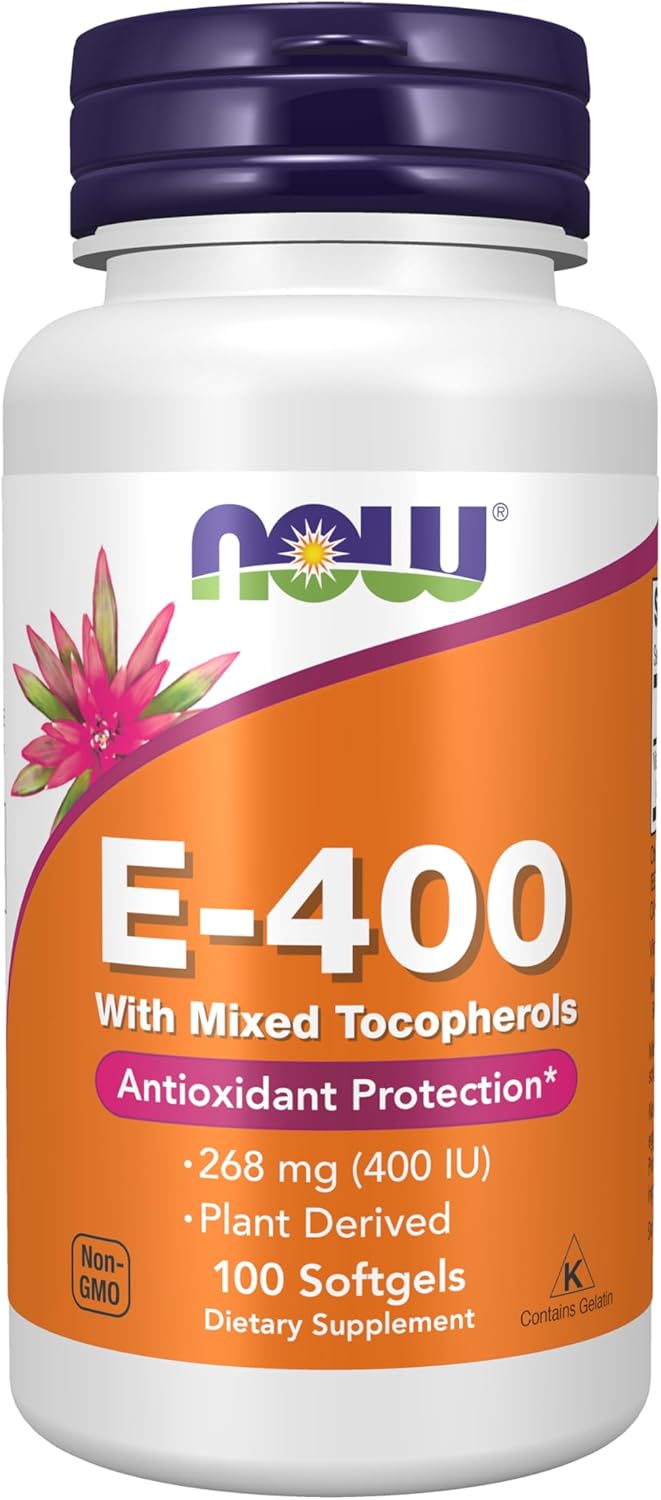
NOW Foods E-400 Mixed Tocopherols
Best value mixed tocopherol option. NOW Foods' 55-year GMP track record and 4,600 reviews make this a reliable workhorse choice for budget-conscious users who want natural d-form vitamin E with all four tocopherols. The soybean oil carrier and absence of tocotrienols are the same limitations as Solgar.
- No tocotrienols
- Soybean oil carrier
- Alpha-tocopherol dominant; gamma and delta at lower relative amounts
Affiliate link: If you buy through this link, we may earn a commission at no extra cost to you.
Buy NOW Foods E-400 Mixed TocopherolsCompare supplements with the same checklist we use.
Get the anti-aging supplement cheat sheet with evidence prompts, safety checks, and label-quality questions before you buy.
Comparison Table
| Category | #1 Jarrow FamilE Mixed Tocopherols and Tocotrienols Jarrow Formulas | #2 Solgar Natural Vitamin E 400 IU Solgar | #3 Life Extension Super Vitamin E Life Extension | #4 NOW Foods E-400 Mixed Tocopherols NOW Foods |
|---|---|---|---|---|
| Score | 9.3/10 | 8.8/10 | 8.5/10 | 8.2/10 |
| Best For | Users who want the full eight-compound vitamin E family spectrum for comprehensive skin and systemic membrane antioxidant coverage | Users who want the highest-reviewed natural vitamin E supplement at the best value and don't need tocotrienols | Users specifically interested in the gamma-tocopherol anti-inflammatory fraction with Life Extension quality confidence | Budget-conscious users who want reliable natural d-form mixed tocopherols without paying for tocotrienol coverage |
| Pros |
|
|
|
|
| Cons |
|
|
|
|
What to Know About Vitamin E for Skin Aging
Vitamin E is not a single compound — it is a family of eight fat-soluble antioxidants: four tocopherols (alpha, beta, gamma, delta) and four tocotrienols (alpha, beta, gamma, delta). Most supplements sold as 'vitamin E' contain only dl-alpha-tocopherol — the synthetic racemic mixture that has half the biological activity of the natural d-alpha-tocopherol and provides none of the tocotrienol fraction increasingly linked to the most compelling anti-aging effects. The form distinction is the most important and most overlooked variable in the vitamin E category. Natural d-alpha-tocopherol ('d-alpha') has 100% biological activity by the standard biological activity unit. Synthetic dl-alpha-tocopherol ('dl-alpha') contains eight stereoisomers — only one of which (the RRR form) is the naturally occurring active form. The other seven have lower or negligible biological activity. A supplement labeled '400 IU d-alpha-tocopherol' and one labeled '400 IU dl-alpha-tocopherol' do not deliver equivalent antioxidant activity. For skin aging specifically: Burke et al. 2006 (Journal of Investigative Dermatology, PMID 17134430) demonstrated that topical vitamin E combined with vitamin C reduced UV-induced photoaging markers in human skin, establishing the mechanistic rationale for vitamin E in photoprotective skin care. Oral vitamin E supplementation contributes to skin antioxidant levels — the skin dermis and epidermis accumulate tocopherols from circulation, and UV exposure selectively depletes skin tocopherols. The tocotrienol story is the area most competitor content misses entirely: gamma- and delta-tocotrienols (found primarily in annatto and palm) inhibit HMG-CoA reductase via a post-transcriptional mechanism (distinct from statin pharmacology), have superior neuroprotective activity compared to tocopherols in some models, and reduce skin lipid oxidation with greater potency than equivalent tocopherol doses in some cell studies.
This content is for educational purposes only and is not medical advice. These statements have not been evaluated by the FDA. This product is not intended to diagnose, treat, cure, or prevent any disease.
Key Benefits of Vitamin E for Skin Aging
May help protect skin cell membranes from UV-induced lipid peroxidation — vitamin E is the primary fat-soluble antioxidant in skin cell membranes; UV exposure selectively depletes skin tocopherols, and supplementation may help maintain skin antioxidant status
Mixed tocopherols and tocotrienols provide broader membrane protection than alpha-tocopherol alone — the full vitamin E family covers more of the lipid membrane antioxidant spectrum, with gamma- and delta-tocotrienols showing superior activity in some cellular protection assays
Research suggests vitamin E + C synergism for skin photoprotection — Burke 2007 (PMID 18045356) reviewed evidence that combined topical vitamins C and E inhibit acute UV damage and chronic photoaging synergistically — because vitamin C regenerates oxidized vitamin E, supporting stacking with vitamin C for comprehensive skin antioxidant coverage
How Vitamin E Supports Skin Aging
Vitamin E is the umbrella term for eight naturally occurring fat-soluble compounds that serve as the primary lipid-soluble antioxidants in cell membranes. They reside within the hydrophobic core of phospholipid bilayers and protect polyunsaturated fatty acids (PUFAs) — which are abundant in skin cell membranes — from oxidative chain reactions initiated by UV radiation and reactive oxygen species. **The eight vitamin E compounds:** Four tocopherols: alpha-tocopherol (highest alpha-biological activity), beta-tocopherol, gamma-tocopherol, delta-tocopherol. Four tocotrienols: alpha-tocotrienol, beta-tocotrienol, gamma-tocotrienol, delta-tocotrienol. Tocopherols have a saturated phytyl tail; tocotrienols have an unsaturated farnesyl tail with three double bonds. The unsaturated tail makes tocotrienols more mobile within cell membranes and may explain their superior activity in some assays. **Natural vs. synthetic: d vs. dl** Natural vitamin E (d-alpha-tocopherol) is the RRR stereoisomer — the biologically active form. Synthetic vitamin E (dl-alpha-tocopherol) is a racemic mixture of eight possible stereoisomers, only one of which is the naturally active RRR form. The other seven have lower or negligible biological activity. Pharmacokinetic studies confirm natural d-alpha-tocopherol has approximately 2x higher bioavailability than synthetic dl-alpha-tocopherol. **Skin-specific accumulation:** Skin dermis and epidermis accumulate tocopherols from circulation through lipid transfer mechanisms. Alpha-tocopherol is the predominant form in skin, but gamma-tocopherol is also present and may be important for its distinct anti-inflammatory activity (gamma-tocopherol is a more effective inhibitor of cyclooxygenase activity than alpha-tocopherol). UV irradiation depletes skin tocopherols in a dose-dependent manner — the antioxidant defense system is overwhelmed under high UV load. **Tocotrienols — the emerging anti-aging fraction:** Gamma- and delta-tocotrienols (found in annatto, palm, rice bran) have demonstrated HMG-CoA reductase inhibitory activity via post-transcriptional suppression — a mechanism distinct from statin pharmacology that may contribute to their observed cholesterol-modulating effects in clinical trials. More relevant to skin aging: tocotrienols show superior activity in membrane lipid peroxidation protection compared to tocopherols in cellular models, and their neuroprotective properties are being investigated for healthy brain aging. Delta-tocotrienol from annatto is increasingly preferred over palm-derived tocotrienols due to deforestation concerns with palm oil sourcing. **Vitamin E + C synergism:** Vitamin E and vitamin C work in tandem in the antioxidant network: vitamin E quenches lipid radicals in membranes, becoming oxidized in the process. Vitamin C (ascorbic acid) regenerates vitamin E from its oxidized form — restoring its antioxidant capacity. This makes simultaneous supplementation with both more efficient than either alone, and is the basis for their common co-formulation in skincare research.
What to Look For When Buying Vitamin E
**d vs. dl: the most important label check** Look at the label: does it say 'd-alpha-tocopherol' or 'dl-alpha-tocopherol'? The 'd' means natural; the 'dl' means synthetic racemic mixture with approximately half the biological activity. This single letter is the most impactful quality marker in the vitamin E category. All products on this page use natural d-form. If you see 'dl-alpha-tocopheryl acetate' on a supplement label, that is the synthetic form — avoid it for serious supplementation purposes. **Why mixed tocopherols over alpha-only?** The typical Western diet derives more vitamin E from gamma-tocopherol (from nuts, seeds, vegetable oils) than from alpha-tocopherol, yet most supplements are alpha-tocopherol dominant. Gamma-tocopherol has superior activity against reactive nitrogen species (peroxynitrite) compared to alpha-tocopherol, which may be important for inflammatory conditions. Taking high-dose alpha-tocopherol alone can actually displace gamma and delta tocopherols from tissues by competing for the alpha-tocopherol transfer protein. Mixed tocopherol formulations avoid this alpha-dominance displacement effect. **Should I add tocotrienols?** Tocotrienols (particularly delta and gamma from annatto) are the emerging frontier in vitamin E supplementation. Their HMG-CoA reductase inhibitory activity, superior membrane mobility, and neuroprotective effects distinguish them from tocopherols. For users specifically targeting skin anti-aging and systemic longevity, the Jarrow FamilE formula provides the most comprehensive vitamin E family coverage. For users who simply want reliable natural vitamin E without tocotrienols, the Solgar or NOW Foods options are excellent value. **High-dose safety note** Vitamin E at doses ≥400 IU/day has been associated with increased all-cause mortality in some meta-analyses (primarily Miller 2005). The products on this page are all at or near 400 IU — this is the generally regarded safe upper range for daily supplementation. The risk:benefit calculation is most favorable for mixed tocopherol and tocotrienol formulations at this dose range in adults with identified antioxidant needs. Consult your healthcare provider for doses above 400 IU/day.
Dosage Guidance
Always follow your healthcare provider's recommendations. Dosages vary by individual health status, age, and goals.
Common Vitamin E Complaints (And How to Avoid Them)
Based on analysis of thousands of customer reviews across Vitamin E products.
"I've been taking vitamin E for years but my supplement says 'dl-alpha-tocopherol' — is this a problem?"
The 'dl' prefix indicates synthetic vitamin E — a racemic mixture of eight stereoisomers, of which only one (the RRR form) has full biological activity. Synthetic dl-alpha-tocopherol delivers approximately half the vitamin E biological activity of the equivalent IU dose of natural d-alpha-tocopherol. It is the most common form in low-cost supplements and in many multivitamins. Switching to natural d-alpha or mixed tocopherol formulations would meaningfully improve the quality of your vitamin E supplementation. Products that list 'd-alpha-tocopherol' (no 'l') or 'd-alpha-tocopheryl succinate/acetate' are the natural form.
"My vitamin E only has alpha-tocopherol — should I be worried about missing the other tocopherols?"
High-dose alpha-tocopherol supplementation can displace gamma and delta tocopherols from tissues by competing for the alpha-tocopherol transfer protein (the primary tocopherol transport mechanism). Gamma-tocopherol — which handles reactive nitrogen species that alpha-tocopherol does not effectively quench — may be reduced in plasma by prolonged high-dose alpha-only supplementation. Mixed tocopherol formulations (providing all four fractions) avoid this displacement. If you have been taking alpha-only vitamin E, switching to a mixed tocopherol product is a straightforward quality upgrade.
"I've seen vitamin E supplements over 1,000 IU — is more always better?"
No. Higher dose vitamin E does not follow a linear dose-response for antioxidant benefit, and doses above 400 IU/day have a less favorable safety profile. The Miller et al. 2005 meta-analysis found an association between doses ≥400 IU/day and small increases in all-cause mortality in chronic disease populations. Additionally, alpha-tocopherol at very high doses competes with and displaces gamma and delta tocopherols. The 200-400 IU range with mixed tocopherols is the most evidence-supported and safest range for daily supplementation. Higher doses should only be taken under physician supervision.
"What is the difference between tocopherols and tocotrienols?"
Both are forms of vitamin E, but they differ structurally: tocopherols have a saturated phytyl tail; tocotrienols have an unsaturated farnesyl tail with three double bonds. The unsaturated tail makes tocotrienols more mobile within cell membranes, which may explain their superior antioxidant activity in some assays. Tocotrienols (particularly delta and gamma from annatto) also inhibit HMG-CoA reductase via a post-transcriptional mechanism — a cholesterol-pathway effect not seen with tocopherols. Tocotrienols are found primarily in annatto seeds, palm, and rice bran; they are not present in significant amounts in most plant oils or nuts (which provide primarily tocopherols). Most standard vitamin E supplements contain tocopherols only.
Safety & Interactions
- Pregnancy and breastfeeding: Consult your healthcare provider before taking this supplement during pregnancy or while nursing. The safety of supplemental doses beyond dietary intake has not been established in pregnant or lactating women.
- Blood thinners: If you take blood-thinning medications (e.g., warfarin, apixaban, rivaroxaban, clopidogrel, or high-dose aspirin), consult your healthcare provider BEFORE starting this supplement, as it may have additive antiplatelet or anticoagulant effects.
- Kidney disease: If you have chronic kidney disease (CKD) or any significant kidney impairment, consult your healthcare provider before taking this supplement. Some supplements can accumulate to dangerous levels when kidney function is reduced.
- Gout: Individuals with gout should consult their healthcare provider before starting this supplement. Certain supplements (e.g., collagen, fish oil, niacin) may affect uric acid levels or trigger flares in susceptible individuals.
- Fish allergy - capsule source: Some softgel capsules use fish-derived gelatin even when the active supplement is not fish-derived. If you have a confirmed fish or shellfish allergy, verify the capsule source on the label or check with the manufacturer. Vegan capsules (vegetable cellulose) are widely available alternatives.
- Beef / alpha-gal allergy - capsule source: Many softgel and two-piece capsules use bovine gelatin. If you have a confirmed beef allergy or alpha-gal syndrome (mammalian meat allergy), check capsule sources on the label. Vegan capsules (vegetable cellulose) and HPMC capsules are alternatives.
""The vitamin E category has more persistent content quality problems than almost any other supplement category. The main failures: (1) virtually all mainstream vitamin E content treats it as a single compound and never mentions the d vs. dl distinction — the single most important label variable; (2) tocotrienols are completely absent from most supplement comparison content despite being the most scientifically interesting recent development in the vitamin E family; (3) the high-dose safety discussion is either absent or alarmist without context. Our editorial position: natural mixed tocopherols are the minimum quality standard; full-spectrum tocopherols + tocotrienols is the gold standard. The Jarrow FamilE recommendation reflects this — it is the only consumer-accessible full-spectrum formula with annatto tocotrienols (the preferred non-palm source) on the mainstream market. The high-dose safety note is included because 400 IU/day is where the safety signal appears, and it is the dose most users assume is 'normal' — context matters."
— Angelique Nicole R. Villegas, RND, Registered Nutritionist Dietitian · PRC Philippines · License #0023950
Frequently Asked Questions
Citations & Research
This page references peer-reviewed research indexed on PubMed/NCBI. Citations are provided for transparency. Always consult a qualified healthcare professional before making any medical decisions.
- [1]Rattanawiwatpong P, Wanitphakdeedecha R, Bumrungpert A et al. Anti-aging and brightening effects of a topical treatment containing vitamin C, vitamin E, and raspberry leaf cell culture extract: A split-face, randomized controlled trial. Journal of cosmetic dermatology. 2020;19(3):671-676.PMID 31975502 ↗
- [2]Rimm EB, Stampfer MJ, Ascherio A, et al. Vitamin E consumption and the risk of coronary disease in men. N Engl J Med. 1993;328(20):1450-1456.PMID 8479464 ↗
- [3]Ahmad NS, Khalid BAK, Luke DA, et al. Tocotrienol offers better protection than tocopherol from free radical-induced damage of rat bone. Clin Exp Pharmacol Physiol. 2005;32(9):761-770.PMID 16173934 ↗
- [4]Burke KE. Photodamage of the skin: protection and reversal with topical antioxidants. Journal of cosmetic dermatology. 2004;3(3):149-55.PMID 17134430 ↗
- [5]Burke KE. Interaction of vitamins C and E as better cosmeceuticals. Dermatologic therapy. 2007;20(5):314-21.PMID 18045356 ↗
Ready to Try Vitamin E?
Our top pick for skin aging. Third-party tested, highly reviewed.
Affiliate link: If you buy through this link, we may earn a commission at no extra cost to you.
Shop #1 Pick — Jarrow FamilE Mixed Tocopherols and TocotrienolsContinue exploring
- our Vitamin E guideSupplement overview
- skin aging — supplements that may helpGoal overview
- Collagen fit for skin agingAlternative supplement
- our Glutathione guide for skin agingAlternative supplement
- Astaxanthin fit for anti agingEditor pick
- Collagen guidance for skin healthEditor pick
- see how supplements stacks up to food sourcesCompare options
Get the evidence-graded supplement cheat sheet.
Evidence prompts, safety checks, and label-quality questions before you buy — free, straight to your inbox.
No spam. Unsubscribe anytime.