
Best Psyllium Husk Supplements for Digestive Health (2026)
Psyllium has an FDA heart health claim for LDL reduction and acts as a prebiotic. Anderson 2000 meta-analysis, dosing guide, and the choking hazard warning

This content is for educational purposes only and is not medical advice. These statements have not been evaluated by the FDA. This product is not intended to diagnose, treat, cure, or prevent any disease. Always consult your healthcare provider before starting any supplement.
Best Psyllium for Digestive Health in 2026
Ranked by quality, value, and clinical backing
Where available, we show when each product price was last checked so the list stays honest without overreacting to normal Amazon price movement.
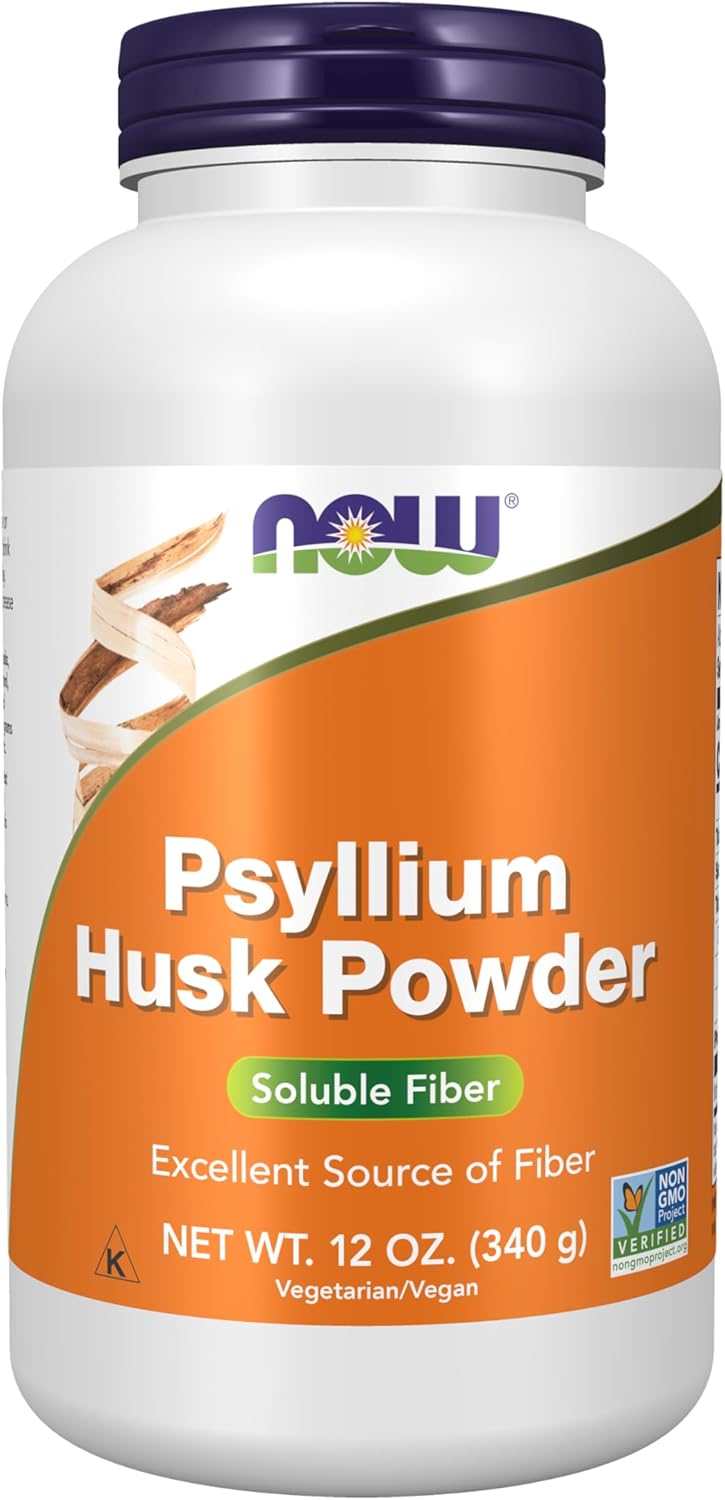
NOW Foods Psyllium Husk Powder
Adults who want a simple, cost-effective psyllium powder for both cholesterol management and digestive regularity
- Powder must be mixed immediately and consumed before it gels — cannot prepare ahead
- Unflavored psyllium has a mild earthy taste that some find unpleasant
Affiliate link: If you buy through this link, we may earn a commission at no extra cost to you.
Buy NOW Foods Psyllium Husk Powder
Metamucil 4-in-1 Fiber Supplement Powder
Adults who prefer a flavored, convenient format and want the original psyllium brand used in clinical communication
- Contains citric acid and artificial sweetener (aspartame in some versions) — not suitable for those avoiding these additives
- More expensive per gram of psyllium than pure powder options
- Sugar-free versions use sweeteners that some adults prefer to avoid
Affiliate link: If you buy through this link, we may earn a commission at no extra cost to you.
Buy Metamucil 4-in-1 Fiber Supplement Powder
Konsyl Daily Psyllium Fiber Powder
Adults with diabetes or sweetener sensitivity who need the cleanest possible psyllium with no additives
- Unflavored — taste acceptance varies; less palatable than Metamucil for some users
- Smaller brand; less widely stocked than Metamucil or NOW
Affiliate link: If you buy through this link, we may earn a commission at no extra cost to you.
Buy Konsyl Daily Psyllium Fiber Powder
Garden of Life Raw Organic Psyllium Husk Powder
Adults who prioritize organic certified products and are willing to pay a modest premium for clean sourcing
- Premium pricing for organic certification that may not provide additional health benefit over conventional psyllium
- Availability can be inconsistent
Affiliate link: If you buy through this link, we may earn a commission at no extra cost to you.
Buy Garden of Life Raw Organic Psyllium Husk PowderCompare supplements with the same checklist we use.
Get the anti-aging supplement cheat sheet with evidence prompts, safety checks, and label-quality questions before you buy.
Comparison Table
| Category | #1 NOW Foods Psyllium Husk Powder NOW Foods | #2 Metamucil 4-in-1 Fiber Supplement Powder Metamucil | #3 Konsyl Daily Psyllium Fiber Powder Konsyl | #4 Garden of Life Raw Organic Psyllium Husk Powder Garden of Life |
|---|---|---|---|---|
| Score | 9.2/10 | 8.7/10 | 8.5/10 | 8.1/10 |
| Best For | Adults who want a simple, cost-effective psyllium powder for both cholesterol management and digestive regularity | Adults who prefer a flavored, convenient format and want the original psyllium brand used in clinical communication | Adults with diabetes or sweetener sensitivity who need the cleanest possible psyllium with no additives | Adults who prioritize organic certified products and are willing to pay a modest premium for clean sourcing |
| Pros |
|
|
|
|
| Cons |
|
|
|
|
What to Know About Psyllium for Digestive Health
Psyllium husk is one of the most underappreciated compounds in preventive health. It is the active ingredient in Metamucil, has an FDA-approved health claim for cardiovascular benefit, and has prebiotic activity — yet it is largely marketed as a laxative. Psyllium operates through two distinct mechanisms. First, it is a soluble gel-forming fiber: when mixed with water, psyllium's mucilage creates a viscous gel that slows gastric emptying, reduces the rate of glucose absorption, and — critically — traps bile acids in the intestinal lumen, preventing their reabsorption. Because bile acids are synthesized from cholesterol, the liver must draw on circulating LDL cholesterol to replace them. This is the mechanism behind psyllium's FDA-approved health claim: 'Diets low in saturated fat and cholesterol that include 7 grams of soluble fiber per day from psyllium husk may reduce the risk of heart disease.' Second, psyllium has documented prebiotic properties. Unlike many soluble fibers, psyllium's fermentation pattern in the colon selectively promotes Bifidobacterium and Lactobacillus populations. Anderson et al. (2000) conducted a comprehensive meta-analysis of 8 trials evaluating psyllium's effects on serum lipids, and separate microbiome research has established its bifidogenic activity — making psyllium a dual-function compound unlike any other fiber supplement. For adults 45+ managing both cholesterol and gut health, psyllium provides a uniquely efficient intervention. The critical safety requirement: always take psyllium with a full glass of water (8 oz minimum). Dry psyllium can swell before it clears the esophagus, creating a choking or obstruction hazard.
This content is for educational purposes only and is not medical advice. These statements have not been evaluated by the FDA. This product is not intended to diagnose, treat, cure, or prevent any disease.
Key Benefits of Psyllium for Digestive Health
The only fiber supplement with an FDA-approved cholesterol health claim — and a prebiotic too
How to use it correctly and safely
How Psyllium Supports Digestive Health
Psyllium husk works through its unique soluble fiber gel. When hydrated, psyllium forms a viscous gel in the gastrointestinal tract that serves multiple functions: it slows gastric emptying (reducing post-meal glucose spikes), adds bulk to stool and retains water (normalizing both constipation and diarrhea), and physically binds bile acids in the small intestine — forcing the liver to convert more cholesterol into bile acids to replace them, thereby lowering LDL cholesterol. Psyllium does not get fermented to the same extent as other fibers, making it well-tolerated at the doses needed for clinical effect.
What to Look For When Buying Psyllium
We evaluated psyllium products on: (1) psyllium husk purity and dose per serving relative to the FDA health claim threshold (7g/day soluble fiber) and Anderson 2000 trial doses (10.2g/day); (2) absence of additives, sweeteners, and fillers that may interfere with the clean lipid research data; (3) third-party certification; and (4) price per gram of psyllium husk.
Dosage Guidance
Always follow your healthcare provider's recommendations. Dosages vary by individual health status, age, and goals.
Common Psyllium Complaints (And How to Avoid Them)
Based on analysis of thousands of customer reviews across Psyllium products.
"Psyllium makes me feel too full and bloated"
The gel-forming effect that makes psyllium work also increases gastric fill sensation. Start at half the labeled dose (3-4g) and increase gradually over 2 weeks. Take psyllium with meals rather than separately — this distributes the bulking effect alongside food. Drinking extra water throughout the day (not just with the dose) helps keep the gel moving and reduces prolonged bloating. If bloating persists, try splitting the dose into 2-3 smaller doses with different meals rather than one large dose.
"Does psyllium interfere with my medications?"
Yes, it can — and this is important. Psyllium's gel physically reduces the absorption of oral medications taken at the same time. Always take any oral medication at least 1 hour before or 2-3 hours after psyllium. This is especially critical for levothyroxine (thyroid hormone), warfarin (blood thinner), metformin, statins, and diabetes medications. Tell your pharmacist you take psyllium regularly — they can flag interactions with any newly prescribed drugs.
"Can I use psyllium long-term?"
Yes — psyllium has been used as a long-term daily fiber supplement for decades with a strong safety record. The clinical trial data includes studies lasting 6 months or more showing continued benefit without adverse effects. Psyllium does not cause 'dependence' in the way that stimulant laxatives can. The main long-term consideration is drug interaction management — as you're prescribed new medications over time, consistently flagging your psyllium use to your pharmacist ensures absorption interactions are caught.
Safety & Interactions
- Pregnancy and breastfeeding: Consult your healthcare provider before taking this supplement during pregnancy or while nursing. The safety of supplemental doses beyond dietary intake has not been established in pregnant or lactating women.
- Blood thinners: If you take blood-thinning medications (e.g., warfarin, apixaban, rivaroxaban, clopidogrel, or high-dose aspirin), consult your healthcare provider BEFORE starting this supplement, as it may have additive antiplatelet or anticoagulant effects.
- Kidney disease: If you have chronic kidney disease (CKD) or any significant kidney impairment, consult your healthcare provider before taking this supplement. Some supplements can accumulate to dangerous levels when kidney function is reduced.
- Gout: Individuals with gout should consult their healthcare provider before starting this supplement. Certain supplements (e.g., collagen, fish oil, niacin) may affect uric acid levels or trigger flares in susceptible individuals.
- Fish allergy - capsule source: Some softgel capsules use fish-derived gelatin even when the active supplement is not fish-derived. If you have a confirmed fish or shellfish allergy, verify the capsule source on the label or check with the manufacturer. Vegan capsules (vegetable cellulose) are widely available alternatives.
- Beef / alpha-gal allergy - capsule source: Many softgel and two-piece capsules use bovine gelatin. If you have a confirmed beef allergy or alpha-gal syndrome (mammalian meat allergy), check capsule sources on the label. Vegan capsules (vegetable cellulose) and HPMC capsules are alternatives.
- Important: This supplement is not a replacement for prescription medications. It is supportive for individuals with low baseline status, not a treatment for diagnosed conditions (anxiety disorders, insomnia, hypertension, osteoporosis, etc.). Do not stop or reduce any prescription without consulting your doctor.
""Psyllium stands out because it genuinely does two things well: it reduces LDL cholesterol through bile acid sequestration (with FDA-level evidence) and acts as a prebiotic for Bifidobacterium. For adults 45+ managing both cholesterol and gut function, this is unusually efficient. The practical rules are non-negotiable: full glass of water every time, take at least 1 hour away from any oral medications, and titrate dose upward from 3-4g to allow GI adjustment. The choking hazard is real — it is why all psyllium products carry a mandatory FDA warning label."
— Angelique Nicole R. Villegas, RND, Registered Nutritionist Dietitian · PRC Philippines · License #0023950
Frequently Asked Questions
Citations & Research
This page references peer-reviewed research indexed on PubMed/NCBI. Citations are provided for transparency. Always consult a qualified healthcare professional before making any medical decisions.
- [1]Anderson JW, Allgood LD, Lawrence A, et al. Cholesterol-lowering effects of psyllium intake adjunctive to diet therapy in men and women with hypercholesterolemia: meta-analysis of 8 controlled trials. Am J Clin Nutr. 2000;71(2):472-479.PMID 10648260 ↗
- [2]Jalanka J, Major G, Murray K, et al. The Effect of Psyllium Husk on Intestinal Microbiota in Constipated Patients and Healthy Controls. Int J Mol Sci. 2019;20(2):433.PMID 30669509 ↗
- [3]Sprecher DL, Harris BV, Goldberg AC, et al. Efficacy of psyllium in reducing serum cholesterol levels in hypercholesterolemic patients on high- or low-fat diets. Ann Intern Med. 1993;119(7 Pt 1):545-554.PMID 8363164 ↗
Ready to Try Psyllium?
Our top pick for digestive health. Third-party tested, highly reviewed.
Affiliate link: If you buy through this link, we may earn a commission at no extra cost to you.
Shop #1 Pick — NOW Foods Psyllium Husk PowderContinue exploring
- everything we know about Psyllium HuskSupplement overview
- see all digestive health supplements we coverGoal overview
- evidence notes on Digestive Enzymes for digestive healthAlternative supplement
- clinical notes on Probiotics and digestive healthAlternative supplement
- Psyllium Husk reviewed for constipation reliefSame supplement, different goal
- Prebiotics — an option to consider for gut healthEditor pick
- Probiotics research for gut healthEditor pick
- we tested supplements against food sourcesCompare options
Get the evidence-graded supplement cheat sheet.
Evidence prompts, safety checks, and label-quality questions before you buy — free, straight to your inbox.
No spam. Unsubscribe anytime.