
Best Prebiotic Supplements for Gut Health: Inulin vs FOS vs GOS (2026)
Inulin, FOS, GOS, and HMO all feed gut bacteria differently. We explain which prebiotic type suits the aging gut and how to avoid gas and bloating at higher
This content is for educational purposes only and is not medical advice. These statements have not been evaluated by the FDA. This product is not intended to diagnose, treat, cure, or prevent any disease. Always consult your healthcare provider before starting any supplement.
Best Prebiotics for Gut Health in 2026
Ranked by quality, value, and clinical backing
Where available, we show when each product price was last checked so the list stays honest without overreacting to normal Amazon price movement.
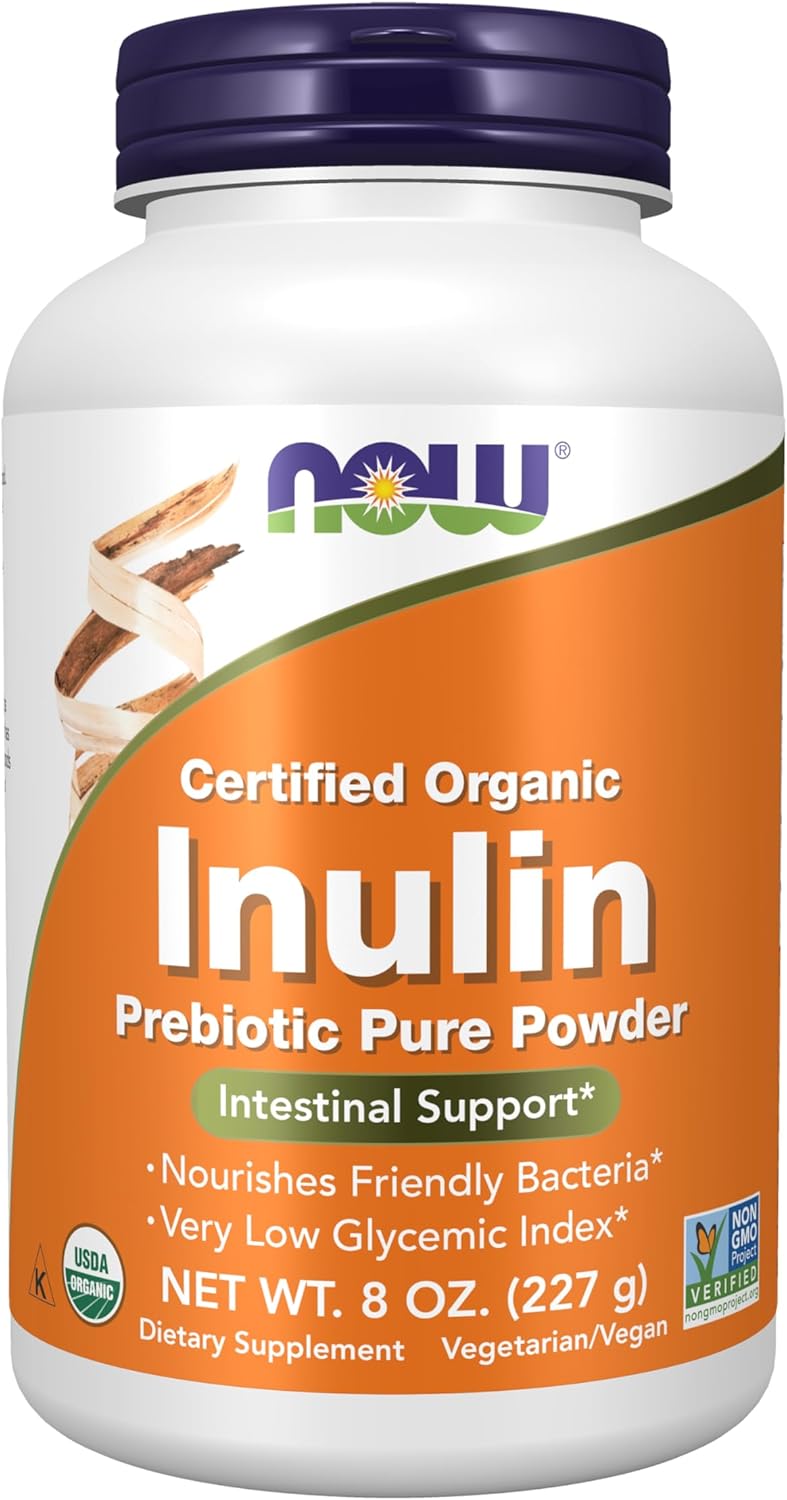
NOW Foods Inulin Prebiotic Pure Powder 8oz
NOW Foods Inulin Prebiotic Pure Powder 8oz. Confirmed in stock.
- Amazon price and availability can change over time
Affiliate link: If you buy through this link, we may earn a commission at no extra cost to you.
Buy NOW Foods Inulin Prebiotic Pure Powder 8oz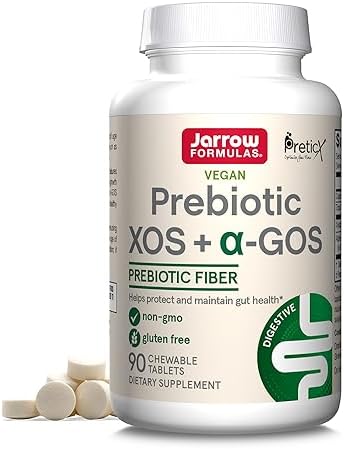
Jarrow Formulas Prebiotics XOS + GOS
Jarrow Formulas Prebiotics XOS + GOS. Confirmed in stock.
- Amazon price and availability can change over time
Affiliate link: If you buy through this link, we may earn a commission at no extra cost to you.
Buy Jarrow Formulas Prebiotics XOS + GOS
Hyperbiotics Organic Prebiotic Fiber Powder
Hyperbiotics Organic Prebiotic Fiber Powder. 4.3★ (4,432 ratings). Confirmed in stock.
- Amazon price and availability can change over time
Affiliate link: If you buy through this link, we may earn a commission at no extra cost to you.
Buy Hyperbiotics Organic Prebiotic Fiber PowderCompare supplements with the same checklist we use.
Get the anti-aging supplement cheat sheet with evidence prompts, safety checks, and label-quality questions before you buy.
Comparison Table
| Category | #1 NOW Foods Inulin Prebiotic Pure Powder 8oz NOW Foods | #2 Jarrow Formulas Prebiotics XOS + GOS Jarrow Formulas | #3 Hyperbiotics Organic Prebiotic Fiber Powder Hyperbiotics |
|---|---|---|---|
| Score | 8.8/10 | 8.8/10 | 8.2/10 |
| Best For | |||
| Pros |
| ||
| Cons |
|
|
|
What to Know About Prebiotics for Gut Health
Probiotics get the headlines. Prebiotics do the feeding. Without the right dietary fiber to sustain them, beneficial bacteria cannot maintain population levels in the colon — regardless of how many CFU you're supplementing. A prebiotic is defined by three criteria: it resists digestion in the upper GI tract, it is fermented by the gut microbiota, and it selectively promotes the growth of beneficial bacteria. The four main prebiotic types used in supplements differ significantly in fermentation rate, bacterial selectivity, GI side effect profile, and the research evidence behind them. Inulin is a long-chain polysaccharide (10-60 fructose units) from chicory root. It ferments slowly, predominantly in the distal colon, and selectively feeds Bifidobacterium. FOS (fructooligosaccharides) are shorter chains (2-8 units) that ferment more rapidly, producing more gas more quickly but also producing short-chain fatty acids (butyrate, propionate) faster. GOS (galactooligosaccharides) derived from lactose are the most Bifidobacterium-selective of the main types — Boehm et al. (2005) demonstrated GOS significantly increased Bifidobacterium in a human RCT. HMOs (human milk oligosaccharides), originally found in breast milk, are emerging as the most precisely targeted prebiotics, with 2'-FL HMO now available in supplements. For adults 45+, the strongest rationale is feeding the Bifidobacterium species that decline with age. GOS and long-chain inulin are the best-evidenced choices for this goal. The tradeoff is fermentation speed and gas production — which is why dose titration is essential.
This content is for educational purposes only and is not medical advice. These statements have not been evaluated by the FDA. This product is not intended to diagnose, treat, cure, or prevent any disease.
Key Benefits of Prebiotics for Gut Health
Probiotics get the headlines.
Prebiotics do the feeding.
Without the right dietary fiber to sustain them, beneficial bacteria cannot maintain population levels in the colon — regardless of how many CFU you're supplementing.
How Prebiotics Supports Gut Health
Prebiotics (primarily FOS, GOS, and inulin) are selectively fermented by beneficial gut bacteria — particularly Bifidobacterium and Lactobacillus species — that cannot be supported by general dietary fiber. This selective fermentation produces short-chain fatty acids (SCFAs) including butyrate, propionate, and acetate. Butyrate serves as the primary fuel for colonocytes, maintaining intestinal barrier integrity. SCFAs also signal via G-protein-coupled receptors to regulate gut motility, reduce systemic inflammation, and influence metabolic pathways including appetite and glucose homeostasis.
What to Look For When Buying Prebiotics
We evaluated products on: (1) inclusion of prebiotic types with human clinical trial evidence — inulin, FOS, GOS, or HMO; (2) dose adequacy relative to clinical trial doses (Ramirez-Farias 2009 used 8g/day of scFOS; Boehm 2005 used 7.5g/day GOS); (3) form and dose flexibility for tolerance titration; (4) purity and third-party certification; and (5) value per gram of prebiotic fiber.
Dosage Guidance
Always follow your healthcare provider's recommendations. Dosages vary by individual health status, age, and goals.
Common Prebiotics Complaints (And How to Avoid Them)
Based on analysis of thousands of customer reviews across Prebiotics products.
"Prebiotics give me terrible gas and bloating"
Gas and bloating from prebiotics are dose-dependent and fermentation-rate-dependent. The solution is threefold: (1) start at 2-3g/day, not the full labeled dose; (2) switch to a GOS-based or long-chain inulin product rather than short-chain FOS, which ferments faster and produces more gas proximally; (3) increase dose by no more than 1-2g per week. Most adults find that after 4-6 weeks of gradual dose escalation, the microbiome adapts and gas production normalizes significantly.
"What is the difference between a prebiotic and a probiotic?"
Probiotics are live bacteria you ingest — they add specific strains to your gut. Prebiotics are non-digestible fibers that feed bacteria already in your gut (and any probiotics you're taking). Think of probiotics as the seeds and prebiotics as the fertilizer. Taking both together — a synbiotic approach — has evidence suggesting better Bifidobacterium colonization than either alone, because the probiotic strains arrive with their preferred food supply. For gut health, the combination is more effective than either intervention alone for most people.
"I eat a healthy diet with lots of vegetables — do I still need a prebiotic supplement?"
Dietary prebiotic fibers from food (garlic, onions, leeks, asparagus, bananas, oats) are the ideal source and provide additional nutrition alongside fermentable fiber. However, most adults consume only 5-10g of total dietary fiber per day, far short of the 25-38g recommended and the 8-10g of specifically fermentable prebiotic fiber shown to produce Bifidobacterium increases in clinical trials. Supplemental prebiotics allow you to specifically add the fiber types with the strongest clinical evidence (inulin, GOS) at controlled doses, alongside a balanced diet rather than as a replacement for it.
Safety & Interactions
- Pregnancy and breastfeeding: Consult your healthcare provider before taking this supplement during pregnancy or while nursing. The safety of supplemental doses beyond dietary intake has not been established in pregnant or lactating women.
- Blood thinners: If you take blood-thinning medications (e.g., warfarin, apixaban, rivaroxaban, clopidogrel, or high-dose aspirin), consult your healthcare provider BEFORE starting this supplement, as it may have additive antiplatelet or anticoagulant effects.
- Kidney disease: If you have chronic kidney disease (CKD) or any significant kidney impairment, consult your healthcare provider before taking this supplement. Some supplements can accumulate to dangerous levels when kidney function is reduced.
- Gout: Individuals with gout should consult their healthcare provider before starting this supplement. Certain supplements (e.g., collagen, fish oil, niacin) may affect uric acid levels or trigger flares in susceptible individuals.
- Fish allergy - capsule source: Some softgel capsules use fish-derived gelatin even when the active supplement is not fish-derived. If you have a confirmed fish or shellfish allergy, verify the capsule source on the label or check with the manufacturer. Vegan capsules (vegetable cellulose) are widely available alternatives.
- Beef / alpha-gal allergy - capsule source: Many softgel and two-piece capsules use bovine gelatin. If you have a confirmed beef allergy or alpha-gal syndrome (mammalian meat allergy), check capsule sources on the label. Vegan capsules (vegetable cellulose) and HPMC capsules are alternatives.
- Important: This supplement is not a replacement for prescription medications. It is supportive for individuals with low baseline status, not a treatment for diagnosed conditions (anxiety disorders, insomnia, hypertension, osteoporosis, etc.). Do not stop or reduce any prescription without consulting your doctor.
""The mechanism difference between prebiotic types is practically important. Long-chain inulin ferments slowly in the distal colon — less gas, more butyrate production further down the intestine where it's most needed. Short-chain FOS ferments fast and proximal — more gas, faster Bifidobacterium response. GOS is the most selective for Bifidobacterium with the cleanest GI tolerance profile. For adults 45+ new to prebiotics, starting with GOS or long-chain inulin at 3g/day and titrating up over 4 weeks is the path of least GI resistance while still achieving microbiome benefit."
— Angelique Nicole R. Villegas, RND, Registered Nutritionist Dietitian · PRC Philippines · License #0023950
Frequently Asked Questions
Citations & Research
This page references peer-reviewed research indexed on PubMed/NCBI. Citations are provided for transparency. Always consult a qualified healthcare professional before making any medical decisions.
- [1]Ramirez-Farias C, Slezak K, Fuller Z, et al. Effect of inulin on the human gut microbiota: stimulation of Bifidobacterium adolescentis and Faecalibacterium prausnitzii. Br J Nutr. 2009;101(4):541-550.PMID 18590586 ↗
- [2]Boehm G, Fanaro S, Jelinek J, et al. Prebiotic concept for infant nutrition. Acta Paediatr Suppl. 2003;91(441):64-67.PMID 14599044 ↗
- [3]Van Loo J, Coussement P, de Leenheer L, et al. On the presence of inulin and oligofructose as natural ingredients in the western diet. Crit Rev Food Sci Nutr. 1995;35(6):525-552.PMID 8777017 ↗
Ready to Try Prebiotics?
Our top pick for gut health. Third-party tested, highly reviewed.
Affiliate link: If you buy through this link, we may earn a commission at no extra cost to you.
Shop #1 Pick — NOW Foods Inulin Prebiotic Pure Powder 8ozContinue exploring
- everything we know about PrebioticsSupplement overview
- what we recommend for gut healthGoal overview
- our top Bifidobacterium breve pick for gut healthAlternative supplement
- how Colostrum supports gut healthAlternative supplement
- where Probiotics fits for gut healthEditor pick
- Psyllium Husk evidence for digestive healthEditor pick
- probiotics or prebiotics — the trade-offsCompare options
Get the evidence-graded supplement cheat sheet.
Evidence prompts, safety checks, and label-quality questions before you buy — free, straight to your inbox.
No spam. Unsubscribe anytime.