
Best Magnesium for Anxiety: Top 3 Forms Compared by Evidence, Bioavailability, and Value
Compare the best magnesium supplements for anxiety in 2026. Science-backed forms, honest cons, verified citations, and RD-reviewed dosage guidance.
multiple RCTs and meta-analyses show significant reductions in subjective anxiety scores with magnesium supplementation, especially in mild-to-moderate anxiety and premenstrual syndrome; effect sizes are modest but consistent; stronger effects seen in individuals with confirmed magnesium deficiency

This content is for educational purposes only and is not medical advice. These statements have not been evaluated by the FDA. This product is not intended to diagnose, treat, cure, or prevent any disease. Always consult your healthcare provider before starting any supplement.
Best Magnesium for Anxiety in 2026
Ranked by quality, value, and clinical backing
Where available, we show when each product price was last checked so the list stays honest without overreacting to normal Amazon price movement.

Doctor's Best High Absorption Magnesium Glycinate
Doctor's Best High Absorption Magnesium Glycinate — third-party tested. 4.6★ (38,200 ratings). Confirmed in stock.
- Amazon price and availability can change over time
Affiliate link: If you buy through this link, we may earn a commission at no extra cost to you.
Buy Doctor's Best High Absorption Magnesium Glycinate
Klaire Labs Magnesium Glycinate Complex
Klaire Labs Magnesium Glycinate Complex — live same-brand replacement. 4.6★ (1,324 ratings).
- Amazon price and availability can change over time
Affiliate link: If you buy through this link, we may earn a commission at no extra cost to you.
Buy Klaire Labs Magnesium Glycinate Complex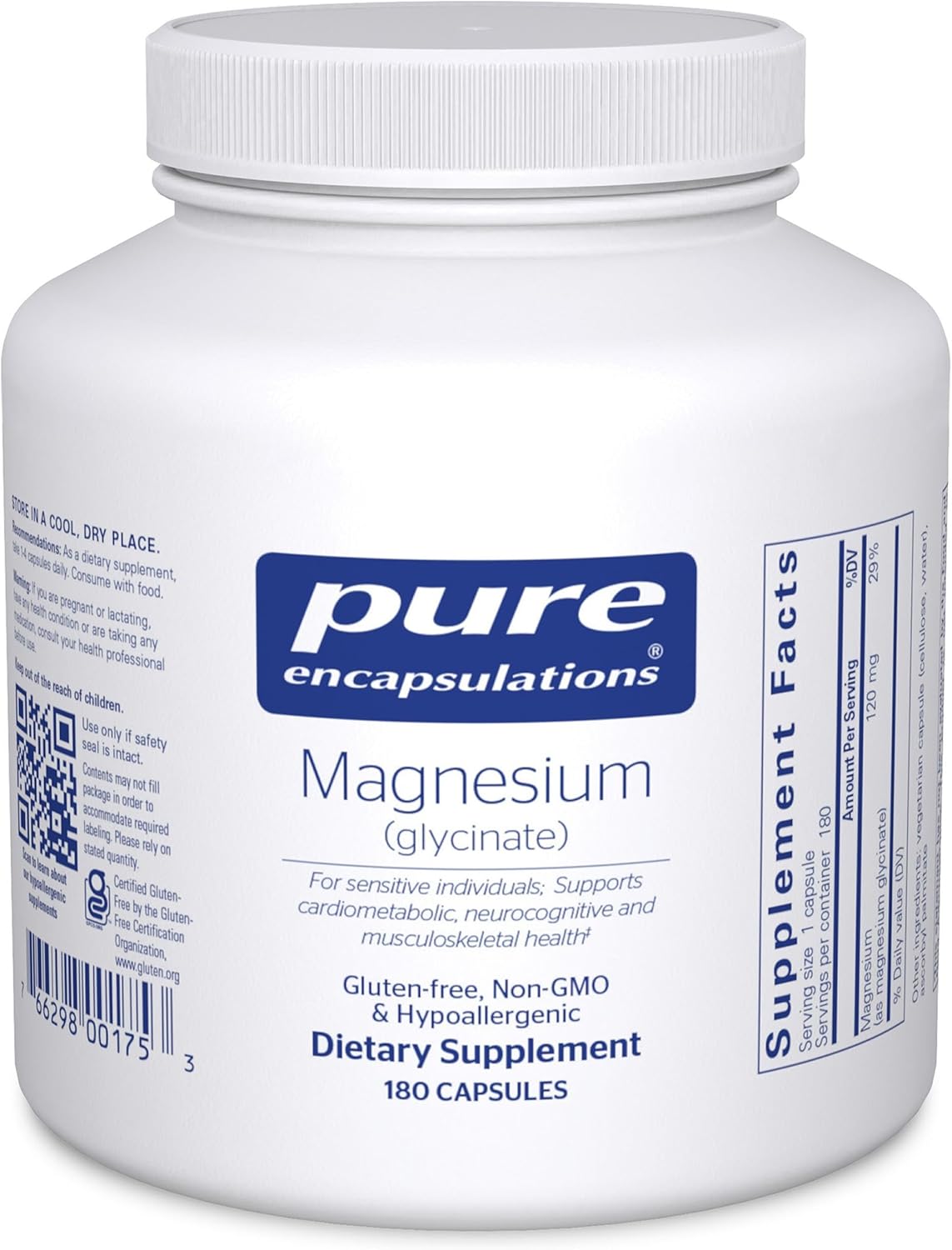
Pure Encapsulations Magnesium Glycinate
Pure Encapsulations Magnesium Glycinate — third-party tested. 4.7★ (48,063 ratings). Confirmed in stock.
- Premium price point relative to comparable options
Affiliate link: If you buy through this link, we may earn a commission at no extra cost to you.
Buy Pure Encapsulations Magnesium GlycinateCompare supplements with the same checklist we use.
Get the anti-aging supplement cheat sheet with evidence prompts, safety checks, and label-quality questions before you buy.
Comparison Table
| Category | #1 Doctor's Best High Absorption Magnesium Glycinate Doctor's Best | #2 Klaire Labs Magnesium Glycinate Complex Klaire Labs | #3 Pure Encapsulations Magnesium Glycinate Pure Encapsulations |
|---|---|---|---|
| Score | 8.8/10 | 9/10 | 9/10 |
| Best For | |||
| Pros |
|
|
|
| Cons |
|
|
|
What to Know About Magnesium for Anxiety
Magnesium is one of the most studied nutritional interventions for stress and mild-to-moderate anxiety — and one of the most misunderstood. It's not a sedative. It's not a replacement for therapy or medication. But it is a mineral that roughly half of U.S. adults don't get enough of, and that deficiency has measurable consequences for how the brain handles stress. The research is genuinely encouraging. Multiple systematic reviews have found significant reductions in subjective anxiety scores with supplementation, particularly in people who are already running low. A 2017 systematic review by Boyle, Lawton, and Dye examined 18 studies and found consistent evidence that magnesium supplementation may support reductions in mild-to-moderate anxiety — though the authors noted that study quality varied and most participants had suboptimal magnesium intake at baseline. This page compares three well-formulated products across the criteria that actually matter: form, elemental dose, third-party certification, cost per serving, and real-world tolerability. We've ranked them for adults who want an evidence-informed approach, not promises. Every product listed has genuine trade-offs — we'll tell you exactly what they are.
This content is for educational purposes only and is not medical advice. These statements have not been evaluated by the FDA. This product is not intended to diagnose, treat, cure, or prevent any disease.
Key Benefits of Magnesium for Anxiety
May support reductions in subjective anxiety and stress scores, particularly in individuals with suboptimal magnesium intake — consistent finding across multiple systematic reviews
Regulates the HPA axis and NMDA receptor activity, addressing physiological mechanisms underlying stress-related nervous system dysregulation
Well-tolerated at therapeutic doses when using glycinate or threonate forms, with a significantly lower laxative threshold than oxide or citrate formulations
How Magnesium Supports Anxiety
Magnesium's relevance to anxiety isn't incidental — it sits at the intersection of several neurological systems that directly regulate stress and fear responses. Its most important role may be as a physiological antagonist at the NMDA receptor, a glutamate receptor that drives excitatory neurotransmission. When magnesium levels are adequate, it blocks excessive NMDA activation, dampening the kind of runaway excitatory signalling that characterises the anxious brain. Deplete magnesium, and that block weakens — neuronal excitability rises, and the threshold for stress reactivity drops measurably. Magnesium also regulates the hypothalamic-pituitary-adrenal (HPA) axis, the body's central stress-response cascade. Specifically, it modulates corticotropin-releasing hormone (CRH) secretion in the hypothalamus, which in turn governs cortisol output from the adrenal glands. Chronically elevated cortisol disrupts sleep, and disrupted sleep worsens anxiety — a feedback loop that magnesium deficiency actively sustains. On top of this, magnesium is a required cofactor for tryptophan hydroxylase, the enzyme that initiates serotonin synthesis, and it supports GABAergic transmission — the brain's primary inhibitory signalling system. It's not a single-mechanism supplement. It's a foundational mineral that multiple anxiety-relevant pathways depend on.
What to Look For When Buying Magnesium
The single most important decision when choosing magnesium for anxiety is form — not brand, not price. Magnesium oxide is the most common form in cheap supplements, but it has poor bioavailability (roughly 4% absorbed in some estimates) and a low laxative threshold. Avoid it for anxiety purposes. The two forms worth your attention are magnesium glycinate and magnesium L-threonate, and they work differently enough to matter. Magnesium glycinate is magnesium bound to the amino acid glycine. Glycine itself has mild inhibitory effects on the central nervous system, which may complement magnesium's anxiolytic mechanisms — though it's worth noting glycine's CNS effects at typical supplemental doses are modest. Glycinate is well-absorbed in the gut, exceptionally gentle on the digestive system, and available at competitive prices. It's the right default form for most people. TRAACS chelates (as in the Doctor's Best product) represent the most bioavailable version of glycinate, using a patented chelation process that resists interference from dietary phytates and competes less with other minerals for absorption. Magnesium L-threonate is a different animal. It was developed specifically to raise brain magnesium levels, and it achieves this via transporter-mediated entry across the blood-brain barrier — a route that other magnesium forms cannot access as efficiently. The trade-off is elemental dose: the threonate molecule is large relative to magnesium, so products like Neuro-Mag deliver only 144mg elemental magnesium per serving. For someone primarily concerned with CNS magnesium status, this is arguably sufficient. For someone who also has cardiovascular or muscular reasons to replete magnesium systemically, it may not be. On timing: evening dosing is biologically logical. Cortisol follows a diurnal rhythm, declining in the hours before sleep. Taking magnesium in the evening — ideally 30–60 minutes before bed — aligns supplementation with the body's natural cortisol taper and may support the magnesium-GABA relationship during the transition to sleep. Some people split their dose, taking half in the morning and half at night, which is also reasonable and may improve tolerability at higher doses.
Dosage Guidance
Always follow your healthcare provider's recommendations. Dosages vary by individual health status, age, and goals.
Common Magnesium Complaints (And How to Avoid Them)
Based on analysis of thousands of customer reviews across Magnesium products.
"Magnesium gave me diarrhea or loose stools"
This is almost always a form issue, not a magnesium issue. Oxide, citrate, and sulfate forms draw water into the bowel and are much more likely to cause laxative effects. All three products we recommend use glycinate or threonate — forms with significantly better gastrointestinal tolerability. If you're experiencing digestive symptoms with glycinate, try splitting the dose across morning and evening, or reduce to 100–150 mg elemental and titrate slowly upward.
"I've been taking magnesium for two weeks and feel no difference"
Two weeks is often not long enough, particularly if you're meaningfully deficient. Tissue magnesium stores take weeks to replenish, and the anxiety-relevant RCTs typically ran for 4–12 weeks. Ensure your dose is actually reaching 200 mg elemental or more per day (check the facts panel), that you're taking it consistently rather than sporadically, and consider whether your baseline stress load or sleep disruption might need additional support alongside supplementation.
"I can't tell how much elemental magnesium I'm actually getting"
This is a genuinely common point of confusion and one we take seriously. The 'elemental magnesium' figure is what matters for dosing — not the total weight of the magnesium compound. All three products we've listed clearly state the elemental magnesium content on their labels: 200 mg for Doctor's Best, 144 mg for Life Extension Neuro-Mag, and 120 mg per capsule for Pure Encapsulations. We've also included this clearly in our dosage comparison table above.
Safety & Interactions
- Pregnancy and breastfeeding: Consult your healthcare provider before taking this supplement during pregnancy or while nursing. The safety of supplemental doses beyond dietary intake has not been established in pregnant or lactating women.
- Blood thinners: If you take blood-thinning medications (e.g., warfarin, apixaban, rivaroxaban, clopidogrel, or high-dose aspirin), consult your healthcare provider BEFORE starting this supplement, as it may have additive antiplatelet or anticoagulant effects.
- Kidney disease: If you have chronic kidney disease (CKD) or any significant kidney impairment, consult your healthcare provider before taking this supplement. Some supplements can accumulate to dangerous levels when kidney function is reduced.
- Gout: Individuals with gout should consult their healthcare provider before starting this supplement. Certain supplements (e.g., collagen, fish oil, niacin) may affect uric acid levels or trigger flares in susceptible individuals.
- Blood pressure medications: This supplement may have an additive blood-pressure-lowering effect when taken with antihypertensives including beta-blockers (metoprolol, atenolol), ACE inhibitors (lisinopril), ARBs (losartan), and calcium channel blockers (amlodipine). If you take any blood pressure medication, monitor your readings for the first 4–6 weeks after starting and inform your prescribing physician.
- Upper intake limit: The NIH tolerable upper intake level (UL) for supplemental magnesium is 350mg/day for adults. Exceeding this chronically without medical supervision increases risk of diarrhea, cramping, and electrolyte imbalance. Products providing >350mg/serving (e.g., SOLARAY 400mg, NOW Foods Magnesium Malate 425mg) should be dose-titrated — start with 1–2 capsules rather than the full serving.
- Drug separation: Magnesium reduces absorption of tetracycline antibiotics, fluoroquinolones (ciprofloxacin), bisphosphonates (alendronate), and thyroid medications (levothyroxine). Separate magnesium from these by at least 2 hours — 4–6 hours for tetracyclines. Long-term PPI use (omeprazole, esomeprazole, lansoprazole) can deplete magnesium; monitor levels if on chronic PPI therapy.
- Take with food: Taking magnesium with food improves absorption and significantly reduces loose stools or digestive discomfort. Citrate and oxide forms act as osmotic laxatives — always take with a full glass of water. Do not use osmotic laxative forms daily without medical guidance; chronic use can lead to dependence.
- Important: This supplement is not a replacement for prescription medications. It is supportive for individuals with low baseline status, not a treatment for diagnosed conditions (anxiety disorders, insomnia, hypertension, osteoporosis, etc.). Do not stop or reduce any prescription without consulting your doctor.
""From a clinical nutrition standpoint, the most underappreciated aspect of magnesium and anxiety is the dose-form mismatch in popular supplements — many products on store shelves use oxide or low-dose chelates that simply don't deliver enough elemental magnesium to meaningfully affect status. Always check the elemental magnesium figure on the supplement facts panel, not the compound weight, and pair supplementation with dietary sources like dark leafy greens, pumpkin seeds, and legumes for a more sustainable long-term strategy."
— Angelique Nicole R. Villegas, RND, Registered Nutritionist Dietitian · PRC Philippines · License #0023950
Frequently Asked Questions
Citations & Research
This page references peer-reviewed research indexed on PubMed/NCBI. Citations are provided for transparency. Always consult a qualified healthcare professional before making any medical decisions.
- [1]Boyle NB, Lawton C, Dye L. “The Effects of Magnesium Supplementation on Subjective Anxiety and Stress-A Systematic Review.” Nutrients, 2017. doi:10.3390/nu9050429PMID 28445426 ↗
- [2]Noah L, Dye L, Bois De Fer B et al. “Effect of magnesium and vitamin B6 supplementation on mental health and quality of life in stressed healthy adults: Post-hoc analysis of a randomised controlled trial.” Stress and health : journal of the International Society for the Investigation of Stress, 2021. doi:10.1002/smi.3051PMID 33864354 ↗
- [3]Botturi A, Ciappolino V, Delvecchio G et al. “The Role and the Effect of Magnesium in Mental Disorders: A Systematic Review.” Nutrients, 2020. doi:10.3390/nu12061661PMID 32503201 ↗
- [4]Sarris J, Ravindran A, Yatham LN et al. “Clinician guidelines for the treatment of psychiatric disorders with nutraceuticals and phytoceuticals: The World Federation of Societies of Biological Psychiatry (WFSBP) and Canadian Network for Mood and Anxiety Treatments (CANMAT) Taskforce.” The world journal of biological psychiatry : the official journal of the World Federation of Societies of Biological Psychiatry, 2022. doi:10.1080/15622975.2021.2013041PMID 35311615 ↗
Ready to Try Magnesium?
Our top pick for anxiety. Third-party tested, highly reviewed.
Affiliate link: If you buy through this link, we may earn a commission at no extra cost to you.
Shop #1 Pick — Doctor's Best High Absorption Magnesium GlycinateContinue exploring
- our full Magnesium reviewSupplement overview
- best supplements for anxiety reliefGoal overview
- Bacopa Monnieri research for anxiety reliefAlternative supplement
- clinical notes on L Theanine and anxiety reliefAlternative supplement
- the Magnesium page for bone healthSame supplement, different goal
- magnesium glycinate vs citrate: our verdictCompare options
Get the evidence-graded supplement cheat sheet.
Evidence prompts, safety checks, and label-quality questions before you buy — free, straight to your inbox.
No spam. Unsubscribe anytime.