
Best Magnesium for Bone Health: Top Picks for Bone Density Support in 2026
Compare the best magnesium supplements for bone health in 2026. Science-backed picks for postmenopausal women, osteopenia, and adults over 50. RD-reviewed.
cross-sectional studies consistently show positive association between magnesium intake and BMD; RCT data are smaller and primarily in postmenopausal women; systematic reviews suggest magnesium supplementation may modestly increase BMD but effect sizes are smaller than calcium/vitamin D; strongest evidence in magnesium-deficient populations

This content is for educational purposes only and is not medical advice. These statements have not been evaluated by the FDA. This product is not intended to diagnose, treat, cure, or prevent any disease. Always consult your healthcare provider before starting any supplement.
Best Magnesium for Bone Health in 2026
Ranked by quality, value, and clinical backing
Where available, we show when each product price was last checked so the list stays honest without overreacting to normal Amazon price movement.

Doctor's Best High Absorption Magnesium Glycinate
Doctor's Best High Absorption Magnesium Glycinate — third-party tested. 4.6★ (38,200 ratings). Confirmed in stock.
- Amazon price and availability can change over time
Affiliate link: If you buy through this link, we may earn a commission at no extra cost to you.
Buy Doctor's Best High Absorption Magnesium Glycinate
NOW Magnesium Malate
NOW Magnesium Malate — third-party tested. 4.7★ (3,963 ratings). Confirmed in stock.
- Amazon price and availability can change over time
Affiliate link: If you buy through this link, we may earn a commission at no extra cost to you.
Buy NOW Magnesium Malate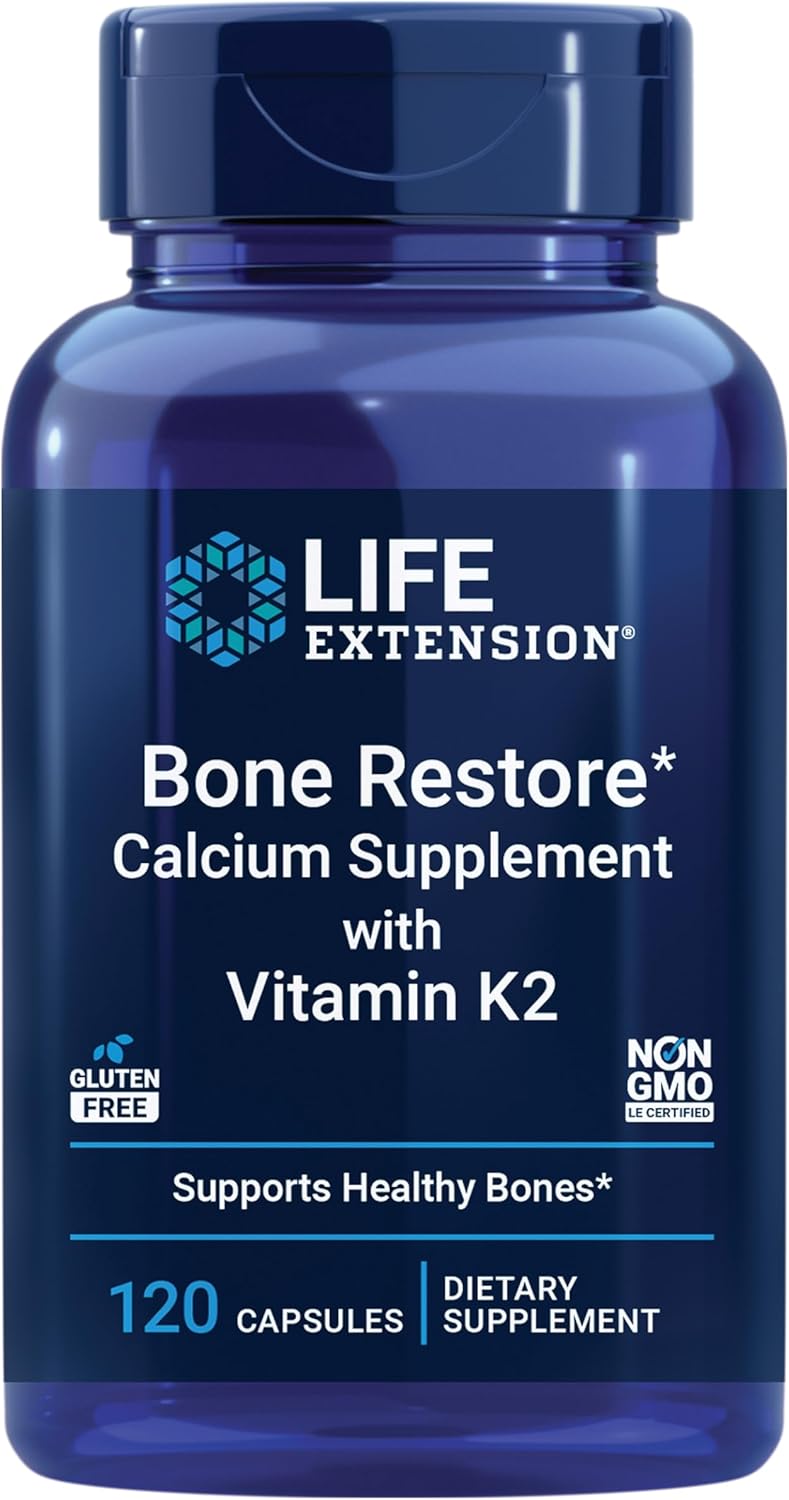
Life Extension Bone Restore with Vitamin K2 120 Capsules
Life Extension Bone Restore with Vitamin K2 120 Capsules — third-party tested. 4.6★ (5,230 ratings). Confirmed in stock.
- Amazon price and availability can change over time
Affiliate link: If you buy through this link, we may earn a commission at no extra cost to you.
Buy Life Extension Bone Restore with Vitamin K2 120 Capsules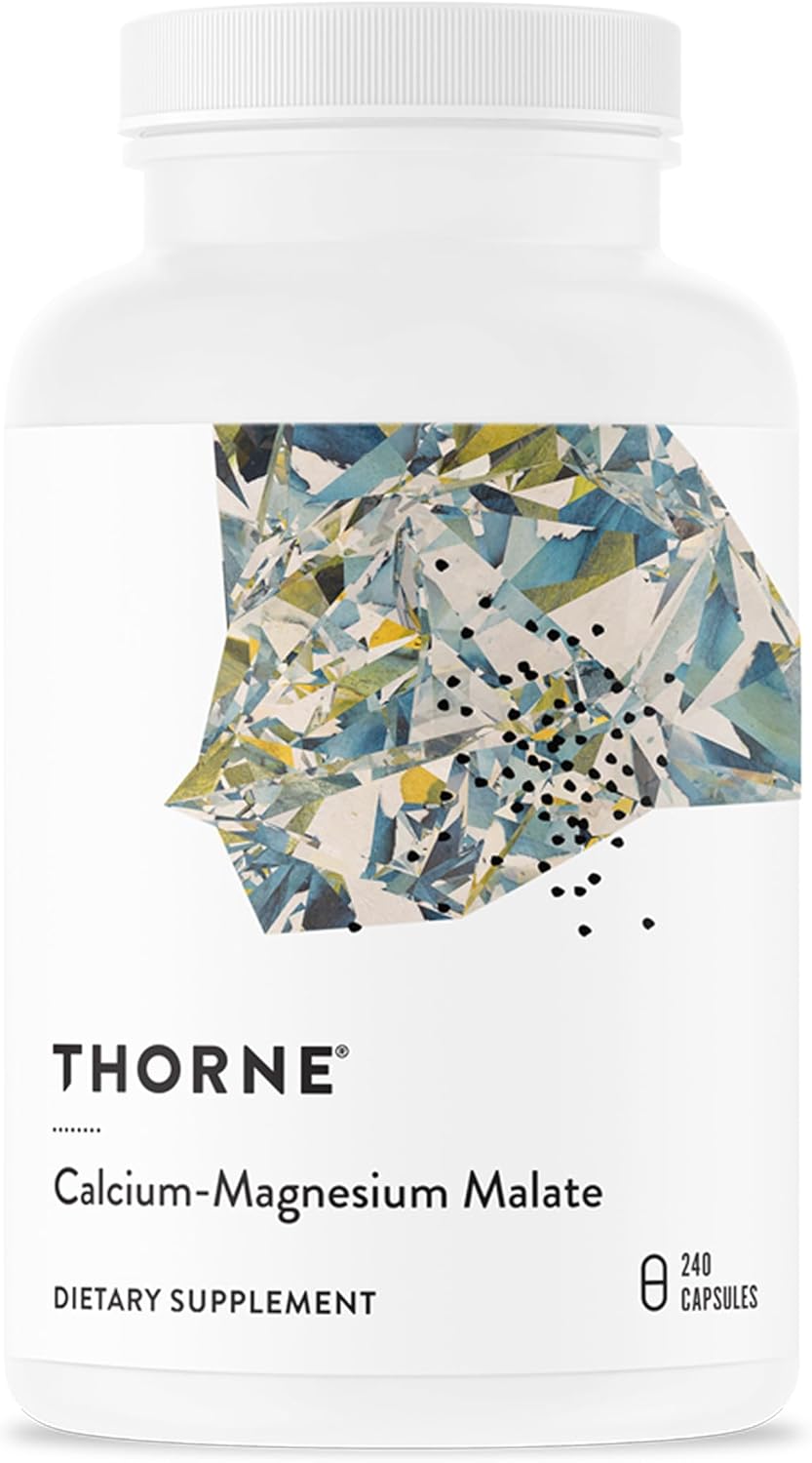
Thorne Calcium-Magnesium Malate 240 Capsules
Thorne Calcium-Magnesium Malate 240 Capsules — third-party tested. 4.7★ (862 ratings). Confirmed in stock.
- Premium price point relative to comparable options
- Smaller customer-review base than category best-sellers
Affiliate link: If you buy through this link, we may earn a commission at no extra cost to you.
Buy Thorne Calcium-Magnesium Malate 240 CapsulesCompare supplements with the same checklist we use.
Get the anti-aging supplement cheat sheet with evidence prompts, safety checks, and label-quality questions before you buy.
Comparison Table
| Category | #1 Doctor's Best High Absorption Magnesium Glycinate Doctor's Best | #2 NOW Magnesium Malate NOW Foods | #3 Life Extension Bone Restore with Vitamin K2 120 Capsules Life Extension | #4 Thorne Calcium-Magnesium Malate 240 Capsules Thorne |
|---|---|---|---|---|
| Score | 8.8/10 | 9/10 | 8.8/10 | 9/10 |
| Best For | ||||
| Pros |
|
|
|
|
| Cons |
|
|
|
|
What to Know About Magnesium for Bone Health
Calcium gets all the attention when it comes to bone health. That's understandable — it makes up the bulk of bone mineral content. But magnesium is quietly doing some of the most important regulatory work in the background, and most adults aren't getting enough of it. Around 60% of the body's magnesium is stored in bone itself, where it contributes directly to the structural integrity of the bone mineral matrix. Without adequate magnesium, the enzymes that activate vitamin D can't do their job, and your carefully chosen calcium supplement may deliver far less benefit than you expect. For postmenopausal women, adults over 50 managing osteopenia, and anyone with a gut condition that impairs mineral absorption, getting magnesium right isn't optional — it's foundational. The National Health and Nutrition Examination Survey data consistently show that a significant proportion of Americans fall below the estimated average requirement for magnesium, largely because Western diets are low in leafy greens, nuts, legumes, and whole grains. This guide cuts through the noise. We've reviewed the clinical evidence, assessed four leading products across form, bioavailability, third-party certification, and value, and provided practical guidance on dosing, timing, and how magnesium fits into a complete bone health regimen. No hype. Just the science you need to make an informed decision.
This content is for educational purposes only and is not medical advice. These statements have not been evaluated by the FDA. This product is not intended to diagnose, treat, cure, or prevent any disease.
Key Benefits of Magnesium for Bone Health
May support bone mineral density at the hip and spine, the sites most associated with osteoporotic fracture risk in observational studies
Acts as a required cofactor for the enzymes that convert vitamin D to its biologically active form — making magnesium adequacy essential for anyone supplementing with vitamin D3
Modulates parathyroid hormone sensitivity and calcium homeostasis, helping to regulate how calcium is deposited in bone rather than lost through the kidneys
How Magnesium Supports Bone Health
Magnesium contributes to bone health through two distinct pathways: structural and regulatory. Structurally, magnesium ions are incorporated directly into the hydroxyapatite crystal lattice that forms the mineral matrix of bone. This isn't a passive role — magnesium influences crystal size and solubility, which in turn affects how resistant bone is to mechanical stress. Magnesium also activates alkaline phosphatase, an enzyme produced by osteoblasts (the cells responsible for building new bone) that's essential for mineralisation. Without adequate magnesium, alkaline phosphatase activity is impaired, and the bone-building process slows. On the regulatory side, magnesium's relationship with parathyroid hormone (PTH) and vitamin D is where things get particularly important for supplement users. Low magnesium blunts tissue sensitivity to PTH, which normally acts to mobilise calcium from bone and increase calcium reabsorption in the kidneys. When this signalling breaks down, calcium homeostasis is compromised. More critically for anyone taking vitamin D supplements: the hydroxylation steps that convert 25(OH)D — the storage form measured in blood tests — into 1,25(OH)2D, the biologically active form, are magnesium-dependent enzymatic reactions. This means that if your magnesium status is poor, your vitamin D supplement may not be activating fully, regardless of the dose you're taking.
What to Look For When Buying Magnesium
The most important decision when choosing a magnesium supplement for bone health isn't brand — it's form. Magnesium glycinate (particularly chelated forms like TRAACS) is the gold standard for bioavailability and tolerability. The glycine chelation protects the magnesium ion from competing minerals and stomach acid during transit, resulting in efficient uptake with minimal laxative effect. Magnesium malate pairs the mineral with malic acid and is a sensible choice for active adults who want simultaneous support for energy metabolism — malic acid is a genuine Krebs cycle intermediate, not a marketing claim. Magnesium oxide, which appears in some combination bone formulas, has significantly lower fractional absorption than chelated forms and is primarily used because it's cheap and allows higher label doses; it's not a form you'd choose if bioavailability is the priority. The calcium-to-magnesium ratio matters, but the timing question matters more. A commonly cited target is a 2:1 calcium-to-magnesium ratio — so if you're taking 600–700mg calcium, pairing it with 300–350mg magnesium is reasonable. What gets less attention is that calcium and magnesium compete for the same intestinal transporter. Taking them simultaneously reduces net absorption of both. If you're using a combination formula like Life Extension Bone Restore, splitting the daily dose — taking half in the morning and half in the evening — partially mitigates this. If you're using separate products, taking magnesium at a different time of day from your calcium is a simple and effective strategy. K2 pairing deserves a mention because it's genuinely relevant to how calcium behaves once absorbed. Vitamin K2 — particularly the MK-7 form — activates osteocalcin and matrix Gla protein, which together direct calcium toward bone mineralisation and away from arterial calcification. If you're taking higher-dose calcium supplements long-term, including K2 in your stack is sensible preventive nutrition, and some evidence suggests it may independently support bone strength. Finally, think about what you're trying to accomplish. If you're using a well-constructed separate stack (calcium citrate + D3/K2 + standalone magnesium glycinate), you have precise control over each mineral's timing and dose. If you're managing supplement fatigue and want one product, a combination formula like Life Extension Bone Restore is reasonable — just go in with eyes open about the absorption trade-offs inherent in co-delivering competing minerals.
Dosage Guidance
Always follow your healthcare provider's recommendations. Dosages vary by individual health status, age, and goals.
Common Magnesium Complaints (And How to Avoid Them)
Based on analysis of thousands of customer reviews across Magnesium products.
"Magnesium supplements cause loose stools or diarrhoea"
This is a real and common issue with oxide, sulfate, and high-dose citrate forms. Our top pick uses magnesium glycinate lysinate chelate specifically because it's the best-tolerated form at therapeutic doses — the chelation significantly reduces the osmotic laxative effect that poorly absorbed magnesium exerts in the colon. Starting at a lower dose and titrating up over 1–2 weeks also helps most people adapt.
"I'm already taking so many supplements — do I really need a separate magnesium?"
Not necessarily. If supplement fatigue is a concern, Life Extension Bone Restore combines calcium, magnesium, D3, K2, and boron in one 4-capsule serving. The trade-off is that the magnesium form is oxide-based with lower bioavailability, and co-delivering calcium and magnesium slightly reduces net absorption of both. It's a genuine convenience versus optimisation trade-off, and for some people simplified adherence outweighs marginal absorption differences.
"I can't tell if magnesium is actually doing anything for my bones"
This is honest and fair — magnesium's contribution to bone health is largely working in the background as a cofactor and regulatory mineral, not as a direct bone-builder the way calcium is. Its most visible role may be enabling your vitamin D supplement to activate properly. Bone density improvements from any single supplement intervention take 12–24 months to show up meaningfully on DEXA scans. Magnesium's value is best understood as removing a limiting factor in an otherwise well-designed regimen, not as a standalone intervention with fast measurable results.
Safety & Interactions
- Pregnancy and breastfeeding: Consult your healthcare provider before taking this supplement during pregnancy or while nursing. The safety of supplemental doses beyond dietary intake has not been established in pregnant or lactating women.
- Blood thinners: If you take blood-thinning medications (e.g., warfarin, apixaban, rivaroxaban, clopidogrel, or high-dose aspirin), consult your healthcare provider BEFORE starting this supplement, as it may have additive antiplatelet or anticoagulant effects.
- Kidney disease: If you have chronic kidney disease (CKD) or any significant kidney impairment, consult your healthcare provider before taking this supplement. Some supplements can accumulate to dangerous levels when kidney function is reduced.
- Gout: Individuals with gout should consult their healthcare provider before starting this supplement. Certain supplements (e.g., collagen, fish oil, niacin) may affect uric acid levels or trigger flares in susceptible individuals.
- Fish allergy - capsule source: Some softgel capsules use fish-derived gelatin even when the active supplement is not fish-derived. If you have a confirmed fish or shellfish allergy, verify the capsule source on the label or check with the manufacturer. Vegan capsules (vegetable cellulose) are widely available alternatives.
- Beef / alpha-gal allergy - capsule source: Many softgel and two-piece capsules use bovine gelatin. If you have a confirmed beef allergy or alpha-gal syndrome (mammalian meat allergy), check capsule sources on the label. Vegan capsules (vegetable cellulose) and HPMC capsules are alternatives.
- Upper intake limit: The NIH tolerable upper intake level (UL) for supplemental magnesium is 350mg/day for adults. Exceeding this chronically without medical supervision increases risk of diarrhea, cramping, and electrolyte imbalance. Products providing >350mg/serving (e.g., SOLARAY 400mg, NOW Foods Magnesium Malate 425mg) should be dose-titrated — start with 1–2 capsules rather than the full serving.
- Drug separation: Magnesium reduces absorption of tetracycline antibiotics, fluoroquinolones (ciprofloxacin), bisphosphonates (alendronate), and thyroid medications (levothyroxine). Separate magnesium from these by at least 2 hours — 4–6 hours for tetracyclines. Long-term PPI use (omeprazole, esomeprazole, lansoprazole) can deplete magnesium; monitor levels if on chronic PPI therapy.
- Take with food: Taking magnesium with food improves absorption and significantly reduces loose stools or digestive discomfort. Citrate and oxide forms act as osmotic laxatives — always take with a full glass of water. Do not use osmotic laxative forms daily without medical guidance; chronic use can lead to dependence.
- Important: This supplement is not a replacement for prescription medications. It is supportive for individuals with low baseline status, not a treatment for diagnosed conditions (anxiety disorders, insomnia, hypertension, osteoporosis, etc.). Do not stop or reduce any prescription without consulting your doctor.
""From a registered dietitian's perspective, magnesium is the most commonly overlooked piece of the bone health puzzle — particularly for postmenopausal women who are diligently taking calcium and vitamin D but not getting the cofactor support those supplements require to function optimally. Think of it this way: a well-designed bone health regimen should address the complete mineral and vitamin network — calcium, magnesium, vitamin D3, K2, and weight-bearing exercise — not just the most heavily marketed components."
— Angelique Nicole R. Villegas, RND, Registered Nutritionist Dietitian · PRC Philippines · License #0023950
Frequently Asked Questions
Citations & Research
This page references peer-reviewed research indexed on PubMed/NCBI. Citations are provided for transparency. Always consult a qualified healthcare professional before making any medical decisions.
- [1]Groenendijk I, van Delft M, Versloot P et al. “Impact of magnesium on bone health in older adults: A systematic review and meta-analysis.” Bone, 2022. doi:10.1016/j.bone.2021.116233PMID 34666201 ↗
- [2]Rizzoli R, Chevalley T. “Bone health: biology and nutrition.” Current opinion in clinical nutrition and metabolic care, 2024. doi:10.1097/MCO.0000000000000988PMID 37922025 ↗
- [3]Pendón-Ruiz de Mier MV, Santamaría R, Moyano-Peregrín C et al. “Bone and vascular effects of magnesium supplements in CKD patients (the MagicalBone Pilot Study).” Nefrologia, 2024. doi:10.1016/j.nefroe.2024.11.001PMID 39547778 ↗
- [4]Rondanelli M, Faliva MA, Tartara A, Gasparri C et al. “An update on magnesium and bone health.” Biometals, 2021. doi:10.1007/s10534-021-00305-0PMID 33959846 ↗
- [5]Vermeulen EA, Vervloet MG. “Magnesium Administration in Chronic Kidney Disease.” Nutrients, 2023. doi:10.3390/nu15030547PMID 36771254 ↗
Ready to Try Magnesium?
Our top pick for bone health. Third-party tested, highly reviewed.
Affiliate link: If you buy through this link, we may earn a commission at no extra cost to you.
Shop #1 Pick — Doctor's Best High Absorption Magnesium GlycinateContinue exploring
- Magnesium — our editorial overviewSupplement overview
- what we recommend for bone healthGoal overview
- Boron guidance for bone healthAlternative supplement
- Collagen guidance for bone healthAlternative supplement
- how Magnesium supports anxiety reliefSame supplement, different goal
- magnesium glycinate or citrate — the trade-offsCompare options
Get the evidence-graded supplement cheat sheet.
Evidence prompts, safety checks, and label-quality questions before you buy — free, straight to your inbox.
No spam. Unsubscribe anytime.