
Best Magnesium Glycinate Supplements for Anxiety in 2026
Magnesium glycinate achieves 45% absorption vs 4% for oxide. Superior form for anxiety: lower GI side effects and glycine GABA co-agonism.

This content is for educational purposes only and is not medical advice. These statements have not been evaluated by the FDA. This product is not intended to diagnose, treat, cure, or prevent any disease. Always consult your healthcare provider before starting any supplement.
Best Magnesium Glycinate for Anxiety in 2026
Ranked by quality, value, and clinical backing
Where available, we show when each product price was last checked so the list stays honest without overreacting to normal Amazon price movement.

Doctor's Best High Absorption Magnesium Glycinate
Doctor's Best High Absorption Magnesium Glycinate — third-party tested. 4.6★ (38,200 ratings). Confirmed in stock.
- Amazon price and availability can change over time
Affiliate link: If you buy through this link, we may earn a commission at no extra cost to you.
Buy Doctor's Best High Absorption Magnesium Glycinate
Klaire Labs Magnesium Glycinate Complex
Klaire Labs Magnesium Glycinate Complex — live same-brand replacement. 4.6★ (1,324 ratings).
- Amazon price and availability can change over time
Affiliate link: If you buy through this link, we may earn a commission at no extra cost to you.
Buy Klaire Labs Magnesium Glycinate Complex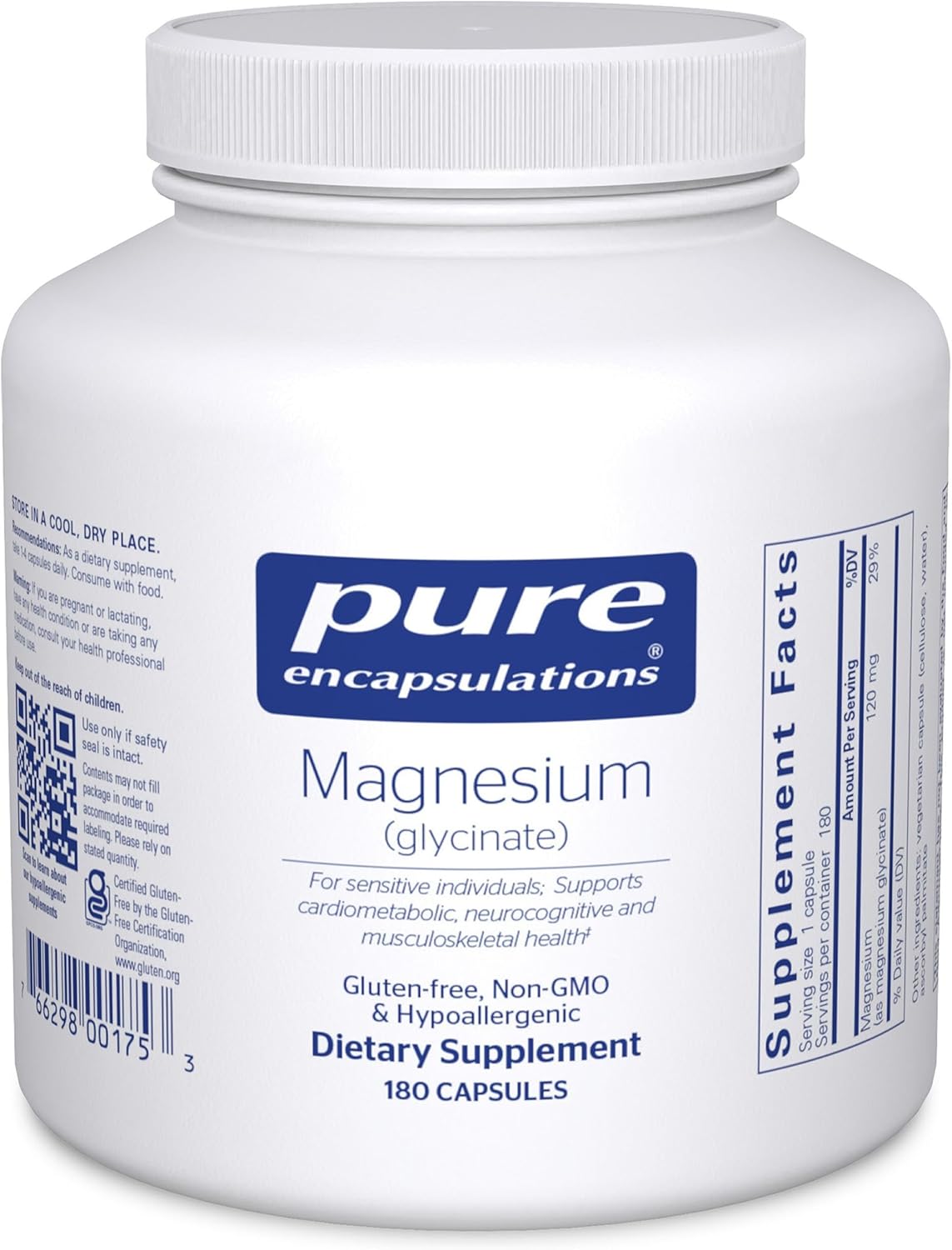
Pure Encapsulations Magnesium Glycinate
Pure Encapsulations Magnesium Glycinate — third-party tested. 4.7★ (48,063 ratings). Confirmed in stock.
- Premium price point relative to comparable options
Affiliate link: If you buy through this link, we may earn a commission at no extra cost to you.
Buy Pure Encapsulations Magnesium GlycinateCompare supplements with the same checklist we use.
Get the anti-aging supplement cheat sheet with evidence prompts, safety checks, and label-quality questions before you buy.
Comparison Table
| Category | #1 Doctor's Best High Absorption Magnesium Glycinate Doctor's Best | #2 Klaire Labs Magnesium Glycinate Complex Klaire Labs | #3 Pure Encapsulations Magnesium Glycinate Pure Encapsulations |
|---|---|---|---|
| Score | 8.8/10 | 9/10 | 9/10 |
| Best For | |||
| Pros |
|
|
|
| Cons |
|
|
|
What to Know About Magnesium Glycinate for Anxiety
If you've tried magnesium for anxiety and either experienced loose stools or felt nothing, form matters more than most supplement articles admit. Magnesium oxide — the cheapest and most common form in drugstore supplements — has roughly 4% bioavailability. Magnesium citrate is better (~30%) but retains a meaningful laxative effect due to osmotic action in the colon. Magnesium glycinate, where magnesium is chelated to two glycine amino acid molecules, changes both equations. Bioavailability jumps to approximately 45% with glycinate chelation. The glycine molecules act as a transport vehicle across intestinal epithelium — and crucially, they also have independent calming activity. Glycine is a co-agonist at NMDA receptors and an inhibitory neurotransmitter at spinal glycine receptors; it also potentiates GABA-A receptor activity in the central nervous system. So magnesium glycinate delivers two calming mechanisms in one molecule: magnesium's well-established regulation of HPA-axis reactivity and GABA-receptor function, plus glycine's direct CNS inhibitory effects. This page covers the form-specific evidence, explains when to choose glycinate over other forms, and identifies the products that use verified chelation technology — not just any manufacturer's blend labelled 'glycinate.'
This content is for educational purposes only and is not medical advice. These statements have not been evaluated by the FDA. This product is not intended to diagnose, treat, cure, or prevent any disease.
Key Benefits of Magnesium Glycinate for Anxiety
Magnesium glycinate achieves approximately 45% elemental absorption vs ~4% for oxide — making it the most efficient form for raising serum and tissue magnesium levels.
The glycine chelate co-ligand has independent CNS calming activity via GABA and glycine receptor pathways, providing a dual anxiety mechanism.
Lowest laxative effect among magnesium forms — the most common reason adults discontinue other magnesium supplements.
How Magnesium Glycinate Supports Anxiety
Magnesium glycinate delivers elemental magnesium via amino acid chelation, bypassing the osmotic absorption pathway that makes oxide and citrate forms laxative. Once absorbed, magnesium regulates HPA-axis reactivity (reducing cortisol overresponse to stress), modulates GABA-A receptor sensitivity (GABA is the brain's primary inhibitory neurotransmitter), and restrains NMDA receptor excitotoxicity. The glycine co-ligand adds a second calming layer: glycine acts as an inhibitory neurotransmitter at spinal glycine receptors and co-agonises NMDA receptors in a way that reduces hyperexcitability. Together, these mechanisms address anxiety from multiple biochemical angles.
What to Look For When Buying Magnesium Glycinate
Choose magnesium glycinate products with verified chelation: TRAACS (Albion) or bisglycinate labelling are the quality signals. Avoid: magnesium glycinate products without certification marks that are very cheap — these are often partial chelates. Aim for 200mg elemental magnesium per serving, not 200mg of the chelate complex (the elemental content is lower).
Dosage Guidance
Always follow your healthcare provider's recommendations. Dosages vary by individual health status, age, and goals.
Common Magnesium Glycinate Complaints (And How to Avoid Them)
Based on analysis of thousands of customer reviews across Magnesium Glycinate products.
"I tried magnesium before and it gave me diarrhea"
You almost certainly used oxide or high-dose citrate. Magnesium oxide causes diarrhea by drawing water into the colon osmotically — that's why it's in laxative products. Magnesium glycinate uses amino acid transport pathways that bypass this osmotic mechanism. Most users who switch from oxide or citrate to glycinate experience no GI side effects at 200–300mg elemental magnesium per day. Start at 100–150mg and titrate up over two weeks.
"How is this different from regular magnesium for anxiety?"
The anxiety benefits of magnesium come from the mineral — and those are the same regardless of form. The glycinate advantage is that you actually absorb ~45% vs ~4% (oxide) or ~30% (citrate), meaning the dose that reaches your cells is materially different. Additionally, the glycine co-ligand has its own CNS calming activity via GABA and glycine receptor pathways. For people who've had tolerability issues with other forms, glycinate also avoids the laxative side effect that often leads to discontinuation.
"My magnesium supplement says glycinate but is cheap — is it the same?"
Not necessarily. 'Magnesium glycinate' on a label can mean fully chelated (TRAACS or bisglycinate certified) or a partial chelate with lower bioavailability. Products using Albion's TRAACS certification or explicitly labeled 'bisglycinate' (two glycine molecules per magnesium ion) have verified chelation. Generic private-label glycinates without certification may have significantly lower actual bioavailability. This is why certification matters for this specific form.
Safety & Interactions
- Pregnancy and breastfeeding: Consult your healthcare provider before taking this supplement during pregnancy or while nursing. The safety of supplemental doses beyond dietary intake has not been established in pregnant or lactating women.
- Blood thinners: If you take blood-thinning medications (e.g., warfarin, apixaban, rivaroxaban, clopidogrel, or high-dose aspirin), consult your healthcare provider BEFORE starting this supplement, as it may have additive antiplatelet or anticoagulant effects.
- Kidney disease: If you have chronic kidney disease (CKD) or any significant kidney impairment, consult your healthcare provider before taking this supplement. Some supplements can accumulate to dangerous levels when kidney function is reduced.
- Gout: Individuals with gout should consult their healthcare provider before starting this supplement. Certain supplements (e.g., collagen, fish oil, niacin) may affect uric acid levels or trigger flares in susceptible individuals.
- Fish allergy - capsule source: Some softgel capsules use fish-derived gelatin even when the active supplement is not fish-derived. If you have a confirmed fish or shellfish allergy, verify the capsule source on the label or check with the manufacturer. Vegan capsules (vegetable cellulose) are widely available alternatives.
- Beef / alpha-gal allergy - capsule source: Many softgel and two-piece capsules use bovine gelatin. If you have a confirmed beef allergy or alpha-gal syndrome (mammalian meat allergy), check capsule sources on the label. Vegan capsules (vegetable cellulose) and HPMC capsules are alternatives.
- Not a replacement for prescription sleep medications: This supplement is a supportive option for people with low magnesium status, not a treatment for clinical insomnia disorders. Anyone with chronic sleep issues should consult a doctor.
- Upper intake limit: The NIH tolerable upper intake level (UL) for supplemental magnesium is 350mg/day for adults. Exceeding this chronically without medical supervision increases risk of diarrhea, cramping, and electrolyte imbalance. Products providing >350mg/serving (e.g., SOLARAY 400mg, NOW Foods Magnesium Malate 425mg) should be dose-titrated — start with 1–2 capsules rather than the full serving.
- Drug separation: Magnesium reduces absorption of tetracycline antibiotics, fluoroquinolones (ciprofloxacin), bisphosphonates (alendronate), and thyroid medications (levothyroxine). Separate magnesium from these by at least 2 hours — 4–6 hours for tetracyclines. Long-term PPI use (omeprazole, esomeprazole, lansoprazole) can deplete magnesium; monitor levels if on chronic PPI therapy.
- Take with food: Taking magnesium with food improves absorption and significantly reduces loose stools or digestive discomfort. Citrate and oxide forms act as osmotic laxatives — always take with a full glass of water. Do not use osmotic laxative forms daily without medical guidance; chronic use can lead to dependence.
- Important: This supplement is not a replacement for prescription medications. It is supportive for individuals with low baseline status, not a treatment for diagnosed conditions (anxiety disorders, insomnia, hypertension, osteoporosis, etc.). Do not stop or reduce any prescription without consulting your doctor.
""The magnesium oxide vs glycinate distinction is one of the most practically important things we communicate on this site. A large fraction of people who 'tried magnesium and it didn't work' were using oxide — which is roughly 96% excreted unabsorbed. That's not a fair test of magnesium's anxiolytic potential. If you're still in that camp, the glycinate form is worth a proper 8-week trial at 200–300mg elemental magnesium per day. The additional glycine doesn't hurt — and for the subset of users who also struggle with sleep onset, the combined magnesium-plus-glycine mechanism is particularly well-suited."
— Angelique Nicole R. Villegas, RND, Registered Nutritionist Dietitian · PRC Philippines · License #0023950
Frequently Asked Questions
Citations & Research
This page references peer-reviewed research indexed on PubMed/NCBI. Citations are provided for transparency. Always consult a qualified healthcare professional before making any medical decisions.
- [c1]Boyle NB, Lawton C, Dye L. “The Effects of Magnesium Supplementation on Subjective Anxiety and Stress — A Systematic Review.” Nutrients, 2017. doi:10.3390/nu9050429PMID 28445426 ↗
Ready to Try Magnesium Glycinate?
Our top pick for anxiety. Third-party tested, highly reviewed.
Affiliate link: If you buy through this link, we may earn a commission at no extra cost to you.
Shop #1 Pick — Doctor's Best High Absorption Magnesium GlycinateContinue exploring
- Magnesium Glycinate supplement guideSupplement overview
- what we recommend for anxiety reliefGoal overview
- see Bacopa Monnieri evidence for anxiety reliefAlternative supplement
- L Theanine evidence for anxiety reliefAlternative supplement
- best Magnesium Glycinate for menopause supportSame supplement, different goal
- Magnesium options for anxiety reliefEditor pick
- which form is right for youCompare options
Get the evidence-graded supplement cheat sheet.
Evidence prompts, safety checks, and label-quality questions before you buy — free, straight to your inbox.
No spam. Unsubscribe anytime.