
Best Lutein for Brain Health: Evidence-Based Product Rankings for Cognitive Longevity
Evidence-backed lutein supplements for cognitive support in adults 45+. Compare top brands, dosages, and brain health research.
AREDS2 RCT, n=4,203

This content is for educational purposes only and is not medical advice. These statements have not been evaluated by the FDA. This product is not intended to diagnose, treat, cure, or prevent any disease. Always consult your healthcare provider before starting any supplement.
Best Lutein for Brain Health in 2026
Ranked by quality, value, and clinical backing
Where available, we show when each product price was last checked so the list stays honest without overreacting to normal Amazon price movement.

Jarrow Formulas Lutein 20mg 120 Softgels
Best overall for flexibility and clinical alignment—FloraGLO-branded lutein at the lowest price per serving, with the option to adjust dosage to AREDS2 levels (10mg) or use full 20mg for higher-dose protocols.
- Only 800mcg zeaxanthin per serving—falls short of AREDS2's 2mg zeaxanthin target; users targeting full AREDS2 supplementation will need a separate zeaxanthin product
- 20mg lutein may exceed maintenance needs for some users, requiring dose splitting
Affiliate link: If you buy through this link, we may earn a commission at no extra cost to you.
Buy Jarrow Formulas Lutein 20mg 120 Softgels
NOW Foods Lutein 20mg with Zeaxanthin 60 Softgels
Best value and accessibility—largest review count (6,800), excellent price per serving, and combines lutein + zeaxanthin in one softgel; backed by NOW Foods' 55-year GMP track record.
- 1mg zeaxanthin per serving still falls below AREDS2's 2mg target; users targeting exact AREDS2 formulation will need additional zeaxanthin
- Unbranded lutein source (not labeled as FloraGLO or equivalent); less direct clinical trial linkage than branded-ingredient competitors
Affiliate link: If you buy through this link, we may earn a commission at no extra cost to you.
Buy NOW Foods Lutein 20mg with Zeaxanthin 60 Softgels
Life Extension MacuGuard Ocular Support with Saffron
Exact AREDS2 dosing in one softgel (10mg lutein + 2mg zeaxanthin)—plus meso-zeaxanthin and anthocyanins for users who want complete macular carotenoid coverage; premium formulation for those prioritizing clinical precision.
- Only 1,900 reviews—smallest trust base on this ranking; less real-world feedback than competitors
- Meso-zeaxanthin, while biologically relevant, doesn't have the same depth of clinical RCT evidence as the lutein + trans-zeaxanthin pairing from AREDS2
Affiliate link: If you buy through this link, we may earn a commission at no extra cost to you.
Buy Life Extension MacuGuard Ocular Support with Saffron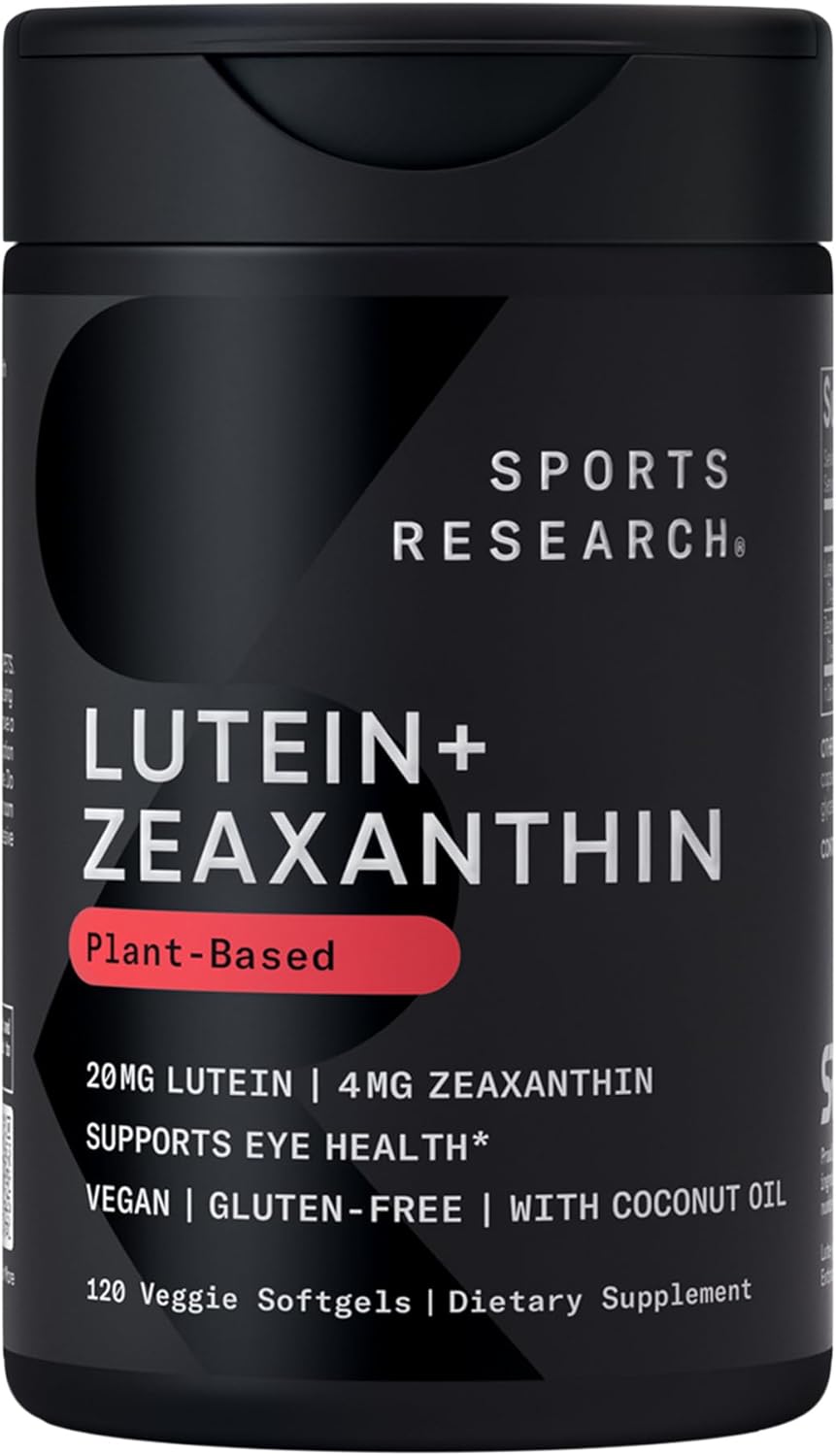
Sports Research Lutein 20mg 120 Softgels
Strong runner-up with FloraGLO-branded lutein, organic coconut oil carrier, and Non-GMO Project Verification; slightly undercut by lower zeaxanthin ratio and larger softgel dose than some users need.
- 800mcg zeaxanthin—same shortfall as Jarrow on the AREDS2 2mg zeaxanthin target
- 20mg lutein is higher than AREDS2 maintenance dosing; requires dose splitting for users targeting 10mg, adding inconvenience
- Saturated fat from coconut oil may be a consideration for users tracking saturated fat intake
Affiliate link: If you buy through this link, we may earn a commission at no extra cost to you.
Buy Sports Research Lutein 20mg 120 SoftgelsCompare supplements with the same checklist we use.
Get the anti-aging supplement cheat sheet with evidence prompts, safety checks, and label-quality questions before you buy.
Comparison Table
| Category | #1 Jarrow Formulas Lutein 20mg 120 Softgels Jarrow Formulas | #2 NOW Foods Lutein 20mg with Zeaxanthin 60 Softgels NOW Foods | #3 Life Extension MacuGuard Ocular Support with Saffron Life Extension | #4 Sports Research Lutein 20mg 120 Softgels Sports Research |
|---|---|---|---|---|
| Score | 9.2/10 | 8.9/10 | 8.6/10 | 8.4/10 |
| Best For | Adults who want clinically-backed ingredient (FloraGLO) at competitive price and don't mind splitting a softgel to hit AREDS2 dosing, or those who prefer flexible higher-dose protocols. | Budget-conscious users age 50+ who value long customer reviews and want a simple one-softgel-daily lutein + zeaxanthin combo; best for maintenance dosing rather than AREDS2-exact replication. | Users who want AREDS2 dosing in one softgel without splitting or mixing products, and are willing to pay a premium for extended carotenoid coverage (including meso-zeaxanthin); best for those prioritizing convenience and ingredient comprehensiveness. | Users who prioritize branded lutein (FloraGLO) and organic ingredients, have higher lutein needs (20mg+), or prefer coconut oil as their fat carrier; good for those comfortable splitting softgels. |
| Pros |
|
|
|
|
| Cons |
|
|
|
|
What to Know About Lutein for Brain Health
Lutein is gaining recognition beyond its well-established role in eye health. Emerging research suggests this carotenoid may accumulate in brain tissue and support cognitive function—particularly important for adults navigating the cognitive shifts that accompany aging. Unlike flashy "brain pills" making unsupported claims, lutein has a foundation of human clinical data worth understanding. This guide ranks four lutein supplements based on ingredient quality, dosage alignment with clinical trials, third-party testing, and value. We've focused on products that provide either AREDS2-level dosing (10mg lutein + 2mg zeaxanthin) or higher doses with branded, clinically-studied ingredients. If you're 45+ and concerned about maintaining mental clarity and processing speed as you age, this breakdown will help you choose the right lutein product for your needs.
This content is for educational purposes only and is not medical advice. These statements have not been evaluated by the FDA. This product is not intended to diagnose, treat, cure, or prevent any disease.
Key Benefits of Lutein for Brain Health
Supports processing speed and cognitive efficiency in adults 50+, based on recent RCT evidence
Accumulates in brain tissue (occipital cortex, prefrontal regions) associated with attention and decision-making
Works synergistically with zeaxanthin, another carotenoid found concentrated in the brain's visual and cognitive centers
How Lutein Supports Brain Health
Lutein is a carotenoid—a plant-derived pigment—that your body cannot synthesize on its own. When you consume lutein, your intestines absorb it (best with dietary fat) and distribute it to tissues, including the brain. Unlike most carotenoids, lutein appears to cross the blood-brain barrier efficiently and accumulates specifically in neural regions tied to executive function and visual processing. Once in brain tissue, lutein acts as an antioxidant, neutralizing free radicals generated during normal metabolism and cognitive activity. It also has anti-inflammatory properties. These mechanisms are thought to protect neuronal membranes—particularly myelin, the fatty sheath that insulates nerve fibers—from oxidative stress. Over time, consistent lutein intake may help preserve the structural and functional integrity of neural networks involved in processing and working memory. This is why the clinical trials emphasizing sustained lutein intake over months show more pronounced effects than short-term dosing.
What to Look For When Buying Lutein
**Dosage: AREDS2 vs. Maintenance vs. Higher-Dose Protocols** The AREDS2 trial established 10mg lutein + 2mg zeaxanthin as a validated clinical dose for eye and cognitive health in adults over 50. If you want to replicate this exact formulation, Life Extension MacuGuard hits it in one softgel. However, many users take higher doses (15–20mg lutein daily) based on preliminary evidence suggesting dose-response benefits for processing speed and memory in older adults. None of our four products contain zeaxanthin at the AREDS2 level—all three alternatives fall short of 2mg zeaxanthin per serving. If AREDS2 replication is your goal, you may need to pair a lutein supplement with a standalone zeaxanthin product or choose MacuGuard. **Absorption: The Role of Fat Carriers** Lutein is fat-soluble, meaning it requires dietary fat for intestinal absorption and distribution to brain tissue. All four products include oil carriers: Jarrow uses safflower oil, NOW Foods uses rice bran oil, Life Extension uses extra virgin olive oil, and Sports Research uses organic coconut oil. From an absorption perspective, all are effective—none has a clear advantage. However, olive oil (Life Extension) adds polyphenols, rice bran oil (NOW) adds trace B vitamins, and safflower or coconut oil are neutral carriers. Take your lutein supplement with a meal containing fat (nuts, avocado, olive oil) for optimal absorption. **Brand Track Record & Testing** All four products carry GMP certification and third-party testing. Jarrow and Sports Research specifically use FloraGLO-branded lutein, the ingredient in the AREDS2 trial—offering the most direct clinical lineage. NOW Foods has the longest manufacturing history (55 years) and largest review base (6,800), which signals real-world reliability. Life Extension's MacuGuard is premium-positioned with meso-zeaxanthin and anthocyanins, suitable for users wanting comprehensive macular support. For purely cognitive goals in 45+ adults without existing eye disease, Jarrow and NOW Foods offer the best combination of evidence alignment and value. **Price Per Serving & Long-Term Budget** NOW Foods offers the lowest per-serving cost ($0.21), making it ideal for budget-conscious users committed to daily supplementation. Jarrow ($0.30/serving) and Sports Research ($0.27/serving) offer good value with branded lutein. Life Extension ($0.32/serving) is premium-priced but delivers AREDS2 dosing in one softgel, eliminating splitting inconvenience. For most users, the difference between $0.21 and $0.32/serving is roughly $3–5 per month—negligible if ingredient quality and dosage alignment matter more than minimal savings.
Dosage Guidance
Always follow your healthcare provider's recommendations. Dosages vary by individual health status, age, and goals.
Common Lutein Complaints (And How to Avoid Them)
Based on analysis of thousands of customer reviews across Lutein products.
"I've been taking lutein for a month and don't notice any difference in my memory or focus."
A month is too soon. Lutein accumulates in brain tissue over 8–12 weeks of daily intake. The clinical trials showing cognitive benefits ran 12 weeks or longer. Give it at least 3 months of consistent daily dosing before evaluating effectiveness. Cognitive improvements are subtle—better sustained attention during a long meeting, slightly faster word recall—not dramatic memory jolts. If you don't notice anything after 12 weeks, it's worth discussing with your healthcare provider to rule out other factors (sleep, stress, medication interactions).
"I'm confused about zeaxanthin dosing. None of these products hit the AREDS2 2mg target."
You're right to notice this. The AREDS2 trial used 10mg lutein + 2mg zeaxanthin. Jarrow and Sports Research both provide 800mcg zeaxanthin (below target), while NOW Foods has 1mg (still short), and only Life Extension hits 2mg exactly. If replicating AREDS2 dosing is your goal, Life Extension MacuGuard is your single-product match, or pair Jarrow/NOW with a standalone zeaxanthin supplement to reach 2mg. For brain health alone (not eye disease treatment), the slightly lower zeaxanthin levels in Jarrow or NOW are still likely adequate.
"Why is lutein so much cheaper from NOW Foods if it's supposed to work the same as the branded versions?"
NOW Foods' lutein is unbranded (not labeled FloraGLO), which doesn't make it inferior—it's just a generic lutein extract from marigold, like all of them. The price difference reflects NOW's 55-year manufacturing scale, fewer added ingredients, and slightly lower zeaxanthin dose. Jarrow and Sports Research pay for the FloraGLO trademark and direct clinical trial linkage, which some users value for peace of mind. From a brain-health perspective, the lutein molecule is the same; the difference is brand assurance and convenience, not efficacy. For budget-conscious users, NOW Foods is legitimate.
Safety & Interactions
- Pregnancy and breastfeeding: Consult your healthcare provider before taking this supplement during pregnancy or while nursing. The safety of supplemental doses beyond dietary intake has not been established in pregnant or lactating women.
- Blood thinners: If you take blood-thinning medications (e.g., warfarin, apixaban, rivaroxaban, clopidogrel, or high-dose aspirin), consult your healthcare provider BEFORE starting this supplement, as it may have additive antiplatelet or anticoagulant effects.
- Kidney disease: If you have chronic kidney disease (CKD) or any significant kidney impairment, consult your healthcare provider before taking this supplement. Some supplements can accumulate to dangerous levels when kidney function is reduced.
- Gout: Individuals with gout should consult their healthcare provider before starting this supplement. Certain supplements (e.g., collagen, fish oil, niacin) may affect uric acid levels or trigger flares in susceptible individuals.
- Fish allergy - capsule source: Some softgel capsules use fish-derived gelatin even when the active supplement is not fish-derived. If you have a confirmed fish or shellfish allergy, verify the capsule source on the label or check with the manufacturer. Vegan capsules (vegetable cellulose) are widely available alternatives.
- Beef / alpha-gal allergy - capsule source: Many softgel and two-piece capsules use bovine gelatin. If you have a confirmed beef allergy or alpha-gal syndrome (mammalian meat allergy), check capsule sources on the label. Vegan capsules (vegetable cellulose) and HPMC capsules are alternatives.
- Important: This supplement is not a replacement for prescription medications. It is supportive for individuals with low baseline status, not a treatment for diagnosed conditions (anxiety disorders, insomnia, hypertension, osteoporosis, etc.). Do not stop or reduce any prescription without consulting your doctor.
""From a registered dietitian's perspective, lutein's brain health story is compelling but still emerging. The AREDS2 trial wasn't designed for cognitive outcomes, so we're extrapolating from mechanistic studies and smaller RCTs. That said, the evidence for processing speed and attention support in older adults is real and reproducible. My advice: treat lutein as a foundational brain-health nutrient alongside the big-three evidence-backed behaviors—aerobic exercise, Mediterranean diet, and sleep. Supplements amplify healthy habits; they don't replace them. If you choose a lutein product, prioritize consistency (daily intake for 12+ weeks) over brand hype, and pair it with dietary sources (spinach, kale, broccoli) whenever possible."
— Angelique Nicole R. Villegas, RND, Registered Nutritionist Dietitian · PRC Philippines · License #0023950
Frequently Asked Questions
Citations & Research
This page references peer-reviewed research indexed on PubMed/NCBI. Citations are provided for transparency. Always consult a qualified healthcare professional before making any medical decisions.
- [1]Yagi A, Nouchi R, Butler L et al. “Lutein Has a Positive Impact on Brain Health in Healthy Older Adults: A Systematic Review of Randomized Controlled Trials and Cohort Studies.” Nutrients, 2021. doi:10.3390/nu13061746PMID 34063827 ↗
- [2]Li J, Abdel-Aal EM. “Dietary Lutein and Cognitive Function in Adults: A Meta-Analysis of Randomized Controlled Trials.” Molecules (Basel, Switzerland), 2021. doi:10.3390/molecules26195794PMID 34641336 ↗
- [4]Vishwanathan R, Kuchan MJ, Sen S, Johnson EJ. “Lutein and preterm infants with decreased concentrations of brain carotenoids.” Journal of pediatric gastroenterology and nutrition, 2014. doi:10.1097/MPG.0000000000000340PMID 24691400 ↗
- [5]Renzi-Hammond LM, Bovier ER, Fletcher LM, et al. “Effects of a Lutein and Zeaxanthin Intervention on Cognitive Function: A Randomized, Double-Masked, Placebo-Controlled Trial of Younger Healthy Adults.” Nutrients, 2017. doi:10.3390/nu9111246PMID 29135938 ↗
Ready to Try Lutein?
Our top pick for brain health. Third-party tested, highly reviewed.
Affiliate link: If you buy through this link, we may earn a commission at no extra cost to you.
Shop #1 Pick — Jarrow Formulas Lutein 20mg 120 SoftgelsContinue exploring
- how we evaluate LuteinSupplement overview
- see all brain health supplements we coverGoal overview
- Acetyl L Carnitine — an option to consider for brain healthAlternative supplement
- see CoQ10 evidence for brain healthAlternative supplement
- how we rate Lutein for eye healthSame supplement, different goal
- see Omega 3 evidence for eye healthEditor pick
- we tested supplements against food sourcesCompare options
Get the evidence-graded supplement cheat sheet.
Evidence prompts, safety checks, and label-quality questions before you buy — free, straight to your inbox.
No spam. Unsubscribe anytime.