
Best Ginger Supplements for Nausea Support (2026)
Compare the best ginger supplements for nausea support in 2026. Science-backed picks, dosage guidance, and honest pros and cons for each product.

This content is for educational purposes only and is not medical advice. These statements have not been evaluated by the FDA. This product is not intended to diagnose, treat, cure, or prevent any disease. Always consult your healthcare provider before starting any supplement.
Best Ginger for Nausea Support in 2026
Ranked by quality, value, and clinical backing
Where available, we show when each product price was last checked so the list stays honest without overreacting to normal Amazon price movement.

Nature's Way Ginger Root
With 17,000+ verified reviews, a clinically relevant 1,100mg dose per serving, and Non-GMO certification, this is the most credible all-around choice for most adults.
- Not standardized to a specific gingerol percentage, so active compound concentration may vary batch to batch
- Whole-root form may be less potent per milligram than a standardized extract for some users
Affiliate link: If you buy through this link, we may earn a commission at no extra cost to you.
Buy Nature's Way Ginger Root
Nutricost Ginger Root
- 550mg per capsule means a single capsule falls short of the 1,000mg+ doses used in most clinical trials — doubling up is needed
- Significantly fewer consumer reviews than Nature's Way, meaning less real-world tolerability data to draw on
Affiliate link: If you buy through this link, we may earn a commission at no extra cost to you.
Buy Nutricost Ginger Root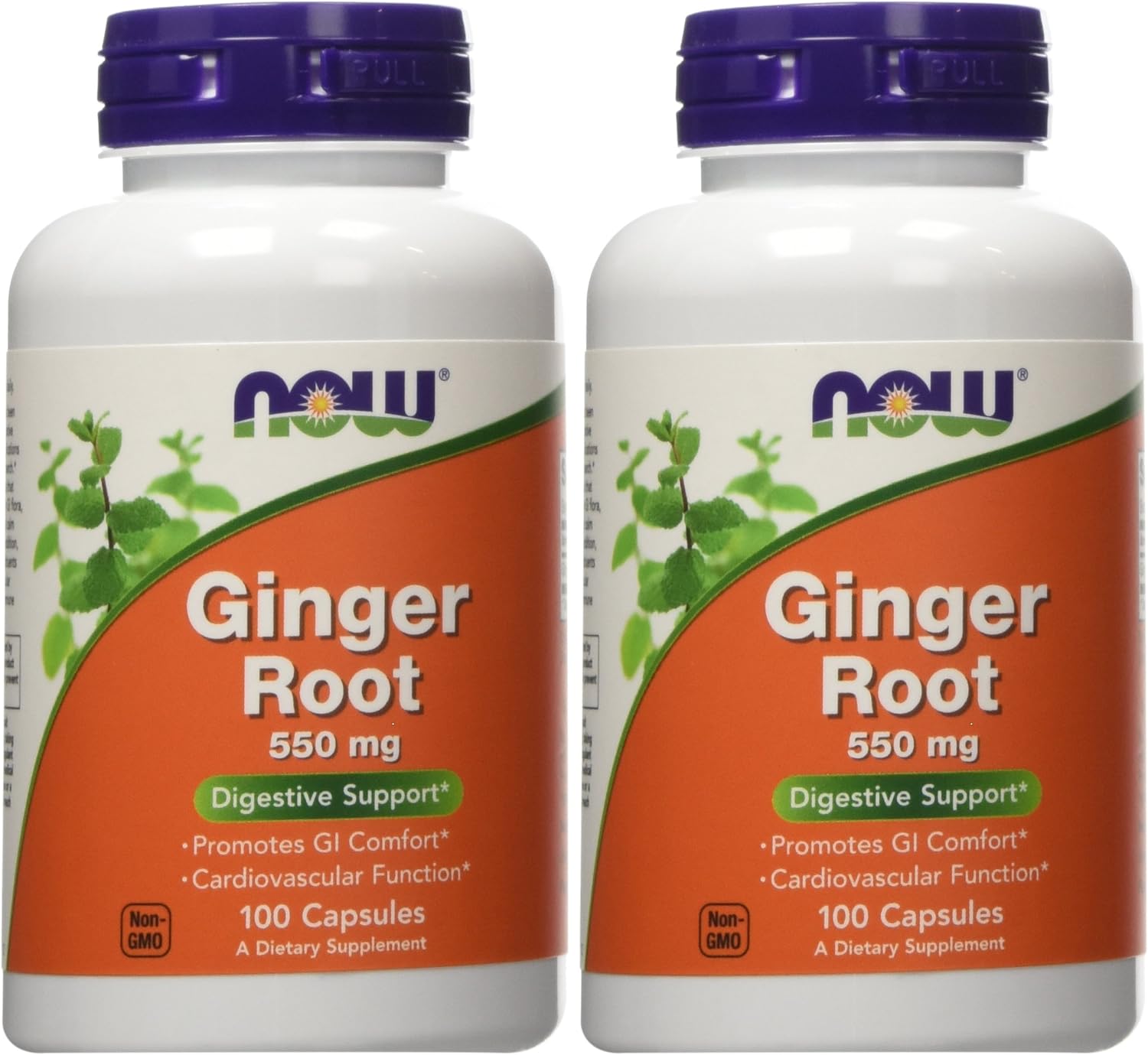
NOW Foods Ginger Root
NOW Foods' excellent manufacturing reputation and vegan certification make this a strong pick, though the pack-of-two format requires a larger upfront investment.
- Purchasing a pack of two requires a higher upfront spend, which may not suit those who want to try ginger before committing to a larger supply
- Lowest review count of the three products at 834, making it harder to assess broad consumer tolerability
Affiliate link: If you buy through this link, we may earn a commission at no extra cost to you.
Buy NOW Foods Ginger RootCompare supplements with the same checklist we use.
Get the anti-aging supplement cheat sheet with evidence prompts, safety checks, and label-quality questions before you buy.
Comparison Table
| Category | #1 Nature's Way Ginger Root Nature's Way | #2 Nutricost Ginger Root Nutricost | #3 NOW Foods Ginger Root NOW Foods |
|---|---|---|---|
| Score | 9.2/10 | 8.6/10 | 8.4/10 |
| Best For | Adults wanting the highest confidence in a well-reviewed, full-dose ginger product for everyday nausea support | Budget-conscious adults who are comfortable managing their own dosing and want long-term supply at the lowest cost | Vegan adults or those who prioritize manufacturing transparency and want to stock up for sustained daily use |
| Pros |
|
|
|
| Cons |
|
|
|
What to Know About Ginger for Nausea Support
Nausea is miserable. Whether it's creeping in from a new medication, post-surgical recovery, or morning sickness, the search for something that actually helps — without adding more pharmaceuticals to the mix — is completely understandable. Ginger has been used for digestive discomfort for centuries, and it's one of the few botanicals with genuine clinical research behind it. What makes ginger interesting isn't just tradition. Its active compounds — primarily gingerols and shogaols — appear to influence how the gut and nervous system communicate. That's a real mechanism, not folklore. Multiple systematic reviews have examined ginger for nausea in pregnancy and chemotherapy contexts, and while the evidence is still considered moderate rather than definitive, it's enough to make ginger a reasonable, low-risk first step for many adults. This page compares three of the most widely available and consumer-reviewed ginger capsule products. We looked at dose, manufacturing quality, third-party testing, value, and how each product stacks up against what the clinical literature actually used. No hype — just an honest breakdown to help you make an informed decision.
This content is for educational purposes only and is not medical advice. These statements have not been evaluated by the FDA. This product is not intended to diagnose, treat, cure, or prevent any disease.
Key Benefits of Ginger for Nausea Support
May help reduce the severity of nausea in pregnancy, based on multiple controlled trials reviewed in Cochrane-level systematic reviews
Studied as a complementary dietary strategy alongside conventional antiemetics in chemotherapy patients, with some evidence of added benefit
Generally well-tolerated with a low side effect profile at typical supplement doses, making it accessible for adults managing medication-related GI discomfort
How Ginger Supports Nausea Support
Ginger's active compounds — primarily 6-gingerol, 8-gingerol, 10-gingerol, and their dehydrated forms called shogaols — are thought to act on multiple pathways involved in nausea signaling. Research suggests these compounds may interact with serotonin receptors (specifically 5-HT3) in the gut, which are the same receptors targeted by some prescription antiemetics. They may also have local prokinetic effects, meaning they could help accelerate gastric emptying and reduce that uncomfortable feeling of food sitting too long in the stomach. There's also evidence from in vitro and some human research suggesting anti-inflammatory effects in the gastrointestinal lining, which may contribute to ginger's tolerability profile. It's worth noting that whole root preparations and standardized extracts have slightly different compound profiles — whole root retains a broader range of naturally occurring constituents, while standardized extracts concentrate specific gingerols. Neither has been definitively shown to be superior in clinical trials, which is one reason we've included both whole-root products in this comparison.
What to Look For When Buying Ginger
The first thing to understand about ginger supplements is that 'ginger root' and 'ginger extract' are not the same thing — and neither is automatically better. Whole ginger root capsules contain the full spectrum of naturally occurring compounds, including gingerols, shogaols, zingerone, and volatile oils. Standardized extracts, on the other hand, concentrate one specific marker compound (usually 5% gingerols) for more consistent dosing. All three products on this page are whole-root formulations, which reflects what the majority of clinical trials have actually studied. Dose matters more than most shoppers realize. The range used in clinical research for nausea typically runs from 1,000mg to 1,500mg of ginger root daily, sometimes split across doses. A single 550mg capsule probably won't cut it — which is why we flagged Nutricost's lower per-capsule dose as a real consideration. Nature's Way and NOW Foods both deliver 1,100mg per two-capsule serving, putting them squarely in the studied range. Always read the serving size label, not just the 'per capsule' amount. Third-party testing is non-negotiable for a YMYL health product. All three of our picks are third-party tested, which means an independent lab has verified that what's on the label is actually in the capsule — and that common contaminants aren't. GMP certification means the facility follows standardized manufacturing processes. These aren't just marketing badges; they're the minimum you should expect from any supplement you're putting in your body. Finally, consider your use case when choosing between them. If this is your first time trying ginger and you want the most real-world validation, Nature's Way's enormous review base is genuinely reassuring. If you're on a tight budget and willing to take two capsules, Nutricost is excellent value. If you're vegan or you already know ginger works for you and want to stock up, NOW Foods is worth the upfront buy.
Dosage Guidance
Always follow your healthcare provider's recommendations. Dosages vary by individual health status, age, and goals.
Common Ginger Complaints (And How to Avoid Them)
Based on analysis of thousands of customer reviews across Ginger products.
"Ginger capsules give me heartburn or an upset stomach"
This is one of the most common complaints with ginger supplements, and it's almost always dose- or timing-related. Taking ginger capsules with food rather than on an empty stomach significantly reduces GI irritation for most people. If heartburn persists, starting with a lower dose (one capsule instead of two) and gradually increasing may help.
"I don't know if I should take 1 or 2 capsules — the label is confusing"
Serving size language on supplement labels can be genuinely confusing. For both Nature's Way and NOW Foods, the studied dose is the two-capsule serving (1,100mg total) — not one capsule. For Nutricost, one capsule delivers 550mg, so two capsules are needed to reach a comparable dose. Always read the 'Serving Size' line on the Supplement Facts panel, not just the per-capsule amount.
"I've been taking ginger for a week and it's not doing anything"
Ginger's effects on nausea tend to be modest and supportive rather than dramatic. If you're not noticing any difference after consistent use at an appropriate dose, it may not be the right tool for your specific type of nausea — some causes respond better than others. It's also worth reviewing whether your dose is in the 1,000–1,500mg daily range, and whether you're taking it consistently. A conversation with your healthcare provider about other options is a reasonable next step.
Safety & Interactions
- Pregnancy and breastfeeding: Consult your healthcare provider before taking this supplement during pregnancy or while nursing. The safety of supplemental doses beyond dietary intake has not been established in pregnant or lactating women.
- Blood thinners: If you take blood-thinning medications (e.g., warfarin, apixaban, rivaroxaban, clopidogrel, or high-dose aspirin), consult your healthcare provider BEFORE starting this supplement, as it may have additive antiplatelet or anticoagulant effects.
- Kidney disease: If you have chronic kidney disease (CKD) or any significant kidney impairment, consult your healthcare provider before taking this supplement. Some supplements can accumulate to dangerous levels when kidney function is reduced.
- Gout: Individuals with gout should consult their healthcare provider before starting this supplement. Certain supplements (e.g., collagen, fish oil, niacin) may affect uric acid levels or trigger flares in susceptible individuals.
- Fish allergy - capsule source: Some softgel capsules use fish-derived gelatin even when the active supplement is not fish-derived. If you have a confirmed fish or shellfish allergy, verify the capsule source on the label or check with the manufacturer. Vegan capsules (vegetable cellulose) are widely available alternatives.
- Beef / alpha-gal allergy - capsule source: Many softgel and two-piece capsules use bovine gelatin. If you have a confirmed beef allergy or alpha-gal syndrome (mammalian meat allergy), check capsule sources on the label. Vegan capsules (vegetable cellulose) and HPMC capsules are alternatives.
""From a registered dietitian's perspective, ginger capsules are one of the more credible non-prescription options for situational nausea — the evidence base is real, the safety profile is solid, and the barrier to trying it is low. Just make sure the dose you're taking actually matches what was studied, and always loop in your healthcare provider if nausea is ongoing, severe, or connected to a medical treatment."
— Angelique Nicole R. Villegas, RND, Registered Nutritionist Dietitian · PRC Philippines · License #0023950
Frequently Asked Questions
Citations & Research
This page references peer-reviewed research indexed on PubMed/NCBI. Citations are provided for transparency. Always consult a qualified healthcare professional before making any medical decisions.
- [1]Zhu W, Dai Y, Huang M, Li J. “Efficacy of Ginger in Preventing Postoperative Nausea and Vomiting: A Systematic Review and Meta-Analysis.” Journal of nursing scholarship : an official publication of Sigma Theta Tau International Honor Society of Nursing, 2021. doi:10.1111/jnu.12691PMID 34312974 ↗
- [2]Gala D, Wright HH, Zigori B et al. “Dietary strategies for chemotherapy-induced nausea and vomiting: A systematic review.” Clinical nutrition (Edinburgh, Scotland), 2022. doi:10.1016/j.clnu.2022.08.003PMID 36067586 ↗
- [3]Marx WM, Teleni L, McCarthy AL et al. “Ginger (Zingiber officinale) and chemotherapy-induced nausea and vomiting: a systematic literature review.” Nutrition reviews, 2013. doi:10.1111/nure.12016PMID 23550785 ↗
- [4]Matthews A, Haas DM, O'Mathúna DP et al. “Interventions for nausea and vomiting in early pregnancy.” The Cochrane database of systematic reviews, 2015. doi:10.1002/14651858.CD007575.pub4PMID 26348534 ↗
Ready to Try Ginger?
Our top pick for nausea support. Third-party tested, highly reviewed.
Affiliate link: If you buy through this link, we may earn a commission at no extra cost to you.
Shop #1 Pick — Nature's Way Ginger RootContinue exploring
- everything we know about GingerSupplement overview
- see all gut health supplements we coverGoal overview
- our nausea relief supplement guideGoal overview
- our Ginger review for glp 1 nausea reliefSame supplement, different goal
- Magnesium fit for constipation reliefEditor pick
- the Magnesium page for sleepEditor pick
- which form is right for youCompare options
Get the evidence-graded supplement cheat sheet.
Evidence prompts, safety checks, and label-quality questions before you buy — free, straight to your inbox.
No spam. Unsubscribe anytime.