
Best Chlorella for Antioxidant Support in 2026
Find the best chlorella for antioxidant support in 2026. We rank 3 science-backed products by bioavailability, oxidative stress evidence, and value.
oxidative stress biomarker RCTs

This content is for educational purposes only and is not medical advice. These statements have not been evaluated by the FDA. This product is not intended to diagnose, treat, cure, or prevent any disease. Always consult your healthcare provider before starting any supplement.
Best Chlorella for Antioxidant Support in 2026
Ranked by quality, value, and clinical backing
Where available, we show when each product price was last checked so the list stays honest without overreacting to normal Amazon price movement.
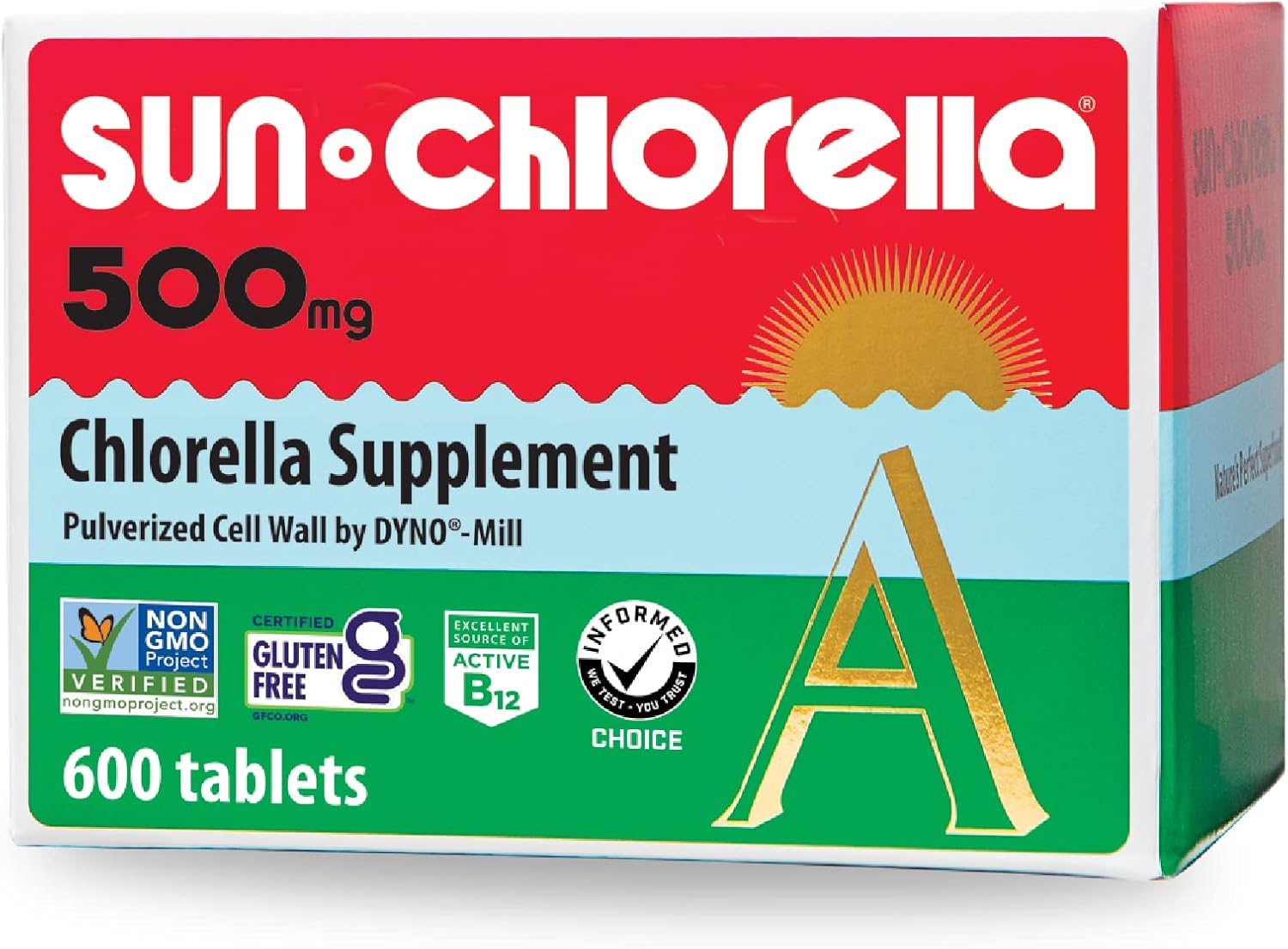
Sun Chlorella A Tablets 200mg
The most extensively researched commercial chlorella brand, with a proprietary cell wall processing method and Chlorella pyrenoidosa strain that maps most directly to published antioxidant RCT data.
- 15 tablets per serving is a real commitment; practically, most users split across two or three daily doses, which requires planning
Affiliate link: If you buy through this link, we may earn a commission at no extra cost to you.
Buy Sun Chlorella A Tablets 200mg
NOW Chlorella Tablets 1000mg Premium Non-GMO Microalgae Green Superfood Supplement, 200 Tabs
The most practical daily-use chlorella for most adults — confirmed broken cell wall processing, a manageable 2-tablet dose, and a price point that makes consistent supplementation realistic.
- Chlorella vulgaris strain has a somewhat smaller body of strain-specific antioxidant RCT data compared to pyrenoidosa
- Heavy metal COA is not as prominently published or easily accessible on the product page as some competitors, which matters for buyers prioritizing contamination transparency
Affiliate link: If you buy through this link, we may earn a commission at no extra cost to you.
Buy NOW Chlorella Tablets 1000mg Premium Non-GMO Microalgae Green Superfood Supplement, 200 Tabs
Micro Ingredients Organic Chlorella Powder 1lb
The best value-per-gram option for users comfortable with powder format and willing to trade some testing transparency for organic certification and cost efficiency.
- The taste is intensely algae-forward — many users find it tolerable only when well-masked in a strong smoothie, and it's not subtle
- No readily accessible Certificate of Analysis or third-party heavy metal verification on the product page, which is a meaningful gap given chlorella's contamination risk profile
Affiliate link: If you buy through this link, we may earn a commission at no extra cost to you.
Buy Micro Ingredients Organic Chlorella Powder 1lbCompare supplements with the same checklist we use.
Get the anti-aging supplement cheat sheet with evidence prompts, safety checks, and label-quality questions before you buy.
Comparison Table
| Category | #1 Sun Chlorella A Tablets 200mg Sun Chlorella | #2 NOW Chlorella Tablets 1000mg Premium Non-GMO Microalgae Green Superfood Supplement, 200 Tabs NOW Foods | #3 Micro Ingredients Organic Chlorella Powder 1lb Micro Ingredients |
|---|---|---|---|
| Score | 9.4/10 | 8.7/10 | 7.9/10 |
| Best For | Adults who prioritize strain-specific evidence and brand research transparency over cost, particularly those with documented oxidative stress markers who want the closest match to published RCT formulations | Health-conscious adults who want a reliable, evidence-adjacent daily chlorella supplement without the premium price or high tablet count of top-tier brands | Budget-conscious users who are already making daily smoothies and want an organic, high-dose chlorella option without caring deeply about brand-level research pedigree |
| Pros |
|
|
|
| Cons |
|
|
|
What to Know About Chlorella for Antioxidant Support
Chlorella has some human data behind antioxidant-marker claims, including trials that measured oxidative stress biomarkers, but the evidence is still best treated as supportive rather than disease-modifying. We're talking MDA reductions, SOD activity increases, and improvements in glutathione peroxidase. That's a meaningful distinction in a supplement category full of speculation. What makes chlorella particularly interesting for antioxidant support is its layered mechanism. It's not a single isolated compound like vitamin C or resveratrol. Chlorella delivers chlorophyll, lutein, zeaxanthin, beta-carotene, and the chlorella growth factor (CGF) — a nucleopeptide complex that appears to have its own antioxidant properties. You're getting a dense, matrix-based antioxidant profile from a whole-food source. We reviewed three commercially available chlorella products, evaluated their formulation quality, processing methods, strain evidence, and price transparency. The rankings below reflect which products we'd actually recommend to someone serious about using chlorella to support healthy oxidative stress levels — and which trade-offs matter most for different users.
This content is for educational purposes only and is not medical advice. These statements have not been evaluated by the FDA. This product is not intended to diagnose, treat, cure, or prevent any disease.
Key Benefits of Chlorella for Antioxidant Support
May support healthier oxidative-stress marker profiles, including malondialdehyde (MDA), in selected study populations
Research suggests chlorella supplementation may increase superoxide dismutase (SOD) and glutathione peroxidase (GPx) activity — two of the body's primary endogenous antioxidant enzymes
Delivers a whole-food matrix of antioxidant compounds including chlorophyll, beta-carotene, lutein, and zeaxanthin — not a single isolated antioxidant
How Chlorella Supports Antioxidant Support
Chlorella's antioxidant activity isn't driven by a single compound — that's what sets it apart from most supplements in this category. Chlorophyll, the pigment responsible for chlorella's deep green color, has demonstrated free radical scavenging properties in human tissue studies. The carotenoid fraction — lutein, zeaxanthin, and beta-carotene — contributes to lipid-phase antioxidant protection, which is particularly relevant for cell membrane integrity and erythrocyte oxidation. These fat-soluble antioxidants integrate into lipid bilayers where water-soluble antioxidants can't reach. The chlorella growth factor (CGF) is arguably the most unique component. This nucleopeptide complex, concentrated in the cell nucleus, has shown antioxidant properties in research settings and is thought to interact with cellular defense pathways that upregulate endogenous antioxidant enzyme production — including SOD and GPx. This indirect mechanism, stimulating your body's own antioxidant machinery rather than just donating electrons, may explain why RCT data shows improvements in enzyme activity rather than simple biomarker dilution. Critically, all of this is moot if the cell wall isn't broken — the nutrients are biologically inaccessible otherwise, which is why processing method is the first filter we apply to any chlorella product.
What to Look For When Buying Chlorella
The single most important factor to evaluate in any chlorella product is cell wall processing. Raw chlorella has a cellulose cell wall that human digestive enzymes simply cannot break down — you'll excrete most of the antioxidant content intact. Look for explicit language like 'broken cell wall,' 'cracked cell wall,' or a named processing method (like Sun Chlorella's DYNO-Mill). If a product doesn't specify this, assume bioavailability is compromised. Every product on this list confirms broken cell wall processing, but you'll encounter many that don't. Strain matters more than most buyers realize. Chlorella pyrenoidosa and Chlorella vulgaris are the two dominant commercial strains, and they differ in their nutrient profiles. Pyrenoidosa generally has higher CGF content and is the strain used in more of the antioxidant-specific human trials. Vulgaris has its own evidence base — particularly around immune and metabolic markers — and is entirely viable, but if antioxidant support is your primary goal, pyrenoidosa has a slight edge in strain-specific relevance. Heavy metal testing is non-negotiable in the microalgae category. Chlorella is a bioaccumulator — it absorbs compounds from its growing environment, which can include lead, arsenic, cadmium, and mercury. A quality brand will either display a Certificate of Analysis on their website or provide one on request. Sun Chlorella is most transparent here; NOW Foods meets GMP standards but doesn't publish COAs as prominently; Micro Ingredients has room to improve on this front. If contamination risk concerns you specifically, let that drive your brand choice. Finally, think about your compliance reality before choosing a format. Tablet vs. powder isn't just about convenience — it's about whether you'll actually take it consistently. A 15-tablet daily serving split across the day requires habit architecture that not everyone has. Two tablets with breakfast is simple. A powder in your morning smoothie works only if you actually make a morning smoothie. The best chlorella is the one you actually take at a consistent dose.
Dosage Guidance
Always follow your healthcare provider's recommendations. Dosages vary by individual health status, age, and goals.
Common Chlorella Complaints (And How to Avoid Them)
Based on analysis of thousands of customer reviews across Chlorella products.
"Chlorella makes me nauseous / upsets my stomach"
Gastrointestinal adjustment in the first week is genuinely common with chlorella, particularly at higher doses. Starting with a lower dose (500–1,000mg) and increasing gradually over two weeks typically resolves this for most users. Taking chlorella with food rather than on an empty stomach also helps considerably.
"The powder tastes terrible and I can't get it down"
This is a legitimate complaint and one reason we rank tablets higher for most users. If you prefer powder for cost reasons, masking it in a smoothie with strong flavors like banana, peanut butter, or cacao is the most practical solution. The taste doesn't improve with repeated exposure — it's just the nature of concentrated microalgae.
"I'm not sure if my chlorella is safe — I've read about heavy metal contamination"
This concern is valid and informed. Chlorella is a bioaccumulator, and poorly sourced products can carry elevated levels of lead, arsenic, or cadmium. The solution is to choose brands that publish Certificates of Analysis (COAs) from independent labs. Sun Chlorella is most transparent on this front among our ranked products. When in doubt, contact the brand directly to request a current COA before purchasing.
Safety & Interactions
- Pregnancy and breastfeeding: Consult your healthcare provider before taking this supplement during pregnancy or while nursing. The safety of supplemental doses beyond dietary intake has not been established in pregnant or lactating women.
- Blood thinners: If you take blood-thinning medications (e.g., warfarin, apixaban, rivaroxaban, clopidogrel, or high-dose aspirin), consult your healthcare provider BEFORE starting this supplement, as it may have additive antiplatelet or anticoagulant effects.
- Kidney disease: If you have chronic kidney disease (CKD) or any significant kidney impairment, consult your healthcare provider before taking this supplement. Some supplements can accumulate to dangerous levels when kidney function is reduced.
- Gout: Individuals with gout should consult their healthcare provider before starting this supplement. Certain supplements (e.g., collagen, fish oil, niacin) may affect uric acid levels or trigger flares in susceptible individuals.
- Immunosuppressive medications: If you take immunosuppressive drugs (e.g., methotrexate, prednisone, biologics, or JAK inhibitors) for an autoimmune condition, consult your rheumatologist before starting any joint health supplement. While no proven negative interactions exist, the immune-modulating effects of some supplements are not fully studied in this population.
- Important: This supplement is not a replacement for prescription medications. It is supportive for individuals with low baseline status, not a treatment for diagnosed conditions (anxiety disorders, insomnia, hypertension, osteoporosis, etc.). Do not stop or reduce any prescription without consulting your doctor.
""From a registered dietitian's perspective, chlorella stands out in the supplement space because its antioxidant claims are backed by actual human biomarker data — not just in vitro plausibility. That said, product selection matters enormously here: broken cell wall processing and third-party heavy metal testing aren't optional features, they're the baseline for a microalgae supplement worth recommending."
— Angelique Nicole R. Villegas, RND, Registered Nutritionist Dietitian · PRC Philippines · License #0023950
Frequently Asked Questions
Citations & Research
This page references peer-reviewed research indexed on PubMed/NCBI. Citations are provided for transparency. Always consult a qualified healthcare professional before making any medical decisions.
- [1]Lee SH, Kang HJ, Lee HJ et al. “Six-week supplementation with Chlorella has favorable impact on antioxidant status in Korean male smokers.” Nutrition (Burbank, Los Angeles County, Calif.), 2010. doi:10.1016/j.nut.2009.03.010PMID 19660910 ↗
- [2]Miyazawa T, Nakagawa K, Takekoshi H et al. “Ingestion of Chlorella reduced the oxidation of erythrocyte membrane lipids in senior Japanese subjects.” Journal of oleo science, 2013. doi:10.5650/jos.62.873PMID 24200934 ↗
- [3]Okada H, Yoshida N, Kakuma T et al. “Effect of Chlorella Ingestion on Oxidative Stress and Fatigue Symptoms in Healthy Men.” The Kurume medical journal, 2018. doi:10.2739/kurumemedj.MS644001PMID 29780062 ↗
- [6]Chiu HF, Lee HJ, Han YC et al. “Beneficial effect of Chlorella pyrenoidosa drink on healthy subjects: A randomized, placebo-controlled, double-blind, cross-over clinical trial.” Journal of food biochemistry, 2021. doi:10.1111/jfbc.13665PMID 33755227 ↗
Ready to Try Chlorella?
Our top pick for antioxidant support. Third-party tested, highly reviewed.
Affiliate link: If you buy through this link, we may earn a commission at no extra cost to you.
Shop #1 Pick — Sun Chlorella A Tablets 200mgContinue exploring
- why Chlorella matters for healthy agingSupplement overview
- top-rated antioxidant support supplementsGoal overview
- Alpha Lipoic Acid and antioxidant support: what to knowAlternative supplement
- the Chlorella page for iron deficiencySame supplement, different goal
- supplements vs food sources comparedCompare options
Get the evidence-graded supplement cheat sheet.
Evidence prompts, safety checks, and label-quality questions before you buy — free, straight to your inbox.
No spam. Unsubscribe anytime.