
Spirulina for Cellular Energy: Phycocyanin, Complete Protein, and What the Evidence Shows
Spirulina improves VO2 max and reduces fatigue in RCTs. Its phycocyanin and iron support cellular energy in plant-based adults 45+. Top picks by evidence.
This content is for educational purposes only and is not medical advice. These statements have not been evaluated by the FDA. This product is not intended to diagnose, treat, cure, or prevent any disease. Always consult your healthcare provider before starting any supplement.
Best Spirulina for Cellular Energy in 2026
Ranked by quality, value, and clinical backing
Where available, we show when each product price was last checked so the list stays honest without overreacting to normal Amazon price movement.

NOW Foods Certified Organic Spirulina 500mg
Plant-based adults 45+ who want certified organic spirulina with heavy metal testing at an accessible price
- Tablet form requires 3–6 tablets for clinical energy doses (1,500–3,000mg)
- Strong algae taste/smell even in tablet form for some users
Affiliate link: If you buy through this link, we may earn a commission at no extra cost to you.
Buy NOW Foods Certified Organic Spirulina 500mg
Nutrex Hawaii Hawaiian Spirulina Powder 16oz
Adults who blend spirulina into smoothies and want a premium, domestically sourced product
- Premium price compared to tablet options
- Powder requires measuring and mixing — less convenient than capsules or tablets
Affiliate link: If you buy through this link, we may earn a commission at no extra cost to you.
Buy Nutrex Hawaii Hawaiian Spirulina Powder 16oz
Earthrise Spirulina Natural Powder 1lb
Adults wanting a reliable, large-quantity powder supply from an established domestic brand
- Bulk powder requires measuring; no individual serving packaging
- Less documentation of phycocyanin content versus Nutrex Hawaii
Affiliate link: If you buy through this link, we may earn a commission at no extra cost to you.
Buy Earthrise Spirulina Natural Powder 1lb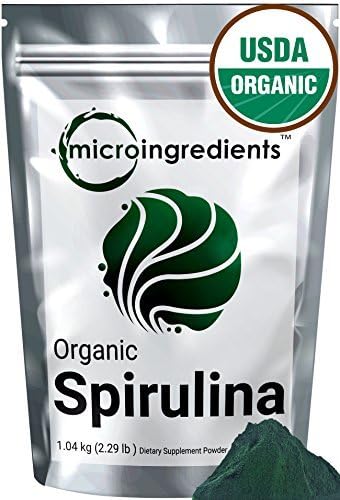
Micro Ingredients Organic Spirulina Powder 2lb
Budget-conscious adults who want organic spirulina at the lowest cost per serving
- Sourced from Asian cultivation — more variation in quality control oversight
- Lighter documentation compared to Hawaiian or California sources
Affiliate link: If you buy through this link, we may earn a commission at no extra cost to you.
Buy Micro Ingredients Organic Spirulina Powder 2lbCompare supplements with the same checklist we use.
Get the anti-aging supplement cheat sheet with evidence prompts, safety checks, and label-quality questions before you buy.
Comparison Table
| Category | #1 NOW Foods Certified Organic Spirulina 500mg NOW Foods | #2 Nutrex Hawaii Hawaiian Spirulina Powder 16oz Nutrex Hawaii | #3 Earthrise Spirulina Natural Powder 1lb Earthrise | #4 Micro Ingredients Organic Spirulina Powder 2lb Micro Ingredients |
|---|---|---|---|---|
| Score | 9.1/10 | 8.9/10 | 8.4/10 | 7.9/10 |
| Best For | Plant-based adults 45+ who want certified organic spirulina with heavy metal testing at an accessible price | Adults who blend spirulina into smoothies and want a premium, domestically sourced product | Adults wanting a reliable, large-quantity powder supply from an established domestic brand | Budget-conscious adults who want organic spirulina at the lowest cost per serving |
| Pros |
|
|
|
|
| Cons |
|
|
|
|
What to Know About Spirulina for Cellular Energy
Spirulina is one of the most nutrient-dense foods per gram available — a cyanobacterium (blue-green algae) that contains 60–70% protein by dry weight with a complete amino acid profile, the antioxidant pigment phycocyanin, and meaningful levels of iron, B vitamins, and essential fatty acids. It is one of the few plant-derived supplements with a systematic review of human evidence supporting its use (Karkos et al., Journal of Medicinal Food, 2011). For adults 45+ — particularly those eating plant-forward diets — spirulina addresses several common nutritional gaps simultaneously: complete protein for muscle maintenance, iron for energy metabolism (especially in women approaching or past menopause), and phycocyanin's antioxidant and anti-inflammatory effects that are clinically distinct from generic green-food marketing. However, honest framing is important. Spirulina is not a drug or a precisely dosed pharmaceutical-grade supplement — it is a food-level nutraceutical where dose, strain, cultivation source, and processing method all affect the active compound content. The B12 in spirulina deserves particular attention: most spirulina B12 is pseudovitamin B12 (a B12 analogue), which has poor bioavailability in humans and does not reliably prevent B12 deficiency. Plant-based adults should not rely on spirulina as their B12 source. This page also clarifies the spirulina versus chlorella distinction — a common source of consumer confusion. For the chlorella review, see /supplements/chlorella/for-detoxification/.
This content is for educational purposes only and is not medical advice. These statements have not been evaluated by the FDA. This product is not intended to diagnose, treat, cure, or prevent any disease.
Key Benefits of Spirulina for Cellular Energy
Spirulina is among the most studied supplements for supporting cellular energy.
Multiple human clinical trials have evaluated Spirulina's safety and efficacy at common doses.
Spirulina may be particularly relevant for adults over 45 seeking evidence-based support for cellular energy.
How Spirulina Supports Cellular Energy
Spirulina supports cellular energy through two primary mechanisms. Its phycocyanin pigment enhances mitochondrial function by protecting Complex I of the electron transport chain from oxidative damage — directly supporting ATP synthesis efficiency. Spirulina is also one of the most bioavailable plant sources of iron (as non-heme iron chelated by phycocyanin), and iron deficiency is a major, frequently underdiagnosed cause of fatigue and reduced aerobic capacity. Additionally, spirulina's complete amino acid profile and B-vitamin content (including B12 precursors) support the metabolic enzymes involved in energy metabolism throughout the Krebs cycle.
What to Look For When Buying Spirulina
Selection criteria: (1) third-party heavy metal testing — critical for algae grown in open water or with variable contamination risk; (2) documented cultivation source (domestic vs. international, controlled vs. open-water); (3) organic certification where available; (4) phycocyanin content documentation where possible; (5) price-per-gram at typical supplement doses (1,500–3,000mg/day).
Dosage Guidance
Always follow your healthcare provider's recommendations. Dosages vary by individual health status, age, and goals.
Common Spirulina Complaints (And How to Avoid Them)
Based on analysis of thousands of customer reviews across Spirulina products.
"Can spirulina replace protein powder for plant-based adults?"
Spirulina is a complete protein at approximately 60–70% protein by dry weight, which is impressive for a plant food. However, at typical supplement doses (1.5–3g/day), you are getting 1–2g of protein — supplemental, not a replacement for a protein source. To use spirulina as a meaningful protein contributor you would need 20–30g/day, which is practical in powder form added to smoothies. Most adults use spirulina at supplement doses for its phycocyanin and micronutrient profile, not as a primary protein strategy.
"Does spirulina really provide B12 for plant-based diets?"
No — not reliably. Most B12 measured in spirulina is pseudovitamin B12 (primarily adenosylcobalamin analogues), which binds B12 transport proteins but does not function as true vitamin B12 in humans. Research indicates it may actually compete with and reduce the absorption of true B12. Plant-based adults over 45 require a separate methylcobalamin or cyanocobalamin supplement. This is one of the most important clarifications to make for the plant-based adult audience.
"What is the difference between spirulina and chlorella?"
Both are microalgae, but they are biologically distinct with different bioactive profiles. Spirulina is a cyanobacterium (technically not a true algae) with a soft cell wall — its nutrients are directly bioavailable without processing. Its key bioactives are phycocyanin (antioxidant pigment) and complete protein. Chlorella is a true green algae with a hard cell wall that must be mechanically broken (broken cell wall processing) for nutrient bioavailability. Chlorella's key bioactives are chlorella growth factor (CGF) and chlorophyll with documented heavy metal binding capacity. They serve different primary purposes and can be used together.
Safety & Interactions
- Pregnancy and breastfeeding: Consult your healthcare provider before taking this supplement during pregnancy or while nursing. The safety of supplemental doses beyond dietary intake has not been established in pregnant or lactating women.
- Blood thinners: If you take blood-thinning medications (e.g., warfarin, apixaban, rivaroxaban, clopidogrel, or high-dose aspirin), consult your healthcare provider BEFORE starting this supplement, as it may have additive antiplatelet or anticoagulant effects.
- Kidney disease: If you have chronic kidney disease (CKD) or any significant kidney impairment, consult your healthcare provider before taking this supplement. Some supplements can accumulate to dangerous levels when kidney function is reduced.
- Gout: Individuals with gout should consult their healthcare provider before starting this supplement. Certain supplements (e.g., collagen, fish oil, niacin) may affect uric acid levels or trigger flares in susceptible individuals.
- Fish allergy - capsule source: Some softgel capsules use fish-derived gelatin even when the active supplement is not fish-derived. If you have a confirmed fish or shellfish allergy, verify the capsule source on the label or check with the manufacturer. Vegan capsules (vegetable cellulose) are widely available alternatives.
- Beef / alpha-gal allergy - capsule source: Many softgel and two-piece capsules use bovine gelatin. If you have a confirmed beef allergy or alpha-gal syndrome (mammalian meat allergy), check capsule sources on the label. Vegan capsules (vegetable cellulose) and HPMC capsules are alternatives.
""Spirulina earns its reputation as a genuine whole-food supplement — the phycocyanin antioxidant evidence is real and the complete amino acid profile is nutritionally meaningful for plant-based adults. The main practical advice: buy from brands that publish third-party heavy metal Certificates of Analysis, and do not rely on spirulina's B12 — it is primarily pseudovitamin B12 that does not function like the B12 your body needs. If you are plant-based and over 45, a separate methylcobalamin or cyanocobalamin supplement is non-negotiable."
— Angelique Nicole R. Villegas, RND, Registered Nutritionist Dietitian · PRC Philippines · License #0023950
Frequently Asked Questions
Citations & Research
This page references peer-reviewed research indexed on PubMed/NCBI. Citations are provided for transparency. Always consult a qualified healthcare professional before making any medical decisions.
- [1]Chaouachi M, Gautier S, Carnot Y et al. Spirulina supplementation prevents exercise-induced lipid peroxidation, inflammation and skeletal muscle damage in elite rugby players. Journal of human nutrition and dietetics : the official journal of the British Dietetic Association. 2022;35(6):1151-1163.PMID 35394687 ↗
- [2]Selmi C, Leung PS, Fischer L, et al. The effects of Spirulina on anemia and immune function in senior citizens. Cell Mol Immunol. 2011;8(3):248-254.PMID 21278762 ↗
- [3]Deng R, Chow TJ. Hypolipidemic, antioxidant, and antiinflammatory activities of microalgae spirulina. Cardiovasc Ther. 2010;28(4):e33-45.PMID 20633020 ↗
Ready to Try Spirulina?
Our top pick for cellular energy. Third-party tested, highly reviewed.
Affiliate link: If you buy through this link, we may earn a commission at no extra cost to you.
Shop #1 Pick — NOW Foods Certified Organic Spirulina 500mgContinue exploring
- Spirulina — our editorial overviewSupplement overview
- what we recommend for cellular energyGoal overview
- NAD+ Direct research for cellular energyAlternative supplement
- where Astaxanthin fits for anti agingEditor pick
- which form is right for youCompare options
Get the evidence-graded supplement cheat sheet.
Evidence prompts, safety checks, and label-quality questions before you buy — free, straight to your inbox.
No spam. Unsubscribe anytime.