
Best Calcium for PMS Support: What the Science Actually Says
Calcium has some of the strongest clinical evidence for PMS relief. Compare the 3 best calcium supplements for PMS support, ranked by form, dosage, and value.

This content is for educational purposes only and is not medical advice. These statements have not been evaluated by the FDA. This product is not intended to diagnose, treat, cure, or prevent any disease. Always consult your healthcare provider before starting any supplement.
Best Calcium for PMS Support in 2026
Ranked by quality, value, and clinical backing
Where available, we show when each product price was last checked so the list stays honest without overreacting to normal Amazon price movement.

Garden of Life mykind Organics Plant Calcium 180 Tablets
The only product on this list with the complete cofactor stack — calcium, D3, K2 MK-7, and magnesium — making it the most formulation-complete choice for women who want evidence-informed PMS support.
- Only 800mg calcium per serving — women need to make up the remaining 400–600mg through dietary sources to reach the clinically studied 1,200mg daily target
Affiliate link: If you buy through this link, we may earn a commission at no extra cost to you.
Buy Garden of Life mykind Organics Plant Calcium 180 Tablets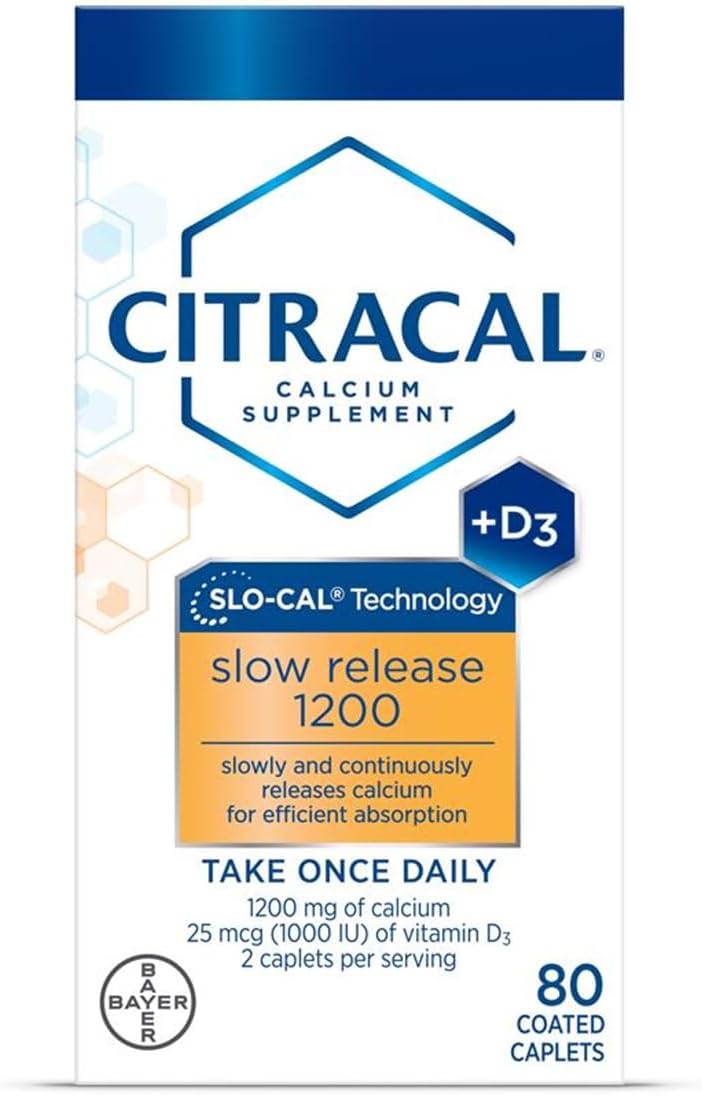
Citracal Slow Release 1200 + D3 80 Caplets
Delivers the full 1,200mg RDA for women 51+ in a superior absorption form — calcium citrate — with no food required, backed by over 16,000 real-world reviews.
- No K2 MK-7 in the formulation — the cofactor that helps direct calcium to bone rather than arterial tissue is absent, which matters for long-term supplementation
- Slow-release tablets cannot be split or crushed, limiting flexibility for those who prefer lower individual doses
Affiliate link: If you buy through this link, we may earn a commission at no extra cost to you.
Buy Citracal Slow Release 1200 + D3 80 Caplets
Nature Made Calcium 600mg + D3 220 Tablets
The most affordable and independently verified option, earning its place through USP certification and a 19,000-review consensus — but the carbonate form and 600mg-per-tablet limitation require careful use.
- Calcium carbonate requires food and adequate stomach acid for absorption — less reliable for women who skip meals or have compromised gastric acid production
- 600mg per serving means two separate servings daily (with two different meals) to reach 1,200mg, which many people fail to sustain consistently; no K2 MK-7
Affiliate link: If you buy through this link, we may earn a commission at no extra cost to you.
Buy Nature Made Calcium 600mg + D3 220 TabletsCompare supplements with the same checklist we use.
Get the anti-aging supplement cheat sheet with evidence prompts, safety checks, and label-quality questions before you buy.
Comparison Table
| Category | #1 Garden of Life mykind Organics Plant Calcium 180 Tablets Garden of Life | #2 Citracal Slow Release 1200 + D3 80 Caplets Citracal | #3 Nature Made Calcium 600mg + D3 220 Tablets Nature Made |
|---|---|---|---|
| Score | 9.1/10 | 8.7/10 | 8.2/10 |
| Best For | Women who want a complete, clean-label calcium supplement with K2 and magnesium included, and who eat a reasonably calcium-rich diet to cover the remaining gap | Women over 40, perimenopausal women, or anyone with digestive sensitivities who needs full-dose calcium citrate with D3 and no food requirement | Budget-conscious women who eat regular meals and primarily need a basic, independently verified calcium + D3 supplement at the lowest cost per serving |
| Pros |
|
|
|
| Cons |
|
|
|
What to Know About Calcium for PMS Support
Most women have no idea calcium is one of the most clinically studied nutrients for PMS relief. We're not talking about fringe research here — multiple randomized controlled trials have examined calcium supplementation specifically for premenstrual symptoms, and the results are surprisingly consistent. Mood disturbances, bloating, cramps, food cravings — calcium appears to play a genuine role in all of them. Why? The short version: estrogen and progesterone fluctuations across the menstrual cycle directly affect how your body regulates calcium, vitamin D, and parathyroid hormone. Women with PMS tend to show lower ionized calcium levels in the luteal phase — the two weeks before your period. Supporting adequate calcium levels may help steady the neurological and hormonal signaling that drives those miserable premenstrual days. This page ranks three calcium supplements selected specifically for PMS support. We're not just recommending the cheapest bottle on a shelf. We looked at calcium form (bioavailability matters enormously), cofactor formulation, third-party testing, real-world review data, and how each product maps to the dosages used in clinical research. Here's what we found.
This content is for educational purposes only and is not medical advice. These statements have not been evaluated by the FDA. This product is not intended to diagnose, treat, cure, or prevent any disease.
Key Benefits of Calcium for PMS Support
May help reduce mood-related PMS symptoms including irritability and low mood during the luteal phase, based on multiple randomized controlled trials
May support reduction in physical PMS symptoms such as bloating, cramps, and breast tenderness when taken consistently at clinically relevant doses
Addresses a common nutritional gap — most women consume significantly less than the recommended daily calcium intake, making supplementation a practical intervention with broad health relevance beyond PMS
How Calcium Supports PMS Support
The mechanism connecting calcium to PMS isn't fully mapped, but the leading hypothesis centers on calcium's role in neurological signaling and its interaction with the hormonal fluctuations of the menstrual cycle. Estrogen promotes calcium absorption in the gut and affects how parathyroid hormone (PTH) regulates blood calcium levels. During the luteal phase — when estrogen and progesterone are rising and then dropping sharply — women with PMS show measurable differences in ionized calcium and PTH compared to women without PMS. This dysregulation may disrupt neurotransmitter function, contributing to the mood symptoms that characterize the condition. Calcium is also essential for smooth muscle contraction and relaxation, which connects it to cramping. Vitamin D3 is a critical cofactor here: it regulates calcium-binding proteins in the gut and is required for efficient intestinal absorption. Taking calcium without adequate D3 is meaningfully less effective. Magnesium competes with calcium for some of the same transport pathways but also supports calcium utilization at the cellular level — the two minerals work in a dynamic balance. K2 MK-7, while not directly studied for PMS, plays an important role in directing calcium to bone tissue and away from soft tissue, which is a relevant safety and efficacy consideration for long-term supplementation.
What to Look For When Buying Calcium
The single most important decision when buying calcium is the form. Calcium carbonate is cheap and widely available, but it requires stomach acid and food to dissolve properly. That's not a problem for a 25-year-old eating three meals a day — it can be a real problem for anyone over 45, anyone who takes proton pump inhibitors, or anyone who skips breakfast. Calcium citrate sidesteps this entirely. It absorbs well regardless of when you take it or what your stomach acid levels are. If you're in any of those categories, paying more for citrate form isn't a luxury — it's just effective supplementation. Vitamin D3 should be non-negotiable as a cofactor. Without adequate D3, your intestinal cells can't produce the calcium-binding proteins needed for efficient absorption. All three products on this list include D3, but the doses vary: 800 IU (Nature Made), 1,000 IU (Citracal), and 1,600 IU (Garden of Life). Most adults in northern latitudes are D3-insufficient, so this gap matters. If your D3 status is already low, the higher-dose formulations may offer practical advantages. K2 MK-7 is the cofactor that most calcium supplements skip, and it's genuinely worth thinking about. Its role is to activate proteins that direct calcium toward bone tissue and away from arterial walls. Whether that's clinically meaningful for a healthy 30-year-old is debatable. Whether it matters for a perimenopausal woman taking 1,200mg daily for years is a more serious question. Only Garden of Life includes K2 MK-7 on this list. Finally, dose split timing. Calcium absorption is capped at roughly 500mg per absorption event. If you're taking 1,200mg daily, two separate 600mg doses — ideally with meals — will absorb more efficiently than a single 1,200mg dose. The Citracal slow-release formula is designed to address this pharmacokinetically, but splitting into separate daily doses remains the general best practice for anyone using other forms.
Dosage Guidance
Always follow your healthcare provider's recommendations. Dosages vary by individual health status, age, and goals.
Common Calcium Complaints (And How to Avoid Them)
Based on analysis of thousands of customer reviews across Calcium products.
"Calcium supplements make me constipated"
This is almost always a calcium carbonate issue, not a calcium problem per se. Switching to calcium citrate (Citracal) or algae-based calcium (Garden of Life) significantly reduces constipation complaints. Splitting the dose into two smaller servings, staying well-hydrated, and taking with meals also helps. If constipation persists, discuss magnesium citrate co-supplementation with your provider — magnesium has the opposite effect on bowel motility.
"I already eat dairy — do I really need a supplement?"
If you eat two to three substantial dairy servings daily (yogurt, milk, hard cheese), you're likely getting 600–900mg from food. A lower-dose supplement — or splitting the Nature Made 600mg dose to once daily instead of twice — may be enough to close the gap to 1,000–1,200mg without overshooting. The key is estimating your dietary baseline rather than blindly adding 1,200mg on top of a calcium-rich diet.
"I've been taking calcium for months and don't notice any PMS difference"
A few possibilities: the form may not be absorbing well (especially carbonate without meals), the dose may be insufficient, or vitamin D deficiency may be limiting calcium utilization regardless of how much you take. It's also worth checking whether your symptoms might have a different primary driver — magnesium deficiency, hormonal imbalances, or high inflammatory load can all mimic or compound calcium-responsive PMS. A conversation with your gynecologist or a registered dietitian can help identify what's actually going on.
Safety & Interactions
- Pregnancy and breastfeeding: Consult your healthcare provider before taking this supplement during pregnancy or while nursing. The safety of supplemental doses beyond dietary intake has not been established in pregnant or lactating women.
- Blood thinners: If you take blood-thinning medications (e.g., warfarin, apixaban, rivaroxaban, clopidogrel, or high-dose aspirin), consult your healthcare provider BEFORE starting this supplement, as it may have additive antiplatelet or anticoagulant effects.
- Kidney disease: If you have chronic kidney disease (CKD) or any significant kidney impairment, consult your healthcare provider before taking this supplement. Some supplements can accumulate to dangerous levels when kidney function is reduced.
- Gout: Individuals with gout should consult their healthcare provider before starting this supplement. Certain supplements (e.g., collagen, fish oil, niacin) may affect uric acid levels or trigger flares in susceptible individuals.
""What stands out to me about the calcium-PMS evidence is its consistency across independent research groups — this isn't a single splashy trial. From a dietary standpoint, most women I work with are genuinely surprised how far below the RDA their actual calcium intake sits. Before adding any supplement, it's worth doing a rough 3-day food diary to understand your baseline — that context helps you choose the right dose and form."
Frequently Asked Questions
Citations & Research
This page references peer-reviewed research indexed on PubMed/NCBI. Citations are provided for transparency. Always consult a qualified healthcare professional before making any medical decisions.
- [1]Robinson J, Ferreira A, Iacovou M et al. “Effect of nutritional interventions on the psychological symptoms of premenstrual syndrome in women of reproductive age: a systematic review of randomized controlled trials.” Nutrition Reviews, 2025. doi:10.1093/nutrit/nuae043PMID 38684926 ↗
- [2]Whelan AM, Jurgens TM, Naylor H. “Herbs, vitamins and minerals in the treatment of premenstrual syndrome: a systematic review.” The Canadian Journal of Clinical Pharmacology, 2009. PMID 19923637 ↗
- [3]Thys-Jacobs S et al. “Calcium carbonate and the premenstrual syndrome: effects on premenstrual and menstrual symptoms. Premenstrual Syndrome Study Group.” American journal of obstetrics and gynecology, 1998. doi:10.1016/s0002-9378(98)70377-1PMID 9731851 ↗
Ready to Try Calcium?
Our top pick for pms support. Third-party tested, highly reviewed.
Affiliate link: If you buy through this link, we may earn a commission at no extra cost to you.
Shop #1 Pick — Garden of Life mykind Organics Plant Calcium 180 TabletsContinue exploring
- Calcium evidence overviewSupplement overview
- see all pms support supplements we coverGoal overview
- Vitamin B6 for pms supportAlternative supplement
- Vitex guidance for pms supportAlternative supplement
- Calcium fit for bone densitySame supplement, different goal
- supplements or food sources — the trade-offsCompare options
Get the evidence-graded supplement cheat sheet.
Evidence prompts, safety checks, and label-quality questions before you buy — free, straight to your inbox.
No spam. Unsubscribe anytime.