
Best Calcium Supplements for Bone Density in 2026
Calcium alone may raise cardiovascular risk. The evidence-based stack is calcium citrate + D3 + K2 MK-7. We rank products and explain the menopause bone

This content is for educational purposes only and is not medical advice. These statements have not been evaluated by the FDA. This product is not intended to diagnose, treat, cure, or prevent any disease. Always consult your healthcare provider before starting any supplement.
Best Calcium for Bone Density in 2026
Ranked by quality, value, and clinical backing
Where available, we show when each product price was last checked so the list stays honest without overreacting to normal Amazon price movement.
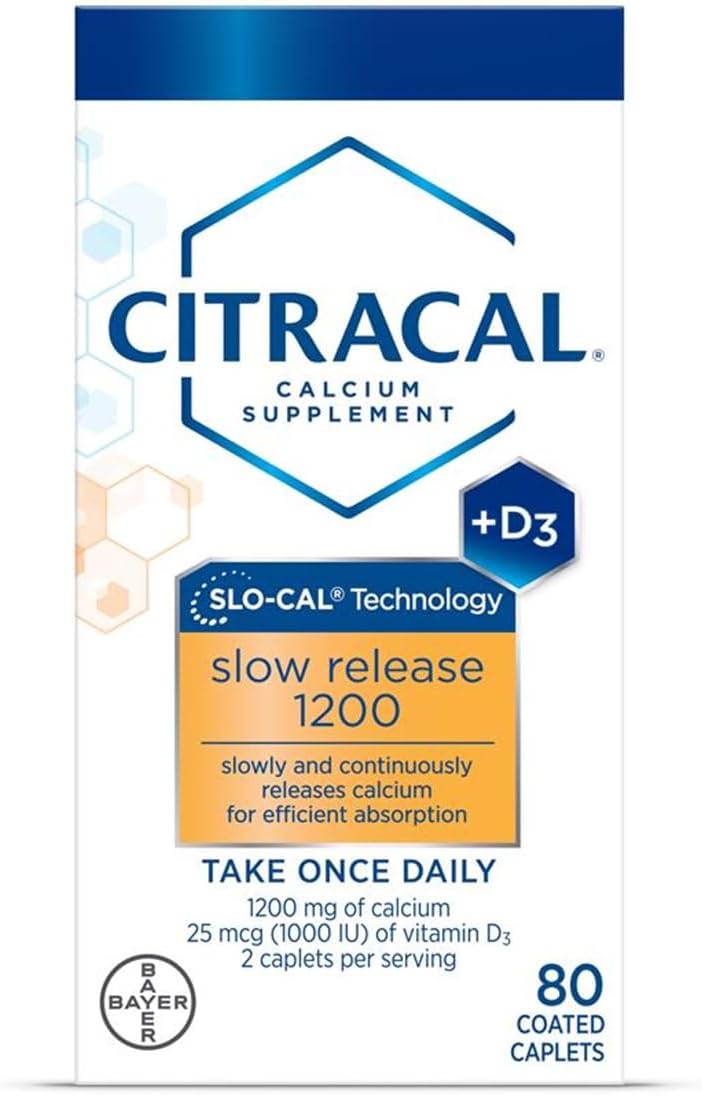
Citracal Slow Release 1200 + D3
Our top pick for postmenopausal women prioritizing calcium form and dose. The calcium citrate formulation absorbs without food — the critical advantage for women with age-related gastric acid reduction. At 1,200mg per serving, it precisely matches the RDA for women 51+. The 1,000 IU D3 per serving provides the essential absorption co-factor. The slow-release format reduces the acute blood calcium spike associated with the cardiovascular risk signal in the Bolland meta-analysis. The primary limitation is the absence of K2 MK-7 — women using this product should consider adding a standalone K2 supplement for the complete co-factor stack.
- No K2 MK-7 — the carboxylation co-factor that directs calcium to bone and prevents arterial calcification is absent
- Slow-release tablets cannot be split or crushed
Affiliate link: If you buy through this link, we may earn a commission at no extra cost to you.
Buy Citracal Slow Release 1200 + D3
Garden of Life mykind Organics Calcium
The only product on this list with the complete evidence-based co-factor stack: calcium + D3 + K2 MK-7 + magnesium. For women who want a single supplement covering all four bone-density co-factors, this is the most comprehensive option. The K2 MK-7 at 80mcg addresses the critical gap in the other products on this list. The plant-based algae calcium source is well-absorbed.
- 800mg calcium per serving — 400mg below the 1,200mg RDA for women 51+; dietary calcium must contribute the remainder
- Smaller review base (3,200) vs Citracal or Nature Made
Affiliate link: If you buy through this link, we may earn a commission at no extra cost to you.
Buy Garden of Life mykind Organics Calcium
Nature Made Calcium 600 + D3 (USP Verified)
The best-value entry point for women new to calcium supplementation who prioritize third-party verification and affordability. USP Verified provides independent confirmation that the product contains what it claims, dissolves properly, and is free from harmful contaminants. The carbonate form is the primary limitation — postmenopausal women with reduced stomach acid should take it with meals and may want to consider the citrate form if tolerability or absorption becomes a concern.
- Calcium carbonate form requires stomach acid (pH <4) — absorption may be reduced in postmenopausal women with hypochlorhydria if not taken with meals
- 600mg per serving requires 2 daily servings (4 tablets) to reach the 1,200mg RDA
- No K2 MK-7
Affiliate link: If you buy through this link, we may earn a commission at no extra cost to you.
Buy Nature Made Calcium 600 + D3 (USP Verified)Compare supplements with the same checklist we use.
Get the anti-aging supplement cheat sheet with evidence prompts, safety checks, and label-quality questions before you buy.
Comparison Table
| Category | #1 Citracal Slow Release 1200 + D3 Citracal | #2 Garden of Life mykind Organics Calcium Garden of Life | #3 Nature Made Calcium 600 + D3 (USP Verified) Nature Made |
|---|---|---|---|
| Score | 9/10 | 8.8/10 | 8/10 |
| Best For | Postmenopausal women who want the citrate form at the full 1,200mg RDA dose with D3 included; women who prefer a simple 2-tablet protocol and will add K2 separately | Women who want the full co-factor stack (calcium + D3 + K2 + Mg) in one product; organic and plant-based supplement consumers | Women seeking the most affordable USP-verified calcium option; women who can take calcium with meals and are comfortable with the carbonate form |
| Pros |
|
|
|
| Cons |
|
|
|
What to Know About Calcium for Bone Density
Calcium is the most prescribed mineral for bone health — but taking it alone may not be sufficient, and some research suggests supplementing without co-factors may carry unintended cardiovascular risk. The landmark meta-analysis from Bolland et al. (BMJ, 2010, PMID 20671013) pooled 12,000 participants and found that calcium supplements taken without vitamin D were associated with a statistically significant increase in cardiovascular events, particularly myocardial infarction. This finding reshaped clinical guidance: calcium supplementation is now understood to require vitamin D3 co-supplementation at a minimum, and an emerging body of evidence supports adding vitamin K2 MK-7 as a third co-factor — the compound that activates proteins responsible for depositing calcium into bone (osteocalcin) and preventing its accumulation in arterial walls (matrix GLA protein). The menopause context adds urgency. Estrogen suppresses osteoclast activity — the cells that break down bone tissue. When estrogen declines during menopause, osteoclast activity accelerates. The National Osteoporosis Foundation estimates women lose 1-3% of bone mineral density per year in the first 5-7 years after menopause — equivalent to up to 20% of total bone mass during this window. This is the period when calcium intake optimization matters most. A second consideration specific to postmenopausal women: gastric acid production declines with age, and calcium carbonate — the most common and cheapest form in supplements — requires a pH below 4 to dissolve and absorb. Calcium citrate absorbs at any gastric pH, making it the more reliable form for women over 50. This page covers the co-factor stack, the citrate vs carbonate absorption question, and how to read each product's label to understand what you're actually getting.
This content is for educational purposes only and is not medical advice. These statements have not been evaluated by the FDA. This product is not intended to diagnose, treat, cure, or prevent any disease.
Key Benefits of Calcium for Bone Density
Research suggests calcium + D3 (≥800 IU) combination may support bone mineral density and help reduce hip fracture risk in postmenopausal women — both co-factors appear necessary; calcium alone may be insufficient and some evidence suggests it may increase cardiovascular risk without co-supplementation (Bolland et al. BMJ 2010)
Calcium citrate absorbs at any gastric pH, making it more reliably bioavailable than calcium carbonate for postmenopausal women with age-related reduction in stomach acid production (hypochlorhydria) — a form-specific consideration that most calcium labels do not address
Some studies indicate that vitamin K2 MK-7 activates osteocalcin (directing calcium into bone) and matrix GLA protein (preventing arterial calcium deposits) — the K2 co-factor may be the mechanism that explains why calcium + D3 alone does not fully address the cardiovascular risk concern raised in the Bolland meta-analysis
How Calcium Supports Bone Density
Understanding calcium supplementation for bone density requires understanding three interconnected systems: the bone remodeling cycle, calcium's hormonal co-factors, and the menopause-specific disruption that makes supplementation most relevant. **The bone remodeling cycle.** Bone is not static tissue — it is continuously rebuilt through a cycle of osteoclast activity (breakdown) and osteoblast activity (formation). In healthy adults, these processes are roughly balanced. Adequate calcium intake supports the osteoblast phase — the formation side of the cycle — by providing the mineral substrate for new bone matrix. If dietary calcium is insufficient, the body draws calcium from bone stores to maintain blood calcium homeostasis (via parathyroid hormone), accelerating net bone loss. **The estrogen-osteoclast connection.** Estrogen is an osteoclast inhibitor — it suppresses the breakdown phase of the remodeling cycle. When estrogen declines during perimenopause and menopause, osteoclast activity accelerates, causing the remodeling cycle to tip toward net bone loss. This is the primary mechanism of postmenopausal bone density decline. Calcium supplementation cannot directly replace estrogen's role in this cycle, but it ensures the osteoblast phase has adequate mineral substrate — and it reduces PTH-mediated bone resorption by keeping blood calcium levels stable. **Vitamin D3 co-factor.** Calcium absorption in the intestine requires an active transport protein (calbindin-D9k) whose expression is dependent on activated vitamin D (calcitriol, 1,25-dihydroxyvitamin D3). Without adequate vitamin D, dietary and supplemental calcium passes through the gut largely unabsorbed. Doses of ≥800 IU/day are required to maintain the 25-OH vitamin D serum levels (≥30 ng/mL) needed for efficient calcium absorption. **Vitamin K2 MK-7 co-factor.** Two key proteins in calcium metabolism require vitamin K2 for activation via gamma-carboxylation: osteocalcin (produced by osteoblasts; when activated, binds calcium and deposits it into bone matrix) and matrix GLA protein (MGP; produced in arterial walls; when activated, inhibits calcium crystal formation in arteries). Inactive, uncarboxylated forms of both proteins are associated with lower bone density and higher arterial calcification respectively. MK-7 is the preferred K2 form because its longer half-life provides more sustained carboxylation activity vs the shorter-acting MK-4 form. **Citrate vs carbonate absorption.** Calcium carbonate (CaCO3) is the form in oyster shells, most antacids, and the cheapest calcium supplements. To dissolve in the gut, it requires stomach acid at pH below 4 — conditions normally present during and after meals. Calcium citrate (calcium bound to citric acid) is pre-acidified and dissolves at any gastric pH. In postmenopausal women, basal gastric acid secretion declines by up to 40%. For these women, taking calcium carbonate without food, or in the context of antacid use or proton pump inhibitor therapy, may result in substantially reduced absorption. Calcium citrate eliminates this dependency.
What to Look For When Buying Calcium
**Citrate vs carbonate: which form should I choose?** For women over 50, calcium citrate is the form most experts recommend. The reason is practical: calcium carbonate requires stomach acid at pH below 4 to dissolve and absorb. Postmenopausal women have reduced basal gastric acid secretion — and women taking proton pump inhibitors (PPIs) for reflux have near-neutral gastric pH. In these conditions, calcium carbonate may pass through the gut substantially unabsorbed. Calcium citrate has no such dependency. If you take your calcium with food and have no GI issues, carbonate may absorb adequately — but citrate eliminates the variable entirely. **Do I need K2 MK-7 with my calcium supplement?** The mechanistic argument for K2 is compelling. Without activated matrix GLA protein (which requires vitamin K2 for carboxylation), calcium absorbed into the bloodstream can deposit in arterial walls rather than bone. This is the proposed biological mechanism behind the cardiovascular signal in the Bolland 2010 meta-analysis. K2 MK-7 at 90-200mcg/day is the standard clinical recommendation for women supplementing calcium for bone density. If your calcium supplement does not include K2 (most do not), consider adding a standalone MK-7 supplement. The Garden of Life product on this list is the only option here that includes all three co-factors. **How much calcium should I get total — from food and supplements combined?** The RDA for women 51+ is 1,200mg/day from all sources. The key phrase is all sources. A woman who eats two servings of dairy per day (approximately 600mg from food) only needs to supplement 600mg to reach the target — not 1,200mg. Over-supplementation above the tolerable upper intake level (2,500mg/day) is associated with kidney stones and the cardiovascular risk signal. Total daily calcium from diet + supplements is the relevant number. **How long before I see results from calcium supplementation?** Bone density changes are slow by biological necessity — meaningful DXA scan improvements take 12-24 months of consistent supplementation alongside weight-bearing exercise. Calcium supplementation is a long-game intervention. The goal in the short term is arresting further loss; rebuilding bone density takes longer and often requires medical management in addition to supplementation.
Dosage Guidance
Always follow your healthcare provider's recommendations. Dosages vary by individual health status, age, and goals.
Common Calcium Complaints (And How to Avoid Them)
Based on analysis of thousands of customer reviews across Calcium products.
"Calcium supplements make me constipated."
This is a well-documented side effect of calcium carbonate specifically. Switch to calcium citrate (Citracal or the Garden of Life product) — citrate is significantly gentler on digestion and much less likely to cause constipation. Splitting the dose and increasing water intake also helps.
"I read that calcium supplements are bad for your heart — should I stop?"
The cardiovascular signal in the Bolland 2010 meta-analysis specifically applied to calcium supplements taken without vitamin D, in women already meeting their calcium needs from diet. The appropriate response is not to stop calcium, but to: (1) ensure you're co-supplementing with D3 at ≥800 IU; (2) assess your total calcium intake from food + supplements and avoid excess above 1,200mg/day; (3) consider adding K2 MK-7. Discuss with your physician if you have cardiovascular risk factors.
"I take calcium carbonate but I'm on a PPI for reflux — is that a problem?"
Yes, potentially. PPIs (omeprazole, pantoprazole, etc.) reduce stomach acid to near-neutral pH, which impairs calcium carbonate dissolution. If you take a PPI, switch to calcium citrate — it absorbs at any pH regardless of acid suppression.
"My bone density scan showed no improvement after 12 months on calcium."
Bone density changes measurable on DXA scans typically require 18-24 months of consistent intervention. Additionally, calcium supplementation alone is unlikely to rebuild significant bone density — weight-bearing exercise and resistance training are the primary osteoblast stimulators. If your protocol is calcium + D3 only, discuss with your physician whether adding K2, magnesium, and/or medical management (bisphosphonates) is appropriate for your fracture risk score.
Safety & Interactions
- Pregnancy and breastfeeding: Consult your healthcare provider before taking this supplement during pregnancy or while nursing. The safety of supplemental doses beyond dietary intake has not been established in pregnant or lactating women.
- Blood thinners: If you take blood-thinning medications (e.g., warfarin, apixaban, rivaroxaban, clopidogrel, or high-dose aspirin), consult your healthcare provider BEFORE starting this supplement, as it may have additive antiplatelet or anticoagulant effects.
- Kidney disease: If you have chronic kidney disease (CKD) or any significant kidney impairment, consult your healthcare provider before taking this supplement. Some supplements can accumulate to dangerous levels when kidney function is reduced.
- Gout: Individuals with gout should consult their healthcare provider before starting this supplement. Certain supplements (e.g., collagen, fish oil, niacin) may affect uric acid levels or trigger flares in susceptible individuals.
- Important: This supplement is not a replacement for prescription medications. It is supportive for individuals with low baseline status, not a treatment for diagnosed conditions (anxiety disorders, insomnia, hypertension, osteoporosis, etc.). Do not stop or reduce any prescription without consulting your doctor.
""As a registered dietitian, calcium is one of the supplements I most frequently have to contextualize for clients — the form matters, the co-factors matter, and the total dietary intake calculation matters. My standard guidance: calculate food calcium first (many women are eating 600–800mg/day already), then supplement the gap, not a flat 1,200mg on top. The cardiovascular signal from Bolland 2010 is not a reason to avoid calcium — it's a reason to take it correctly, with D3 and ideally K2, and within the appropriate total daily range."
— Angelique Nicole R. Villegas, RND, Registered Nutritionist Dietitian · PRC Philippines · License #0023950
Frequently Asked Questions
Citations & Research
This page references peer-reviewed research indexed on PubMed/NCBI. Citations are provided for transparency. Always consult a qualified healthcare professional before making any medical decisions.
- [1]Liu C , Kuang X , Li K et al. “Effects of combined calcium and vitamin D supplementation on osteoporosis in postmenopausal women: a systematic review and meta-analysis of randomized controlled trials.” Food & function, 2020. doi:10.1039/d0fo00787kPMID 33237064 ↗
- [2]Tang BM, Eslick GD, Nowson C, Smith C, Bensoussan A. Use of calcium or calcium in combination with vitamin D supplementation to prevent fractures and bone loss in people aged 50 years and older: a meta-analysis. Lancet. 2007;370(9588):657-666.PMID 17720017 ↗
- [3]Cosman F, de Beur SJ, LeBoff MS, et al. Clinician's Guide to Prevention and Treatment of Osteoporosis. Osteoporos Int. 2014;25(10):2359-2381.PMID 25182228 ↗
- [4]Bolland MJ, Avenell A, Baron JA et al. Effect of calcium supplements on risk of myocardial infarction and cardiovascular events: meta-analysis. BMJ (Clinical research ed.). 2010;341:c3691.PMID 20671013 ↗
Ready to Try Calcium?
Our top pick for bone density. Third-party tested, highly reviewed.
Affiliate link: If you buy through this link, we may earn a commission at no extra cost to you.
Shop #1 Pick — Citracal Slow Release 1200 + D3Continue exploring
- our full Calcium reviewSupplement overview
- bone health — supplements that may helpGoal overview
- top-rated bone density supplementsGoal overview
- how Soy Isoflavones supports bone densityAlternative supplement
- Vitamin D3 and bone density: what to knowAlternative supplement
- our Calcium review for perimenopause supportSame supplement, different goal
- Collagen options for bone healthEditor pick
- how Vitamin D3 supports immune healthEditor pick
- supplements vs food sources comparedCompare options
Get the evidence-graded supplement cheat sheet.
Evidence prompts, safety checks, and label-quality questions before you buy — free, straight to your inbox.
No spam. Unsubscribe anytime.