
Best Vitamin D3 for Thyroid Function Support (2026 Expert Picks)
Compare the 4 best vitamin D3 supplements for thyroid support in 2026. Evidence-based picks for Hashimoto's, hypothyroidism, and anti-TPO antibody reduction.

This content is for educational purposes only and is not medical advice. These statements have not been evaluated by the FDA. This product is not intended to diagnose, treat, cure, or prevent any disease. Always consult your healthcare provider before starting any supplement.
Best Vitamin D3 for Thyroid Health in 2026
Ranked by quality, value, and clinical backing
Where available, we show when each product price was last checked so the list stays honest without overreacting to normal Amazon price movement.
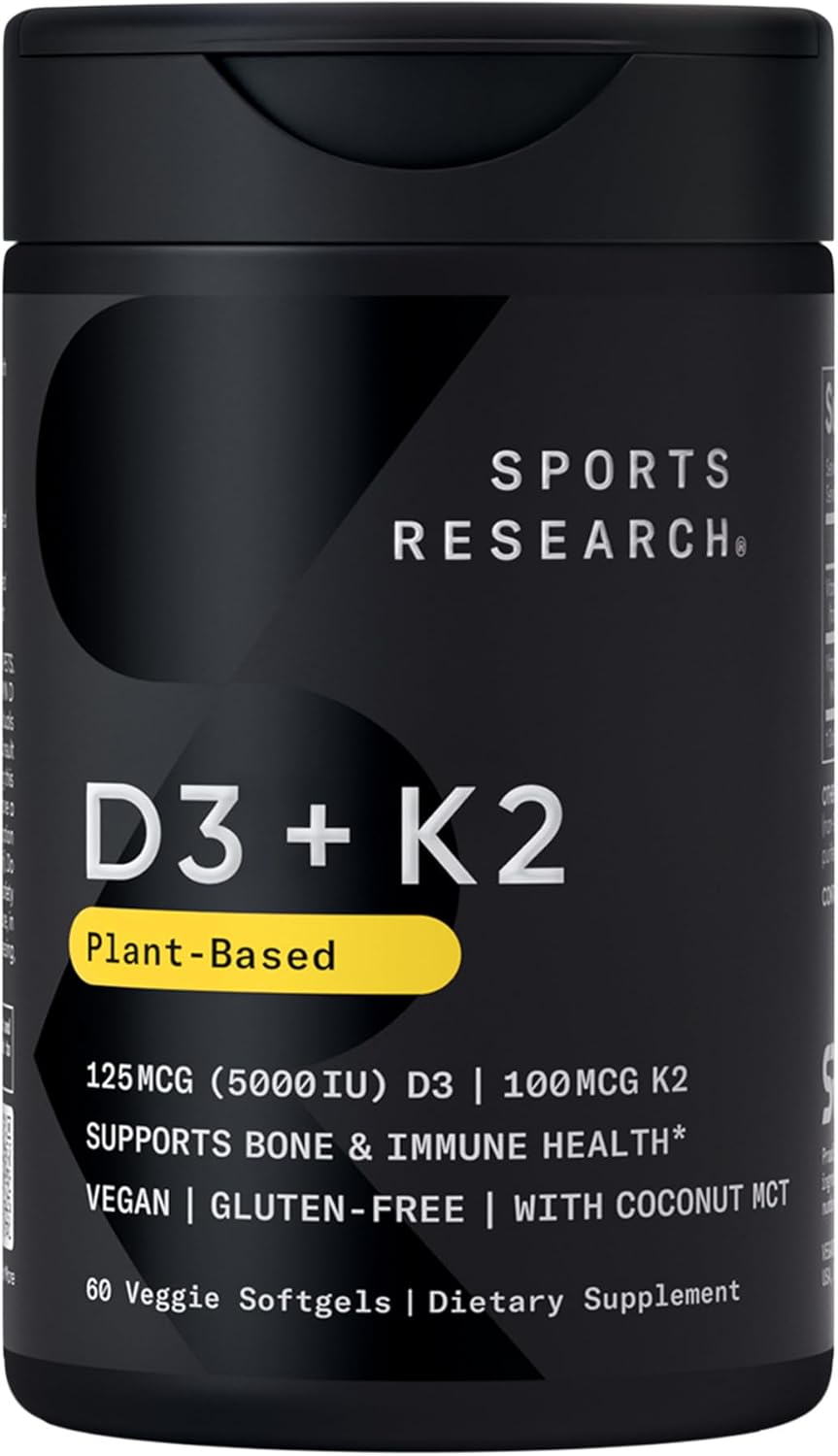
Sports Research Vitamin D3 5000 IU (mini softgel)
Sports Research Vitamin D3 5000 IU (mini softgel) — third-party tested. 4.7★ (53,614 ratings). Confirmed in stock.
- Amazon price and availability can change over time
Affiliate link: If you buy through this link, we may earn a commission at no extra cost to you.
Buy Sports Research Vitamin D3 5000 IU (mini softgel)
Thorne Vitamin D-5000 (D3 5000 IU)
Thorne Vitamin D-5000 (D3 5000 IU) — third-party tested. 4.8★ (9,244 ratings). Confirmed in stock.
- Amazon price and availability can change over time
Affiliate link: If you buy through this link, we may earn a commission at no extra cost to you.
Buy Thorne Vitamin D-5000 (D3 5000 IU)
NatureWise Vitamin D3 5000 IU
NatureWise Vitamin D3 5000 IU — third-party tested. 4.7★ (192,761 ratings). Confirmed in stock.
- Amazon price and availability can change over time
Affiliate link: If you buy through this link, we may earn a commission at no extra cost to you.
Buy NatureWise Vitamin D3 5000 IUCompare supplements with the same checklist we use.
Get the anti-aging supplement cheat sheet with evidence prompts, safety checks, and label-quality questions before you buy.
Comparison Table
| Category | #1 Sports Research Vitamin D3 5000 IU (mini softgel) Sports Research | #2 Thorne Vitamin D-5000 (D3 5000 IU) Thorne | #3 NatureWise Vitamin D3 5000 IU NatureWise |
|---|---|---|---|
| Score | 9/10 | 9.2/10 | 9/10 |
| Best For | |||
| Pros |
|
|
|
| Cons |
|
|
|
What to Know About Vitamin D3 for Thyroid Health
Vitamin D deficiency and thyroid dysfunction don't just overlap by coincidence. Research consistently shows that adults with Hashimoto's thyroiditis carry significantly lower serum 25(OH)D levels than healthy controls — and that correcting this deficiency may support healthier autoantibody levels over time. If you're managing an autoimmune thyroid condition and your vitamin D has come back low, the question isn't really whether to supplement. It's which product to trust. Not all vitamin D3 supplements are created equal. The form of cholecalciferol matters. The delivery oil matters. Third-party testing matters — a lot. And if you're taking levothyroxine, you're already navigating a narrow therapeutic window, which means supplement quality isn't something to cut corners on. We've reviewed three of the most popular and rigorously tested vitamin D3 products available in 2026, specifically evaluated through the lens of Hashimoto's thyroiditis management and hypothyroid micronutrient optimization. These aren't generic picks. Every product was assessed against clinical evidence, formulation science, third-party certification standards, and real-world usability for women aged 30–55 — the demographic most affected by autoimmune thyroid disease.
This content is for educational purposes only and is not medical advice. These statements have not been evaluated by the FDA. This product is not intended to diagnose, treat, cure, or prevent any disease.
Key Benefits of Vitamin D3 for Thyroid Health
May support reduction of anti-TPO and anti-Tg autoantibody levels in individuals with Hashimoto's thyroiditis, based on pooled clinical trial data
Corrects confirmed vitamin D deficiency, which is disproportionately prevalent in people with autoimmune thyroid conditions
Supports immune regulation through vitamin D receptor activity in thyroid and immune tissues, potentially moderating the autoimmune response
How Vitamin D3 Supports Thyroid Health
Vitamin D3 (cholecalciferol) isn't just a bone nutrient — it's a fat-soluble prohormone with receptors expressed throughout the immune system, including in thyroid tissue itself. After oral ingestion, D3 is converted in the liver to 25-hydroxyvitamin D (the form measured in blood tests), then further activated in the kidneys and peripheral tissues to 1,25-dihydroxyvitamin D (calcitriol), the biologically active form. Calcitriol binds to vitamin D receptors (VDR) on T-regulatory cells and dendritic cells — immune cells central to the autoimmune dysregulation seen in Hashimoto's thyroiditis. Research suggests that adequate vitamin D signaling may help shift the immune balance away from the Th1/Th17 inflammatory phenotype associated with autoimmune thyroid attack. The fat-soluble delivery matrix in quality D3 supplements matters mechanistically. Cholecalciferol is absorbed via the lymphatic system alongside dietary fats, which is why products suspended in MCT oil or olive oil outperform dry capsule formulations in bioavailability studies. Taking any of these softgels with your largest meal of the day — rather than on an empty stomach — is a simple but evidence-informed habit that can meaningfully affect how much D3 you actually absorb.
What to Look For When Buying Vitamin D3
The single most important decision when buying vitamin D3 for thyroid support isn't which brand to choose — it's whether you actually need 5000 IU. All four products on this list use a 5000 IU dose, which is commonly prescribed for correcting confirmed deficiency but is genuinely too high for someone whose 25(OH)D is already in the optimal range (40–60 ng/mL by most functional medicine standards). Get your levels tested first. That bloodwork will determine whether 1000 IU, 2000 IU, or 5000 IU is the right starting dose — and it'll give you a baseline to retest against in 3 months. Formulation choice hinges on two factors: your sensitivity profile and your K2 situation. If you have known food sensitivities, multiple chemical sensitivities, or a history of reacting to supplement excipients — which isn't rare in Hashimoto's patients — Pure Encapsulations is worth the price premium. Its hypoallergenic capsule with zero unnecessary additives is genuinely different from the standard softgel. If you don't have those concerns, Sports Research gives you more for less: D3 plus K2 in a single capsule, Informed Sport certified, at $0.28 per day. The K2 question deserves its own paragraph. High-dose vitamin D3 increases intestinal calcium absorption. K2 MK-7 helps direct that calcium toward bone rather than soft tissue. At 5000 IU daily, most practitioners recommend co-supplementing with K2 MK-7. If you choose NatureWise or Nordic Naturals — both D3-only formulas — you'll need to add a separate K2 supplement. Budget for that when comparing prices. Finally, timing matters. Take fat-soluble vitamins with your largest meal of the day, not on an empty stomach. If you're on levothyroxine, the standard guidance is to take thyroid medication on an empty stomach, separate from supplements — typically at least 4 hours apart. Your prescribing physician or pharmacist can confirm the best timing protocol for your specific regimen.
Dosage Guidance
Always follow your healthcare provider's recommendations. Dosages vary by individual health status, age, and goals.
Common Vitamin D3 Complaints (And How to Avoid Them)
Based on analysis of thousands of customer reviews across Vitamin D3 products.
"I've been taking vitamin D for months and my antibodies haven't changed"
Vitamin D is one piece of a complex autoimmune picture. If you've confirmed your 25(OH)D has risen into the 40–60 ng/mL range and antibodies haven't shifted, this isn't unusual — individual responses vary, and D3 alone may not be sufficient without addressing selenium status, sleep, stress, or gut health. Discuss your full lab panel with a thyroid-literate practitioner.
"Vitamin D supplements make me nauseous"
Taking D3 on an empty stomach is the most common cause of supplement-related nausea. All four products on this list are fat-soluble softgels — take them with your largest meal. If nausea persists, the Pure Encapsulations dry capsule (without an oil base) may be better tolerated, as some people react to the MCT or olive oil carriers in softgels.
"I don't know which dose is right for me"
That's a genuinely good instinct. The correct dose depends entirely on your current 25(OH)D level, which requires a blood test. Don't guess. A 5000 IU daily dose is appropriate for repletion of confirmed deficiency under medical supervision, but may be too high for maintenance once levels are corrected. Retest at 3 months and adjust with your provider.
Safety & Interactions
- Pregnancy and breastfeeding: Consult your healthcare provider before taking this supplement during pregnancy or while nursing. The safety of supplemental doses beyond dietary intake has not been established in pregnant or lactating women.
- Blood thinners: If you take blood-thinning medications (e.g., warfarin, apixaban, rivaroxaban, clopidogrel, or high-dose aspirin), consult your healthcare provider BEFORE starting this supplement, as it may have additive antiplatelet or anticoagulant effects.
- Kidney disease: If you have chronic kidney disease (CKD) or any significant kidney impairment, consult your healthcare provider before taking this supplement. Some supplements can accumulate to dangerous levels when kidney function is reduced.
- Gout: Individuals with gout should consult their healthcare provider before starting this supplement. Certain supplements (e.g., collagen, fish oil, niacin) may affect uric acid levels or trigger flares in susceptible individuals.
""As a registered dietitian, I'd emphasize that the research on vitamin D and Hashimoto's is genuinely promising — but it only applies if you're actually deficient. The first step before buying any of these products is a 25(OH)D blood test, ideally ordered alongside your anti-TPO panel. Supplementing blindly at 5000 IU when you're already replete isn't helpful and carries unnecessary risk."
Frequently Asked Questions
Citations & Research
This page references peer-reviewed research indexed on PubMed/NCBI. Citations are provided for transparency. Always consult a qualified healthcare professional before making any medical decisions.
- [1]Tang J, Shan S, Li F et al. “Effects of vitamin D supplementation on autoantibodies and thyroid function in patients with Hashimoto's thyroiditis: A systematic review and meta-analysis.” Medicine, 2023. doi:10.1097/MD.0000000000036759PMID 38206745 ↗
- [2]Peng B, Wang W, Gu Q et al. “Effects of different supplements on Hashimoto's thyroiditis: a systematic review and network meta-analysis.” Frontiers in Endocrinology, 2024. doi:10.3389/fendo.2024.1445878PMID 39698034 ↗
- [3]Hahn J, Cook NR, Alexander EK et al. “Vitamin D and marine omega 3 fatty acid supplementation and incident autoimmune disease: VITAL randomized controlled trial.” BMJ (Clinical research ed.), 2022. n=25,871. doi:10.1136/bmj-2021-066452PMID 35082139 ↗
Ready to Try Vitamin D3?
Our top pick for thyroid health. Third-party tested, highly reviewed.
Affiliate link: If you buy through this link, we may earn a commission at no extra cost to you.
Shop #1 Pick — Sports Research Vitamin D3 5000 IU (mini softgel)Continue exploring
- everything we know about Vitamin D3Supplement overview
- our thyroid health supplement guideGoal overview
- clinical notes on Selenium and thyroid healthAlternative supplement
- see our Vitamin D3 picks for blood pressure supportSame supplement, different goal
- the Vitamin K2 page for bone healthEditor pick
- clinical notes on Vitamin D3 and immune healthEditor pick
- Vitamin D3 reviewed for inflammation supportEditor pick
- vitamin d3 vs vitamin d2 comparedCompare options
Get the evidence-graded supplement cheat sheet.
Evidence prompts, safety checks, and label-quality questions before you buy — free, straight to your inbox.
No spam. Unsubscribe anytime.