
Best Vitamin D3 for Inflammation Reduction: 4 Rigorously Tested Picks for 2026
Compare the 4 best vitamin D3 supplements for inflammation reduction in 2026. Science-backed picks, dosage guidance, and expert safety notes.

This content is for educational purposes only and is not medical advice. These statements have not been evaluated by the FDA. This product is not intended to diagnose, treat, cure, or prevent any disease. Always consult your healthcare provider before starting any supplement.
Best Vitamin D3 for Inflammation Reduction in 2026
Ranked by quality, value, and clinical backing
Where available, we show when each product price was last checked so the list stays honest without overreacting to normal Amazon price movement.
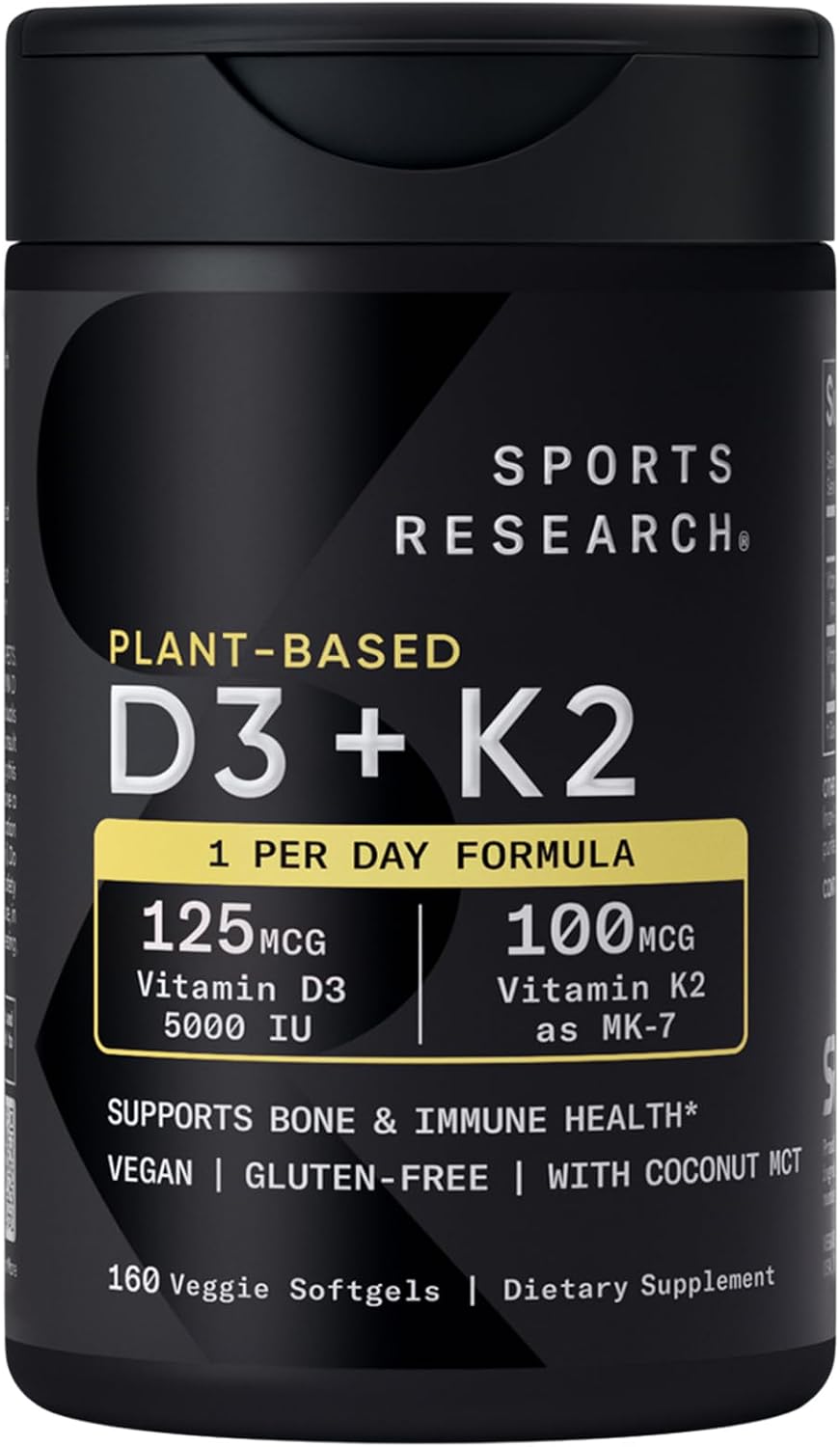
Sports Research Vitamin D3 + K2 (MK-7)
Sports Research Vitamin D3 + K2 (MK-7) — third-party tested. 4.7★ (420 ratings). Confirmed in stock.
- Smaller customer-review base than category best-sellers
Affiliate link: If you buy through this link, we may earn a commission at no extra cost to you.
Buy Sports Research Vitamin D3 + K2 (MK-7)
Pure Encapsulations Vitamin D3 & K2 (120 Capsules)
Pure Encapsulations Vitamin D3 & K2 (120 Capsules) — third-party tested. 4.8★ (4,475 ratings). Confirmed in stock.
- Amazon price and availability can change over time
Affiliate link: If you buy through this link, we may earn a commission at no extra cost to you.
Buy Pure Encapsulations Vitamin D3 & K2 (120 Capsules)
NatureWise Vitamin D3 5000 IU
NatureWise Vitamin D3 5000 IU — third-party tested. 4.7★ (192,761 ratings). Confirmed in stock.
- Amazon price and availability can change over time
Affiliate link: If you buy through this link, we may earn a commission at no extra cost to you.
Buy NatureWise Vitamin D3 5000 IUCompare supplements with the same checklist we use.
Get the anti-aging supplement cheat sheet with evidence prompts, safety checks, and label-quality questions before you buy.
Comparison Table
| Category | #1 Sports Research Vitamin D3 + K2 (MK-7) Sports Research | #2 Pure Encapsulations Vitamin D3 & K2 (120 Capsules) Pure Encapsulations | #3 NatureWise Vitamin D3 5000 IU NatureWise |
|---|---|---|---|
| Score | 9/10 | 9.2/10 | 9/10 |
| Best For | |||
| Pros |
|
|
|
| Cons |
|
|
|
What to Know About Vitamin D3 for Inflammation Reduction
Chronic low-grade inflammation is quietly one of the most prevalent health concerns in modern adults — and vitamin D deficiency is one of the few nutritional factors consistently associated with elevated inflammatory markers like high-sensitivity CRP and IL-6. That's not a coincidence. Vitamin D3 (cholecalciferol) acts as a precursor to a potent steroid hormone that binds to receptors in nearly every immune cell type, and research suggests that correcting deficiency may support more balanced inflammatory signaling. The problem? The supplement market is flooded with products ranging from brilliantly formulated to barely bioavailable. Not all D3 supplements are created equal — delivery matrix, third-party testing rigor, companion nutrients like K2, and dose all matter enormously when your goal is supporting immune regulation rather than just hitting a number on a lab panel. This guide ranks three standout vitamin D3 supplements specifically for adults dealing with chronically elevated inflammatory markers, autoimmune-adjacent conditions, or the age-related inflammatory drift known as inflammaging. We've evaluated formulation quality, clinical dose alignment, third-party certification level, and real-world value. Every product here is third-party tested. Every claim is qualified. Here's what we found.
This content is for educational purposes only and is not medical advice. These statements have not been evaluated by the FDA. This product is not intended to diagnose, treat, cure, or prevent any disease.
Key Benefits of Vitamin D3 for Inflammation Reduction
May support reduction of circulating inflammatory markers (CRP, IL-6) in vitamin D-deficient adults, based on human RCT data
Supports immune cell regulation through vitamin D receptor activation in monocytes, macrophages, and T-lymphocytes
Corrects the nutritional deficiency most commonly associated with age-related chronic low-grade inflammation (inflammaging)
How Vitamin D3 Supports Inflammation Reduction
Vitamin D3 (cholecalciferol) isn't technically a vitamin — it's a prohormone. After ingestion, it's converted in the liver to 25-hydroxyvitamin D (the form measured in blood tests), then further activated in the kidneys (and locally in immune tissues) to 1,25-dihydroxyvitamin D, the biologically active form. This active metabolite binds to the vitamin D receptor (VDR), which is expressed in virtually every immune cell type, including monocytes, macrophages, dendritic cells, and both T and B lymphocytes. VDR activation modulates the transcription of hundreds of genes involved in immune and inflammatory signaling. In practical terms, research suggests that adequate vitamin D signaling may help shift immune responses away from pro-inflammatory cytokine production — including IL-6, TNF-alpha, and IL-17 — while supporting regulatory T-cell activity that keeps immune responses proportionate. The anti-inflammatory effects appear most pronounced in individuals correcting a deficiency rather than supplementing on top of already-adequate levels. That's why testing your 25-OH-D level before starting supplementation isn't just a precaution — it's genuinely useful data for knowing whether D3 supplementation is likely to move your inflammatory markers at all.
What to Look For When Buying Vitamin D3
The single most important formulation factor for vitamin D3 absorption is the delivery matrix. Vitamin D is fat-soluble — it needs dietary fat present in the gut for micellarization and uptake via the lymphatic system. Softgels containing olive oil or MCT oil provide that fat internally, meaning absorption isn't wholly dependent on whether you've eaten a fat-containing meal. Dry powder capsules or tablets require you to take them with food that contains fat. That's not impossible to manage, but it's a meaningful variable to control, especially if you're using D3 supplementation to actively correct a deficiency. D3 versus D2 matters more than many people realize. Cholecalciferol (D3) raises serum 25-OH-D significantly more effectively than ergocalciferol (D2) in human clinical studies — roughly 87% more potent per IU in some comparisons. All four products on this list use cholecalciferol. Don't settle for D2. The K2 question is legitimately nuanced. At doses of 5,000 IU daily, some practitioners recommend pairing D3 with vitamin K2 (MK-7 form) to support appropriate calcium utilization and reduce the theoretical risk of soft tissue calcification with extended high-dose use. This isn't a settled safety issue for most healthy adults at 5,000 IU, but it's a reasonable formulation preference — especially for older adults or those with cardiovascular risk factors. Sports Research is the only product here that includes K2, which is part of why it ranks first. Finally, third-party certification tier genuinely matters. NSF Certified for Sport (Pure Encapsulations) and Informed Sport (Sports Research) require batch-level testing with public certificate availability — not just facility-level GMP audits. If you're an athlete subject to drug testing, or simply want the highest confidence in label accuracy, those two certifications set the bar.
Dosage Guidance
Always follow your healthcare provider's recommendations. Dosages vary by individual health status, age, and goals.
Common Vitamin D3 Complaints (And How to Avoid Them)
Based on analysis of thousands of customer reviews across Vitamin D3 products.
"I've been taking vitamin D3 for months and my CRP still hasn't changed"
CRP response to D3 supplementation is most reliably seen in people correcting a genuine deficiency. If your 25-OH-D was already above 30 ng/mL when you started, D3 may not be the right lever for your CRP. Get a follow-up 25-OH-D test to confirm you've actually reached repletion, and discuss other anti-inflammatory strategies (omega-3s, dietary patterns) with your provider if levels are now adequate.
"Vitamin D softgels give me stomach upset or nausea"
This almost always traces back to taking D3 on an empty stomach or with a low-fat meal. Fat-soluble vitamins draw bile release, which can cause GI irritation without enough food present. Try taking your softgel mid-meal with a meal that includes dietary fat (avocado, olive oil, nuts). Pure Encapsulations' dry capsule may actually be better tolerated for some individuals with oil-sensitive GI tracts.
"I don't know what dose I actually need — everyone says something different"
The dosing variability you're seeing reflects genuine individual differences — body weight, baseline deficiency severity, skin tone, sun exposure, and gut absorption all affect how much D3 you need to reach a given serum level. The only reliable answer is a 25-OH-D blood test before and 8–12 weeks after starting supplementation. Your healthcare provider can then adjust the dose to target the 40–60 ng/mL range most associated with immune and anti-inflammatory benefits.
Safety & Interactions
- Pregnancy and breastfeeding: Consult your healthcare provider before taking this supplement during pregnancy or while nursing. The safety of supplemental doses beyond dietary intake has not been established in pregnant or lactating women.
- Blood thinners: If you take blood-thinning medications (e.g., warfarin, apixaban, rivaroxaban, clopidogrel, or high-dose aspirin), consult your healthcare provider BEFORE starting this supplement, as it may have additive antiplatelet or anticoagulant effects.
- Kidney disease: If you have chronic kidney disease (CKD) or any significant kidney impairment, consult your healthcare provider before taking this supplement. Some supplements can accumulate to dangerous levels when kidney function is reduced.
- Gout: Individuals with gout should consult their healthcare provider before starting this supplement. Certain supplements (e.g., collagen, fish oil, niacin) may affect uric acid levels or trigger flares in susceptible individuals.
""From a registered dietitian's perspective, the most common error I see with vitamin D supplementation is skipping the baseline blood test — people assume they're deficient and dose accordingly, when their actual needs may be quite different. Pair that with consistent fat-containing meals when taking your softgel, and you've addressed the two biggest absorption and safety variables before any brand or formulation choice even matters."
Frequently Asked Questions
Citations & Research
This page references peer-reviewed research indexed on PubMed/NCBI. Citations are provided for transparency. Always consult a qualified healthcare professional before making any medical decisions.
- [1]Arshi S, Fallahpour M, Nabavi M et al. “The effects of vitamin D supplementation on airway functions in mild to moderate persistent asthma.” Annals of allergy, asthma & immunology : official publication of the American College of Allergy, Asthma, & Immunology, 2014. doi:10.1016/j.anai.2014.07.005PMID 25091714 ↗
- [c2]Mazidi M, Rezaie P, Vatanparast H. “Impact of vitamin D supplementation on C-reactive protein; a systematic review and meta-analysis of randomized controlled trials.” BMC Nutrition, 2018. Meta-analysis of RCTs. PMID 32153865 ↗
- [c3]Asbaghi O, Sadeghian M, Mozaffari-Khosravi H, Maleki V, Shokri A, Hajizadeh-Sharafabad F. “The effect of vitamin d-calcium co-supplementation on inflammatory biomarkers: A systematic review and meta-analysis of randomized controlled trials.” Cytokine, 2020. Meta-analysis of RCTs. PMID 32113022 ↗
Ready to Try Vitamin D3?
Our top pick for inflammation reduction. Third-party tested, highly reviewed.
Affiliate link: If you buy through this link, we may earn a commission at no extra cost to you.
Shop #1 Pick — Sports Research Vitamin D3 + K2 (MK-7)Continue exploring
- Vitamin D3 supplement guideSupplement overview
- see all inflammation support supplements we coverGoal overview
- Apigenin for inflammation supportAlternative supplement
- Boswellia reviewed for inflammation supportAlternative supplement
- Vitamin D3 research for blood pressure supportSame supplement, different goal
- see our Vitamin K2 picks for bone healthEditor pick
- Vitamin D3 research for immune healthEditor pick
- best Vitamin D3 for thyroid healthEditor pick
- we tested vitamin d3 against vitamin d2Compare options
Get the evidence-graded supplement cheat sheet.
Evidence prompts, safety checks, and label-quality questions before you buy — free, straight to your inbox.
No spam. Unsubscribe anytime.