
Best Vitamin D3 Supplements for Fatigue & Energy (2026 Rankings)
Science-backed rankings of the best vitamin D3 supplements for fatigue and energy in 2026. Reviewed for deficient adults, third-party tested picks included.

This content is for educational purposes only and is not medical advice. These statements have not been evaluated by the FDA. This product is not intended to diagnose, treat, cure, or prevent any disease. Always consult your healthcare provider before starting any supplement.
Best Vitamin D3 for Fatigue & Energy in 2026
Ranked by quality, value, and clinical backing
Where available, we show when each product price was last checked so the list stays honest without overreacting to normal Amazon price movement.
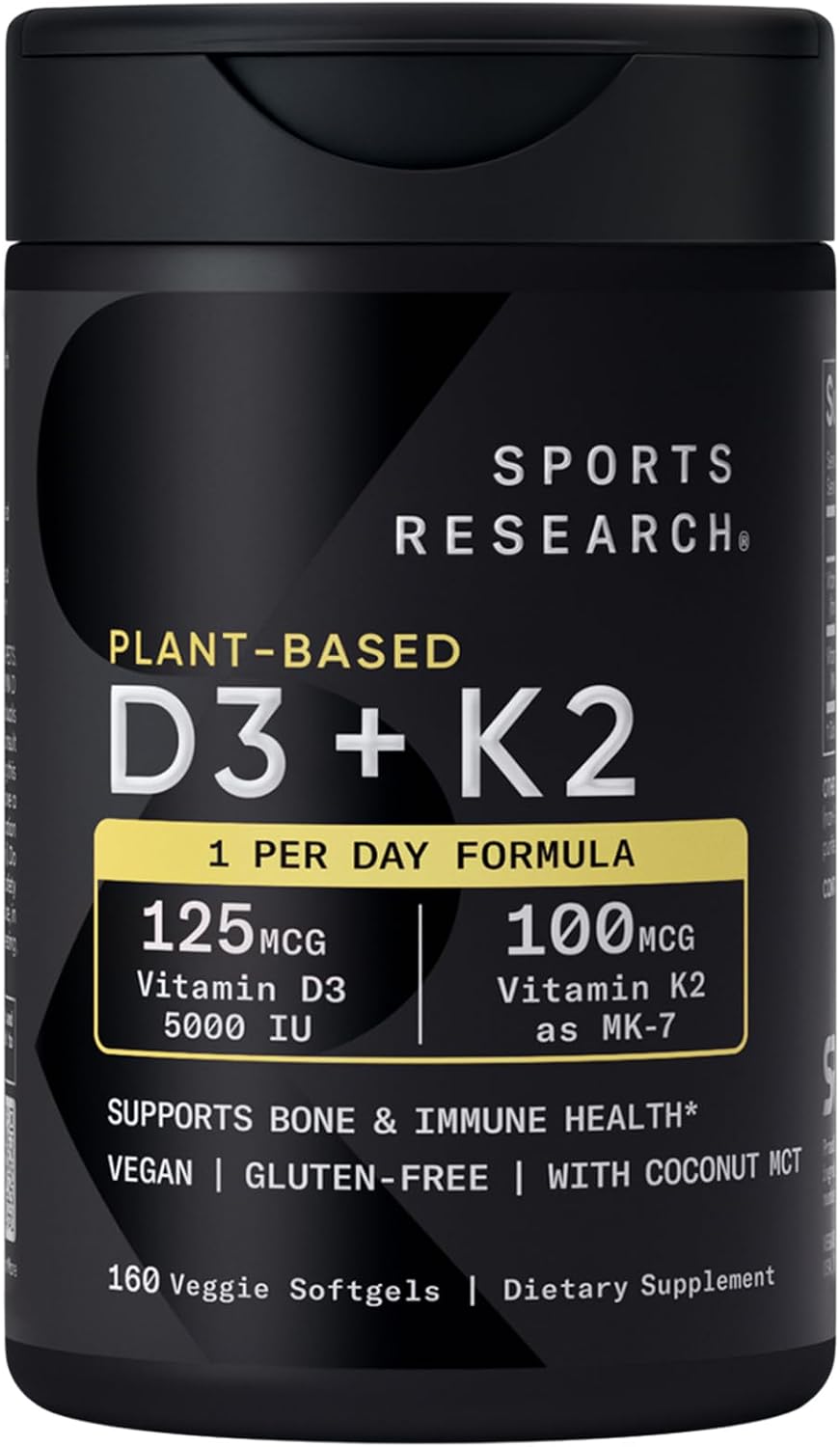
Sports Research Vitamin D3 + K2 (MK-7)
Sports Research Vitamin D3 + K2 (MK-7) — third-party tested. 4.7★ (420 ratings). Confirmed in stock.
- Smaller customer-review base than category best-sellers
Affiliate link: If you buy through this link, we may earn a commission at no extra cost to you.
Buy Sports Research Vitamin D3 + K2 (MK-7)
Pure Encapsulations Vitamin D3 & K2 (120 Capsules)
Pure Encapsulations Vitamin D3 & K2 (120 Capsules) — third-party tested. 4.8★ (4,475 ratings). Confirmed in stock.
- Amazon price and availability can change over time
Affiliate link: If you buy through this link, we may earn a commission at no extra cost to you.
Buy Pure Encapsulations Vitamin D3 & K2 (120 Capsules)
NatureWise Vitamin D3 5000 IU
NatureWise Vitamin D3 5000 IU — third-party tested. 4.7★ (192,761 ratings). Confirmed in stock.
- Amazon price and availability can change over time
Affiliate link: If you buy through this link, we may earn a commission at no extra cost to you.
Buy NatureWise Vitamin D3 5000 IU
Thorne Vitamin D-5000 (D3 5000 IU)
Thorne Vitamin D-5000 (D3 5000 IU) — third-party tested. 4.8★ (9,244 ratings). Confirmed in stock.
- Amazon price and availability can change over time
Affiliate link: If you buy through this link, we may earn a commission at no extra cost to you.
Buy Thorne Vitamin D-5000 (D3 5000 IU)Compare supplements with the same checklist we use.
Get the anti-aging supplement cheat sheet with evidence prompts, safety checks, and label-quality questions before you buy.
Comparison Table
| Category | #1 Sports Research Vitamin D3 + K2 (MK-7) Sports Research | #2 Pure Encapsulations Vitamin D3 & K2 (120 Capsules) Pure Encapsulations | #3 NatureWise Vitamin D3 5000 IU NatureWise | #4 Thorne Vitamin D-5000 (D3 5000 IU) Thorne |
|---|---|---|---|---|
| Score | 9/10 | 9.2/10 | 9/10 | 9.2/10 |
| Best For | ||||
| Pros |
|
|
|
|
| Cons |
|
|
|
|
What to Know About Vitamin D3 for Fatigue & Energy
If you've been dragging through your days and your bloodwork shows a 25(OH)D below 20 ng/mL, you're not imagining the connection. Vitamin D deficiency is one of the most common and most overlooked contributors to persistent fatigue — affecting an estimated 35% of U.S. adults, with rates climbing sharply in northern latitudes and among older populations. Vitamin D3 (cholecalciferol) is the biologically active form your skin synthesizes from UVB sunlight, and it's meaningfully more effective at raising serum 25(OH)D than the D2 form. Research suggests that correcting deficiency may support energy metabolism, muscle function, and mood regulation — three systems that all take a hit when levels drop below the clinical threshold. This guide ranks four of the most credible D3 supplements available in 2026, evaluated specifically for adults experiencing fatigue linked to confirmed or suspected deficiency. We've prioritized formulation quality, third-party testing, fat-soluble delivery matrices, and honest value. You won't find inflated claims here — just the evidence, the products, and what they actually offer someone trying to feel like themselves again.
This content is for educational purposes only and is not medical advice. These statements have not been evaluated by the FDA. This product is not intended to diagnose, treat, cure, or prevent any disease.
Key Benefits of Vitamin D3 for Fatigue & Energy
May support energy metabolism and reduce fatigue symptoms in adults with confirmed vitamin D deficiency (25(OH)D below 20 ng/mL)
Research suggests vitamin D3 (cholecalciferol) raises serum 25(OH)D more effectively than D2, making it the preferred supplemental form for correcting deficiency
Formulations delivered in fat-containing carriers (MCT oil, olive oil) may enhance absorption of this fat-soluble vitamin compared to dry capsule forms without lipids
How Vitamin D3 Supports Fatigue & Energy
Vitamin D3 functions as a precursor to the steroid hormone calcitriol (1,25-dihydroxyvitamin D), which binds to vitamin D receptors (VDRs) distributed in virtually every tissue in the body — including skeletal muscle, brain, immune cells, and mitochondria. When D3 is ingested, it's converted first in the liver to 25(OH)D (the storage and measurement form), then in the kidneys and peripheral tissues to the active calcitriol. This active form regulates gene expression involved in calcium transport, immune function, and, critically for fatigue, mitochondrial oxidative phosphorylation — the process your cells use to generate ATP. In the context of deficiency-related fatigue, the working hypothesis is that insufficient VDR signaling impairs mitochondrial efficiency in skeletal muscle and disrupts serotonin synthesis pathways that influence mood and perceived energy. Fat-soluble delivery matters here: D3 is absorbed in the small intestine via chylomicrons alongside dietary fat. Supplements formulated in olive oil or MCT oil provide the lipid environment that facilitates this transport, making the fat carrier in your D3 product a formulation choice with real physiological relevance, not just a marketing detail.
What to Look For When Buying Vitamin D3
The first question to ask before buying any D3 supplement isn't which brand — it's whether you've confirmed your deficiency with a 25(OH)D blood test. A serum level below 20 ng/mL is generally considered deficient, while 20-29 ng/mL is classified as insufficient. The dose and duration of supplementation that's appropriate depends entirely on where your baseline sits, your body weight (D3 distributes into adipose tissue), and other individual factors your provider can assess. Buying a 5000 IU supplement without that data is like buying prescription glasses without an eye exam. Once you know supplementation is warranted, the formulation decision matters more than most buyers realize. Vitamin D3 is fat-soluble, meaning it requires dietary fat for proper intestinal absorption. Softgels formulated in MCT oil or olive oil deliver that lipid environment built-in, which is particularly relevant if you're taking your supplement in the morning before eating. If you prefer capsules or tablets, take them with your highest-fat meal of the day — typically dinner. The D3/K2 combination question comes up frequently. K2 (specifically the MK-7 form from natto) works alongside vitamin D to direct calcium into bone tissue rather than arterial walls. While the independent bone-health evidence for K2 at therapeutic doses is promising, the practical case for the combination is sound enough that we'd generally recommend it for long-term users. That said, if you're on warfarin (Coumadin), K2 is a contraindication — more on that in the safety section. Finally, don't overlook the certification tier. NSF Certified for Sport and Informed Sport certifications test for label accuracy, heavy metals, and banned substances on a batch-by-batch basis. This matters for product reliability, not just athletic compliance. For clinically supervised repletion protocols, we'd prioritize NSF or Informed Sport certification over price. For healthy adults maintaining adequate levels, the value tier with documented third-party testing is a reasonable choice.
Dosage Guidance
Always follow your healthcare provider's recommendations. Dosages vary by individual health status, age, and goals.
Common Vitamin D3 Complaints (And How to Avoid Them)
Based on analysis of thousands of customer reviews across Vitamin D3 products.
"I've been taking vitamin D for months and still feel exhausted"
Vitamin D deficiency may be one contributor to fatigue, not the sole cause. If you've corrected your 25(OH)D levels (confirmed by retesting) and fatigue persists, the clinical priority shifts to evaluating other factors — ferritin, thyroid function, B12, and sleep quality. Fatigue is rarely monocausal, and D3 supplementation alone won't resolve fatigue driven by iron deficiency, hypothyroidism, or sleep apnea.
"Vitamin D supplements make me feel nauseous"
GI discomfort from D3 supplements is most often dose-related or linked to taking the softgel on an empty stomach. Try taking your D3 with your largest meal of the day, which both improves absorption and reduces the risk of nausea. If symptoms persist, a hypoallergenic option like Pure Encapsulations — with minimal excipients — may be better tolerated than softgels containing MCT or olive oil.
"I don't know which vitamin D test to ask my doctor for"
The test you want is serum 25-hydroxyvitamin D, written as 25(OH)D on most lab panels. This is the storage form and the clinically validated marker for deficiency assessment. Do not rely on 1,25(OH)2D (calcitriol) testing for deficiency screening — it doesn't reliably reflect body stores and is not the standard diagnostic measure.
Safety & Interactions
- Pregnancy and breastfeeding: Consult your healthcare provider before taking this supplement during pregnancy or while nursing. The safety of supplemental doses beyond dietary intake has not been established in pregnant or lactating women.
- Blood thinners: If you take blood-thinning medications (e.g., warfarin, apixaban, rivaroxaban, clopidogrel, or high-dose aspirin), consult your healthcare provider BEFORE starting this supplement, as it may have additive antiplatelet or anticoagulant effects.
- Kidney disease: If you have chronic kidney disease (CKD) or any significant kidney impairment, consult your healthcare provider before taking this supplement. Some supplements can accumulate to dangerous levels when kidney function is reduced.
- Gout: Individuals with gout should consult their healthcare provider before starting this supplement. Certain supplements (e.g., collagen, fish oil, niacin) may affect uric acid levels or trigger flares in susceptible individuals.
""As a registered dietitian, I'd emphasize that vitamin D3 supplementation for fatigue is most defensible — and most likely to work — when it's guided by a confirmed blood test result, not symptoms alone. Get your 25(OH)D tested before you start, and retest 3 months in; that data is what allows you to dial in the right dose and avoid the slow creep toward hypercalcemia that can happen with unsupervised high-dose supplementation."
Frequently Asked Questions
Citations & Research
This page references peer-reviewed research indexed on PubMed/NCBI. Citations are provided for transparency. Always consult a qualified healthcare professional before making any medical decisions.
- [1]LeBlanc ES, Desai M, Perrin N et al. “Vitamin D levels and menopause-related symptoms.” Menopause (New York, N.Y.), 2014. doi:10.1097/GME.0000000000000238PMID 24736200 ↗
- [2]LeBlanc ES, Hedlin H, Qin F et al. “Calcium and vitamin D supplementation do not influence menopause-related symptoms: Results of the Women's Health Initiative Trial.” Maturitas, 2015. doi:10.1016/j.maturitas.2015.04.007PMID 26044075 ↗
- [3]Charoenporn V et al. “Effects of an 8-week high-dose vitamin D supplementation on fatigue and neuropsychiatric manifestations in post-COVID syndrome: A randomized controlled trial.” Psychiatry and clinical neurosciences, 2024. doi:10.1111/pcn.13716PMID 39072958 ↗
Ready to Try Vitamin D3?
Our top pick for fatigue & energy. Third-party tested, highly reviewed.
Affiliate link: If you buy through this link, we may earn a commission at no extra cost to you.
Shop #1 Pick — Sports Research Vitamin D3 + K2 (MK-7)Continue exploring
- why Vitamin D3 matters for healthy agingSupplement overview
- top-rated fatigue supplementsGoal overview
- see CoQ10 evidence for fatigueAlternative supplement
- Vitamin D3 guidance for blood pressure supportSame supplement, different goal
- Vitamin D3 research for bone healthEditor pick
- Vitamin D3 for immune healthEditor pick
- where Vitamin D3 fits for mood supportEditor pick
- which form is right for youCompare options
Get the evidence-graded supplement cheat sheet.
Evidence prompts, safety checks, and label-quality questions before you buy — free, straight to your inbox.
No spam. Unsubscribe anytime.