
Best Vitamin D3 for Blood Sugar & Insulin Sensitivity (2026)
Compare the 4 best vitamin D3 supplements for blood sugar & insulin sensitivity in 2026. Evidence-based picks, dosing guidance, and safety notes.

This content is for educational purposes only and is not medical advice. These statements have not been evaluated by the FDA. This product is not intended to diagnose, treat, cure, or prevent any disease. Always consult your healthcare provider before starting any supplement.
Best Vitamin D3 for Blood Sugar & Insulin Sensitivity in 2026
Ranked by quality, value, and clinical backing
Where available, we show when each product price was last checked so the list stays honest without overreacting to normal Amazon price movement.
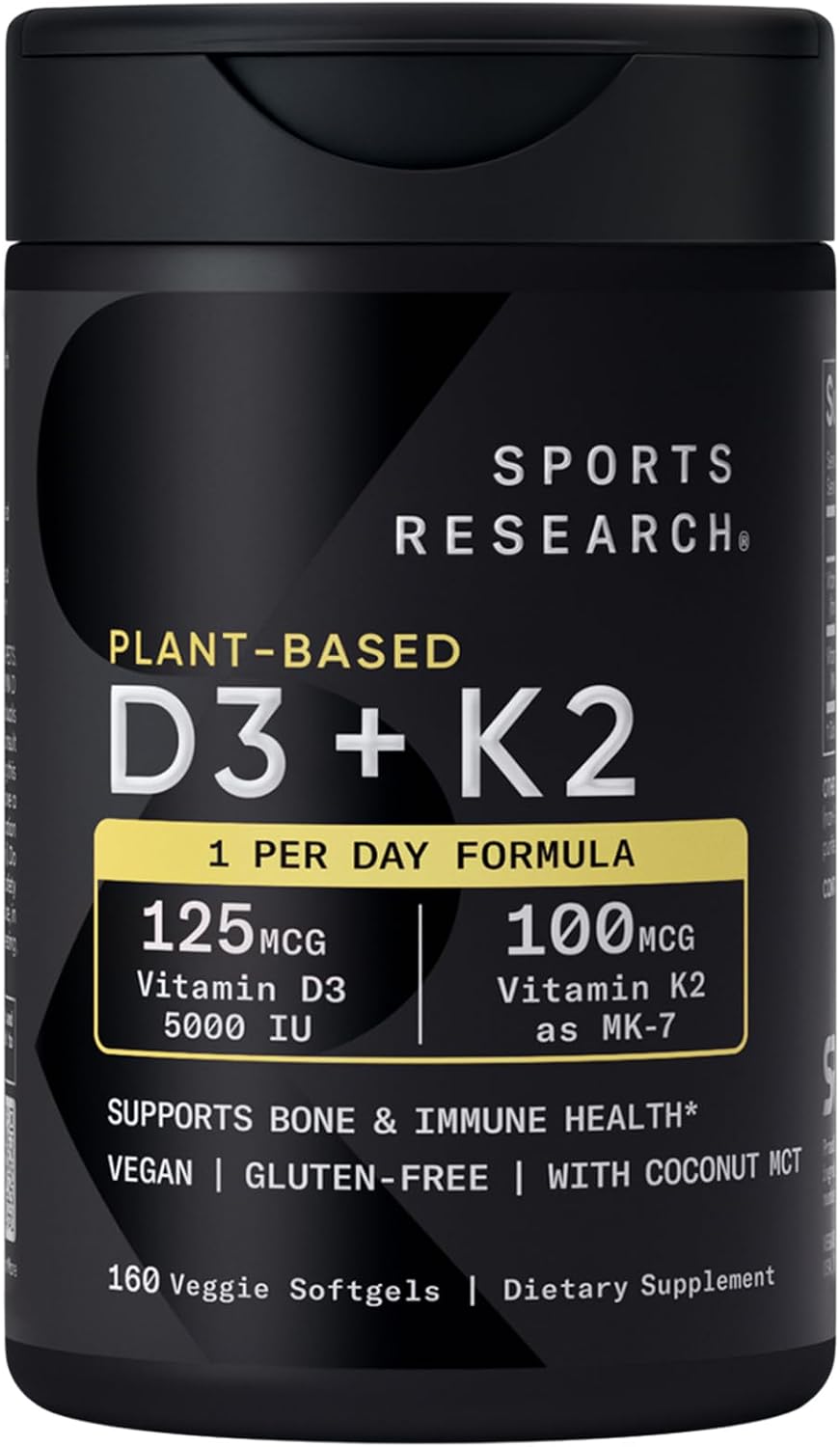
Sports Research Vitamin D3 + K2 (MK-7)
Sports Research Vitamin D3 + K2 (MK-7) — third-party tested. 4.7★ (420 ratings). Confirmed in stock.
- Smaller customer-review base than category best-sellers
Affiliate link: If you buy through this link, we may earn a commission at no extra cost to you.
Buy Sports Research Vitamin D3 + K2 (MK-7)
NatureWise Vitamin D3 5000 IU
NatureWise Vitamin D3 5000 IU — third-party tested. 4.7★ (192,761 ratings). Confirmed in stock.
- Amazon price and availability can change over time
Affiliate link: If you buy through this link, we may earn a commission at no extra cost to you.
Buy NatureWise Vitamin D3 5000 IU
Pure Encapsulations Vitamin D3 & K2 (120 Capsules)
Pure Encapsulations Vitamin D3 & K2 (120 Capsules) — third-party tested. 4.8★ (4,475 ratings). Confirmed in stock.
- Amazon price and availability can change over time
Affiliate link: If you buy through this link, we may earn a commission at no extra cost to you.
Buy Pure Encapsulations Vitamin D3 & K2 (120 Capsules)
Thorne Vitamin D-5000 (D3 5000 IU)
Thorne Vitamin D-5000 (D3 5000 IU) — third-party tested. 4.8★ (9,244 ratings). Confirmed in stock.
- Amazon price and availability can change over time
Affiliate link: If you buy through this link, we may earn a commission at no extra cost to you.
Buy Thorne Vitamin D-5000 (D3 5000 IU)Compare supplements with the same checklist we use.
Get the anti-aging supplement cheat sheet with evidence prompts, safety checks, and label-quality questions before you buy.
Comparison Table
| Category | #1 Sports Research Vitamin D3 + K2 (MK-7) Sports Research | #2 NatureWise Vitamin D3 5000 IU NatureWise | #3 Pure Encapsulations Vitamin D3 & K2 (120 Capsules) Pure Encapsulations | #4 Thorne Vitamin D-5000 (D3 5000 IU) Thorne |
|---|---|---|---|---|
| Score | 9/10 | 9/10 | 9.2/10 | 9.2/10 |
| Best For | ||||
| Pros |
|
|
|
|
| Cons |
|
|
|
|
What to Know About Vitamin D3 for Blood Sugar & Insulin Sensitivity
Vitamin D deficiency and impaired glucose metabolism are two of the most prevalent — and intertwined — health concerns in modern adults. Research suggests the relationship is bidirectional: low 25(OH)D levels are consistently associated with higher fasting insulin, greater insulin resistance, and elevated HbA1c. For adults already managing prediabetes, type 2 diabetes, or metabolic syndrome, correcting a documented deficiency may be one of the most straightforward nutritional levers available. The challenge is that not all vitamin D3 supplements are created equal. Formulation matters — D3 is fat-soluble, meaning absorption is significantly better when delivered in a quality oil carrier. Dosing varies wildly across products, from 400 IU capsules that'll barely move the needle in someone deficient to 10,000 IU megadoses that carry real toxicity risk without monitoring. Third-party testing matters too, especially if you're coordinating supplementation with a healthcare provider who's tracking your 25(OH)D levels. We've evaluated four of the most evidence-aligned, rigorously tested D3 products on the market specifically for adults targeting blood sugar support and insulin sensitivity. Every pick here uses cholecalciferol (the superior D3 form), is delivered in a fat-based matrix, and has verified third-party testing. Here's what the science says — and which product best fits your situation.
This content is for educational purposes only and is not medical advice. These statements have not been evaluated by the FDA. This product is not intended to diagnose, treat, cure, or prevent any disease.
Key Benefits of Vitamin D3 for Blood Sugar & Insulin Sensitivity
May support improved insulin sensitivity in adults with confirmed vitamin D deficiency, particularly those with prediabetes or metabolic syndrome
Research suggests vitamin D repletion is associated with more favorable fasting glucose and HbA1c trajectories in deficient populations
Supports broader cardiometabolic health via VDR-mediated gene expression affecting inflammation, beta-cell function, and calcium signaling
How Vitamin D3 Supports Blood Sugar & Insulin Sensitivity
Vitamin D3 (cholecalciferol) isn't technically a vitamin in the conventional sense — it functions more like a prohormone. After you ingest or synthesize it, the liver converts it to 25(OH)D (calcidiol), the form measured in blood tests. The kidneys then produce the biologically active metabolite, 1,25(OH)2D (calcitriol), which binds the vitamin D receptor (VDR) — a nuclear receptor expressed in virtually every cell type in the body, including pancreatic beta cells, skeletal muscle, adipose tissue, and the liver. Through VDR binding, calcitriol modulates expression of over 1,000 genes involved in immune regulation, calcium metabolism, cell proliferation, and cardiometabolic function. The insulin sensitivity connection runs through several pathways. VDR activation in pancreatic beta cells appears to support insulin gene expression and secretion. In skeletal muscle and adipose tissue — the primary sites of insulin-mediated glucose uptake — calcitriol may upregulate insulin receptor expression and enhance downstream signaling. There's also an indirect pathway via calcium: adequate vitamin D supports proper intracellular calcium flux, which is required for normal insulin secretion and glucose transporter (GLUT4) translocation. In adipose tissue, some research suggests vitamin D may influence adiponectin levels, a hormone that enhances insulin sensitivity. Fat-soluble delivery (in MCT, olive oil, or similar carriers) is essential because cholecalciferol requires dietary fat for efficient intestinal absorption via chylomicron incorporation.
What to Look For When Buying Vitamin D3
The single most important thing to understand about shopping for vitamin D3 is that form and delivery matrix aren't optional details — they determine whether the capsule you're swallowing actually raises your 25(OH)D level. Cholecalciferol (D3) is the only form worth considering. Studies consistently show D3 raises and sustains serum 25(OH)D levels more effectively than ergocalciferol (D2). If a label says 'Vitamin D' without specifying D3 or cholecalciferol, skip it. Fat-soluble delivery is equally non-negotiable. Vitamin D3 is a fat-soluble molecule; it requires dietary fat present in the intestinal lumen to be absorbed via chylomicron incorporation. Softgels or capsules using MCT oil, olive oil, or avocado oil consistently outperform dry powder tablets in bioavailability. If budget forces a tradeoff, always choose an oil-based softgel over a cheaper dry-form tablet — the difference in actual absorbed dose can be substantial, especially in people with fat malabsorption issues. The D3+K2 question deserves real consideration if you're taking 5,000 IU daily long-term. Vitamin D drives calcium absorption from the gut. Vitamin K2 (as MK-7, specifically) activates osteocalcin and matrix Gla protein, proteins that direct that calcium into bone rather than allowing it to deposit in arterial walls. For adults with metabolic syndrome — who already carry elevated cardiovascular risk — adding K2 MK-7 alongside therapeutic D3 doses is a reasonable, evidence-informed choice. The Sports Research product is the only option on this list that bundles both. Finally, dose selection should be driven by your current 25(OH)D level and supervised by your healthcare provider. The 5,000 IU products on this list are appropriate for correcting clinically confirmed deficiency (below 20 ng/mL) in most adults, but they're not appropriate for casual, untested use. Get your levels checked before starting, then retest at 90 days. Target 40–60 ng/mL for most adults with metabolic concerns — getting into that range efficiently, then maintaining it, is the actual goal.
Dosage Guidance
Always follow your healthcare provider's recommendations. Dosages vary by individual health status, age, and goals.
Common Vitamin D3 Complaints (And How to Avoid Them)
Based on analysis of thousands of customer reviews across Vitamin D3 products.
"I've been taking vitamin D for months and my blood sugar hasn't changed"
The evidence suggests D3 works best for glucose metabolism when you start with genuine deficiency (below 20 ng/mL). If your baseline was already sufficient, the marginal benefit of additional supplementation is likely small. Check your 25(OH)D level — if you were never deficient, D3 alone isn't going to move your A1c. Blood sugar management typically requires a multi-pronged approach that includes diet, activity, and often medications.
"Vitamin D supplements upset my stomach or make me nauseous"
GI side effects from D3 are most common when taking capsules on an empty stomach. All four products on this list use oil-based delivery, which already reduces this risk. Take your softgel with your largest meal — the fat in the food both improves absorption and buffers the GI tract. If nausea persists, it's worth checking your 25(OH)D level to rule out over-supplementation.
"I don't know which vitamin D dose is right for me"
You genuinely can't know without a blood test. A serum 25(OH)D level below 20 ng/mL indicates deficiency where 3,000–5,000 IU daily is typically appropriate for correction. Levels between 20–30 ng/mL (insufficiency) often respond to 1,000–2,000 IU. Above 30 ng/mL, a maintenance dose of 1,000 IU may suffice. Ask your primary care provider for a 25(OH)D blood test — it's a standard, inexpensive lab that most insurance covers.
Safety & Interactions
- Pregnancy and breastfeeding: Consult your healthcare provider before taking this supplement during pregnancy or while nursing. The safety of supplemental doses beyond dietary intake has not been established in pregnant or lactating women.
- Blood thinners: If you take blood-thinning medications (e.g., warfarin, apixaban, rivaroxaban, clopidogrel, or high-dose aspirin), consult your healthcare provider BEFORE starting this supplement, as it may have additive antiplatelet or anticoagulant effects.
- Kidney disease: If you have chronic kidney disease (CKD) or any significant kidney impairment, consult your healthcare provider before taking this supplement. Some supplements can accumulate to dangerous levels when kidney function is reduced.
- Gout: Individuals with gout should consult their healthcare provider before starting this supplement. Certain supplements (e.g., collagen, fish oil, niacin) may affect uric acid levels or trigger flares in susceptible individuals.
- Fish allergy - capsule source: Some softgel capsules use fish-derived gelatin even when the active supplement is not fish-derived. If you have a confirmed fish or shellfish allergy, verify the capsule source on the label or check with the manufacturer. Vegan capsules (vegetable cellulose) are widely available alternatives.
- Beef / alpha-gal allergy - capsule source: Many softgel and two-piece capsules use bovine gelatin. If you have a confirmed beef allergy or alpha-gal syndrome (mammalian meat allergy), check capsule sources on the label. Vegan capsules (vegetable cellulose) and HPMC capsules are alternatives.
- Important: This supplement is not a replacement for prescription medications. It is supportive for individuals with low baseline status, not a treatment for diagnosed conditions (anxiety disorders, insomnia, hypertension, osteoporosis, etc.). Do not stop or reduce any prescription without consulting your doctor.
""From a registered dietitian's perspective, vitamin D3 supplementation is one of the few micronutrient interventions where the baseline testing genuinely changes my recommendation — I'd prioritize a 25(OH)D blood test before advising any of these products, since the appropriate dose and expected benefit differ substantially between someone at 12 ng/mL versus 35 ng/mL. For clients with both documented deficiency and insulin resistance, I consistently recommend an oil-based D3 softgel taken with the day's largest meal, and I re-test at 12 weeks to confirm we've moved the needle before continuing at a corrective dose."
— Angelique Nicole R. Villegas, RND, Registered Nutritionist Dietitian · PRC Philippines · License #0023950
Frequently Asked Questions
Citations & Research
This page references peer-reviewed research indexed on PubMed/NCBI. Citations are provided for transparency. Always consult a qualified healthcare professional before making any medical decisions.
- [1]Rasouli N, Brodsky IG, Chatterjee R et al. “Effects of Vitamin D Supplementation on Insulin Sensitivity and Secretion in Prediabetes.” The Journal of clinical endocrinology and metabolism, 2022. doi:10.1210/clinem/dgab649PMID 34473295 ↗
- [2]Alizadeh N, Khalili H, Mohammadi M et al. “Effect of vitamin D on stress-induced hyperglycaemia and insulin resistance in critically ill patients.” International journal of clinical practice, 2016. doi:10.1111/ijcp.12795PMID 27091752 ↗
- [4]Jamilian M, Karamali M, Taghizadeh M et al. “Vitamin D and Evening Primrose Oil Administration Improve Glycemia and Lipid Profiles in Women with Gestational Diabetes.” Lipids, 2016. doi:10.1007/s11745-016-4123-3PMID 26781763 ↗
- [6]Mannheimer B, Wagner H, Östenson CG et al. “No impact of vitamin D on the CYP3A biomarker 4β-hydroxycholesterol in patients with abnormal glucose regulation.” PloS one, 2015. doi:10.1371/journal.pone.0121984PMID 25835492 ↗
Ready to Try Vitamin D3?
Our top pick for blood sugar & insulin sensitivity. Third-party tested, highly reviewed.
Affiliate link: If you buy through this link, we may earn a commission at no extra cost to you.
Shop #1 Pick — Sports Research Vitamin D3 + K2 (MK-7)Continue exploring
- everything we know about Vitamin D3Supplement overview
- see all diabetes support supplements we coverGoal overview
- Vitamin D3 and blood pressure support: what to knowSame supplement, different goal
- best Vitamin D3 for bone healthEditor pick
- Vitamin D3 options for immune healthEditor pick
- Vitamin D3 reviewed for mood supportEditor pick
- vitamin d3 vs vitamin d2: our verdictCompare options
Get the evidence-graded supplement cheat sheet.
Evidence prompts, safety checks, and label-quality questions before you buy — free, straight to your inbox.
No spam. Unsubscribe anytime.