
Saffron for Menopause Mood: The Affron and Satiereal Picks
Saffron for perimenopausal mood lability and irritability in women 42-55. Evidence-based picks with YMYL safety notes.

This content is for educational purposes only and is not medical advice. These statements have not been evaluated by the FDA. This product is not intended to diagnose, treat, cure, or prevent any disease. Always consult your healthcare provider before starting any supplement.
Best Saffron for Menopause Mood in 2026
Ranked by quality, value, and clinical backing
Where available, we show when each product price was last checked so the list stays honest without overreacting to normal Amazon price movement.
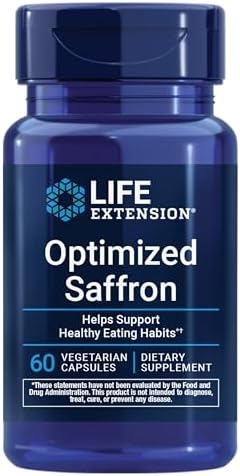
Life Extension Optimized Saffron (Satiereal)
The trial-matched pick. Satiereal is the patented standardized extract used in several mood and menopause-adjacent RCTs at the 88.5mg dose.
- Premium per-serving cost
- Two capsules per serving
- Moderate review base (834)
Affiliate link: If you buy through this link, we may earn a commission at no extra cost to you.
Buy Life Extension Optimized Saffron (Satiereal)
Pure Micronutrients Saffron Extract
The best-value single-ingredient pick. Largest review base of any standalone saffron product but lower extract transparency.
- Label does not specify Satiereal or affron extract
- mg dose not transparent
- Harder to translate to trial doses
Affiliate link: If you buy through this link, we may earn a commission at no extra cost to you.
Buy Pure Micronutrients Saffron Extract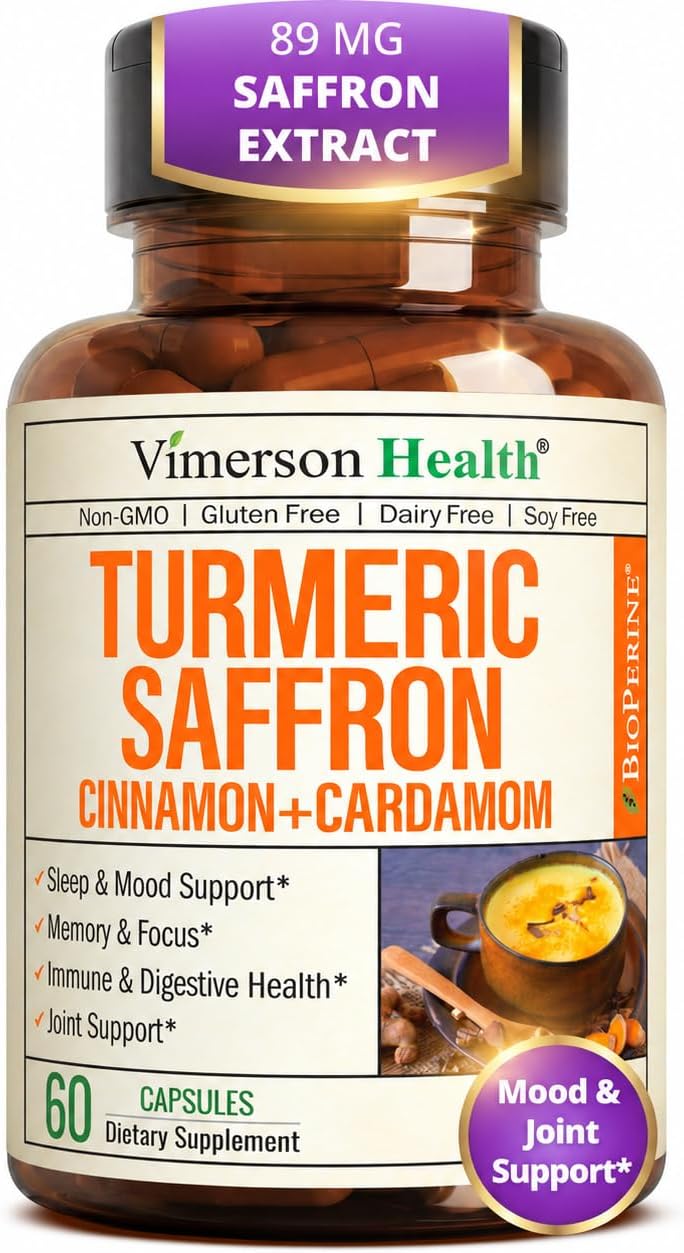
Vimerson Health Saffron with Turmeric Curcumin
The combination pick. 89mg saffron near the trial dose with adjunct turmeric and cinnamon for an anti-inflammatory layer.
- Combination product — saffron-specific contribution harder to isolate
- No third-party certification listed
- Saffron-extract type not specified
Affiliate link: If you buy through this link, we may earn a commission at no extra cost to you.
Buy Vimerson Health Saffron with Turmeric CurcuminCompare supplements with the same checklist we use.
Get the anti-aging supplement cheat sheet with evidence prompts, safety checks, and label-quality questions before you buy.
Comparison Table
| Category | #1 Life Extension Optimized Saffron (Satiereal) Life Extension | #2 Pure Micronutrients Saffron Extract Pure Micronutrients | #3 Vimerson Health Saffron with Turmeric Curcumin Vimerson Health |
|---|---|---|---|
| Score | 8.7/10 | 7.8/10 | 7.5/10 |
| Best For | Women who prioritize matching the published Satiereal extract exactly | Cost-conscious women trialling saffron who accept lower extract transparency | Women who want a combination format from a high-review-base brand |
| Pros |
|
|
|
| Cons |
|
|
|
What to Know About Saffron for Menopause Mood
Perimenopausal mood symptoms rarely show up as a clean clinical depression. The pattern many women between 42 and 55 describe is messier: irritability that doesn't track with anything specific, low-grade weepiness in the late afternoon, a sense that the bandwidth for tolerating small frustrations is thinner than it used to be, and a hormonal substrate that shifts the floor under everything. SSRIs are an option but many women want to try an evidence-informed botanical first. Saffron (Crocus sativus) has the most consistent recent RCT base for mood among the botanicals — and uniquely for this page, one of the only trials specifically enrolling postmenopausal women is a saffron trial. Kashani et al. (2018, PMID 29332222) tested Crocus sativus stigma extract in postmenopausal women with major depressive disorder associated with hot flashes and reported significant improvement on depression measures over six weeks compared to placebo. That's the single highest-relevance trial for the audience this page serves. This page ranks three saffron products — Life Extension Optimized Saffron (Satiereal), Pure Micronutrients, and Vimerson Health — for women in the broader peri-mood window. Research suggests saffron may support mood over 6-12 weeks of consistent use at the studied doses. No product on this page is a treatment for perimenopause, major depressive disorder, or any specific disease; that distinction matters and we'll be precise about it throughout.
This content is for educational purposes only and is not medical advice. These statements have not been evaluated by the FDA. This product is not intended to diagnose, treat, cure, or prevent any disease.
Key Benefits of Saffron for Menopause Mood
Research suggests saffron may improve depressive symptoms in postmenopausal women with hot-flash-associated depression over six weeks — based on Kashani 2018 (PMID 29332222), the only saffron RCT specifically in postmenopausal women
May act via monoaminergic (serotonin, dopamine) and antioxidant pathways rather than estrogen-receptor activation — relevant for women with hormone-sensitive cancer history who want non-phytoestrogenic options
Generally well-tolerated in published trials at 28-30mg/day affron or 88.5mg/day Satiereal; most reported side effects are mild (GI upset, headache, drowsiness) and reversible on discontinuation
How Saffron Supports Menopause Mood
Saffron stigma extract contains crocins (carotenoid glycosides), safranal (the principal volatile aromatic), picrocrocin, and a broader spectrum of phenolic compounds. The mechanistic consensus frames saffron as a monoaminergic modulator — preclinical and clinical work points to effects on serotonin reuptake (mild SSRI-like activity), dopaminergic signaling, and a substantial antioxidant component (crocin scavenges free radicals at the synaptic level). The clinical translation is consistent: saffron tends to lift low mood and irritability through pathways that overlap with SSRIs without producing SSRI-style sexual side effects in the published trial record. This distinction matters for the peri-mood cluster specifically. Saffron does not appear to bind estrogen receptors in clinically meaningful ways, which means the hormone-sensitive cancer interaction question is mechanistically different from black cohosh or phytoestrogen-rich botanicals. The Kashani 2018 trial specifically chose saffron for postmenopausal women in part because of this non-estrogenic mechanism.
What to Look For When Buying Saffron
The most important decision in saffron shopping is not which brand you buy — it's whether the label specifies a named, standardized extract (affron or Satiereal) at a trial dose. Every credible mood RCT in this category used affron 28-30mg/day or Satiereal at the 88.5mg/day stigma-extract dose. "Saffron extract" with no further detail is the canonical red flag — it could mean anything from full-spectrum stigma to a low-crocin powder, and dose translation breaks down. Extract type matters more than mg alone. Affron at 28mg and Satiereal at 88.5mg are not directly equivalent — they are different patented extracts with different crocin/safranal standardizations. The Lopresti 2017 trial (PMID 27723543) used affron 30mg/day; the Kashani 2018 trial (PMID 29332222) used Crocus sativus stigma at lower mg with standardization. If the label doesn't tell you which extract you're buying, it can't tell you what dose you're translating from. Duration matters. Every credible RCT used at least 6 weeks. The Kashani 2018 trial assessed at 6 weeks. The Lopresti 2017 trial ran 12. Plan for a 6-week minimum and use a daily mood diary (mood 0-3, irritability 0-3, weepiness 0-3) to make assessment honest. Think about the stack, not the single bottle. For peri-mood specifically, saffron works alongside — not instead of — the basics: regular exercise (the single most evidence-backed mood intervention), magnesium glycinate, sleep regularization, and addressing thyroid and iron status. Many women find correcting a missing basic (ferritin under 50, vitamin D under 30, TSH out of range) does more for mood than any single botanical. Food-first note: supplementing saffron does not replace addressing thyroid, iron, or vitamin D deficiencies that often co-present with perimenopausal mood symptoms. Get the basic labs (CBC, ferritin, TSH, free T4, vitamin D, B12) before assuming a botanical is the answer.
Dosage Guidance
Always follow your healthcare provider's recommendations. Dosages vary by individual health status, age, and goals.
Common Saffron Complaints (And How to Avoid Them)
Based on analysis of thousands of customer reviews across Saffron products.
"I've taken saffron for 3 weeks and nothing's changed"
Three weeks is below the minimum useful trial duration. Every credible RCT used at least 6 weeks. Hold the dose, keep a daily mood diary, and reassess at 6 weeks.
"Life Extension is almost twice the price of Pure Micronutrients — is it worth it?"
Only if matching the trial-validated Satiereal extract specifically matters to you. For women on a 6-week trial who want the closest dose match to published RCTs, Life Extension is the defensible choice. For cost-conscious women who accept lower extract transparency, Pure Micronutrients is a reasonable starting trial.
"I felt mildly drowsy after the evening dose"
Mild drowsiness is a known side effect at higher doses. Move both doses to morning (or split morning and early afternoon) rather than evening, or drop to a single morning dose to test tolerability.
Safety & Interactions
- Pregnancy and breastfeeding: Consult your healthcare provider before taking this supplement during pregnancy or while nursing. The safety of supplemental doses beyond dietary intake has not been established in pregnant or lactating women.
- Blood thinners: If you take blood-thinning medications (e.g., warfarin, apixaban, rivaroxaban, clopidogrel, or high-dose aspirin), consult your healthcare provider BEFORE starting this supplement, as it may have additive antiplatelet or anticoagulant effects.
- Kidney disease: If you have chronic kidney disease (CKD) or any significant kidney impairment, consult your healthcare provider before taking this supplement. Some supplements can accumulate to dangerous levels when kidney function is reduced.
- Gout: Individuals with gout should consult their healthcare provider before starting this supplement. Certain supplements (e.g., collagen, fish oil, niacin) may affect uric acid levels or trigger flares in susceptible individuals.
- Important: This supplement is not a replacement for prescription medications. It is supportive for individuals with low baseline status, not a treatment for diagnosed conditions (anxiety disorders, insomnia, hypertension, osteoporosis, etc.). Do not stop or reduce any prescription without consulting your doctor.
""What I'd emphasize for women in this window: saffron has uniquely targeted evidence for the peri-mood phenotype — the Kashani 2018 trial is the only saffron RCT specifically enrolling postmenopausal women with mood symptoms. The non-estrogenic mechanism makes saffron a defensible option for women cautious about phytoestrogens. But the effect size is modest, the trials are 6-12 weeks, and extract-dose translation matters: affron 30mg and Satiereal 88.5mg are different products with different standardizations. Layer saffron on top of corrected basics (exercise, sleep, magnesium, thyroid and iron labs checked) and a clinician conversation if symptoms are moderate to severe."
— Angelique Nicole R. Villegas, RND, Registered Nutritionist Dietitian · PRC Philippines · License #0023950
Frequently Asked Questions
Citations & Research
This page references peer-reviewed research indexed on PubMed/NCBI. Citations are provided for transparency. Always consult a qualified healthcare professional before making any medical decisions.
- [1]Kashani L, Esalatmanesh S, Eftekhari F et al. “Efficacy of Crocus sativus (saffron) in treatment of major depressive disorder associated with post-menopausal hot flashes: a double-blind, randomized clinical trial.” Archives of Gynecology and Obstetrics, 2018. 60. doi:10.1007/s00404-017-4644-xPMID 29332222 ↗
- [2]Marx W, Lane M, Rocks T et al. “Effect of saffron supplementation on symptoms of depression and anxiety: a systematic review and meta-analysis.” Nutrition Reviews, 2019. doi:10.1093/nutrit/nuz023PMID 31135916 ↗
- [3]Akhondzadeh S, Tahmacebi-Pour N, Noorbala AA et al. “Crocus sativus L. in the treatment of mild to moderate depression: a double-blind, randomized and placebo-controlled trial.” Phytotherapy Research, 2005. 40. doi:10.1002/ptr.1647PMID 15852492 ↗
- [4]Lopresti AL, Drummond PD. “Efficacy of curcumin, and a saffron/curcumin combination for the treatment of major depression: a randomised, double-blind, placebo-controlled study.” Journal of Affective Disorders, 2017. 123. doi:10.1016/j.jad.2016.09.043PMID 27723543 ↗
Ready to Try Saffron?
Our top pick for menopause mood. Third-party tested, highly reviewed.
Affiliate link: If you buy through this link, we may earn a commission at no extra cost to you.
Shop #1 Pick — Life Extension Optimized Saffron (Satiereal)Continue exploring
- everything we know about SaffronSupplement overview
- top-rated menopause mood support supplementsGoal overview
- Saffron fit for mood supportSame supplement, different goal
- see our Black Cohosh picks for perimenopause supportEditor pick
- Ashwagandha options for perimenopause supportEditor pick
- evidence notes on Maca for perimenopause supportEditor pick
Get the evidence-graded supplement cheat sheet.
Evidence prompts, safety checks, and label-quality questions before you buy — free, straight to your inbox.
No spam. Unsubscribe anytime.