
Best Rhodiola Rosea Supplements for Stress in 2026
Rhodiola is the best-studied adaptogen for acute stress periods. We cover the SHR-5 extract standard, rosavin vs salidroside quality markers, and cycle timing.

This content is for educational purposes only and is not medical advice. These statements have not been evaluated by the FDA. This product is not intended to diagnose, treat, cure, or prevent any disease. Always consult your healthcare provider before starting any supplement.
Best Rhodiola Rosea for Stress in 2026
Ranked by quality, value, and clinical backing
Where available, we show when each product price was last checked so the list stays honest without overreacting to normal Amazon price movement.

NOW Supplements Rhodiola 500mg Helps Body Adapt to Stress of Daily Life Adaptogenic Herb, 60 Veg Capsules
NOW Supplements Rhodiola 500mg Helps Body Adapt to Stress of Daily Life Adaptogenic Herb, 60 Veg Capsules. 4.4★ (7,200 ratings). Confirmed in stock.
- Amazon price and availability can change over time
Affiliate link: If you buy through this link, we may earn a commission at no extra cost to you.
Buy NOW Supplements Rhodiola 500mg Helps Body Adapt to Stress of Daily Life Adaptogenic Herb, 60 Veg Capsules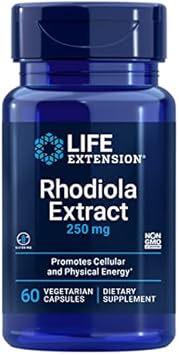
Life Extension Rhodiola Extract
Life Extension Rhodiola Extract. 4.4★ (1,400 ratings). Confirmed in stock.
- Amazon price and availability can change over time
Affiliate link: If you buy through this link, we may earn a commission at no extra cost to you.
Buy Life Extension Rhodiola Extract
Gaia Herbs Rhodiola Rosea
Gaia Herbs Rhodiola Rosea. Confirmed in stock.
- Amazon price and availability can change over time
Affiliate link: If you buy through this link, we may earn a commission at no extra cost to you.
Buy Gaia Herbs Rhodiola Rosea
Rhodiola Rosea by Nootropics Depot (SHR-5 equivalent)
Rhodiola Rosea by Nootropics Depot (SHR-5 equivalent). Confirmed in stock.
- Amazon price and availability can change over time
Affiliate link: If you buy through this link, we may earn a commission at no extra cost to you.
Buy Rhodiola Rosea by Nootropics Depot (SHR-5 equivalent)Compare supplements with the same checklist we use.
Get the anti-aging supplement cheat sheet with evidence prompts, safety checks, and label-quality questions before you buy.
Comparison Table
| Category | #1 NOW Supplements Rhodiola 500mg Helps Body Adapt to Stress of Daily Life Adaptogenic Herb, 60 Veg Capsules NOW Foods | #2 Life Extension Rhodiola Extract Life Extension | #3 Gaia Herbs Rhodiola Rosea Gaia Herbs | #4 Rhodiola Rosea by Nootropics Depot (SHR-5 equivalent) Nootropics Depot |
|---|---|---|---|---|
| Score | 8.4/10 | 8.4/10 | 8.8/10 | 8.8/10 |
| Best For | ||||
| Pros |
|
| ||
| Cons |
|
|
|
|
What to Know About Rhodiola Rosea for Stress
Rhodiola rosea is the most clinically studied adaptogen for the specific challenge of acute, time-limited stress — periods of peak demand where cognitive performance, energy, and stress resilience are simultaneously taxed. Its mechanism and onset profile distinguish it from ashwagandha (which works over weeks to months by reducing baseline cortisol and HPA axis reactivity) and ginseng (which provides general energy support). Rhodiola produces measurable anti-fatigue and cognitive effects within days of supplementation, making it the adaptogen of choice for situational high-demand periods. The foundational clinical study is Spasov et al. 2000 (Phytomedicine, PMID 10839209), published in a BMJ-family journal, which randomized medical students during exam period to Rhodiola SHR-5 extract (170mg/day) or placebo for 20 days. The Rhodiola group showed 20% less stress-fatigue, significantly better mental performance (proofreading speed and accuracy), and improved sleep quality compared to placebo — with no adverse effects. The study population — students under documented acute cognitive stress — and the outcome measures are directly applicable to the most common real-world use case. Rhodiola's active compounds divide into two distinct classes: rosavins (rosavin, rosin, rosarin — cinnamyl glycosides found primarily in Rhodiola rosea) and salidroside (also called tyrosol glucoside — found in Rhodiola species and other plants). Quality clinical studies and the SHR-5 extract standard used in most trials specify both: approximately 3% rosavins and 1% salidroside. Products that standardize to only one of these markers — or that use a vague 'standardized to rosavins' without specifying both — may have imbalanced active compound profiles. A less-known but practically important consideration: rhodiola appears to be most effective in time-limited cycles rather than indefinite daily use. Animal studies and practitioner experience suggest that adaptogenic effects plateau and may diminish with very long continuous use. A 4-8 week cycle followed by a 2-4 week break is a commonly used protocol, though direct controlled data comparing continuous vs cycled use in humans is limited.
This content is for educational purposes only and is not medical advice. These statements have not been evaluated by the FDA. This product is not intended to diagnose, treat, cure, or prevent any disease.
Key Benefits of Rhodiola Rosea for Stress
Rhodiola SHR-5 extract (170mg/day) reduced stress-induced fatigue by 20% and significantly improved mental performance in medical students during exam period in the Spasov 2000 RCT (PMID 10839209) — with effects measurable within the 20-day trial window
Single-dose efficacy demonstrated in the Shevtsov 2003 military trial (n=161) — Rhodiola produces acute anti-fatigue and cognitive performance benefits that distinguish it from adaptogens requiring weeks of loading
Evidence base spans acute (single-dose), short-term (20 days), and medium-term (4 weeks) use in populations with documented stress loads, providing practical guidance for different demand-period lengths
How Rhodiola Rosea Supports Stress
Rhodiola's adaptogenic mechanisms are multi-targeted and work across the HPA axis, monoamine neurotransmitter systems, and cellular stress-response pathways. **Cortisol and HPA axis.** Rhodiola has been shown to modulate the HPA (hypothalamic-pituitary-adrenal) axis response to acute stress — reducing the cortisol spike triggered by stressors without completely suppressing the cortisol response (which would be counterproductive). The mechanism involves Rhodiola's effects on cyclic AMP (cAMP) signaling in adrenal cells, inhibiting the catechol-O-methyltransferase (COMT) enzyme that degrades stress-signaling monoamines, and reducing the excessive cortisol release that converts adaptive stress response into harmful allostatic load. **Monoamine neurotransmitter protection.** Salidroside and rosavins inhibit monoamine oxidase (MAO) enzymes — the enzymes that break down dopamine, serotonin, and norepinephrine. During acute stress, rapid monoamine depletion contributes to the cognitive fatigue and motivational decline associated with prolonged stress exposure. Rhodiola's MAO inhibition at physiological concentrations may preserve monoamine levels under stress conditions, maintaining cognitive performance and mood stability. **Cellular stress protection (HSP70 upregulation).** Rhodiola upregulates heat shock proteins (particularly HSP70) — cellular chaperone proteins that protect the structural integrity of other proteins under stress conditions. This cellular-level stress adaptation is a distinctive adaptogenic mechanism: it allows cells (including neurons) to maintain normal function despite being under chemical or physiological stress, rather than simply blunting the stress response at the hormonal level. **Adenosine triphosphate (ATP) synthesis.** Animal and in vitro studies suggest that rhodiola, particularly salidroside, stimulates mitochondrial ATP synthesis. Fatigue under stress conditions is partly bioenergetic — neural and muscular cells deplete ATP faster than they can synthesize it under high-demand conditions. Rhodiola's potential to support mitochondrial ATP production may underlie the anti-fatigue effects observed in clinical studies. **Serotonin 5-HT1a receptor upregulation.** Rosavins have been shown to upregulate hippocampal 5-HT1a serotonin receptors, which are associated with stress resilience and the anti-anxiety effects of serotonin signaling. This may contribute to the improved mood and reduced anxiety secondary to Rhodiola's primary anti-fatigue mechanism. **Why cycles rather than indefinite use.** The adaptive responses (HSP70 upregulation, receptor sensitivity changes) may reach saturation after 4-8 weeks of continuous use, after which the magnitude of effect may diminish. A cycle-break allows receptor sensitivity to normalize before the next high-demand period. This is a practitioner consensus recommendation rather than a rigorously established finding from comparative trials — but it is consistent with the adaptogen concept (supporting stress adaptation rather than chronically suppressing stress responses).
What to Look For When Buying Rhodiola Rosea
Buying Rhodiola well requires understanding the two active compound classes that define quality — and why many popular products fail to disclose both. **The dual biomarker requirement.** Quality Rhodiola supplements should state two biomarkers: rosavins (typically 3%) and salidroside (typically 1%). These two compound classes come from different biosynthetic pathways and have different mechanisms. Rosavins are cinnamyl glycosides found almost exclusively in Rhodiola rosea (not in other Rhodiola species) and are the class most associated with the adaptogenic effects studied in clinical trials. Salidroside (tyrosol glucoside) is more widely found in the Rhodiola genus and has independently characterized anti-fatigue, neuroprotective, and antioxidant effects. Products that state only rosavin standardization have incomplete quality disclosure; products that state neither are unusable for clinical dose verification. **The SHR-5 extract standard.** Several trials (including Spasov 2000) used the SHR-5 extract — a specific Rhodiola rosea root extract standardized to 3% rosavins and 1% salidroside. Some products specifically label their extract as SHR-5 or SHR-5 equivalent, providing a direct connection to the trial evidence base. This is the quality benchmark to compare against. **Root vs aerial parts.** Rhodiola rosea root contains substantially higher rosavin and salidroside concentrations than aerial (above-ground) plant parts. Quality products use root extract exclusively. Check that the label specifies 'root' rather than generic 'plant extract.' **Dosing guidance for different stress situations.** The Spasov 2000 exam-period trial used 170mg/day SHR-5 extract (approximately 5mg rosavins). The Shevtsov 2003 acute-dosing military trial used 370-555mg. The Darbinyan burnout trial used 576mg/day. For acute high-demand periods (1-4 weeks), 200-400mg/day of standardized extract is a practical starting range. For more significant burnout scenarios, 400-600mg/day may be more appropriate. **Cycling.** Consider using Rhodiola for 4-8 weeks during high-demand periods and taking 2-4 week breaks between cycles. This is not a hard protocol rule but aligns with adaptogen cycling principles and anecdotal practitioner experience.
Dosage Guidance
Always follow your healthcare provider's recommendations. Dosages vary by individual health status, age, and goals.
Common Rhodiola Rosea Complaints (And How to Avoid Them)
Based on analysis of thousands of customer reviews across Rhodiola Rosea products.
""Rhodiola makes me anxious or jittery""
This is a recognized response in a minority of users and reflects Rhodiola's mild stimulating character — it is the most common adverse effect reported in clinical trials (though reported in only a small percentage of participants). Two approaches help: (1) reduce the dose — start at 170-250mg/day and only increase if well-tolerated; (2) take it earlier in the day (with breakfast) to give the stimulating effect time to dissipate before evening. If jitteriness persists at the lower dose, Rhodiola may simply not be the right adaptogen for your physiology — ashwagandha, which is calming rather than stimulating, is a better-tolerated alternative for anxiety-prone individuals.
""I can't find a Rhodiola that says both rosavins and salidroside on the label""
This is a real quality issue in the Rhodiola market. Many products state only rosavin standardization ('3% rosavins') without specifying salidroside. A smaller number of products state both (Gaia Herbs and NOW Foods on this list both do). When a product states only rosavins, it may still contain appropriate salidroside levels — but you cannot verify this from the label. As a practical guide: products from established botanical brands that specifically reference the SHR-5 extract standard or list both markers are the most trustworthy. Avoid products that only say 'standardized extract' without any percentage.
Safety & Interactions
- Pregnancy and breastfeeding: Consult your healthcare provider before taking this supplement during pregnancy or while nursing. The safety of supplemental doses beyond dietary intake has not been established in pregnant or lactating women.
- Blood thinners: If you take blood-thinning medications (e.g., warfarin, apixaban, rivaroxaban, clopidogrel, or high-dose aspirin), consult your healthcare provider BEFORE starting this supplement, as it may have additive antiplatelet or anticoagulant effects.
- Kidney disease: If you have chronic kidney disease (CKD) or any significant kidney impairment, consult your healthcare provider before taking this supplement. Some supplements can accumulate to dangerous levels when kidney function is reduced.
- Gout: Individuals with gout should consult their healthcare provider before starting this supplement. Certain supplements (e.g., collagen, fish oil, niacin) may affect uric acid levels or trigger flares in susceptible individuals.
- Fish allergy - capsule source: Some softgel capsules use fish-derived gelatin even when the active supplement is not fish-derived. If you have a confirmed fish or shellfish allergy, verify the capsule source on the label or check with the manufacturer. Vegan capsules (vegetable cellulose) are widely available alternatives.
- Beef / alpha-gal allergy - capsule source: Many softgel and two-piece capsules use bovine gelatin. If you have a confirmed beef allergy or alpha-gal syndrome (mammalian meat allergy), check capsule sources on the label. Vegan capsules (vegetable cellulose) and HPMC capsules are alternatives.
""Rhodiola rosea fills a specific and underserved niche in the adaptogen category: the fast-acting, situationally appropriate tool for acute and time-limited stress periods. Its clinical evidence — from the Spasov 2000 exam-period trial to the Shevtsov single-dose military study — directly addresses the real-world use case of maintaining cognitive performance under documented acute stress. The quality variable that matters most is dual-biomarker standardization: products stating both 3% rosavins and 1% salidroside provide the highest confidence in active compound content and the closest match to the SHR-5 clinical standard. Gaia Herbs and NOW Foods both meet this standard on this list. Cycled use (4-8 weeks on, 2-4 weeks off) is the practical protocol recommendation for adults who face periodic high-demand periods rather than continuous chronic stress."
— Angelique Nicole R. Villegas, RND, Registered Nutritionist Dietitian · PRC Philippines · License #0023950
Frequently Asked Questions
Citations & Research
This page references peer-reviewed research indexed on PubMed/NCBI. Citations are provided for transparency. Always consult a qualified healthcare professional before making any medical decisions.
- [1]Spasov AA, Wikman GK, Mandrikov VB, Mironova IA, Neumoin VV. A double-blind, placebo-controlled pilot study of the stimulating and adaptogenic effect of Rhodiola rosea SHR-5 extract on the fatigue of students caused by stress during an examination period with a repeated low-dose regimen. Phytomedicine. 2000;7(2):85-89.PMID 10839209 ↗
- [2]Shevtsov VA, Zholus BI, Shervarly VI, Vol'skij VB, Korovin YP, Khristich MP, Roslyakova NA, Wikman G. A randomized trial of two different doses of a SHR-5 Rhodiola rosea extract versus placebo and control of capacity for mental work. Phytomedicine. 2003;10(2-3):95-105.PMID 12725561 ↗
- [3]Darbinyan V, Aslanyan G, Amroyan E, Gabrielyan E, Malmström C, Panossian A. Clinical trial of Rhodiola rosea L. extract SHR-5 in the treatment of mild to moderate depression. Nord J Psychiatry. 2007;61(5):343-348.PMID 17990195 ↗
Ready to Try Rhodiola Rosea?
Our top pick for stress. Third-party tested, highly reviewed.
Affiliate link: If you buy through this link, we may earn a commission at no extra cost to you.
Shop #1 Pick — NOW Supplements Rhodiola 500mg Helps Body Adapt to Stress of Daily Life Adaptogenic Herb, 60 Veg CapsulesContinue exploring
- Rhodiola Rosea — our editorial overviewSupplement overview
- our stress support supplement guideGoal overview
- Ashwagandha reviewed for stress supportAlternative supplement
- B Complex evidence for stress supportAlternative supplement
- the Rhodiola Rosea page for burnout supportSame supplement, different goal
- L Theanine evidence for sleepEditor pick
- ashwagandha vs rhodiola: our verdictCompare options
Get the evidence-graded supplement cheat sheet.
Evidence prompts, safety checks, and label-quality questions before you buy — free, straight to your inbox.
No spam. Unsubscribe anytime.