
Best Rhodiola Rosea Supplements for Stress Resilience in 2026
Rhodiola rosea SHR-5 extract reduces mental fatigue and cortisol via a mechanism distinct from ashwagandha. RCT evidence, burnout in adults 45+, dosing guide

This content is for educational purposes only and is not medical advice. These statements have not been evaluated by the FDA. This product is not intended to diagnose, treat, cure, or prevent any disease. Always consult your healthcare provider before starting any supplement.
Best Rhodiola Rosea for Stress Resilience in 2026
Ranked by quality, value, and clinical backing
Where available, we show when each product price was last checked so the list stays honest without overreacting to normal Amazon price movement.

Rhodiola Rosea by Nootropics Depot (SHR-5 equivalent)
Adults who want the SHR-5-equivalent standardization ratio used in clinical burnout and fatigue RCTs
- Nootropics Depot is primarily a direct-to-consumer brand; less mainstream recognition than Gaia or NOW Foods
- Some users report mild stimulating effects; not ideal for evening dosing
Affiliate link: If you buy through this link, we may earn a commission at no extra cost to you.
Buy Rhodiola Rosea by Nootropics Depot (SHR-5 equivalent)
Gaia Herbs Rhodiola Rosea
Adults who prefer a whole-spectrum premium herbal extract with verified supply-chain transparency
- Phytosome format makes direct rosavin/salidroside content comparison to SHR-5 difficult
- Premium pricing; higher per-serving cost than standardized extract options
Affiliate link: If you buy through this link, we may earn a commission at no extra cost to you.
Buy Gaia Herbs Rhodiola Rosea
NOW Foods Rhodiola Extract 500mg
Budget-conscious adults who want clinically relevant standardization at reliable quality without premium pricing
- GMP-certified but not NSF or USP third-party certified at this SKU
- Generic branding may feel less premium to users accustomed to specialized adaptogen brands
Affiliate link: If you buy through this link, we may earn a commission at no extra cost to you.
Buy NOW Foods Rhodiola Extract 500mg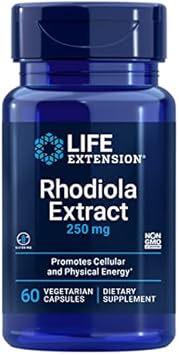
Life Extension Rhodiola Extract
Life Extension customers and longevity-focused adults who want to start conservatively with dose flexibility
- 250mg per capsule is below the 400-600mg dose range used in most RCTs; two capsules required for clinical dose
- Standardized to rosavins only (3%), not dual-standardized for salidroside
Affiliate link: If you buy through this link, we may earn a commission at no extra cost to you.
Buy Life Extension Rhodiola ExtractCompare supplements with the same checklist we use.
Get the anti-aging supplement cheat sheet with evidence prompts, safety checks, and label-quality questions before you buy.
Comparison Table
| Category | #1 Rhodiola Rosea by Nootropics Depot (SHR-5 equivalent) Nootropics Depot | #2 Gaia Herbs Rhodiola Rosea Gaia Herbs | #3 NOW Foods Rhodiola Extract 500mg NOW Foods | #4 Life Extension Rhodiola Extract Life Extension |
|---|---|---|---|---|
| Score | 9.2/10 | 8.9/10 | 8.5/10 | 8.2/10 |
| Best For | Adults who want the SHR-5-equivalent standardization ratio used in clinical burnout and fatigue RCTs | Adults who prefer a whole-spectrum premium herbal extract with verified supply-chain transparency | Budget-conscious adults who want clinically relevant standardization at reliable quality without premium pricing | Life Extension customers and longevity-focused adults who want to start conservatively with dose flexibility |
| Pros |
|
|
|
|
| Cons |
|
|
|
|
What to Know About Rhodiola Rosea for Stress Resilience
Rhodiola rosea is an adaptogenic herb from the high-altitude regions of Russia, Scandinavia, and the Arctic — used in traditional medicine for over a thousand years for stamina, stress tolerance, and mental fatigue. Of all the adaptogens, rhodiola has some of the most methodologically rigorous human RCT evidence, largely because the pivotal trials used a single standardized extract (SHR-5) with defined rosavin and salidroside content, making the results reproducible and the mechanism traceable. The mechanism is distinct from ashwagandha — a distinction that matters for choosing the right adaptogen. Ashwagandha's primary mechanism is HPA axis modulation: it reduces cortisol through sustained downregulation of the cortisol response over weeks. Rhodiola acts primarily on the sympatho-adrenal system: it modulates catecholamine release (adrenaline, noradrenaline) in response to acute stress and appears to support mental performance under cognitive load by preserving neurotransmitter availability (serotonin, dopamine, norepinephrine) under stressor conditions. Rhodiola also exhibits neuroprotective effects through monoamine oxidase inhibition, which may explain its benefit in cognitive fatigue rather than just physiological stress. The clinical evidence specifically examines burnout, mental fatigue, and performance under stress — not general anxiety or HPA axis cortisol reduction as ashwagandha studies do. This makes rhodiola the preferred choice for adults experiencing the cognitive fatigue of overwork, career demands, and sustained mental load — which maps well to the 45-65 demographic facing peak professional responsibilities alongside age-related physiological changes. For this population, the interaction of burnout with perimenopause (in women), andropause (in men), and general age-related HPA axis dysregulation creates a distinct stress-resilience profile that ashwagandha and rhodiola address differently — and why both supplements remain in the evidence conversation rather than one replacing the other.
This content is for educational purposes only and is not medical advice. These statements have not been evaluated by the FDA. This product is not intended to diagnose, treat, cure, or prevent any disease.
Key Benefits of Rhodiola Rosea for Stress Resilience
Rhodiola Rosea is among the most studied supplements for supporting stress resilience.
Multiple human clinical trials have evaluated Rhodiola Rosea's safety and efficacy at common doses.
Rhodiola Rosea may be particularly relevant for adults over 45 seeking evidence-based support for stress resilience.
How Rhodiola Rosea Supports Stress Resilience
Rhodiola rosea acts as an adaptogen — modulating the body's stress response systems rather than simply suppressing or stimulating them. Its active compounds (rosavins and salidroside) influence the hypothalamic-pituitary-adrenal (HPA) axis by inhibiting excess cortisol secretion while preserving appropriate stress responses. Rhodiola also inhibits the enzyme monoamine oxidase (MAO), which degrades serotonin, dopamine, and norepinephrine — explaining its mood-elevating and fatigue-reducing effects. These combined actions help the body maintain homeostasis under physical and psychological stress.
What to Look For When Buying Rhodiola Rosea
Products were selected based on: (1) standardization to 3% rosavins and 1% salidroside — the biomarker ratio of the SHR-5 extract used in clinical burnout and fatigue RCTs; (2) dose per serving — targeting 300-600mg standardized extract, the clinical range; (3) brand quality, manufacturing standards, and third-party testing; (4) price and value per dose. Non-standardized rhodiola powders and products standardized only to rosavins without salidroside were deprioritized.
Dosage Guidance
Always follow your healthcare provider's recommendations. Dosages vary by individual health status, age, and goals.
Common Rhodiola Rosea Complaints (And How to Avoid Them)
Based on analysis of thousands of customer reviews across Rhodiola Rosea products.
"Should I take rhodiola or ashwagandha for stress?"
They address different stress mechanisms and are often compared but serve different primary uses. Ashwagandha works primarily on the HPA axis: it reduces chronically elevated cortisol, improves sleep, and addresses anxiety over 4-8 weeks. Rhodiola works primarily on the sympatho-adrenal system and monoamine availability: it reduces cognitive fatigue under acute stress loads and may show benefit faster (within days to 2 weeks). Choose ashwagandha if your primary symptoms are anxiety, poor sleep, and high perceived stress. Choose rhodiola if your primary symptoms are cognitive fatigue, brain fog, impaired concentration under work demands, and burnout-like depletion. Both are reasonable to cycle: rhodiola during high-demand periods, ashwagandha for sustained HPA axis support.
"Rhodiola keeps me up at night."
This is a known effect. Rhodiola has mild stimulating properties through its monoamine oxidase inhibition and catecholamine modulation. Taking it in the morning or early afternoon (before 1-2pm) rather than at midday or evening resolves this for most users. If morning dosing still interferes with sleep, reduce to the lower dose range (340mg) or consider whether rhodiola's stimulating profile is a poor fit for your neurochemistry — ashwagandha has a more sedating profile and may be more compatible.
"What does 'standardized to 3% rosavins, 1% salidroside' mean?"
Rosavins and salidroside are the two primary bioactive compound groups in rhodiola. Rosavins (rosavin, rosarin, rosin) are specific to Rhodiola rosea and help verify species identity; salidroside (also found in other plants) is associated with neuroprotective and anti-fatigue effects. The SHR-5 extract used in the pivotal burnout RCTs was standardized to 3% rosavins and 1% salidroside. This dual standardization ensures you are getting meaningful amounts of both bioactive groups. Products standardized only to rosavins without salidroside may be missing an important component of the clinical effect.
"How long does rhodiola take to work?"
Faster than most adaptogens. The Spasov 2000 RCT showed improvements in mental fatigue and performance within days of starting the lower-dose protocol. The Olsson burnout RCT showed measurable burnout score and cortisol ratio changes over 28 days. In practice, many users report acute anti-fatigue effects from the first dose, with cumulative stress-resilience benefits building over 2-4 weeks. This is meaningfully faster than ashwagandha's typical 4-8 week onset for cortisol normalization.
Safety & Interactions
- Pregnancy and breastfeeding: Consult your healthcare provider before taking this supplement during pregnancy or while nursing. The safety of supplemental doses beyond dietary intake has not been established in pregnant or lactating women.
- Blood thinners: If you take blood-thinning medications (e.g., warfarin, apixaban, rivaroxaban, clopidogrel, or high-dose aspirin), consult your healthcare provider BEFORE starting this supplement, as it may have additive antiplatelet or anticoagulant effects.
- Kidney disease: If you have chronic kidney disease (CKD) or any significant kidney impairment, consult your healthcare provider before taking this supplement. Some supplements can accumulate to dangerous levels when kidney function is reduced.
- Gout: Individuals with gout should consult their healthcare provider before starting this supplement. Certain supplements (e.g., collagen, fish oil, niacin) may affect uric acid levels or trigger flares in susceptible individuals.
- Fish allergy - capsule source: Some softgel capsules use fish-derived gelatin even when the active supplement is not fish-derived. If you have a confirmed fish or shellfish allergy, verify the capsule source on the label or check with the manufacturer. Vegan capsules (vegetable cellulose) are widely available alternatives.
- Beef / alpha-gal allergy - capsule source: Many softgel and two-piece capsules use bovine gelatin. If you have a confirmed beef allergy or alpha-gal syndrome (mammalian meat allergy), check capsule sources on the label. Vegan capsules (vegetable cellulose) and HPMC capsules are alternatives.
""The rhodiola versus ashwagandha comparison is one of the most useful distinctions to make for our 45-65 target audience. A significant share of adults in this demographic are experiencing what could be characterized as burnout — chronic cognitive fatigue, reduced motivation, impaired concentration under mental load — rather than generalized anxiety or sleep disruption. Ashwagandha addresses the HPA axis cortisol elevation that accompanies chronic stress; rhodiola addresses the cognitive fatigue and acute stress response through catecholamine modulation and monoamine oxidase inhibition. The practical rule: if the primary complaint is anxiety, sleep difficulty, and sustained elevated cortisol — ashwagandha is the first-line adaptogen. If the primary complaint is mental fatigue, impaired concentration under work load, and burnout-like cognitive depletion — rhodiola is more mechanistically targeted. Many adults will benefit from both over a cycling protocol. The SHR-5 standardization point is critical: most rhodiola products on the market are standardized only to rosavins (not salidroside), or are non-standardized entirely. The clinical evidence is specific to the 3% rosavins + 1% salidroside combination."
— Angelique Nicole R. Villegas, RND, Registered Nutritionist Dietitian · PRC Philippines · License #0023950
Frequently Asked Questions
Citations & Research
This page references peer-reviewed research indexed on PubMed/NCBI. Citations are provided for transparency. Always consult a qualified healthcare professional before making any medical decisions.
- [1]Spasov AA, Wikman GK, Mandrikov VB, Miroschnikova IA, Neumoin VV. A double-blind, placebo-controlled pilot study of the stimulating and adaptogenic effect of Rhodiola rosea SHR-5 extract on the fatigue of students caused by stress during an examination period with a repeated low-dose regimen. Phytomedicine. 2000;7(2):85-89.PMID 10839209 ↗
- [2]Olsson EM, von Scheele B, Panossian AG. A randomised, double-blind, placebo-controlled, parallel-group study of the standardised extract SHR-5 of the roots of Rhodiola rosea in the treatment of subjects with stress-related fatigue. Planta Med. 2009;75(2):105-112.PMID 19016404 ↗
- [3]Panossian A, Wikman G. Effects of adaptogens on the central nervous system and the molecular mechanisms associated with their stress-protective activity. Pharmaceuticals. 2010;3(1):188-224.PMID 27713248 ↗
Ready to Try Rhodiola Rosea?
Our top pick for stress resilience. Third-party tested, highly reviewed.
Affiliate link: If you buy through this link, we may earn a commission at no extra cost to you.
Shop #1 Pick — Rhodiola Rosea by Nootropics Depot (SHR-5 equivalent)Continue exploring
- Rhodiola Rosea — our editorial overviewSupplement overview
- what we recommend for stress resilienceGoal overview
- how we rate Holy Basil for stress resilienceAlternative supplement
- our Schisandra guide for stress resilienceAlternative supplement
- Rhodiola Rosea and burnout support: what to knowSame supplement, different goal
- Ashwagandha — an option to consider for stress supportEditor pick
- best Ashwagandha for hormonal balanceEditor pick
- Magnesium research for sleepEditor pick
- we tested ashwagandha against rhodiolaCompare options
Get the evidence-graded supplement cheat sheet.
Evidence prompts, safety checks, and label-quality questions before you buy — free, straight to your inbox.
No spam. Unsubscribe anytime.