
Psyllium for GLP-1 Constipation: Working With Slowed Gut Transit
Psyllium fiber for the delayed-gastric-emptying constipation that follows GLP-1 medications. Evidence-based picks with hydration caveats and YMYL safety notes.
This content is for educational purposes only and is not medical advice. These statements have not been evaluated by the FDA. This product is not intended to diagnose, treat, cure, or prevent any disease. Always consult your healthcare provider before starting any supplement.
Best Psyllium for GLP-1 Constipation Relief in 2026
Ranked by quality, value, and clinical backing
Where available, we show when each product price was last checked so the list stays honest without overreacting to normal Amazon price movement.
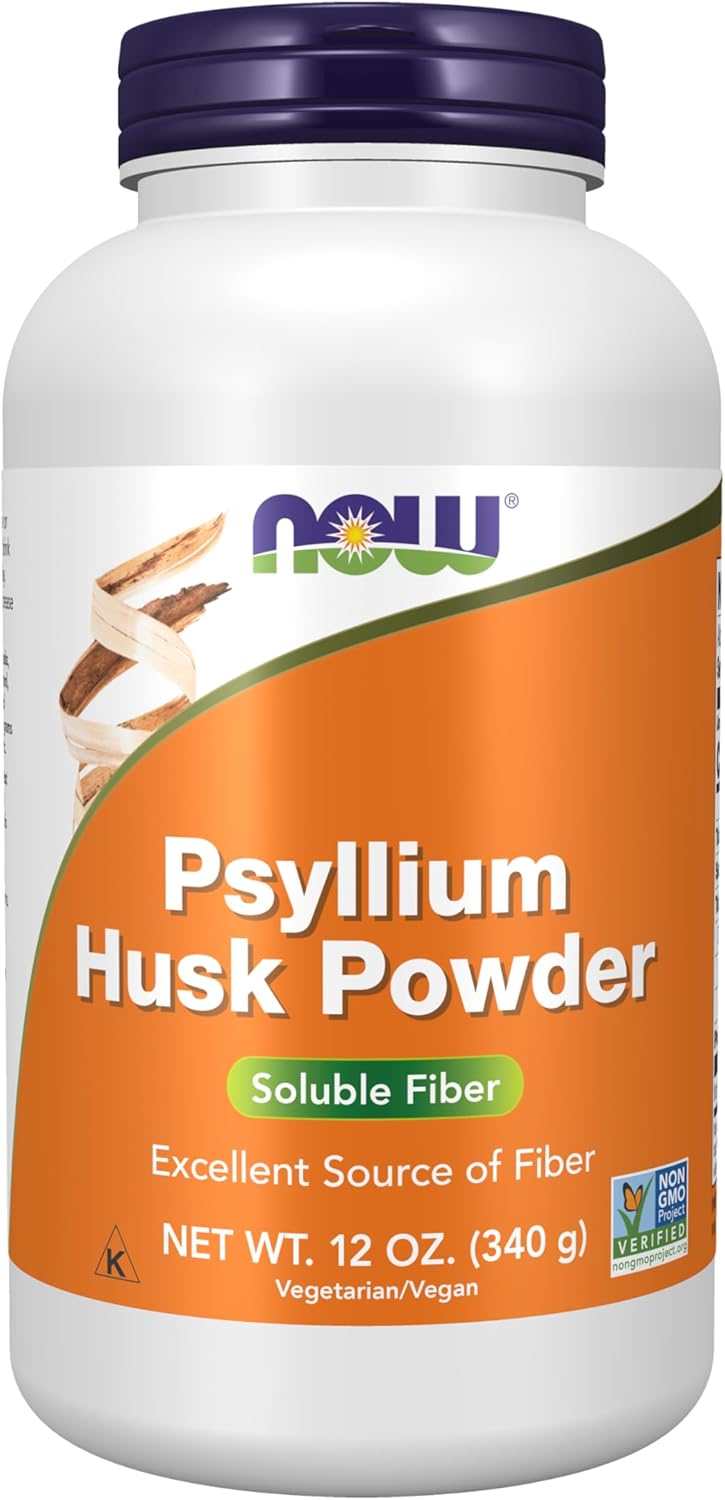
NOW Foods Psyllium Husk Powder 12oz
The best-value pick. Pure unflavored psyllium that lets you start at a tiny dose and titrate up slowly — the right approach for a GLP-1 gut.
- Powder must be mixed and consumed immediately
- Mild earthy taste in plain water
- Not third-party tested by an independent lab
Affiliate link: If you buy through this link, we may earn a commission at no extra cost to you.
Buy NOW Foods Psyllium Husk Powder 12oz
Konsyl Daily Psyllium Fiber Powder 19oz
The gastroenterologist default. Pure psyllium with the cleanest label in the category — if your GLP-1 prescriber suggested psyllium, this is probably what they meant.
- Higher per-serving cost than NOW Foods
- Mild earthy taste in plain water
- Lower review count than Metamucil
Affiliate link: If you buy through this link, we may earn a commission at no extra cost to you.
Buy Konsyl Daily Psyllium Fiber Powder 19oz
Metamucil 4-in-1 Psyllium Husk Sugar-Free 180 Dose
The adherence pick. Orange flavor format that's easier to take consistently when GLP-1 nausea makes unflavored fiber unappealing.
- Contains aspartame and artificial flavor
- Most expensive per ounce of actual fiber
- Less precise dose titration than pure powders
Affiliate link: If you buy through this link, we may earn a commission at no extra cost to you.
Buy Metamucil 4-in-1 Psyllium Husk Sugar-Free 180 DoseCompare supplements with the same checklist we use.
Get the anti-aging supplement cheat sheet with evidence prompts, safety checks, and label-quality questions before you buy.
Comparison Table
| Category | #1 NOW Foods Psyllium Husk Powder 12oz NOW Foods | #2 Konsyl Daily Psyllium Fiber Powder 19oz Konsyl | #3 Metamucil 4-in-1 Psyllium Husk Sugar-Free 180 Dose Metamucil |
|---|---|---|---|
| Score | 8.7/10 | 8.5/10 | 8.2/10 |
| Best For | GLP-1 users who want full dose control and a clean ingredient list | GLP-1 users whose physician suggested a pure-psyllium product | GLP-1 users with active nausea or who travel and need pre-portioned doses |
| Pros |
|
|
|
| Cons |
|
|
|
What to Know About Psyllium for GLP-1 Constipation Relief
Constipation is one of the most consistently reported gastrointestinal side effects of GLP-1 receptor agonists — semaglutide (Ozempic, Wegovy), liraglutide (Saxenda, Victoza), and tirzepatide (Mounjaro, Zepbound). The mechanism is not subtle: these medications directly slow gastric emptying and reduce gut motility as part of their intended action on appetite, and the same slowing translates downstream into firmer, less frequent stools. Layered on top is the practical reality that GLP-1 users often eat and drink less — total fluid intake drops, which compounds the problem. Psyllium husk (Plantago ovata) is the most studied bulk-forming fiber for chronic constipation in Western medicine. Unlike stimulant laxatives that try to override slowed motility with forced contractions — a poor match for the GLP-1 gut — psyllium works with whatever peristalsis is happening by adding water-holding bulk that softens stool and increases its volume. The 2022 van der Schoot meta-analysis (PMID 35816465) in the American Journal of Clinical Nutrition pooled randomized trials of fiber supplementation in chronic constipation and reported clinically meaningful improvements in stool frequency and consistency. The McRorie 2020 review (PMID 31764399) is the modern reference for why psyllium specifically — as a gel-forming soluble fiber — is the bulk-laxative of choice rather than insoluble wheat bran. This page ranks three psyllium products specifically for adults on GLP-1 therapy. The picks are NOW Foods (best value, pure unflavored), Konsyl (gastroenterologist-default clean label), and Metamucil (orange flavor for the nausea-prone). The framing is different from our general psyllium-for-constipation page because the GLP-1 cohort has a specific set of constraints — slowed transit, reduced thirst signaling, and a stomach that's already touchy — that changes how psyllium should be introduced and dosed. Research suggests psyllium may support stool frequency and consistency in chronic constipation; we'll be precise about what that means and doesn't mean in the GLP-1 context.
This content is for educational purposes only and is not medical advice. These statements have not been evaluated by the FDA. This product is not intended to diagnose, treat, cure, or prevent any disease.
Key Benefits of Psyllium for GLP-1 Constipation Relief
May increase stool frequency and improve stool consistency in chronic constipation by holding water in the colon and adding bulk — the mechanism that maps onto GLP-1-induced slowed transit (van der Schoot 2022, PMID 35816465)
Acts as a bulk-forming agent rather than a stimulant — research suggests it does not override existing motility, which makes it a better mechanistic fit for the slowed gut on GLP-1 than senna or bisacodyl
Generally well-tolerated at the studied 5–10g/day dose range over weeks; most side effects (transient bloating) resolve with gradual titration and adequate fluid intake
How Psyllium Supports GLP-1 Constipation Relief
Psyllium husk is the seed coat of Plantago ovata. It is composed predominantly of arabinoxylan — a gel-forming soluble fiber that, when hydrated, swells to many times its volume and forms a viscous mucilage that traverses the entire GI tract largely intact. The McRorie 2020 review (PMID 31764399) explains why this matters: a fiber that holds water through the colon both softens stool (by keeping it hydrated) and maintains bulk (by resisting fermentation that would otherwise destroy structure). Insoluble fibers like wheat bran add scratch but not gel; rapidly fermenting fibers like inulin add gas without consistent stool-softening effect. Psyllium's specific physical chemistry — gel-forming, slowly fermenting — is the combination that earned it its first-line status in chronic constipation guidelines. In the GLP-1 context, the mechanism mapping is direct. GLP-1 receptor agonists slow gastric emptying and reduce overall GI motility as part of their intended mechanism on appetite and post-prandial glucose. Slower transit means more water reabsorbed from stool in the colon, which means harder, drier, less-frequent stool. Psyllium's water-holding bulk works in the same colonic compartment, partially counteracting the dehydration of stool that the slowed transit drives. It does not speed up gastric emptying — nothing should, while the drug is doing its intended work — and that's the point. Psyllium is a downstream water-holding intervention, not an attempt to fight the GLP-1 mechanism itself.
What to Look For When Buying Psyllium
The most important decision in GLP-1 psyllium isn't which brand you pick — it's how slowly you titrate up and whether you can hit your fluid target. Both matter more than the label. Start low. The standard chronic-constipation dosing studied in van der Schoot 2022 is 5–10g/day, but starting at full dose on day one in a GLP-1 user is a recipe for severe bloating and sometimes nausea spike. A practical introduction is 1–2g (about half a teaspoon of any product here) once daily for 3–5 days, then increase by 1–2g every 3–5 days until you reach 5–7g/day or until you find your effective dose. Most GLP-1 users will see improvement in the 4–7g/day range. Hydration is non-negotiable. Psyllium works by holding water in the colon. In a person whose GLP-1 medication has already reduced fluid intake substantially, taking psyllium without aggressively increasing water can actually make constipation worse. Aim for at least 8 oz of water with each psyllium dose plus a meaningful overall fluid increase (the practical target many GLP-1 prescribers use is 2 liters/day). If you can't reliably hit that hydration target — for example because of severe nausea — psyllium is not the right intervention until you can, and a clinician conversation about osmotic laxatives or magnesium citrate is more appropriate. Format matters more than usual. In the general constipation market, taste and format are convenience factors. In the GLP-1 context, they are adherence factors — if active nausea makes you skip the psyllium, you do not get the benefit. If unflavored powder mixed in water makes you gag during the early weeks of GLP-1 dose escalation, switch to the Metamucil orange product even though it has aspartame. Adherence beats purity here. Timing matters because of medication absorption. GLP-1 receptor agonists are injected, so psyllium does not directly compete with their absorption — but psyllium can slow absorption of any oral medications you take alongside (levothyroxine, oral diabetes drugs, statins, some antibiotics). Take psyllium at least 2 hours apart from oral prescription medications. Food-first note: getting 25–35g of total daily fiber from food (vegetables, fruit, legumes, whole grains) is the higher-leverage intervention. Psyllium is what you add when intake is too low to hit that target or when GLP-1 appetite suppression has crashed your food volume. It is a complement to food fiber, not a replacement.
Dosage Guidance
Always follow your healthcare provider's recommendations. Dosages vary by individual health status, age, and goals.
Common Psyllium Complaints (And How to Avoid Them)
Based on analysis of thousands of customer reviews across Psyllium products.
"I started psyllium and my GLP-1 nausea got worse"
Two likely causes. First, the dose was too high too fast — drop back to 1g (a quarter teaspoon) once daily and re-titrate every 4–5 days. Second, the unflavored taste may be the trigger when nausea is active — switch to the Metamucil orange product even though it has aspartame; adherence beats purity here. If nausea worsens significantly within the first dose, stop and discuss with your prescriber.
"I'm taking 7g psyllium daily and still not regular"
Hydration is the most common gap. Aim for 8 oz of water with each psyllium dose plus 2 liters total daily fluid — this often resolves it. If hydration is genuinely covered and you're still not regular after 2 weeks at 7g/day, talk to your prescribing physician about adding PEG 3350 (Miralax) or short-term magnesium citrate; this is where fiber alone hits its ceiling.
"Won't psyllium just make me more bloated when I'm already bloated from the GLP-1?"
Transient bloating is normal in the first 5–10 days of psyllium as your gut adapts to the increased bulk; it typically resolves with continued use. Starting at 1–2g rather than 5g and titrating up over weeks dramatically reduces this. If bloating is severe and not resolving by week 2, drop the dose by half or pause and try a non-bulk alternative like magnesium citrate.
Safety & Interactions
- Pregnancy and breastfeeding: Consult your healthcare provider before taking this supplement during pregnancy or while nursing. The safety of supplemental doses beyond dietary intake has not been established in pregnant or lactating women.
- Blood thinners: If you take blood-thinning medications (e.g., warfarin, apixaban, rivaroxaban, clopidogrel, or high-dose aspirin), consult your healthcare provider BEFORE starting this supplement, as it may have additive antiplatelet or anticoagulant effects.
- Kidney disease: If you have chronic kidney disease (CKD) or any significant kidney impairment, consult your healthcare provider before taking this supplement. Some supplements can accumulate to dangerous levels when kidney function is reduced.
- Gout: Individuals with gout should consult their healthcare provider before starting this supplement. Certain supplements (e.g., collagen, fish oil, niacin) may affect uric acid levels or trigger flares in susceptible individuals.
- Important: This supplement is not a replacement for prescription medications. It is supportive for individuals with low baseline status, not a treatment for diagnosed conditions (anxiety disorders, insomnia, hypertension, osteoporosis, etc.). Do not stop or reduce any prescription without consulting your doctor.
""What I'd emphasize for GLP-1 users: psyllium is a downstream water-holding intervention, not an attempt to fight the drug. The clinical evidence base for psyllium in chronic constipation is strong (van der Schoot 2022, McRorie 2020), and the mechanism maps well onto the GLP-1 transit profile. But the obstruction risk in this specific cohort is real — GLP-1 therapy itself can cause ileus in rare cases, and adding fiber bulk without adequate fluid can compound that. Start at 1–2g/day, increase by 1–2g every few days, and do not push through severe bloating or vomiting — those are the early signals to stop and call your prescriber."
— Angelique Nicole R. Villegas, RND, Registered Nutritionist Dietitian · PRC Philippines · License #0023950
Frequently Asked Questions
Citations & Research
This page references peer-reviewed research indexed on PubMed/NCBI. Citations are provided for transparency. Always consult a qualified healthcare professional before making any medical decisions.
- [1]van der Schoot A, Drysdale C, Whelan K, Dimidi E. “The Effect of Fiber Supplementation on Chronic Constipation in Adults: An Updated Systematic Review and Meta-Analysis of Randomized Controlled Trials.” The American Journal of Clinical Nutrition, 2022. Multiple RCTs analyzed. doi:10.1093/ajcn/nqac184PMID 35816465 ↗
- [2]McRorie JW Jr, Fahey GC Jr, Gibb RD, Chey WD. “Laxative effects of wheat bran and psyllium: Resolving enduring misconceptions about fiber in treatment guidelines for chronic idiopathic constipation.” Journal of the American Association of Nurse Practitioners, 2020. Evidence review. doi:10.1097/JXX.0000000000000346PMID 31764399 ↗
- [3]Lambeau KV, McRorie JW Jr. “Fiber supplements and clinically proven health benefits: How to recognize and recommend an effective fiber therapy.” Journal of the American Association of Nurse Practitioners, 2017. Evidence review. doi:10.1002/2327-6924.12447PMID 28252255 ↗
- [4]Eswaran S, Muir J, Chey WD. “Fiber and functional gastrointestinal disorders.” The American Journal of Gastroenterology, 2013. Evidence review. doi:10.1038/ajg.2013.63PMID 23545709 ↗
Ready to Try Psyllium?
Our top pick for glp-1 constipation relief. Third-party tested, highly reviewed.
Affiliate link: If you buy through this link, we may earn a commission at no extra cost to you.
Shop #1 Pick — NOW Foods Psyllium Husk Powder 12ozContinue exploring
- Psyllium Husk evidence overviewSupplement overview
- our glp 1 constipation relief supplement guideGoal overview
- Magnesium Citrate guidance for glp 1 constipation reliefAlternative supplement
- Magnesium options for glp 1 constipation reliefAlternative supplement
- Psyllium Husk reviewed for constipation reliefSame supplement, different goal
- best Creatine for glp 1 muscle loss preventionEditor pick
- evidence notes on Electrolytes for glp 1 hydration & electrolyte balanceEditor pick
- evidence notes on Magnesium for constipation reliefEditor pick
Get the evidence-graded supplement cheat sheet.
Evidence prompts, safety checks, and label-quality questions before you buy — free, straight to your inbox.
No spam. Unsubscribe anytime.