
Best Phytosterols for Lipid Management (2026 Expert Review)
Compare the top phytosterol supplements for lipid support in 2026. Science-backed picks, dosage guidance, and honest product reviews from our nutrition team.

This content is for educational purposes only and is not medical advice. These statements have not been evaluated by the FDA. This product is not intended to diagnose, treat, cure, or prevent any disease. Always consult your healthcare provider before starting any supplement.
Best Phytosterols for Lipid Management in 2026
Ranked by quality, value, and clinical backing
Where available, we show when each product price was last checked so the list stays honest without overreacting to normal Amazon price movement.

NOW Foods Beta-Sitosterol Plant Sterols
NOW Foods Beta-Sitosterol Plant Sterols. 4.6★ (3,400 ratings). Confirmed in stock.
- Amazon price and availability can change over time
Affiliate link: If you buy through this link, we may earn a commission at no extra cost to you.
Buy NOW Foods Beta-Sitosterol Plant Sterols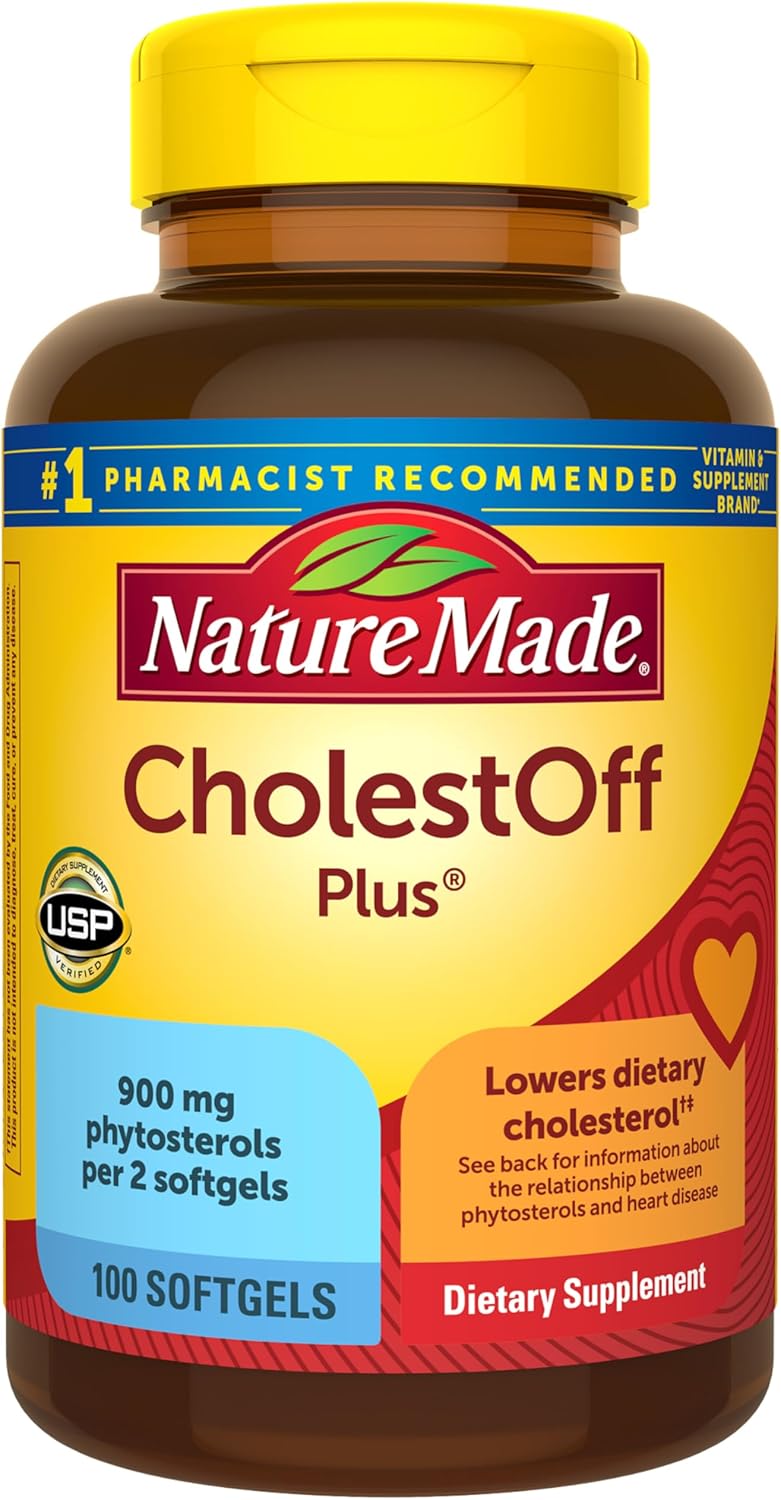
Nature Made CholestOff Plus, 100 Softgels (Plant Sterols & Stanols, 1800mg/day)
Nature Made CholestOff Plus, 100 Softgels (Plant Sterols & Stanols, 1800mg/day). 4.5★ (5,562 ratings). Confirmed in stock.
- Amazon price and availability can change over time
Affiliate link: If you buy through this link, we may earn a commission at no extra cost to you.
Buy Nature Made CholestOff Plus, 100 Softgels (Plant Sterols & Stanols, 1800mg/day)Compare supplements with the same checklist we use.
Get the anti-aging supplement cheat sheet with evidence prompts, safety checks, and label-quality questions before you buy.
Comparison Table
| Category | #1 NOW Foods Beta-Sitosterol Plant Sterols NOW Foods | #2 Nature Made CholestOff Plus, 100 Softgels (Plant Sterols & Stanols, 1800mg/day) Nature Made |
|---|---|---|
| Score | 8.8/10 | 8.6/10 |
| Best For | ||
| Pros |
|
|
| Cons |
|
|
What to Know About Phytosterols for Lipid Management
Phytosterols — plant-derived compounds structurally similar to cholesterol — have one of the more compelling evidence profiles in the supplement world. Unlike many wellness trends, their mechanism is well-understood and their effects on lipid markers have been studied in dozens of human clinical trials. That's a relatively rare thing in this industry, and it's why they've earned a place in cardiovascular nutrition guidelines internationally. The challenge isn't whether phytosterols work. It's choosing a product that actually delivers an evidence-supported dose in a form that fits your routine. Dosing matters enormously here — supplements providing less than 1.5–2g of plant sterols daily are unlikely to produce meaningful effects on LDL cholesterol, yet many products on the market fall short of this threshold or obscure their sterol content behind proprietary blends. We reviewed three of the most popular phytosterol supplements available in 2026, focusing on sterol content per serving, formulation quality, label transparency, and value. Our picks span a range of price points and formats, so whether you're maximizing potency or flexibility, there's a clear recommendation here.
This content is for educational purposes only and is not medical advice. These statements have not been evaluated by the FDA. This product is not intended to diagnose, treat, cure, or prevent any disease.
Key Benefits of Phytosterols for Lipid Management
May support healthy LDL cholesterol levels when taken consistently at 2g/day
Well-characterized mechanism of action: competes with dietary cholesterol for intestinal absorption
Suitable for long-term daily use; generally well-tolerated in healthy adults
How Phytosterols Supports Lipid Management
Phytosterols are structural analogs of cholesterol — their molecular shape is similar enough that they compete with cholesterol for the same absorption pathways in the small intestine. When phytosterols are present in the gut in sufficient quantities, they displace cholesterol from the mixed micelles that carry fats toward intestinal cells for absorption. Less cholesterol gets absorbed, more gets excreted, and circulating LDL levels may fall as the liver draws on existing cholesterol stores. This mechanism requires the phytosterols to be in the gut at the same time as dietary cholesterol — which is why timing with meals matters. The competitive inhibition effect is dose-dependent: small amounts have minimal impact, while consistent intake of 1.5–2g per day appears to produce the most reproducible results in human trials. Beta-sitosterol is the most abundant and most studied individual phytosterol, though commercial supplements typically provide a blend of campesterol and stigmasterol alongside it.
What to Look For When Buying Phytosterols
The single most important number on any phytosterol supplement label is the total plant sterols (or plant sterol esters) per serving — not the weight of the capsule, not the 'proprietary blend' total. Look for this figure stated explicitly in milligrams. If a product lists only 'plant sterol complex' without a milligram breakdown, that's a red flag worth taking seriously. Form factor matters more than most buyers realize. Hard capsules and tablets offer more precise dosing and are generally more stable over time. Softgels can be easier to swallow, but the lower potency per softgel in most softgel products means you'll need more of them to hit an effective dose — which adds up in cost and daily pill burden. Vegetarians should check for gelatin, which disqualifies most softgel options. Timing is a real consideration that's often overlooked on supplement labels. Phytosterols need to be in the intestine at the same time as dietary cholesterol to compete for absorption. Taking them on an empty stomach or away from meals significantly reduces their utility. The practical implication: split your daily dose across two meals, ideally lunch and dinner, rather than taking everything in a single morning dose. Finally, calculate cost per gram of plant sterols rather than cost per bottle. A $17.99 bottle that provides 375mg per softgel and requires 5–6 softgels daily may actually cost you more per month than a $22.99 bottle delivering 1000mg per capsule in just two capsules. Run the math before defaulting to the lowest sticker price.
Dosage Guidance
Always follow your healthcare provider's recommendations. Dosages vary by individual health status, age, and goals.
Common Phytosterols Complaints (And How to Avoid Them)
Based on analysis of thousands of customer reviews across Phytosterols products.
"I don't notice any difference after taking these for a month"
Phytosterols don't produce noticeable symptoms — their effect is on a lab value (LDL cholesterol), not a feeling. The only way to assess whether they're working is a lipid panel before and after 8–12 weeks of consistent use. If you haven't had bloodwork done, you can't know whether they're working or not.
"Taking 5–6 pills a day just to get the right dose is unrealistic"
That's a legitimate concern about lower-potency softgel products. It's exactly why we ranked the 1000mg-per-capsule Life Extension option first — two capsules daily (one with lunch, one with dinner) is a far more manageable regimen. If pill burden is a concern, choose for potency, not price per unit.
"I got an upset stomach when I started taking plant sterols"
Mild GI discomfort — bloating, loose stools — is a recognized and common initial response to phytosterol supplementation, particularly at higher doses. Starting with a lower dose and building up over 1–2 weeks can reduce this. Ensuring you're always taking them with food (not on an empty stomach) also helps considerably.
Safety & Interactions
- Pregnancy and breastfeeding: Consult your healthcare provider before taking this supplement during pregnancy or while nursing. The safety of supplemental doses beyond dietary intake has not been established in pregnant or lactating women.
- Blood thinners: If you take blood-thinning medications (e.g., warfarin, apixaban, rivaroxaban, clopidogrel, or high-dose aspirin), consult your healthcare provider BEFORE starting this supplement, as it may have additive antiplatelet or anticoagulant effects.
- Kidney disease: If you have chronic kidney disease (CKD) or any significant kidney impairment, consult your healthcare provider before taking this supplement. Some supplements can accumulate to dangerous levels when kidney function is reduced.
- Gout: Individuals with gout should consult their healthcare provider before starting this supplement. Certain supplements (e.g., collagen, fish oil, niacin) may affect uric acid levels or trigger flares in susceptible individuals.
- Blood pressure medications: This supplement may have an additive blood-pressure-lowering effect when taken with antihypertensives including beta-blockers (metoprolol, atenolol), ACE inhibitors (lisinopril), ARBs (losartan), and calcium channel blockers (amlodipine). If you take any blood pressure medication, monitor your readings for the first 4–6 weeks after starting and inform your prescribing physician.
- Important: This supplement is not a replacement for prescription medications. It is supportive for individuals with low baseline status, not a treatment for diagnosed conditions (anxiety disorders, insomnia, hypertension, osteoporosis, etc.). Do not stop or reduce any prescription without consulting your doctor.
""From a registered dietitian's perspective, phytosterols are one of the few supplements where the mechanism, dose-response relationship, and clinical evidence are clear enough to make a meaningful recommendation — but that 2g/day threshold is non-negotiable. A product that delivers 375mg per serving and is taken once daily isn't doing much; be honest with yourself about whether you'll actually take the required number of servings consistently before choosing based on price alone."
— Angelique Nicole R. Villegas, RND, Registered Nutritionist Dietitian · PRC Philippines · License #0023950
Frequently Asked Questions
Citations & Research
This page references peer-reviewed research indexed on PubMed/NCBI. Citations are provided for transparency. Always consult a qualified healthcare professional before making any medical decisions.
- [1]Backes JM, Hilleman DE. “A Clinicians Guide to Recommending Common Cholesterol-Lowering Dietary Supplements.” American journal of cardiovascular drugs : drugs, devices, and other interventions, 2024. doi:10.1007/s40256-024-00681-1PMID 39297910 ↗
- [2]Brown WV. “Cholesterol absorption inhibitors: defining new options in lipid management.” Clinical cardiology, 2003. doi:10.1002/clc.4950260604PMID 12839042 ↗
- [3]Gylling H et al. “Plant sterols and plant stanols in the management of dyslipidaemia and prevention of cardiovascular disease.” Atherosclerosis, 2014. doi:10.1016/j.atherosclerosis.2013.11.043PMID 24468148 ↗
Ready to Try Phytosterols?
Our top pick for lipid management. Third-party tested, highly reviewed.
Affiliate link: If you buy through this link, we may earn a commission at no extra cost to you.
Shop #1 Pick — NOW Foods Beta-Sitosterol Plant SterolsContinue exploring
- our full Phytosterols reviewSupplement overview
- best supplements for lipid managementGoal overview
- evidence notes on CoQ10 for lipid managementAlternative supplement
- where Fish Oil fits for lipid managementAlternative supplement
- clinical notes on Phytosterols and cholesterol supportSame supplement, different goal
- Niacin evidence for lipid managementEditor pick
- supplements or food sources — the trade-offsCompare options
Get the evidence-graded supplement cheat sheet.
Evidence prompts, safety checks, and label-quality questions before you buy — free, straight to your inbox.
No spam. Unsubscribe anytime.