
Best Phytosterols for Cholesterol Management (2026 Ranked & Reviewed)
Compare the best phytosterol supplements for cholesterol management in 2026. Science-backed picks, dosage guidance, and expert safety notes.

This content is for educational purposes only and is not medical advice. These statements have not been evaluated by the FDA. This product is not intended to diagnose, treat, cure, or prevent any disease. Always consult your healthcare provider before starting any supplement.
Best Phytosterols for Cholesterol Management in 2026
Ranked by quality, value, and clinical backing
Where available, we show when each product price was last checked so the list stays honest without overreacting to normal Amazon price movement.

NOW Foods Beta-Sitosterol Plant Sterols
NOW Foods Beta-Sitosterol Plant Sterols. 4.6★ (3,400 ratings). Confirmed in stock.
- Amazon price and availability can change over time
Affiliate link: If you buy through this link, we may earn a commission at no extra cost to you.
Buy NOW Foods Beta-Sitosterol Plant Sterols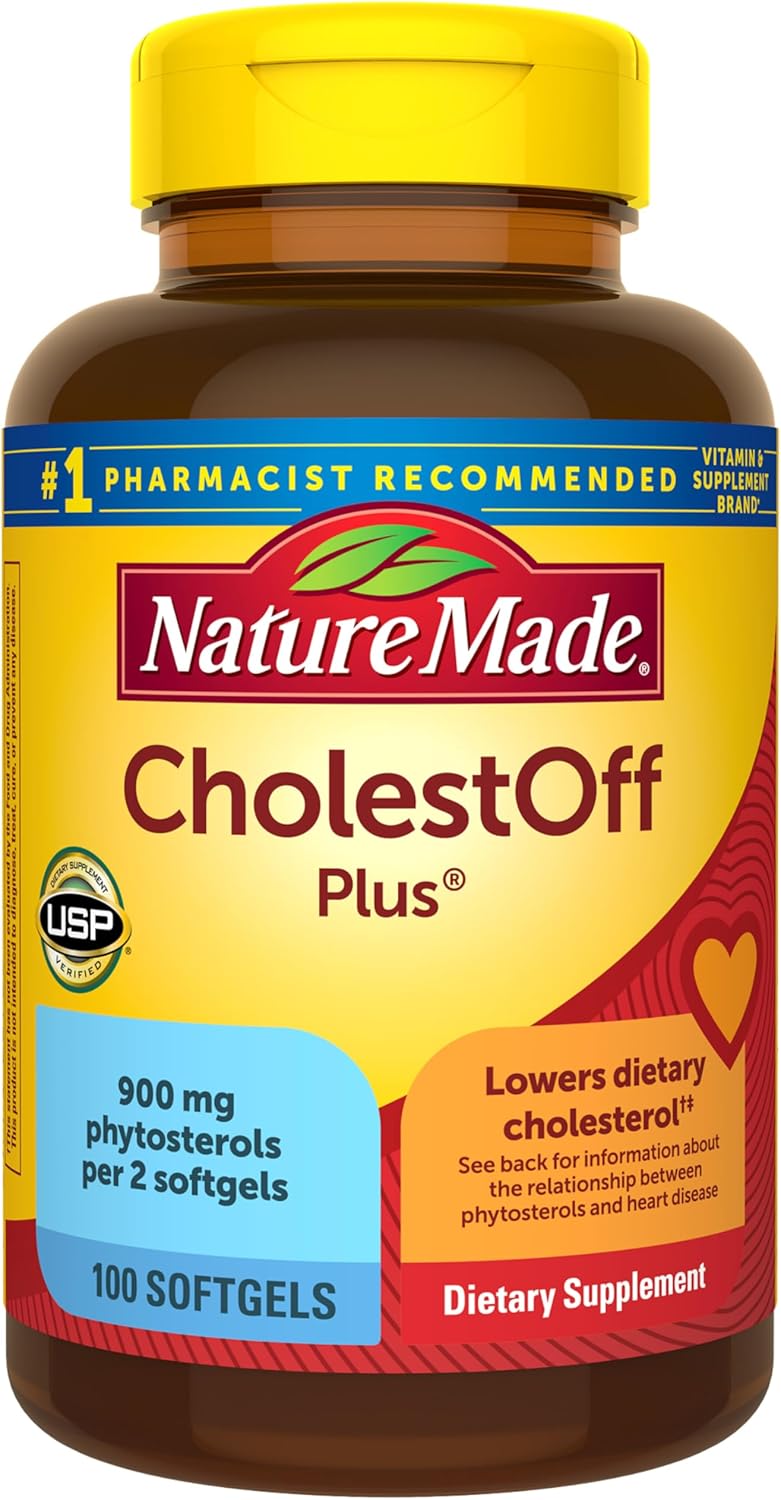
Nature Made CholestOff Plus, 100 Softgels
Nature Made CholestOff Plus, 100 Softgels. 4.5★ (5,567 ratings). Confirmed in stock.
- Amazon price and availability can change over time
Affiliate link: If you buy through this link, we may earn a commission at no extra cost to you.
Buy Nature Made CholestOff Plus, 100 SoftgelsCompare supplements with the same checklist we use.
Get the anti-aging supplement cheat sheet with evidence prompts, safety checks, and label-quality questions before you buy.
Comparison Table
| Category | #1 NOW Foods Beta-Sitosterol Plant Sterols NOW Foods | #2 Nature Made CholestOff Plus, 100 Softgels Nature Made |
|---|---|---|
| Score | 8.8/10 | 8.6/10 |
| Best For | ||
| Pros |
|
|
| Cons |
|
|
What to Know About Phytosterols for Cholesterol Management
Phytosterols are among the most well-studied nutritional compounds for supporting healthy cholesterol levels — and yet most people have never heard of them. These plant-derived compounds are structurally similar to cholesterol, and research suggests they work by competing with dietary cholesterol for absorption in the gut. The result, across dozens of human trials, is a meaningful reduction in LDL cholesterol at doses of around 2 grams per day. The European Food Safety Authority and the FDA have both issued qualified health claims around phytosterols and cholesterol. That's a relatively rare distinction for a dietary supplement category — and it's why cardiologists and dietitians frequently bring these up before escalating to pharmaceutical options. Choosing the right phytosterol product isn't complicated, but a few formulation details matter: total sterol dose per serving, the specific sterol blend, and how transparently the manufacturer discloses standardisation. We've reviewed the two strongest, most defensible options on the market to help you make a confident, informed choice.
This content is for educational purposes only and is not medical advice. These statements have not been evaluated by the FDA. This product is not intended to diagnose, treat, cure, or prevent any disease.
Key Benefits of Phytosterols for Cholesterol Management
May support LDL cholesterol reduction of approximately 8–10% at 2g/day doses, based on human clinical trial data
Well-tolerated in healthy adults with a long safety record and regulatory-acknowledged health claims in the US and EU
May provide additive LDL-lowering benefit alongside dietary changes or statin therapy, offering a complementary nutritional strategy
How Phytosterols Supports Cholesterol Management
Phytosterols — including beta-sitosterol, campesterol, and stigmasterol — are structurally nearly identical to cholesterol. That similarity is exactly what makes them useful. In the small intestine, both dietary cholesterol and phytosterols compete for the same transport proteins (primarily Niemann-Pick C1-Like 1, or NPC1L1) needed to cross the gut epithelium. When phytosterol concentrations are high enough, they effectively crowd out cholesterol molecules, reducing how much cholesterol is absorbed from food and bile. The unabsorbed cholesterol is then excreted in stool. The liver, noticing lower cholesterol delivery from the gut, compensates by upregulating LDL receptors — pulling more LDL out of circulation. This dual mechanism (reduced absorption plus increased hepatic uptake) is why the LDL-lowering effect is measurable and consistent across studies. Phytosterols themselves are absorbed in only trace amounts, which is both a feature (limited systemic accumulation in healthy people) and a consideration for those with the rare genetic disorder phytosterolaemia, who absorb them abnormally.
What to Look For When Buying Phytosterols
The single most important number when buying a phytosterol supplement is total milligrams of plant sterols per serving — not per capsule. Multiple systematic reviews have identified approximately 2 grams per day as the dose threshold at which you see clinically meaningful LDL reductions. Products that provide 500mg or less per capsule aren't inherently inferior, but you need to do the arithmetic and make sure you can realistically take enough capsules or tablets each day to hit that target. Second, pay attention to whether the label specifies the sterol fraction. 'Plant sterol complex' is vaguer than 'standardised to X% beta-sitosterol.' Beta-sitosterol is the most abundant and most studied individual phytosterol; campesterol and stigmasterol are present in smaller fractions in most plant sources. A product that names all three gives you more confidence that you're getting a representative, food-like sterol profile rather than an isolated compound. Third, consider form. Capsules tend to be easier to swallow for most people, but tablets from reputable manufacturers like NOW Foods are fine if dissolution is adequate (and NOW's reputation suggests it is). Softgels can also be a strong option when the daily sterol dose is explicit, as with the Nature Made pick above. Chewables exist but tend to have higher added-sugar content, which is counterproductive if heart health is your goal. Finally, timing matters more than most people realise. Phytosterols work by competing with cholesterol in the gut — so they need to be present at the same time as dietary cholesterol. Take them with your largest meal or with a meal that contains fat. Taking them on an empty stomach in the morning won't produce the same competitive absorption effect. This is a practical point that product labels often underemphasise.
Dosage Guidance
Always follow your healthcare provider's recommendations. Dosages vary by individual health status, age, and goals.
Common Phytosterols Complaints (And How to Avoid Them)
Based on analysis of thousands of customer reviews across Phytosterols products.
"I don't see any difference in my cholesterol after taking these"
The most common reason for non-response is not reaching the 2g/day threshold consistently, or taking capsules on an empty stomach. Confirm you're hitting 2g/day with food, then run a lipid panel at the 6–8 week mark before concluding they're not working for you.
"They upset my stomach / give me loose stools"
GI sensitivity is the most common complaint, especially in the first week. Starting at a lower dose (1g/day) and titrating up over 1–2 weeks typically resolves this. Always take with a fat-containing meal rather than on an empty stomach.
"Two capsules a day feels like a lot — why isn't one enough?"
One 1000mg capsule provides half the clinically studied dose. Single-capsule products do exist in this category but require a 2g serving in one capsule, which is a larger capsule. The two-capsule protocol lets manufacturers use a standard capsule size while still reaching the effective dose — it's a formulation tradeoff, not a quality issue.
Safety & Interactions
- Pregnancy and breastfeeding: Consult your healthcare provider before taking this supplement during pregnancy or while nursing. The safety of supplemental doses beyond dietary intake has not been established in pregnant or lactating women.
- Blood thinners: If you take blood-thinning medications (e.g., warfarin, apixaban, rivaroxaban, clopidogrel, or high-dose aspirin), consult your healthcare provider BEFORE starting this supplement, as it may have additive antiplatelet or anticoagulant effects.
- Kidney disease: If you have chronic kidney disease (CKD) or any significant kidney impairment, consult your healthcare provider before taking this supplement. Some supplements can accumulate to dangerous levels when kidney function is reduced.
- Gout: Individuals with gout should consult their healthcare provider before starting this supplement. Certain supplements (e.g., collagen, fish oil, niacin) may affect uric acid levels or trigger flares in susceptible individuals.
""As a registered dietitian, I'd emphasise that phytosterol supplements work best as part of a broader dietary pattern — not as a standalone fix. Pairing them with increased soluble fibre intake and reduced saturated fat gives you a genuinely additive effect on LDL that neither approach achieves alone."
Frequently Asked Questions
Citations & Research
This page references peer-reviewed research indexed on PubMed/NCBI. Citations are provided for transparency. Always consult a qualified healthcare professional before making any medical decisions.
- [1]Windler E, Beil FU, Berthold HK et al. “Phytosterols and Cardiovascular Risk Evaluated against the Background of Phytosterolemia Cases-A German Expert Panel Statement.” Nutrients, 2023. doi:10.3390/nu15040828PMID 36839186 ↗
- [c2]Trautwein EA, Koppenol WP, de Jong A et al. “Plant sterols lower LDL-cholesterol and triglycerides in dyslipidemic individuals with or at risk of developing type 2 diabetes; a randomized, double-blind, placebo-controlled study.” Nutrition & diabetes, 2018. Randomized trial. PMID 29795368 ↗
- [c3]Granger MJ, Eck PK, Vazquez-Vidal I et al. “Genosets for APOE and CYP7A1-rs3808607 variants do not predict LDL cholesterol lowering upon intervention with plant sterols in a randomized, double-blind, placebo-controlled trial.” The American journal of clinical nutrition, 2022. Randomized trial. PMID 34791009 ↗
Ready to Try Phytosterols?
Our top pick for cholesterol management. Third-party tested, highly reviewed.
Affiliate link: If you buy through this link, we may earn a commission at no extra cost to you.
Shop #1 Pick — NOW Foods Beta-Sitosterol Plant SterolsContinue exploring
- Phytosterols supplement guideSupplement overview
- best supplements for cholesterol supportGoal overview
- Fish Oil guidance for cholesterol supportAlternative supplement
- Phytosterols evidence for lipid managementSame supplement, different goal
- CoQ10 evidence for lipid managementEditor pick
- Policosanol options for cholesterol supportEditor pick
- supplements or food sources — the trade-offsCompare options
Get the evidence-graded supplement cheat sheet.
Evidence prompts, safety checks, and label-quality questions before you buy — free, straight to your inbox.
No spam. Unsubscribe anytime.