
Magnesium for GLP-1-Related Sleep Disruption: The Glycinate Case
Magnesium glycinate for the GLP-1 sleep disruption profile — nighttime nausea, delayed gastric emptying, mood-related wakening.

This content is for educational purposes only and is not medical advice. These statements have not been evaluated by the FDA. This product is not intended to diagnose, treat, cure, or prevent any disease. Always consult your healthcare provider before starting any supplement.
Best Magnesium for GLP-1 Sleep Support in 2026
Ranked by quality, value, and clinical backing
Where available, we show when each product price was last checked so the list stays honest without overreacting to normal Amazon price movement.

Doctor's Best High Absorption Magnesium Glycinate
The dose-matched best-value pick. 200 mg elemental in a single 2-tablet serving hits the published trial range at the lowest cost.
- Tablet form may be large for some
- Not NSF certified
- Single-ingredient bottle without B6 co-factor
Affiliate link: If you buy through this link, we may earn a commission at no extra cost to you.
Buy Doctor's Best High Absorption Magnesium Glycinate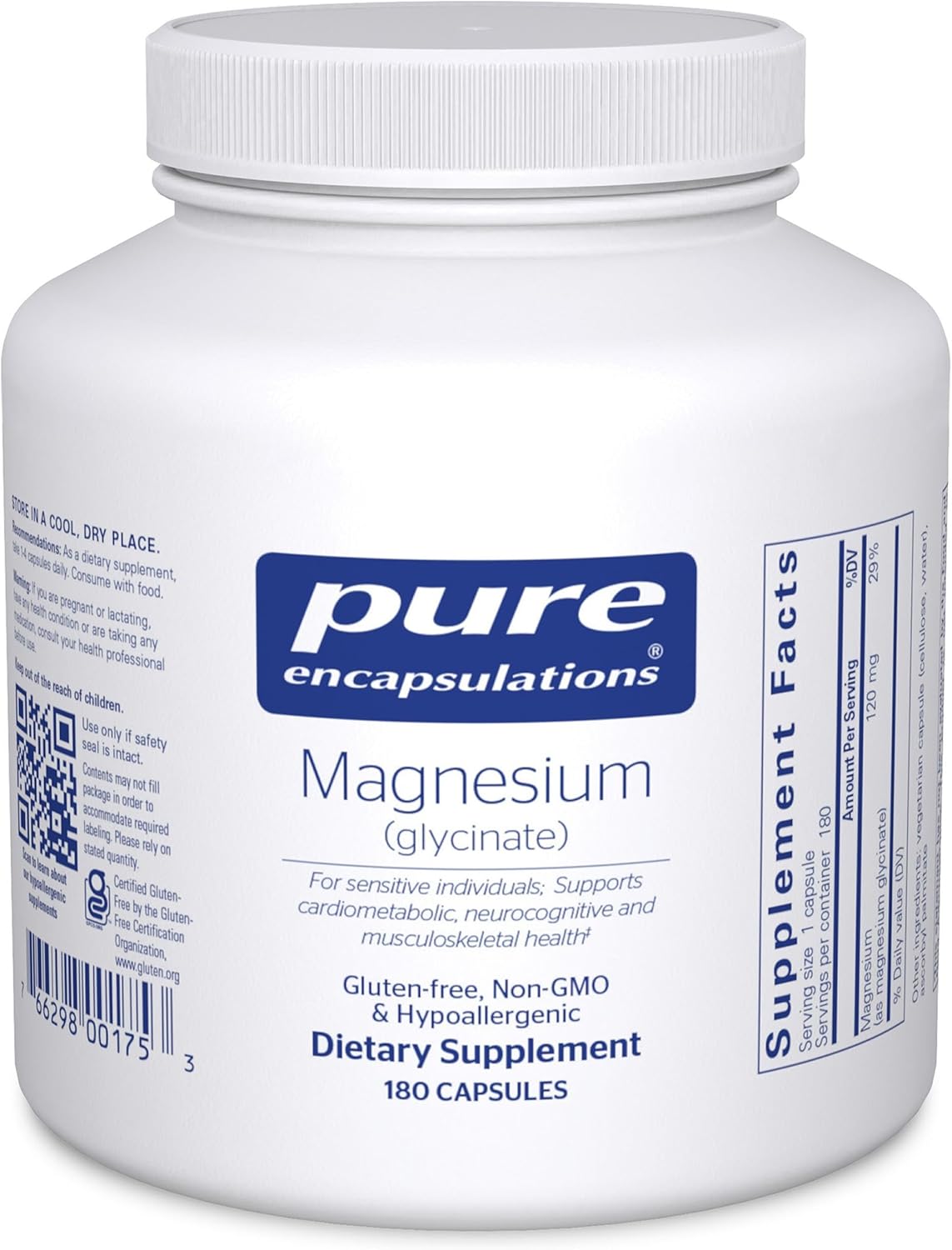
Pure Encapsulations Magnesium Glycinate
The hypoallergenic clinician pick. NSF certified and free of common additives, but requires doubling the serving to reach trial dose.
- 120mg elemental per serving — most users need 2 servings
- Highest per-serving cost in this lineup
- Higher daily capsule load when doubled
Affiliate link: If you buy through this link, we may earn a commission at no extra cost to you.
Buy Pure Encapsulations Magnesium Glycinate
Natural Vitality CALM Magnesium Glycinate
The recognizable-brand pick. CALM's glycinate variant is reasonable, but the per-serving dose is below the trial range.
- Only 115mg elemental per serving
- Most users will need 2 servings to reach trial dose
- Smaller review base than Doctor's Best or Pure Encapsulations
Affiliate link: If you buy through this link, we may earn a commission at no extra cost to you.
Buy Natural Vitality CALM Magnesium GlycinateCompare supplements with the same checklist we use.
Get the anti-aging supplement cheat sheet with evidence prompts, safety checks, and label-quality questions before you buy.
Comparison Table
| Category | #1 Doctor's Best High Absorption Magnesium Glycinate Doctor's Best | #2 Pure Encapsulations Magnesium Glycinate Pure Encapsulations | #3 Natural Vitality CALM Magnesium Glycinate Natural Vitality |
|---|---|---|---|
| Score | 8.7/10 | 8.3/10 | 7.9/10 |
| Best For | GLP-1 users who want to match the 200mg sleep-trial dose at the best per-serving price | GLP-1 users with multiple sensitivities or whose clinicians prefer hypoallergenic formulations | GLP-1 users who already trust the CALM brand and want a glycinate-only formulation |
| Pros |
|
|
|
| Cons |
|
|
|
What to Know About Magnesium for GLP-1 Sleep Support
Sleep complaints are one of the most under-discussed side effects of GLP-1 receptor agonists. The published clinical literature still anchors on weight loss, glycemic control, and the headline GI side effects — nausea, constipation, reflux. But ask in any GLP-1 community and the pattern is unmistakable: people who fell asleep easily before semaglutide or tirzepatide are now waking at 2 or 3 a.m. with nausea, reflux, or a vague restlessness that doesn't map onto the day's events. The mechanisms are plausible and overlapping. GLP-1 agonists slow gastric emptying — food that would have cleared the stomach by bedtime in a non-medicated state can still be sitting there at midnight, contributing to reflux and a sense of fullness that fragments sleep. Appetite suppression at the central level also appears to alter mood and anxiety signaling in some users; the same medications being studied for substance-use disorders are not neutral on reward and arousal pathways. And the rapid weight loss many users experience perturbs sleep architecture independently — a well-documented effect across any cutting protocol. Magnesium glycinate is the most reasonable first-line mineral adjunct for this picture. The 2021 Mah systematic review and meta-analysis (PMID 33865376) found oral magnesium supplementation improved insomnia symptoms in older adults. The 2023 Arab review of magnesium in sleep health (PMID 35184264) and the 2024 Rawji review covering anxiety and sleep quality (PMID 38817505) extend the picture across broader adult populations and explicitly address the anxiety component that often accompanies GLP-1 sleep complaints. None of these trials enrolled GLP-1 users specifically. What we can say honestly is that magnesium addresses three mechanisms relevant to this cohort — GABAergic relaxation via glycinate, smooth-muscle relaxation relevant to the gastric and esophageal sphincter context, and NMDA modulation relevant to the arousal/anxiety component — and that the safety profile in healthy adults is well established. This page ranks three magnesium glycinate products — Doctor's Best, Pure Encapsulations, and Natural Vitality CALM — for GLP-1 users navigating new sleep disruption. Research suggests magnesium may support sleep quality over 4–8 weeks of consistent nightly use. No product on this page is a treatment for insomnia, anxiety, or any GLP-1 side effect; that distinction matters and we will be precise about it throughout.
This content is for educational purposes only and is not medical advice. These statements have not been evaluated by the FDA. This product is not intended to diagnose, treat, cure, or prevent any disease.
Key Benefits of Magnesium for GLP-1 Sleep Support
Research suggests magnesium may improve self-reported sleep quality and reduce sleep onset latency over 4–8 weeks of consistent nightly use — based on the 2021 Mah meta-analysis (PMID 33865376) and 2023 Arab review (PMID 35184264)
May address the anxiety component that often accompanies GLP-1 sleep disruption via the same pathway, per the 2024 Rawji review covering anxiety and sleep (PMID 38817505)
Glycinate form provides additional GABAergic effect from the glycine amino acid co-substrate — relevant in a cohort where pharmacological appetite suppression appears to alter arousal signaling
Generally well-tolerated at the doses used in published trials; most reported side effects (mild loose stools, GI upset) are dose-dependent and reversible
How Magnesium Supports GLP-1 Sleep Support
Magnesium is the fourth most abundant cation in the body and a cofactor in more than 300 enzymatic reactions, including those regulating neurotransmission and muscle relaxation. Three of these mechanisms are directly relevant to the GLP-1 sleep disruption picture. First, magnesium acts as a non-competitive antagonist at the NMDA glutamate receptor, dampening excitatory glutamatergic signaling that drives arousal. This is the mechanism most relevant to the 'wired but tired' quality many GLP-1 users describe at 2 a.m. Second, magnesium potentiates GABA-A receptor activity, supporting the brain's principal inhibitory tone. The glycinate form adds a secondary GABAergic effect from glycine itself, which acts on both GABA and glycine inhibitory receptors. This is the mechanism most relevant to the anxiety-tinged wakefulness. Third, magnesium contributes to smooth-muscle relaxation throughout the body, including the esophageal sphincter and stomach wall. In a population whose gastric emptying is already pharmacologically slowed, the smooth-muscle effect is plausibly relevant to the nighttime reflux and fullness that fragments sleep — though no trial has directly tested this in GLP-1 users. The combination of these three pathways is why glycinate is the preferred form for this context: oxide and citrate share the first two mechanisms but lack the glycine co-substrate, and citrate's osmotic GI effect is undesirable in a cohort already managing slowed transit.
What to Look For When Buying Magnesium
The most important shopping decision for the GLP-1 sleep context is form: glycinate (or bisglycinate). Oxide and citrate are cheap and bioavailable enough for general magnesium replacement, but both have a meaningful osmotic GI effect — undesirable in a cohort already managing slowed gastric emptying and variable bowel patterns. Glycinate is chelated to glycine, which softens the GI effect and adds a secondary GABAergic action from the amino acid co-substrate. Dose translation is the second decision. Published sleep trials used 200–500 mg elemental magnesium nightly. Labels can be confusing because the headline number is sometimes the salt weight (the magnesium-plus-the-counterion), not the elemental magnesium. Read for 'elemental magnesium' on the supplement facts panel and aim for the 200 mg per nightly dose range as a starting point. Timing matters more than most labels suggest. Take magnesium roughly 60–90 minutes before bed for the smooth-muscle and GABAergic effects to be active when you are trying to fall asleep. Pair with the basic protocol the GLP-1 sleep context requires: dose your GLP-1 in the morning when possible, eat dinner at least three hours before bed to allow gastric clearance, elevate the head of the bed if reflux is part of the picture. Food-first note: magnesium supplementation does not replace addressing other GLP-1 sleep contributors — late dinners (GI sleep disruption), caffeine after noon, or alcohol (both worsen sleep architecture and interact with GLP-1 GI effects). Get the basic labs your prescribing clinician should be running (kidney function, electrolytes) before assuming a mineral is the answer.
Dosage Guidance
Always follow your healthcare provider's recommendations. Dosages vary by individual health status, age, and goals.
Common Magnesium Complaints (And How to Avoid Them)
Based on analysis of thousands of customer reviews across Magnesium products.
"I've taken magnesium for 2 weeks and my sleep is still broken"
Two weeks is below the assessment window used in most trials. Hold the dose, keep a daily sleep diary, and reassess at 4 and 8 weeks. If you have not also addressed dinner timing and GLP-1 dose timing, those are higher-leverage levers than the magnesium alone.
"I started magnesium and now I have diarrhea on top of my GLP-1 GI side effects"
Reduce the magnesium dose first — split it into two smaller servings or drop one serving. If diarrhea persists, switch from citrate or oxide (if you are using those) to glycinate. If you are already on glycinate and still having diarrhea, stop the magnesium and discuss the GLP-1 GI picture with your prescribing clinician.
"Pure Encapsulations is triple the price of Doctor's Best — is it worth it?"
Only if hypoallergenic certification matters to you specifically or your clinician has flagged sensitivity concerns. For most GLP-1 users on a 4–8-week trial, Doctor's Best at 200mg elemental in a single serving is a defensible choice with comparable expected effect.
Safety & Interactions
- Pregnancy and breastfeeding: Consult your healthcare provider before taking this supplement during pregnancy or while nursing. The safety of supplemental doses beyond dietary intake has not been established in pregnant or lactating women.
- Blood thinners: If you take blood-thinning medications (e.g., warfarin, apixaban, rivaroxaban, clopidogrel, or high-dose aspirin), consult your healthcare provider BEFORE starting this supplement, as it may have additive antiplatelet or anticoagulant effects.
- Kidney disease: If you have chronic kidney disease (CKD) or any significant kidney impairment, consult your healthcare provider before taking this supplement. Some supplements can accumulate to dangerous levels when kidney function is reduced.
- Gout: Individuals with gout should consult their healthcare provider before starting this supplement. Certain supplements (e.g., collagen, fish oil, niacin) may affect uric acid levels or trigger flares in susceptible individuals.
- Important: This supplement is not a replacement for prescription medications. It is supportive for individuals with low baseline status, not a treatment for diagnosed conditions (anxiety disorders, insomnia, hypertension, osteoporosis, etc.). Do not stop or reduce any prescription without consulting your doctor.
""What I would emphasize for GLP-1 users with new sleep disruption: glycinate is the form that matches the mechanisms most likely operating in this cohort, and 200 mg elemental nightly is a reasonable starting target. But magnesium alone will not fully solve a GLP-1 sleep problem that has structural drivers — late dinners, reflux from delayed gastric emptying, or a GLP-1 dose that is too high for the user. Treat magnesium as one layer in a protocol that also addresses dinner timing, head-of-bed elevation if reflux is part of the picture, and a clinician conversation about GLP-1 dose titration if symptoms persist past 8 weeks."
— Angelique Nicole R. Villegas, RND, Registered Nutritionist Dietitian · PRC Philippines · License #0023950
Frequently Asked Questions
Citations & Research
This page references peer-reviewed research indexed on PubMed/NCBI. Citations are provided for transparency. Always consult a qualified healthcare professional before making any medical decisions.
- [1]Mah J, Pitre T. “Oral magnesium supplementation for insomnia in older adults: a Systematic Review & Meta-Analysis.” BMC Complementary Medicine and Therapies, 2021. doi:10.1186/s12906-021-03297-zPMID 33865376 ↗
- [2]Arab A, Rafie N, Amani R et al. “The Role of Magnesium in Sleep Health: a Systematic Review of Available Literature.” Biological Trace Element Research, 2023. PMID 35184264 ↗
- [3]Rawji A, Peltier MR, Mourtzanakis K et al. “Examining the Effects of Supplemental Magnesium on Self-Reported Anxiety and Sleep Quality: A Systematic Review.” Cureus, 2024. PMID 38817505 ↗
- [4]Chan V, Lo K. “Efficacy of dietary supplements on improving sleep quality: a systematic review and meta-analysis.” Postgraduate Medical Journal, 2022. PMID 33441476 ↗
Ready to Try Magnesium?
Our top pick for glp-1 sleep support. Third-party tested, highly reviewed.
Affiliate link: If you buy through this link, we may earn a commission at no extra cost to you.
Shop #1 Pick — Doctor's Best High Absorption Magnesium GlycinateContinue exploring
- how we evaluate MagnesiumSupplement overview
- our glp 1 sleep support supplement guideGoal overview
- L Theanine guidance for glp 1 sleep supportAlternative supplement
- our top Melatonin pick for glp 1 sleep supportAlternative supplement
- Magnesium reviewed for anxiety reliefSame supplement, different goal
- Magnesium evidence for sleepEditor pick
- Creatine — an option to consider for glp 1 muscle loss preventionEditor pick
- clinical notes on Electrolytes and glp 1 hydration & electrolyte balanceEditor pick
Get the evidence-graded supplement cheat sheet.
Evidence prompts, safety checks, and label-quality questions before you buy — free, straight to your inbox.
No spam. Unsubscribe anytime.