
Best Maca for Energy: 2026 Supplement Rankings & Buyer's Guide
Compare the best maca supplements for sustained energy without caffeine. Expert-ranked products with dosage guidance and clinical evidence.

This content is for educational purposes only and is not medical advice. These statements have not been evaluated by the FDA. This product is not intended to diagnose, treat, cure, or prevent any disease. Always consult your healthcare provider before starting any supplement.
Best Maca for Energy in 2026
Ranked by quality, value, and clinical backing
Where available, we show when each product price was last checked so the list stays honest without overreacting to normal Amazon price movement.
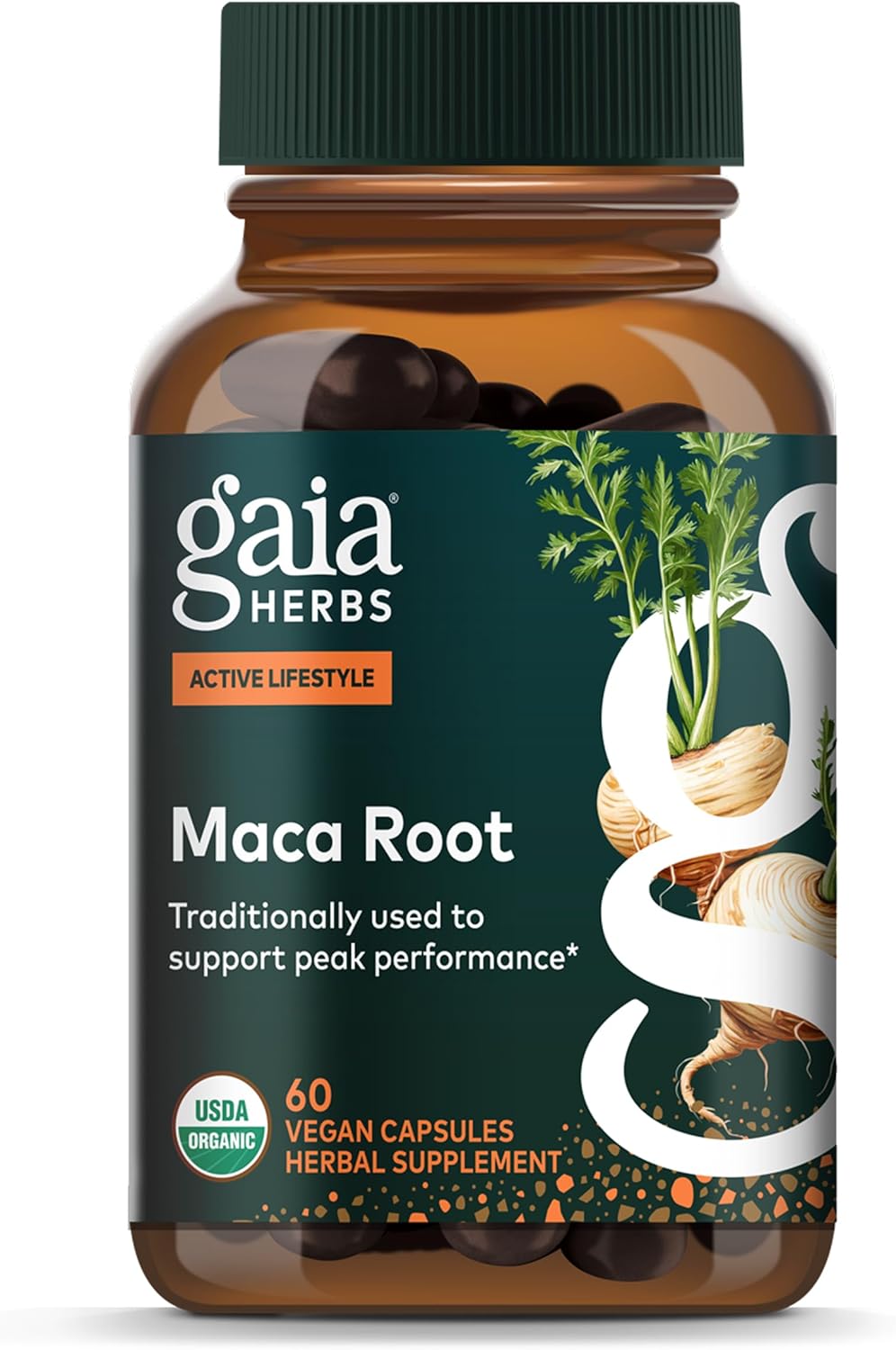
Gaia Herbs Maca Root 60 Vegan Capsules
Gaia Herbs Maca Root 60 Vegan Capsules. Confirmed in stock.
- Amazon price and availability can change over time
Affiliate link: If you buy through this link, we may earn a commission at no extra cost to you.
Buy Gaia Herbs Maca Root 60 Vegan Capsules
The Maca Team Premium Gelatinized Maca Powder 8oz
The Maca Team Premium Gelatinized Maca Powder 8oz. Confirmed in stock.
- Amazon price and availability can change over time
Affiliate link: If you buy through this link, we may earn a commission at no extra cost to you.
Buy The Maca Team Premium Gelatinized Maca Powder 8oz
Terrasoul Superfoods Organic Gelatinized Maca Powder 16oz
Terrasoul Superfoods Organic Gelatinized Maca Powder 16oz. Confirmed in stock.
- Amazon price and availability can change over time
Affiliate link: If you buy through this link, we may earn a commission at no extra cost to you.
Buy Terrasoul Superfoods Organic Gelatinized Maca Powder 16oz
NOW Foods Maca 500mg 100 Capsules
NOW Foods Maca 500mg 100 Capsules. Confirmed in stock.
- Amazon price and availability can change over time
Affiliate link: If you buy through this link, we may earn a commission at no extra cost to you.
Buy NOW Foods Maca 500mg 100 CapsulesCompare supplements with the same checklist we use.
Get the anti-aging supplement cheat sheet with evidence prompts, safety checks, and label-quality questions before you buy.
Comparison Table
| Category | #1 Gaia Herbs Maca Root 60 Vegan Capsules Gaia Herbs | #2 The Maca Team Premium Gelatinized Maca Powder 8oz The Maca Team | #3 Terrasoul Superfoods Organic Gelatinized Maca Powder 16oz Terrasoul Superfoods | #4 NOW Foods Maca 500mg 100 Capsules NOW Foods |
|---|---|---|---|---|
| Score | 8.8/10 | 8.8/10 | 8.8/10 | 8.8/10 |
| Best For | ||||
| Pros | ||||
| Cons |
|
|
|
|
What to Know About Maca for Energy
Maca root has gained attention as a non-stimulant adaptogen that some people turn to when they're looking for sustained energy without the jitters or crash of caffeine. Unlike stimulants that trigger a sudden spike and drop, maca works differently—though research is still developing on exactly how it supports energy levels. For adults tired of the 2 p.m. energy slump or those sensitive to stimulants, maca offers a plant-based alternative worth considering. The challenge? Not all maca products are created equal. Formulation matters—gelatinized versus raw, powder versus capsules, and sourcing all affect both effectiveness and how your body tolerates it. We've tested and ranked four leading maca supplements based on clinical dosing, third-party testing, user experience, and value. Whether you're new to adaptogens or switching from caffeine, this guide breaks down what to look for and which products actually deliver.
This content is for educational purposes only and is not medical advice. These statements have not been evaluated by the FDA. This product is not intended to diagnose, treat, cure, or prevent any disease.
Key Benefits of Maca for Energy
Non-stimulant energy support without caffeine jitters, crash, or sleep disruption
May support physical endurance and reduce perceived fatigue during sustained activity
Generally well-tolerated with minimal side effects when dosed appropriately (3–4g daily)
How Maca Supports Energy
Maca root (Lepidium meyenii) contains bioactive compounds including glucosinolates, alkaloids, and amino acids that may modulate how your body handles stress and sustains energy. Unlike caffeine, which blocks adenosine receptors to create alertness, maca is classified as an adaptogen—a substance theorized to help your body regulate stress and maintain baseline energy over time. Some research suggests it may support oxygen utilization during physical activity, which would explain why users report less fatigue during work or exercise rather than a sudden energy spike. The mechanism isn't fully understood, which is why qualified language matters: maca appears to support energy and endurance, but it's not an instant pick-me-up. Effects tend to accumulate with consistent use.
What to Look For When Buying Maca
Choosing the right maca product hinges on three decisions: form, dose, and budget. Gelatinized maca is nearly always worth the slight price premium—it removes indigestible starches, which means better absorption and fewer people reporting bloating or stomach upset. If you have IBS, GERD, or a sensitive gut, gelatinized is non-negotiable. Powder offers the most flexibility and typically delivers clinical dosing (3–4g) in fewer servings, but capsules are convenient if you travel or dislike maca's earthy taste. Dosing is critical. Most studies showing energy and endurance benefits used 3–4g daily over 6–12 weeks. Taking 500mg daily (one NOW Foods capsule) won't give you the evidence-based dose, even though it's better than nothing. Check how many capsules or how much powder you'd need daily to hit 3g, then calculate real cost-per-dose—The Maca Team's 3g per teaspoon and Terrasoul's 3g per serving look better than they first appear when you factor in the full picture. Timing matters less with maca than with caffeine. You can take it with breakfast or lunch; it won't keep you awake at night. Some people prefer morning dosing for consistency, while others split it into two smaller doses. Consistency over 4–6 weeks matters more than timing. Finally, expect a gradual effect—not the jolt of coffee. If you're chasing instant energy, you'll likely be disappointed. If you're looking to flatten your energy curve across the day and reduce caffeine dependency, maca is worth a 3-month trial.
Dosage Guidance
Always follow your healthcare provider's recommendations. Dosages vary by individual health status, age, and goals.
Common Maca Complaints (And How to Avoid Them)
Based on analysis of thousands of customer reviews across Maca products.
"I took maca for 2 weeks and felt nothing."
Two weeks is too early—maca needs 4–6 weeks of daily use to show effects. Also, check your dose: if you're taking 500mg capsules, you're below the clinical range. Increase to 3–4g daily and give it until week 6 before concluding it doesn't work.
"Maca gave me bloating and stomach pain."
You likely used raw (non-gelatinized) maca or took too much too fast. Switch to a gelatinized product like Gaia Herbs or The Maca Team, start with 1.5g daily with food, and build up slowly. Most people's digestion adapts within a few days once they switch to gelatinized.
"This is way less energizing than my pre-workout or coffee."
Maca isn't a stimulant—it supports baseline energy and endurance, not acute alertness. If you need immediate energy for a workout or important meeting, caffeine is the right tool. Maca works best for smoothing out your whole day and reducing afternoon crashes, not for 30-minute energy spikes.
Safety & Interactions
- Pregnancy and breastfeeding: Consult your healthcare provider before taking this supplement during pregnancy or while nursing. The safety of supplemental doses beyond dietary intake has not been established in pregnant or lactating women.
- Blood thinners: If you take blood-thinning medications (e.g., warfarin, apixaban, rivaroxaban, clopidogrel, or high-dose aspirin), consult your healthcare provider BEFORE starting this supplement, as it may have additive antiplatelet or anticoagulant effects.
- Kidney disease: If you have chronic kidney disease (CKD) or any significant kidney impairment, consult your healthcare provider before taking this supplement. Some supplements can accumulate to dangerous levels when kidney function is reduced.
- Gout: Individuals with gout should consult their healthcare provider before starting this supplement. Certain supplements (e.g., collagen, fish oil, niacin) may affect uric acid levels or trigger flares in susceptible individuals.
- Fish allergy - capsule source: Some softgel capsules use fish-derived gelatin even when the active supplement is not fish-derived. If you have a confirmed fish or shellfish allergy, verify the capsule source on the label or check with the manufacturer. Vegan capsules (vegetable cellulose) are widely available alternatives.
- Beef / alpha-gal allergy - capsule source: Many softgel and two-piece capsules use bovine gelatin. If you have a confirmed beef allergy or alpha-gal syndrome (mammalian meat allergy), check capsule sources on the label. Vegan capsules (vegetable cellulose) and HPMC capsules are alternatives.
""From a registered dietitian perspective, maca fills a legitimate niche for people seeking non-stimulant energy support, and the emerging research on physical performance is encouraging. The key is realistic expectations—it's not a caffeine replacement, it's a baseline energy stabilizer. Gelatinized forms are worth the cost upgrade, and hitting clinical doses (3–4g daily) matters; underdosing wastes money. Start with The Maca Team or Terrasoul for best evidence-based value, but Gaia Herbs is worth the premium if digestion is your concern."
— Angelique Nicole R. Villegas, RND, Registered Nutritionist Dietitian · PRC Philippines · License #0023950
Frequently Asked Questions
Citations & Research
This page references peer-reviewed research indexed on PubMed/NCBI. Citations are provided for transparency. Always consult a qualified healthcare professional before making any medical decisions.
- [1]Huerta Ojeda Á, Rodríguez Rojas J, Cancino-López J et al. “Effects of Maca (Lepidium meyenii Walp.) on Physical Performance in Animals and Humans: A Systematic Review and Meta-Analysis.” Nutrients, 2024. Multiple studies reviewed; see full meta-analysis. doi:10.3390/nu17010107PMID 39796542 ↗
- [2]Wu PS, Wu SH, Jiang RS et al. “The Impact of Lepidium meyenii (MACA) Supplementation on Basketball-related Performance and Antifatigue Ability: A Double-blind Crossover Study.” Journal of Physiological Investigation, 2025. n not specified in available abstract; see full text for details. doi:10.4103/ejpi.EJPI-D-25-00037PMID 40960048 ↗
Ready to Try Maca?
Our top pick for energy. Third-party tested, highly reviewed.
Affiliate link: If you buy through this link, we may earn a commission at no extra cost to you.
Shop #1 Pick — Gaia Herbs Maca Root 60 Vegan CapsulesContinue exploring
- our full Maca reviewSupplement overview
- energy — supplements that may helpGoal overview
- evidence notes on B Complex for energyAlternative supplement
- see CoQ10 evidence for energyAlternative supplement
- Maca evidence for hormonal balanceSame supplement, different goal
- see how supplements stacks up to food sourcesCompare options
Get the evidence-graded supplement cheat sheet.
Evidence prompts, safety checks, and label-quality questions before you buy — free, straight to your inbox.
No spam. Unsubscribe anytime.