
CoQ10 for energy: ubiquinol vs ubiquinone, dose, and ranked picks
CoQ10 is not a stimulant, but may support mitochondrial energy in older adults and statin users. Compare ubiquinol, ubiquinone, dose, absorption, and picks.

This content is for educational purposes only and is not medical advice. These statements have not been evaluated by the FDA. This product is not intended to diagnose, treat, cure, or prevent any disease. Always consult your healthcare provider before starting any supplement.
Best CoQ10 for Energy in 2026
Ranked by quality, value, and clinical backing
Where available, we show when each product price was last checked so the list stays honest without overreacting to normal Amazon price movement.

Qunol Ultra CoQ10
- Uses ubiquinone (the precursor form), which requires enzymatic conversion to ubiquinol in the body — a conversion that may be less efficient in adults over 50 or those with mitochondrial concerns
- 100mg per softgel means you'd need to take two capsules daily to reach the 200mg doses used in some clinical research, which erodes the value advantage
Affiliate link: If you buy through this link, we may earn a commission at no extra cost to you.
Buy Qunol Ultra CoQ10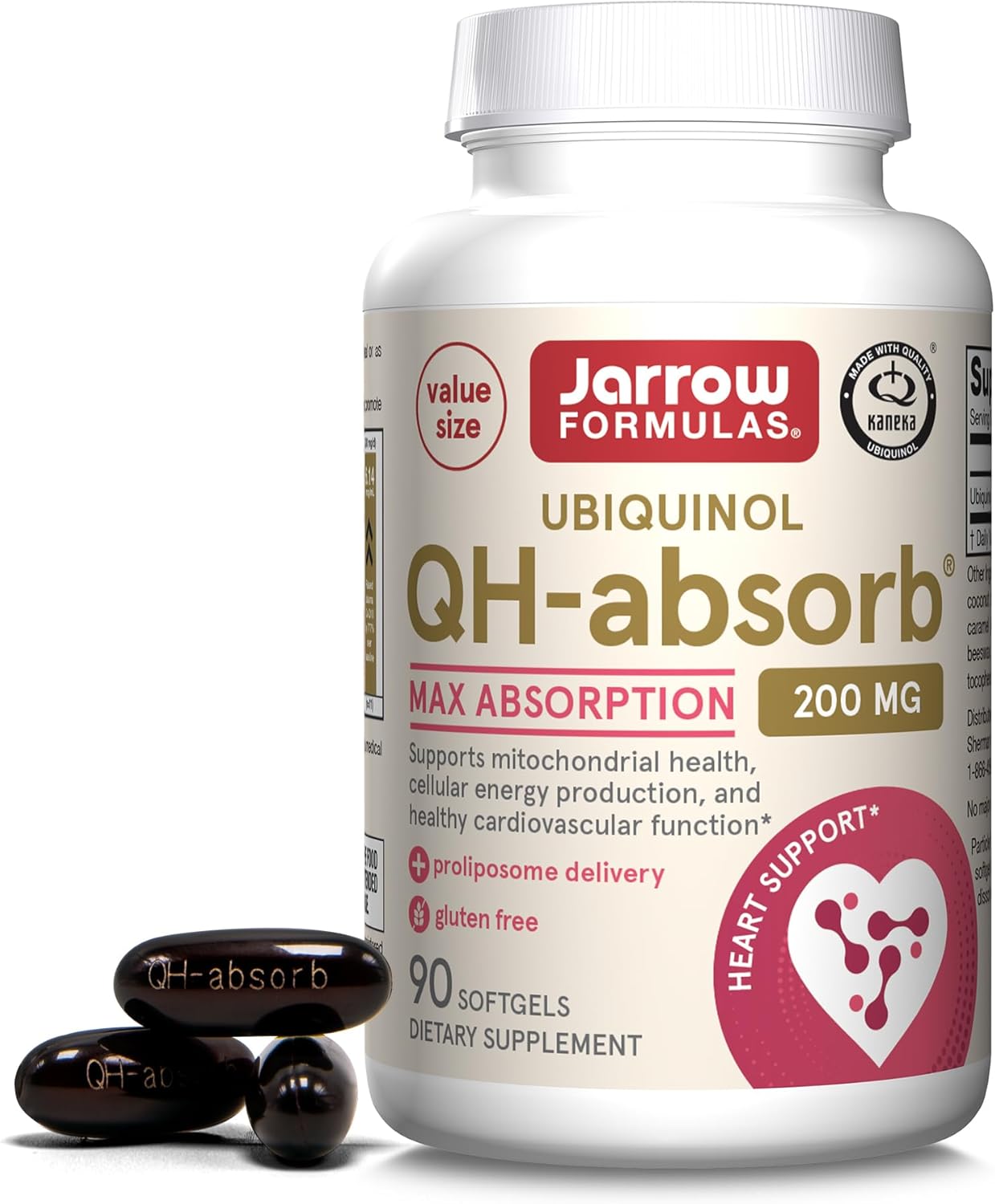
Jarrow Formulas QH-Absorb 200
Delivers 200mg of ubiquinol per softgel using Kaneka QH — the most rigorously studied ubiquinol source globally — plus a proliposome delivery system designed to maximize absorption.
- No USP Verified or NSF Certified for Sport certification; quality depends on Jarrow's in-house GMP compliance and Kaneka's supplier testing rather than independent verification
Affiliate link: If you buy through this link, we may earn a commission at no extra cost to you.
Buy Jarrow Formulas QH-Absorb 200
NOW Ubiquinol 200mg
- No USP Verified or NSF Certified for Sport certification — a meaningful gap for a product in this price range where independent verification is achievable
- A notable subset of user reviews (across multiple retail platforms) report a fishy or unpleasant aftertaste, suggesting potential softgel quality inconsistency across batches
- NOW does not publish detailed third-party certificates of analysis publicly, making it harder to independently confirm potency
Affiliate link: If you buy through this link, we may earn a commission at no extra cost to you.
Buy NOW Ubiquinol 200mg
Life Extension Super Ubiquinol CoQ10
Best direct Life Extension Europe option for adults who prefer the active ubiquinol form with a research-oriented brand and an official Awin direct-brand checkout path.
- More expensive per serving than Qunol, so it is not the best value pick for every reader
- 100mg per softgel is lower than the 200mg ubiquinol dose in Jarrow and NOW products
Affiliate link: If you buy through this link, we may earn a commission at no extra cost to you.
Buy Life Extension Super Ubiquinol CoQ10Compare supplements with the same checklist we use.
Get the anti-aging supplement cheat sheet with evidence prompts, safety checks, and label-quality questions before you buy.
Comparison Table
| Category | #1 Qunol Ultra CoQ10 Qunol | #2 Jarrow Formulas QH-Absorb 200 Jarrow Formulas | #3 NOW Ubiquinol 200mg NOW Foods | #4 Life Extension Super Ubiquinol CoQ10 Life Extension |
|---|---|---|---|---|
| Score | 9.2/10 | 8.7/10 | 8.1/10 | 7.9/10 |
| Best For | Adults under 50 looking for a quality-verified, affordable daily CoQ10, or statin users who want the most credentialed product available | Adults over 50, those with poor CoQ10 conversion capacity, or anyone specifically seeking high-dose ubiquinol with a premium delivery system | Budget-conscious buyers who want 200mg ubiquinol from a reputable source and are comfortable with a brand-level (rather than product-level) quality assurance model | Adults who specifically want a direct Life Extension Europe ubiquinol option rather than another Amazon-only CoQ10 listing |
| Pros |
|
|
|
|
| Cons |
|
|
|
|
What to Know About CoQ10 for Energy
Quick answer: CoQ10 is not a stimulant, and it will not replace sleep, calories, iron, thyroid care, or medical evaluation for unexplained fatigue. It is most plausible for energy support when low CoQ10 status is part of the picture, especially with aging, statin use, or higher mitochondrial demand. If you're over 35 and find yourself dragging through afternoons that used to feel effortless, your CoQ10 levels may be part of the story. This coenzyme is fundamental to how your mitochondria generate ATP - the energy currency every cell in your body runs on. Natural production peaks in your mid-twenties, then declines steadily with age. Statin medications accelerate that drop further. The supplement market doesn't make choosing easy. There are two distinct forms - ubiquinone and ubiquinol - plus enormous variation in absorption technology, dosage, and quality verification. A product that looks identical on the label can deliver meaningfully different results depending on its formulation. We've spent considerable time sorting through that complexity so you don't have to. This guide ranks four products that represent the best available options across different priorities: verified quality and value, maximum potency in the active form, and a mid-range option that balances both. Every pick is backed by a rationale grounded in formulation science and clinical context, not marketing claims.
This content is for educational purposes only and is not medical advice. These statements have not been evaluated by the FDA. This product is not intended to diagnose, treat, cure, or prevent any disease.
Key Benefits of CoQ10 for Energy
May support mitochondrial ATP production, potentially reducing fatigue in adults with age-related or statin-related CoQ10 depletion
Research suggests a role in cardiovascular health, with one randomized trial showing reduced adverse events in heart failure patients (Mortensen et al., 2014)
Acts as a fat-soluble antioxidant, helping protect cell membranes from oxidative stress — a process that increases with age
How CoQ10 Supports Energy
CoQ10 — formally coenzyme Q10 — sits at the heart of the mitochondrial electron transport chain, the biochemical assembly line your cells use to produce ATP. Specifically, it shuttles electrons between Complex I, Complex II, and Complex III in the inner mitochondrial membrane. Without adequate CoQ10, this chain becomes inefficient, and ATP output drops. Every cell in your body needs ATP, but high-demand tissues — heart muscle, skeletal muscle, brain — feel the shortfall most acutely. That's why fatigue and reduced exercise tolerance are the most commonly reported symptoms of CoQ10 depletion. There are two forms in supplements. Ubiquinone is the oxidized form; your body must convert it to ubiquinol (the reduced, active form) before it can participate in the electron transport chain. Most healthy adults under 40 make this conversion efficiently. After 40, or in the presence of certain conditions, conversion capacity may decline — which is the core argument for choosing ubiquinol directly. Ubiquinol also functions as the body's primary fat-soluble antioxidant, neutralizing free radicals in cell membranes before they cause oxidative damage. Both mechanisms are relevant to energy, cellular aging, and cardiovascular tissue health. Note: The Mortensen et al. 2014 trial (Q-SYMBIO) studied CoQ10 in patients with chronic heart failure - a population with severe underlying mitochondrial dysfunction. Results from this population may not generalize to healthy adults seeking general energy support. The trial is cited for mechanistic plausibility, not as direct evidence for healthy-population use.
CoQ10 supports the electron transport chain, but NMN for energy feeds the NAD+ pool that drives the same mitochondrial machinery — many people find stacking both more effective than either alone.
Chronic low-grade inflammation is a hidden drag on cellular energy; omega-3 for inflammation addresses that upstream bottleneck while CoQ10 works directly at the mitochondrial level.
What to Look For When Buying CoQ10
The single most important decision you'll make buying CoQ10 is choosing between ubiquinone and ubiquinol. Ubiquinone is the form with the longer research history — most landmark human trials, including the Q-SYMBIO heart failure study, used ubiquinone. It's also less expensive to manufacture, which is why it dominates the market. The catch: your body must convert it to ubiquinol before it's metabolically active. In younger, healthy adults, this conversion is efficient. After roughly age 50, or in individuals with metabolic or mitochondrial dysfunction, conversion may become a limiting factor. If you're over 50 or have specific health concerns, there's a reasonable scientific rationale for choosing ubiquinol directly. Age and statin context matter, but they do not turn CoQ10 into a stimulant or a replacement for medical evaluation. Statin users often have a clearer rationale because statins reduce endogenous CoQ10 production; adults over 50 may also have less efficient conversion from ubiquinone to ubiquinol. If fatigue is new, severe, or paired with shortness of breath, chest symptoms, weight change, or sleep disruption, rule out medical causes before assuming a supplement gap. Absorption technology matters almost as much as form. CoQ10 is highly lipophilic — it doesn't dissolve in water and struggles to cross the aqueous environment of the gut. Standard powder capsules have poor bioavailability. Look for products that address this through softgel formulations with oils, water-soluble delivery systems (as in Qunol), or proliposome/lipid matrix technologies (as in Jarrow QH-Absorb). Taking any CoQ10 supplement with a meal that contains some fat will also meaningfully improve absorption. Dosage is genuinely context-dependent. For general wellness and mild fatigue support, 100mg daily is a reasonable starting point. For statin-associated depletion, cardiovascular support under physician guidance, or adults over 50 targeting energy optimization, 200–300mg daily is more commonly referenced in clinical literature. Don't assume a higher dose is always better — there's a ceiling effect, and doses above 300mg don't appear to offer proportional benefit in most healthy adults. Finally: don't overlook quality verification. USP Verified is the gold standard for dietary supplements — it confirms identity, potency, and purity through independent laboratory testing. NSF Certified for Sport adds a contaminant screen relevant to competitive athletes. If a product carries neither certification, you're relying entirely on the brand's in-house quality controls, which vary enormously. For a supplement you'll take daily for months or years, that distinction is worth the small price premium.
Dosage Guidance
Always follow your healthcare provider's recommendations. Dosages vary by individual health status, age, and goals.
Common CoQ10 Complaints (And How to Avoid Them)
Based on analysis of thousands of customer reviews across CoQ10 products.
"I've been taking CoQ10 for two weeks and don't feel any different"
Two weeks is genuinely too short a trial period. Clinical research typically assesses outcomes at 8–12 weeks minimum. CoQ10 replenishment is a gradual process — cellular mitochondrial function doesn't flip like a switch. Commit to at least 8 weeks at an appropriate dose (100–200mg daily with food) before evaluating whether it's working for you.
"CoQ10 upsets my stomach"
This almost always resolves when the softgel is taken with a meal rather than on an empty stomach. The oil-based carrier in softgel formulations can cause nausea without food. If GI issues persist even with food, switching to a divided dose — 100mg twice daily rather than 200mg once — tends to resolve the problem for most people.
"There are so many CoQ10 products — how do I know if mine is actually real CoQ10?"
This is a legitimate concern. The only reliable answer is USP Verified or NSF Certified status, which requires independent laboratory testing of the actual commercial product. Qunol Ultra is USP Verified. For products without these marks, choosing brands that source from Kaneka — a major Japanese CoQ10 manufacturer with extensive quality documentation — provides the next best level of ingredient traceability.
Safety & Interactions
- Pregnancy and breastfeeding: Consult your healthcare provider before taking this supplement during pregnancy or while nursing. The safety of supplemental doses beyond dietary intake has not been established in pregnant or lactating women.
- Blood thinners: If you take blood-thinning medications (e.g., warfarin, apixaban, rivaroxaban, clopidogrel, or high-dose aspirin), consult your healthcare provider BEFORE starting this supplement, as it may have additive antiplatelet or anticoagulant effects.
- Kidney disease: If you have chronic kidney disease (CKD) or any significant kidney impairment, consult your healthcare provider before taking this supplement. Some supplements can accumulate to dangerous levels when kidney function is reduced.
- Gout: Individuals with gout should consult their healthcare provider before starting this supplement. Certain supplements (e.g., collagen, fish oil, niacin) may affect uric acid levels or trigger flares in susceptible individuals.
- Fish allergy - capsule source: Some softgel capsules use fish-derived gelatin even when the active supplement is not fish-derived. If you have a confirmed fish or shellfish allergy, verify the capsule source on the label or check with the manufacturer. Vegan capsules (vegetable cellulose) are widely available alternatives.
- Beef / alpha-gal allergy - capsule source: Many softgel and two-piece capsules use bovine gelatin. If you have a confirmed beef allergy or alpha-gal syndrome (mammalian meat allergy), check capsule sources on the label. Vegan capsules (vegetable cellulose) and HPMC capsules are alternatives.
- Active cancer or chemotherapy/radiation: If you have an active cancer diagnosis or are undergoing chemotherapy or radiation, consult your oncologist before taking this supplement. Mechanisms involving DNA repair, mitochondrial energy production, cellular proliferation, or antioxidant activity could theoretically affect cancer cell survival or treatment efficacy. This is a theoretical concern based on cellular mechanisms, not a proven clinical interaction, but it warrants an oncology discussion before use.
- Blood pressure medications: This supplement may have an additive blood-pressure-lowering effect when taken with antihypertensives including beta-blockers (metoprolol, atenolol), ACE inhibitors (lisinopril), ARBs (losartan), and calcium channel blockers (amlodipine). If you take any blood pressure medication, monitor your readings for the first 4–6 weeks after starting and inform your prescribing physician.
- Diabetes medications: If you take metformin, insulin, or sulfonylureas, consult your provider before starting this supplement. Some studies suggest a modest lowering of fasting blood glucose and HbA1c — generally beneficial, but additive effects could increase hypoglycemia risk if your diabetes medications are not adjusted.
- Statin-associated CoQ10 depletion: If you take a statin (atorvastatin, simvastatin, rosuvastatin, pravastatin, lovastatin) you have a higher clinical need for CoQ10. Statins inhibit HMG-CoA reductase — the same enzyme that produces CoQ10 — and reduce circulating CoQ10 by 20–40% in some studies. Many cardiologists recommend 100–200mg CoQ10 daily for statin users, particularly those with statin-associated muscle symptoms. Discuss with your prescribing physician.
""As a registered dietitian, I'd emphasize that CoQ10 supplementation is most evidence-supported for adults with documented depletion — statin users, those over 50, or individuals with specific cardiovascular concerns under medical care. For general fatigue in otherwise healthy adults, ruling out iron, B12, and thyroid issues first is both cheaper and more likely to yield results."
— Angelique Nicole R. Villegas, RND, Registered Nutritionist Dietitian · PRC Philippines · License #0023950
Frequently Asked Questions
Citations & Research
This page references peer-reviewed research indexed on PubMed/NCBI. Citations are provided for transparency. Always consult a qualified healthcare professional before making any medical decisions.
- [1]Mortensen SA, Rosenfeldt F, Kumar A et al. “The effect of coenzyme Q10 on morbidity and mortality in chronic heart failure: results from Q-SYMBIO: a randomized double-blind trial.” JACC Heart Failure, 2014. n=420. doi:10.1016/j.jchf.2014.06.008PMID 25282031 ↗
- [2]Sándor PS, Di Clemente L, Coppola G et al. “Efficacy of coenzyme Q10 in migraine prophylaxis: a randomized controlled trial.” Neurology, 2005. n=42. doi:10.1212/01.WNL.0000151975.03598.EDPMID 15728298 ↗
- [3]Nederveen JP, Mastrolonardo AJ, Xhuti D et al. “Novel Multi-Ingredient Supplement Facilitates Weight Loss and Improves Body Composition in Overweight and Obese Individuals: A Randomized, Double-Blind, Placebo-Controlled Clinical Trial.” Nutrients, 2023. doi:10.3390/nu15173693PMID 37686725 ↗
- [5]Ayers J, Cook J, Koenig RA et al. “Recent Developments in the Role of Coenzyme Q10 for Coronary Heart Disease: a Systematic Review.” Current Atherosclerosis Reports, 2018. doi:10.1007/s11883-018-0730-1PMID 29766349 ↗
Ready to Try CoQ10?
Our top pick for energy. Third-party tested, highly reviewed.
Affiliate link: If you buy through this link, we may earn a commission at no extra cost to you.
Shop #1 Pick — Qunol Ultra CoQ10Continue exploring
- CoQ10 supplement guideSupplement overview
- see all energy supplements we coverGoal overview
- clinical notes on B Complex and energyAlternative supplement
- our Cordyceps guide for energyAlternative supplement
- our top CoQ10 pick for blood pressure supportSame supplement, different goal
- coq10 vs ubiquinol comparedCompare options
- clinical notes on CoQ10 and migraine preventionEditor pick
- where CoQ10 fits for heart healthEditor pick
- CoQ10 research for fertilityEditor pick
Get the evidence-graded supplement cheat sheet.
Evidence prompts, safety checks, and label-quality questions before you buy — free, straight to your inbox.
No spam. Unsubscribe anytime.