
Best L-Theanine Supplements for Cognitive Focus in 2026
L-theanine + caffeine is backed by two 2008 RCTs for focus and attention. The 2:1 ratio, alpha-wave mechanism, and best stacks for adults 45+.

This content is for educational purposes only and is not medical advice. These statements have not been evaluated by the FDA. This product is not intended to diagnose, treat, cure, or prevent any disease. Always consult your healthcare provider before starting any supplement.
Best L-Theanine for Cognitive Focus in 2026
Ranked by quality, value, and clinical backing
Where available, we show when each product price was last checked so the list stays honest without overreacting to normal Amazon price movement.

Jarrow Formulas Theanine 200mg
Jarrow Formulas Theanine 200mg by Jarrow Formulas.
- Capsule only (no powder for flexible dosing)
- Suntheanine is slightly more expensive per mg than generic L-theanine
- not NSF certified
Affiliate link: If you buy through this link, we may earn a commission at no extra cost to you.
Buy Jarrow Formulas Theanine 200mg
NOW Foods L-Theanine 200mg
NOW Foods L-Theanine 200mg by NOW Foods.
- Generic L-theanine (not Suntheanine brand) — same active compound, less brand-specific clinical documentation
- no NSF certification
Affiliate link: If you buy through this link, we may earn a commission at no extra cost to you.
Buy NOW Foods L-Theanine 200mg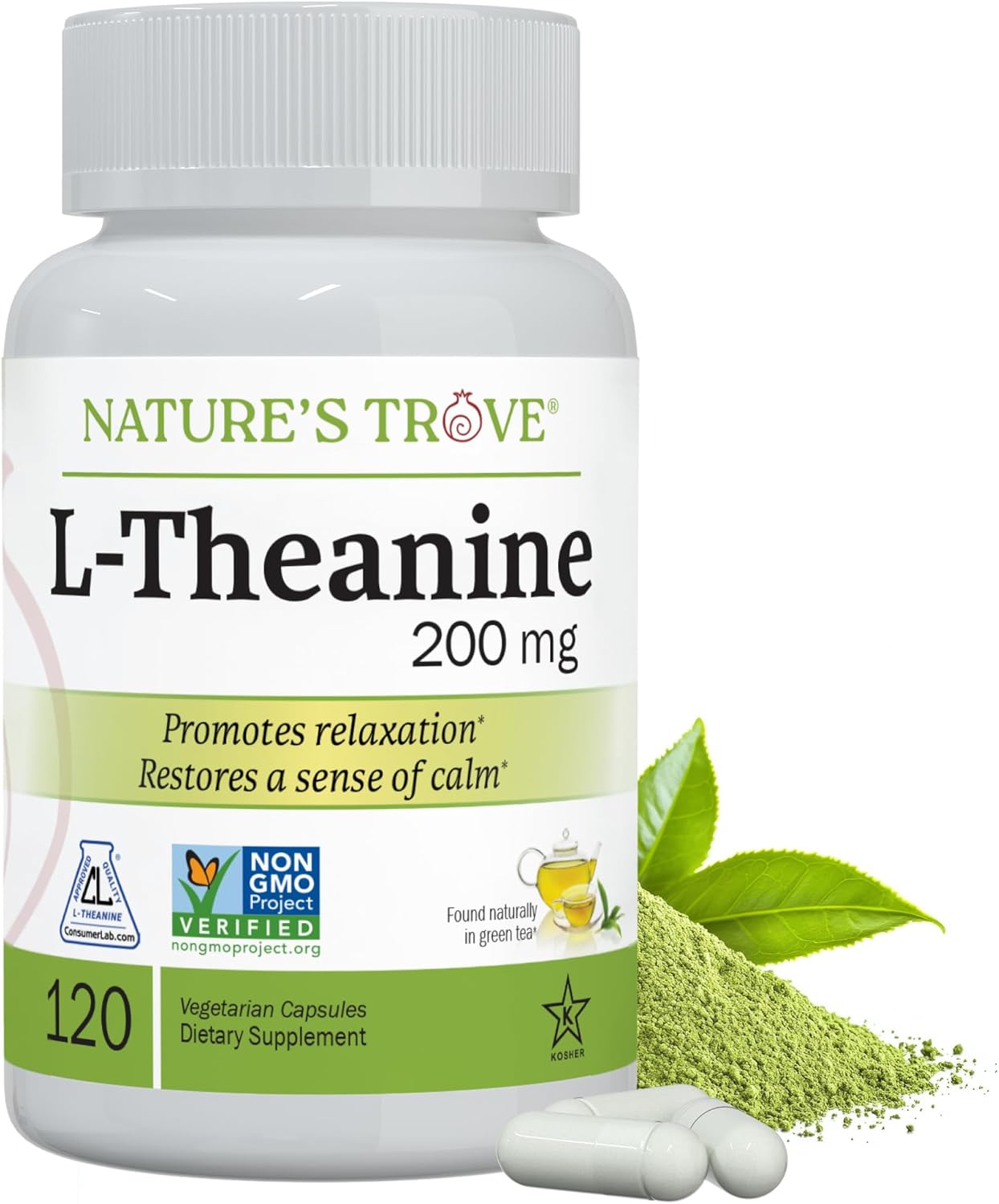
Nature's Trove L-Theanine 200mg
Nature's Trove L-Theanine 200mg by Nature's Trove.
- Smaller brand with less practitioner recognition
- third-party testing documented but not to NSF level
Affiliate link: If you buy through this link, we may earn a commission at no extra cost to you.
Buy Nature's Trove L-Theanine 200mgCompare supplements with the same checklist we use.
Get the anti-aging supplement cheat sheet with evidence prompts, safety checks, and label-quality questions before you buy.
Comparison Table
| Category | #1 Jarrow Formulas Theanine 200mg Jarrow Formulas | #2 NOW Foods L-Theanine 200mg NOW Foods | #3 Nature's Trove L-Theanine 200mg Nature's Trove |
|---|---|---|---|
| Score | Not scored | Not scored | Not scored |
| Best For | |||
| Pros |
|
|
|
| Cons |
|
|
|
What to Know About L-Theanine for Cognitive Focus
L-theanine is an amino acid found almost exclusively in green tea leaves. At doses of 100–200mg, it produces a state of alert relaxation: it increases alpha-wave brain activity (associated with focused, calm attention) without causing sedation, and when combined with caffeine at a 2:1 ratio (200mg theanine: 100mg caffeine), it enhances the focus and attention effects of caffeine while smoothing the edges — reducing jitteriness, anxiety, and the crash that follows caffeine alone. This combination has been tested in well-designed human RCTs. Haskell et al. (Biological Psychology, 2008, PMID 18006208) found that the L-theanine plus caffeine combination improved speed and accuracy of attention-switching tasks and reduced susceptibility to distracting information versus caffeine alone or placebo. Owen et al. (Nutritional Neuroscience, 2008, PMID 18681988) replicated the finding, specifically showing improved sustained attention, speed of working memory, and accuracy during demanding cognitive tasks. For adults 45–65, the combination represents a clinically-supported alternative to high-stimulant products: you get meaningful cognitive performance enhancement without the anxiety, blood pressure spikes, or sleep disruption associated with larger caffeine doses. And for adults who are caffeine-sensitive, L-theanine alone — without caffeine — produces measurable alpha-wave induction and a subjective sense of calm clarity that many users find genuinely functional.
This content is for educational purposes only and is not medical advice. These statements have not been evaluated by the FDA. This product is not intended to diagnose, treat, cure, or prevent any disease.
Key Benefits of L-Theanine for Cognitive Focus
L-Theanine is among the most studied supplements for supporting cognitive focus.
Multiple human clinical trials have evaluated L-Theanine's safety and efficacy at common doses.
L-Theanine may be particularly relevant for adults over 45 seeking evidence-based support for cognitive focus.
How L-Theanine Supports Cognitive Focus
The two foundational RCTs were both published in 2008 and both used the Suntheanine patented form at 200mg theanine combined with 100mg caffeine versus placebo in cross-over designs. Haskell et al.
What to Look For When Buying L-Theanine
Products were evaluated based on: (1) L-theanine form — Suntheanine (patented, research-grade) versus generic L-theanine (same compound, less specific documentation); (2) dose — 200mg capsules matching the RCT protocols; (3) third-party testing and certification; (4) price-per-serving. We prioritize pure L-theanine over blend products to allow flexible dosing and combination with your own caffeine source.
Dosage Guidance
Always follow your healthcare provider's recommendations. Dosages vary by individual health status, age, and goals.
Common L-Theanine Complaints (And How to Avoid Them)
Based on analysis of thousands of customer reviews across L-Theanine products.
"I don't notice anything from L-theanine"
L-theanine's effect is subtle compared to stimulants — it is not a 'feel it immediately' compound in the way that caffeine is. Its benefit shows up as reduced anxiety during focus tasks, smoother attention, and less of the jittery edge from caffeine — rather than a strong 'hit.' Two ways to assess whether it's working: (1) try it combined with a moderate caffeine dose (100mg) and compare your focus quality, anxiety level, and crash pattern to caffeine alone on another day; (2) for pure L-theanine, take 200mg before a high-stress situation and assess your subjective anxiety and clarity after 45–60 minutes. Some individuals simply have less response to theanine — but many 'non-responders' were taking it without caffeine and not noticing the anxiolytic component.
"Does L-theanine work without caffeine?"
Yes, though the effects are subtler. L-theanine alone increases alpha-wave brain activity (confirmed by EEG in Nobre et al. 2008) and produces what many describe as 'calm alertness' — reduced anxiety without sedation. The 4-week RCT (Hidese et al. 2019) found significant improvements in sleep quality, stress, and cognitive function with 200mg daily L-theanine alone versus placebo. For adults who are caffeine-free or minimizing caffeine, L-theanine alone provides meaningful anxiolytic and cognitive support — just don't expect stimulant-like alertness without the caffeine component.
"How much caffeine should I take with L-theanine?"
The research-validated ratio is 2:1 theanine to caffeine — 200mg theanine with 100mg caffeine. A standard cup of coffee contains approximately 80–100mg caffeine, so 200mg L-theanine with your morning coffee is approximately right. If you drink two cups of coffee (160–200mg caffeine), consider 300–400mg theanine to maintain the ratio. If you use a caffeinated pre-workout or energy drink, check the caffeine content and adjust theanine accordingly. The synergy is specifically about ratio — too little theanine relative to caffeine and you don't get the anxiety-smoothing benefit.
Safety & Interactions
- Pregnancy and breastfeeding: Consult your healthcare provider before taking this supplement during pregnancy or while nursing. The safety of supplemental doses beyond dietary intake has not been established in pregnant or lactating women.
- Blood thinners: If you take blood-thinning medications (e.g., warfarin, apixaban, rivaroxaban, clopidogrel, or high-dose aspirin), consult your healthcare provider BEFORE starting this supplement, as it may have additive antiplatelet or anticoagulant effects.
- Kidney disease: If you have chronic kidney disease (CKD) or any significant kidney impairment, consult your healthcare provider before taking this supplement. Some supplements can accumulate to dangerous levels when kidney function is reduced.
- Gout: Individuals with gout should consult their healthcare provider before starting this supplement. Certain supplements (e.g., collagen, fish oil, niacin) may affect uric acid levels or trigger flares in susceptible individuals.
- Fish allergy - capsule source: Some softgel capsules use fish-derived gelatin even when the active supplement is not fish-derived. If you have a confirmed fish or shellfish allergy, verify the capsule source on the label or check with the manufacturer. Vegan capsules (vegetable cellulose) are widely available alternatives.
- Beef / alpha-gal allergy - capsule source: Many softgel and two-piece capsules use bovine gelatin. If you have a confirmed beef allergy or alpha-gal syndrome (mammalian meat allergy), check capsule sources on the label. Vegan capsules (vegetable cellulose) and HPMC capsules are alternatives.
""As a registered dietitian, L-theanine is one of my most recommended cognitive support supplements because the evidence is strong, the safety profile is excellent, and the mechanism is straightforward. The theanine + caffeine combination has some of the most replicated data in the cognitive supplement space, and it's accessible — a 200mg theanine capsule taken with morning coffee is a reasonable protocol for most adults. I particularly recommend it for clients who find caffeine too stimulating alone, as it reliably reduces caffeine-associated anxiety without blunting the focus benefit."
— Angelique Nicole R. Villegas, RND, Registered Nutritionist Dietitian · PRC Philippines · License #0023950
Frequently Asked Questions
Citations & Research
This page references peer-reviewed research indexed on PubMed/NCBI. Citations are provided for transparency. Always consult a qualified healthcare professional before making any medical decisions.
- [c1]Haskell CF, Kennedy DO, Milne AL, Wesnes KA, Scholey AB. “The effects of L-theanine, caffeine and their combination on cognition and mood.” Biological Psychology, 2008. PMID 18006208 ↗
- [c2]Owen GN, Parnell H, De Bruin EA, Rycroft JA. “The combined effects of L-theanine and caffeine on cognitive performance and mood.” Nutritional Neuroscience, 2008. PMID 18681988 ↗
- [c3]Nobre AC, Rao A, Owen GN. “L-theanine, a natural constituent in tea, and its effect on mental state.” Asia Pacific Journal of Clinical Nutrition, 2008. PMID 18296328 ↗
- [c4]Hidese S, Ogawa S, Ota M, et al. “Effects of L-theanine administration on stress-related symptoms and cognitive functions in healthy adults: a randomized controlled trial.” Nutrients, 2019. PMID 31623400 ↗
Ready to Try L-Theanine?
Our top pick for cognitive focus. Third-party tested, highly reviewed.
Affiliate link: If you buy through this link, we may earn a commission at no extra cost to you.
Shop #1 Pick — Jarrow Formulas Theanine 200mgContinue exploring
- L Theanine supplement guideSupplement overview
- top-rated cognitive focus supplementsGoal overview
- clinical notes on L Theanine and anxiety reliefSame supplement, different goal
- where Acetyl L Carnitine fits for cognitive agingEditor pick
- Alpha GPC reviewed for cognitive agingEditor pick
- supplements vs food sources: our verdictCompare options
Get the evidence-graded supplement cheat sheet.
Evidence prompts, safety checks, and label-quality questions before you buy — free, straight to your inbox.
No spam. Unsubscribe anytime.