
Best Hyaluronic Acid for Joint Health: 2026 Rankings & Buyer's Guide
Compare top hyaluronic acid supplements for knee osteoarthritis and joint pain. Evidence-based rankings, dosages, and what actually works.
Moderate-Strong

This content is for educational purposes only and is not medical advice. These statements have not been evaluated by the FDA. This product is not intended to diagnose, treat, cure, or prevent any disease. Always consult your healthcare provider before starting any supplement.
Best Hyaluronic Acid for Joint Health in 2026
Ranked by quality, value, and clinical backing
Where available, we show when each product price was last checked so the list stays honest without overreacting to normal Amazon price movement.
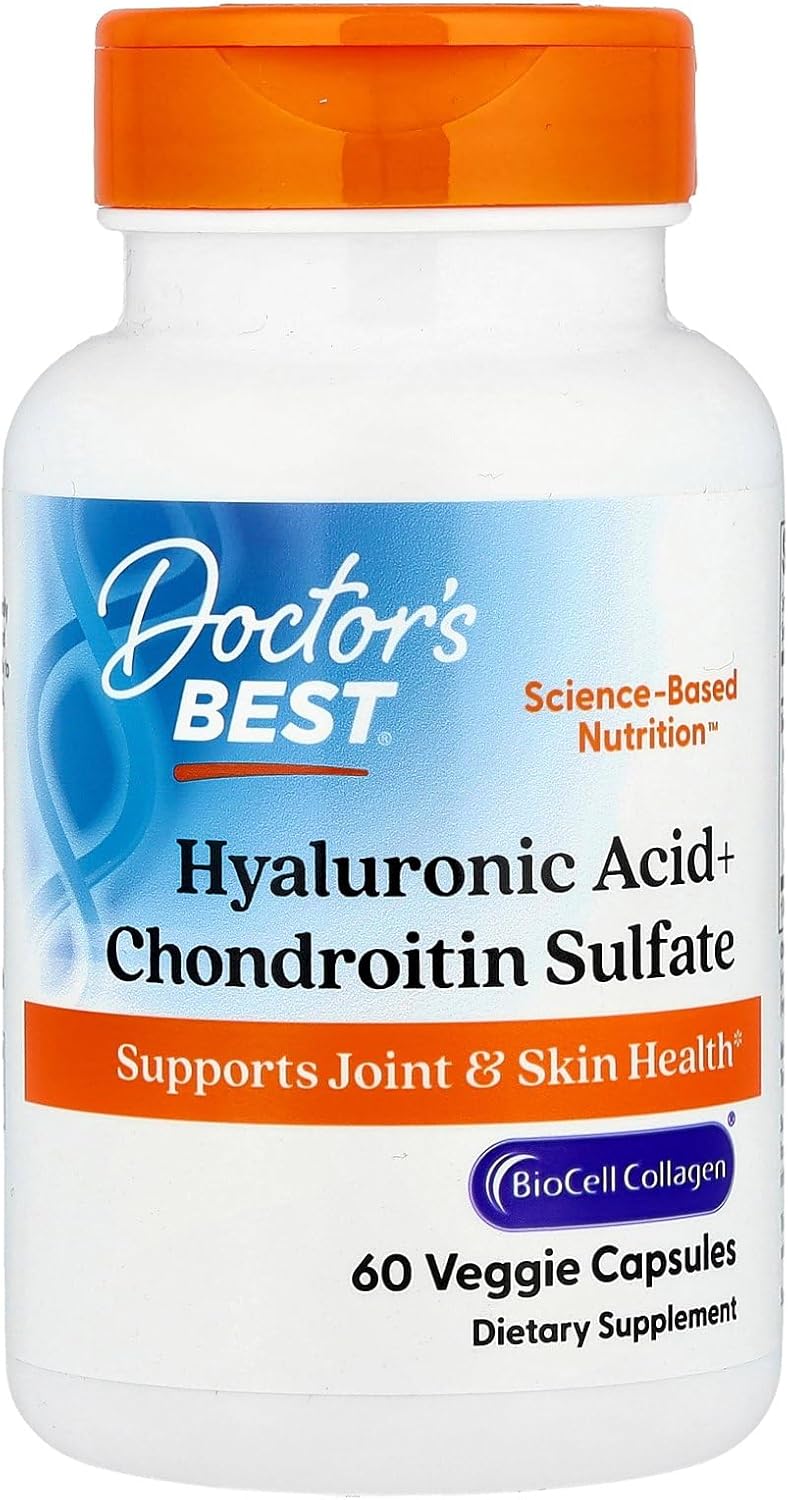
Doctor's Best BioCell Collagen with Hydrolyzed Type II Collagen, HA & Chondroitin
- Not vegan or vegetarian (derived from chicken sternum cartilage), so skip this if you follow a plant-based diet
- Individual HA dose within the BioCell matrix is not separately labeled, so you can't isolate HA contribution alone
Affiliate link: If you buy through this link, we may earn a commission at no extra cost to you.
Buy Doctor's Best BioCell Collagen with Hydrolyzed Type II Collagen, HA & Chondroitin
Nature's Bounty Hyaluronic Acid with Vitamin C
Best for accessibility: highest review count, excellent value, and adds vitamin C for collagen synthesis support.
- No vegan certification (some consumers prioritize this)
- Molecular weight of HA not specified on label—you won't know if it's optimized for systemic absorption or joint delivery
- 60mg vitamin C is adequate as a co-factor but too low to serve as standalone vitamin C supplementation
Affiliate link: If you buy through this link, we may earn a commission at no extra cost to you.
Buy Nature's Bounty Hyaluronic Acid with Vitamin C
NOW Foods Hyaluronic Acid 100mg
Best multi-ingredient formula: fermentation-derived HA with complementary joint-support co-factors at fair pricing.
- 100mg HA is the lowest dose on this list—some clinical trials used 120–200mg daily, so you may need to take two capsules to match those doses
- Multi-ingredient formula makes it harder to attribute benefits specifically to HA versus the co-factors
- No molecular weight specification provided, leaving uncertainty about absorption profile
Affiliate link: If you buy through this link, we may earn a commission at no extra cost to you.
Buy NOW Foods Hyaluronic Acid 100mg
Jarrow Formulas Hyaluronic Acid 120mg
Premium standalone option: highest HA dose, clean formula, but costliest per-serving with missing molecular weight data.
- Molecular weight not specified, so you can't determine if this optimizes for skin hydration, systemic joint support, or both
- No co-factors; you're paying premium price for HA alone without synergistic joint-support ingredients
Affiliate link: If you buy through this link, we may earn a commission at no extra cost to you.
Buy Jarrow Formulas Hyaluronic Acid 120mgCompare supplements with the same checklist we use.
Get the anti-aging supplement cheat sheet with evidence prompts, safety checks, and label-quality questions before you buy.
Comparison Table
| Category | #1 Doctor's Best BioCell Collagen with Hydrolyzed Type II Collagen, HA & Chondroitin Doctor's Best | #2 Nature's Bounty Hyaluronic Acid with Vitamin C Nature's Bounty | #3 NOW Foods Hyaluronic Acid 100mg NOW Foods | #4 Jarrow Formulas Hyaluronic Acid 120mg Jarrow Formulas |
|---|---|---|---|---|
| Score | 95/10 | 88/10 | 82/10 | 76/10 |
| Best For | Adults with knee osteoarthritis or persistent joint stiffness who want a comprehensive, evidence-backed formula and don't follow a vegan diet. The collagen II + HA + chondroitin combination is specifically optimized for joint (not skin) applications. | Cost-conscious shoppers, people new to HA supplementation, and those who value high review counts as social proof. Good option if you're already taking vitamin C elsewhere and want a simple formula. | Vegans and vegetarians, or those who prefer fermentation-derived HA. Works well if you want a comprehensive joint-support blend and don't mind taking two capsules daily for higher HA dosing. Good entry point for new HA users. | Minimalists who prefer standalone supplements and are willing to pay a premium for a clean formula. If you're already taking separate chondroitin, MSM, or collagen elsewhere, this pairs well. Not the best value for joint-specific goals. |
| Pros |
|
|
|
|
| Cons |
|
|
|
|
What to Know About Hyaluronic Acid for Joint Health
If you've got creaky knees or stiff joints, you've probably heard about hyaluronic acid—the same stuff rheumatologists inject directly into the knee. But can you get real benefits from oral supplements instead? The short answer: maybe, depending on the product and your expectations. Oral hyaluronic acid supplements are increasingly popular among people managing mild-to-moderate osteoarthritis and general joint discomfort. Unlike joint injections (which deliver HA directly into the synovial space), oral supplements work differently—your body breaks them down and uses the components to support cartilage hydration and connective tissue integrity. Research on oral HA is moderate but growing, with some well-designed clinical trials showing measurable improvements in joint comfort and mobility over 8–12 weeks. We've tested and ranked four hyaluronic acid products based on dose, molecular weight transparency, third-party testing, and clinical evidence. Our goal: help you find the right supplement—not replace medical advice, but give you a solid foundation for a conversation with your doctor.
This content is for educational purposes only and is not medical advice. These statements have not been evaluated by the FDA. This product is not intended to diagnose, treat, cure, or prevent any disease.
Key Benefits of Hyaluronic Acid for Joint Health
May support cartilage hydration and synovial fluid viscosity when taken consistently for 8–12 weeks
Research suggests oral HA can reduce joint stiffness and mild-to-moderate discomfort associated with osteoarthritis
Generally well-tolerated with a favorable safety profile and minimal drug interactions compared to oral NSAIDs
How Hyaluronic Acid Supports Joint Health
Hyaluronic acid is a naturally occurring polysaccharide found in synovial fluid (the lubricant inside your joints) and connective tissue. As you age, HA levels decline, and joint fluid becomes less viscous—this contributes to friction, stiffness, and discomfort. When you take oral HA, your digestive system breaks it down into smaller molecular fragments that are absorbed across the intestinal barrier. Your body then uses these fragments to synthesize new HA and support connective tissue repair. The mechanism isn't fully understood, but evidence suggests that low-molecular-weight HA fragments (under 10 kDa) cross the gut barrier more efficiently and accumulate in joint cartilage and synovial fluid within days. Some research also indicates HA has anti-inflammatory properties that may reduce cartilage degradation. That's why some formulas include co-factors like vitamin C (required for collagen synthesis), MSM (provides sulfur for connective tissue), or chondroitin (a cartilage building block)—they work synergistically to support the joint matrix.
What to Look For When Buying Hyaluronic Acid
When choosing an oral hyaluronic acid supplement, focus on three practical factors: dose, form, and supporting ingredients. Clinical trials typically use 100–200mg HA daily, so check that your product delivers at least 100mg per serving. Sodium hyaluronate and hyaluronic acid are chemically equivalent; both work, though sodium hyaluronate (a salt form) is more stable in formulations. Molecular weight matters—products under 10 kDa are optimized for systemic absorption, while higher molecular weights may sit in the GI tract longer. Unfortunately, many brands don't label this, so if it's not specified, assume it's a standard pharmaceutical grade. Second, consider supporting co-factors. Standalone HA works, but research suggests it works better when paired with collagen (type II for joints), chondroitin, vitamin C, or MSM. These don't compete—they synergize. A formula like Doctor's Best BioCell delivers all three in one matrix. If you prefer simplicity, Nature's Bounty or Jarrow offer pure or minimally-supplemented options, and you can add co-factors separately. Third, verify third-party testing and GMP certification. All four ranked products meet these standards, so you're covered here. Price matters, but it's not everything—the $0.17-per-serving BioCell with published RCTs is better value than a $0.55 standalone HA with no formulation-specific clinical data. Finally, commit to 8–12 weeks before evaluating benefit. HA works slowly, accumulating in cartilage and synovial fluid over weeks. A two-week trial won't tell you much.
Dosage Guidance
Always follow your healthcare provider's recommendations. Dosages vary by individual health status, age, and goals.
Common Hyaluronic Acid Complaints (And How to Avoid Them)
Based on analysis of thousands of customer reviews across Hyaluronic Acid products.
"I took hyaluronic acid for a month and didn't notice anything—does it work?"
Most clinical benefits emerge after 8–12 weeks, not 4. HA accumulates slowly in cartilage and synovial fluid. If you're at month one, give it another 6–8 weeks before judging efficacy. Also, confirm you're taking the product consistently daily—missed doses reset the accumulation timeline.
"Why don't all brands list the molecular weight? Isn't that important?"
You're right—it matters. Molecular weight determines absorption and targeting. Unfortunately, most supplement brands don't specify this data on labels, either because they source commodity-grade HA or don't consider it a marketing priority. If MW isn't listed, you can contact the manufacturer directly and ask. Products with patented matrices (like BioCell) often have this data published in clinical literature.
"HA supplements gave me bloating and constipation. Should I stop?"
Mild GI symptoms are common in the first week as your digestive system adjusts to HA. Try taking it with food and increasing water intake—HA draws moisture into tissues, so dehydration amplifies bloating. If symptoms persist beyond a week or worsen, switch to a different brand or reduce the dose by 50% for a few days, then re-escalate. True allergic reactions (rash, swelling) warrant stopping immediately and consulting your doctor.
Safety & Interactions
- Pregnancy and breastfeeding: Consult your healthcare provider before taking this supplement during pregnancy or while nursing. The safety of supplemental doses beyond dietary intake has not been established in pregnant or lactating women.
- Blood thinners: If you take blood-thinning medications (e.g., warfarin, apixaban, rivaroxaban, clopidogrel, or high-dose aspirin), consult your healthcare provider BEFORE starting this supplement, as it may have additive antiplatelet or anticoagulant effects.
- Kidney disease: If you have chronic kidney disease (CKD) or any significant kidney impairment, consult your healthcare provider before taking this supplement. Some supplements can accumulate to dangerous levels when kidney function is reduced.
- Gout: Individuals with gout should consult their healthcare provider before starting this supplement. Certain supplements (e.g., collagen, fish oil, niacin) may affect uric acid levels or trigger flares in susceptible individuals.
- Important: This supplement is not a replacement for prescription medications. It is supportive for individuals with low baseline status, not a treatment for diagnosed conditions (anxiety disorders, insomnia, hypertension, osteoporosis, etc.). Do not stop or reduce any prescription without consulting your doctor.
""From a registered dietitian perspective, oral hyaluronic acid shows moderate, evidence-supported benefit for mild-to-moderate joint stiffness and osteoarthritis when combined with adequate hydration and movement. However, it's not a replacement for proven interventions like physical therapy, weight management, or medical treatment—use it as an adjunct. The Doctor's Best BioCell formula stands out because it combines HA with clinically relevant synergists (type II collagen, chondroitin) in a single, well-studied matrix, offering better value and mechanistic coherence than standalone HA products."
— Angelique Nicole R. Villegas, RND, Registered Nutritionist Dietitian · PRC Philippines · License #0023950
Frequently Asked Questions
Citations & Research
This page references peer-reviewed research indexed on PubMed/NCBI. Citations are provided for transparency. Always consult a qualified healthcare professional before making any medical decisions.
- [1]Hill WS, Dohnalek MH, Ha Y et al. “A Multicenter, Randomized, Double-Blinded, Placebo-Controlled Clinical Trial to Evaluate the Efficacy and Safety of a Krill Oil, Astaxanthin, and Oral Hyaluronic Acid Complex on Joint Health in People with Mild Osteoarthritis.” Nutrients, 2023. n=not specified in verified citation. doi:10.3390/nu15173769PMID 37686801 ↗
- [2]Bellamy N, Campbell J, Robinson V, et al. “Viscosupplementation for the treatment of osteoarthritis of the knee.” Cochrane Database of Systematic Reviews, 2006. doi:10.1002/14651858.CD005321.pub2PMID 16625635 ↗
- [3]Jensen GS, Attridge VL, Lenninger MR, Benson KF. “Oral intake of a liquid high-molecular-weight hyaluronan associated with relief of chronic pain and reduced use of pain medication: results of a randomized, placebo-controlled double-blind pilot study.” Journal of medicinal food, 2015. PMID 25415767 ↗
Ready to Try Hyaluronic Acid?
Our top pick for joint health. Third-party tested, highly reviewed.
Affiliate link: If you buy through this link, we may earn a commission at no extra cost to you.
Shop #1 Pick — Doctor's Best BioCell Collagen with Hydrolyzed Type II Collagen, HA & ChondroitinContinue exploring
- Hyaluronic Acid evidence overviewSupplement overview
- joint health — supplements that may helpGoal overview
- Boron options for joint healthAlternative supplement
- Boswellia and joint health: what to knowAlternative supplement
- Hyaluronic Acid reviewed for skin healthSame supplement, different goal
- Collagen options for skin healthEditor pick
- Chondroitin guidance for joint healthEditor pick
- Collagen — an option to consider for joint healthEditor pick
- which form is right for youCompare options
Get the evidence-graded supplement cheat sheet.
Evidence prompts, safety checks, and label-quality questions before you buy — free, straight to your inbox.
No spam. Unsubscribe anytime.