
Best Grape Seed Extract Supplements for Cardiovascular Health in 2026
OPC-rich grape seed extract for blood pressure and endothelial health — Feringa 2011 meta-analysis, OPC standardization guide, and top picks for adults 45+.

This content is for educational purposes only and is not medical advice. These statements have not been evaluated by the FDA. This product is not intended to diagnose, treat, cure, or prevent any disease. Always consult your healthcare provider before starting any supplement.
Best Grape Seed Extract for Cardiovascular Health in 2026
Ranked by quality, value, and clinical backing
Where available, we show when each product price was last checked so the list stays honest without overreacting to normal Amazon price movement.

NOW Foods Grape Seed Extract 100mg Standardized
Most adults seeking clinically-relevant OPC standardization at best value
- No additional synergistic ingredients (vitamin C co-supplementation may enhance OPC stability)
- Single 100mg dose — users seeking the 300mg/day range used in some RCTs will need 3 capsules
Affiliate link: If you buy through this link, we may earn a commission at no extra cost to you.
Buy NOW Foods Grape Seed Extract 100mg Standardized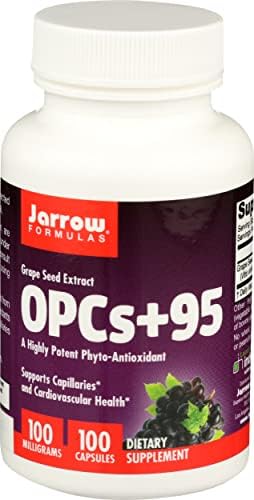
Jarrow Formulas OPCs + 95 100mg
Users who prefer Jarrow's brand quality and want verified 95% OPC standardization
- Marginally higher cost than NOW Foods at equivalent dose and standardization
- No vitamin C co-formulation
Affiliate link: If you buy through this link, we may earn a commission at no extra cost to you.
Buy Jarrow Formulas OPCs + 95 100mg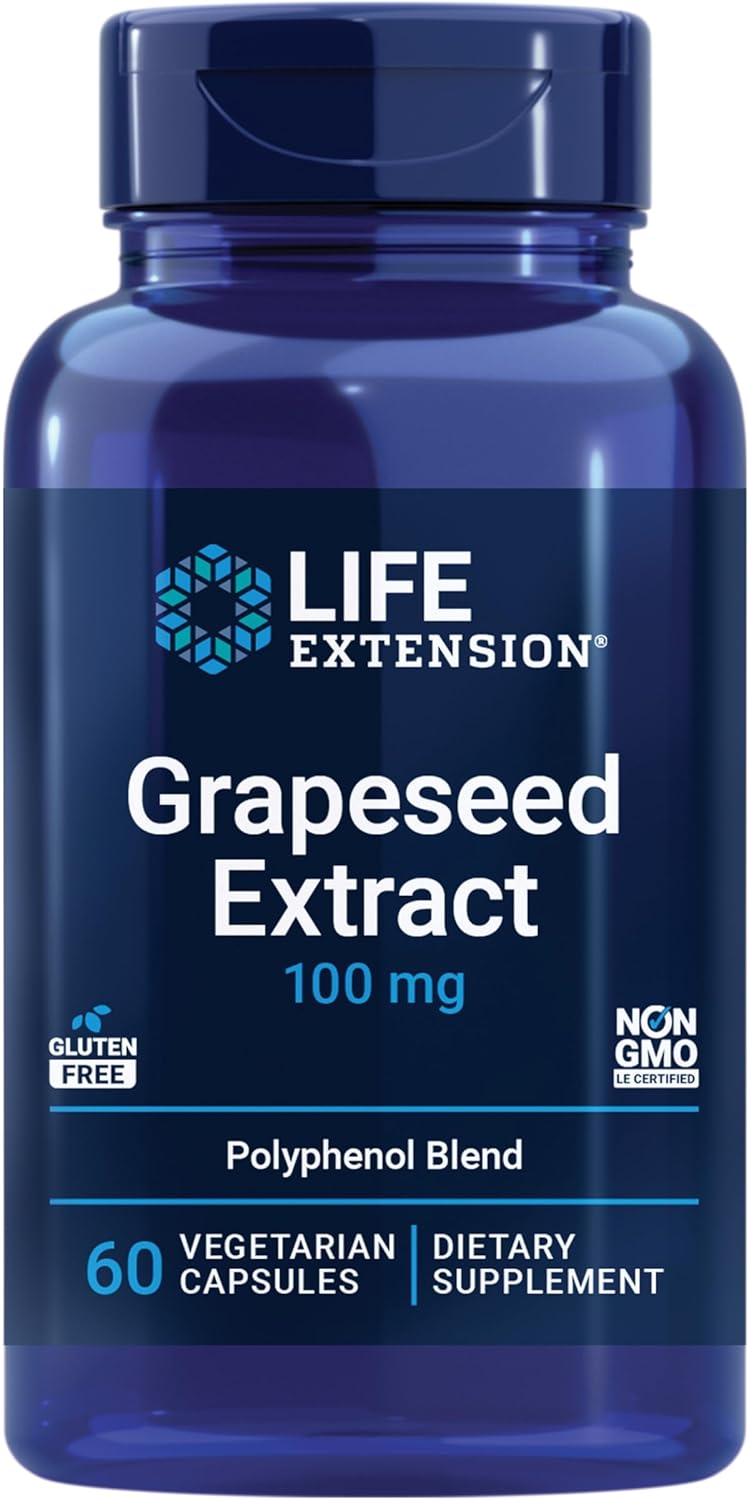
Life Extension Grapeseed Extract with Vitamin C & Resveratrol
Best Life Extension grape seed blend for users who want OPCs paired with vitamin C and resveratrol in one capsule.
- Higher cost per serving than single-ingredient options
- Combination formula makes it harder to isolate grape seed's individual contribution
Affiliate link: If you buy through this link, we may earn a commission at no extra cost to you.
Buy Life Extension Grapeseed Extract with Vitamin C & ResveratrolCompare supplements with the same checklist we use.
Get the anti-aging supplement cheat sheet with evidence prompts, safety checks, and label-quality questions before you buy.
Comparison Table
| Category | #1 NOW Foods Grape Seed Extract 100mg Standardized NOW Foods | #2 Jarrow Formulas OPCs + 95 100mg Jarrow Formulas | #3 Life Extension Grapeseed Extract with Vitamin C & Resveratrol Life Extension |
|---|---|---|---|
| Score | 9.3/10 | 9/10 | 8.7/10 |
| Best For | Most adults seeking clinically-relevant OPC standardization at best value | Users who prefer Jarrow's brand quality and want verified 95% OPC standardization | Adults who want Life Extension's grape seed polyphenol blend with vitamin C and resveratrol in one capsule |
| Pros |
|
|
|
| Cons |
|
|
|
What to Know About Grape Seed Extract for Cardiovascular Health
Grape seed extract's cardiovascular case rests almost entirely on one thing: OPC standardization. Oligomeric proanthocyanidins (OPCs) — the specific polyphenol class concentrated in grape seeds — are responsible for its endothelial and blood pressure effects. Products standardized to 95% OPCs deliver the active fraction studied in clinical trials. Non-standardized products may contain minimal OPCs and should be treated as unproven regardless of the label. The Feringa et al. 2011 meta-analysis (PMID 21802563, 8 RCTs, n=415) found that grape seed extract supplementation produced a statistically significant reduction in systolic blood pressure. The Sivaprakasapillai et al. 2009 RCT specifically examined individuals with metabolic syndrome and observed meaningful reductions in both systolic and diastolic blood pressure at doses of 150–300mg/day of standardized GSE. For buyers comparing grape seed extract to Pycnogenol (French maritime pine bark extract): both deliver OPCs as their primary active fraction, both have RCT blood pressure evidence, and multiple head-to-head comparisons suggest comparable endothelial benefits. The meaningful difference is price — Pycnogenol is a patented branded extract with substantially higher retail cost. Standardized grape seed extract at 95% OPCs provides equivalent OPC delivery for considerably less.
This content is for educational purposes only and is not medical advice. These statements have not been evaluated by the FDA. This product is not intended to diagnose, treat, cure, or prevent any disease.
Key Benefits of Grape Seed Extract for Cardiovascular Health
Grape Seed Extract is among the most studied supplements for supporting cardiovascular health.
Multiple human clinical trials have evaluated Grape Seed Extract's safety and efficacy at common doses.
Grape Seed Extract may be particularly relevant for adults over 45 seeking evidence-based support for cardiovascular health.
How Grape Seed Extract Supports Cardiovascular Health
Grape seed extract (GSE) supports cardiovascular health through its high concentration of oligomeric proanthocyanidins (OPCs) — a class of polyphenols with potent antioxidant activity. OPCs protect LDL cholesterol from oxidative modification (a key step in atherosclerosis), inhibit platelet aggregation, and may support nitric oxide production in endothelial cells, which promotes vasodilation and may help support healthy blood pressure. GSE also inhibits ACE (angiotensin-converting enzyme) activity, contributing to its blood pressure-lowering effects.
What to Look For When Buying Grape Seed Extract
Products were selected based on: (1) OPC standardization — 95% is the clinically-studied level; any product without stated OPC percentage was excluded; (2) dose — 100–300mg/day standardized extract is the range with RCT evidence; (3) brand quality, GMP certification, and third-party testing; (4) value — OPC content per dollar is the primary cost efficiency metric; (5) allergen considerations (grape-derived; relevant for those with grape/wine sensitivities).
Dosage Guidance
Always follow your healthcare provider's recommendations. Dosages vary by individual health status, age, and goals.
Common Grape Seed Extract Complaints (And How to Avoid Them)
Based on analysis of thousands of customer reviews across Grape Seed Extract products.
"Why should I buy GSE when Pycnogenol has more studies?"
Pycnogenol (French maritime pine bark) and grape seed extract both deliver OPCs as their primary active fraction, and multiple comparative studies suggest equivalent endothelial effects at equivalent OPC doses. Pycnogenol benefits from more industry-funded RCTs due to its patented status — not because its mechanism is superior. Standardized GSE at 95% OPCs is mechanistically equivalent at considerably lower cost. If your budget is not a constraint and you prefer the Pycnogenol RCT database specifically, that is a defensible choice. For most buyers, standardized GSE is the rational value selection.
"The blood pressure reduction in studies seems small. Is it worth it?"
A 2–5 mmHg reduction in systolic blood pressure is modest in isolation, but it is consistent with the effect size from other evidence-based lifestyle interventions — including the DASH diet's incremental benefit beyond baseline dietary quality. Supplements are additive to — not replacements for — first-line interventions (dietary sodium reduction, exercise, weight management, physician-directed medications). For someone whose systolic BP is 138 mmHg, a reliable 3–4 mmHg reduction from a low-risk supplement worth $0.12/day is a reasonable component of a comprehensive cardiovascular support approach.
"My GSE product doesn't list an OPC percentage. Is it still effective?"
Likely not reliably so. Without stated OPC standardization, there is no quality guarantee that the active fraction is present at a therapeutically relevant level. OPC content in grape seed extract raw material varies widely depending on grape variety, extraction method, and processing. The RCT evidence is based on standardized extracts with defined OPC content. We recommend choosing only products that explicitly state their OPC standardization percentage (look for '95% OPCs' or 'standardized to X% proanthocyanidins' on the label or supplement facts panel).
Safety & Interactions
- Pregnancy and breastfeeding: Consult your healthcare provider before taking this supplement during pregnancy or while nursing. The safety of supplemental doses beyond dietary intake has not been established in pregnant or lactating women.
- Blood thinners: If you take blood-thinning medications (e.g., warfarin, apixaban, rivaroxaban, clopidogrel, or high-dose aspirin), consult your healthcare provider BEFORE starting this supplement, as it may have additive antiplatelet or anticoagulant effects.
- Kidney disease: If you have chronic kidney disease (CKD) or any significant kidney impairment, consult your healthcare provider before taking this supplement. Some supplements can accumulate to dangerous levels when kidney function is reduced.
- Gout: Individuals with gout should consult their healthcare provider before starting this supplement. Certain supplements (e.g., collagen, fish oil, niacin) may affect uric acid levels or trigger flares in susceptible individuals.
- Fish allergy - capsule source: Some softgel capsules use fish-derived gelatin even when the active supplement is not fish-derived. If you have a confirmed fish or shellfish allergy, verify the capsule source on the label or check with the manufacturer. Vegan capsules (vegetable cellulose) are widely available alternatives.
- Beef / alpha-gal allergy - capsule source: Many softgel and two-piece capsules use bovine gelatin. If you have a confirmed beef allergy or alpha-gal syndrome (mammalian meat allergy), check capsule sources on the label. Vegan capsules (vegetable cellulose) and HPMC capsules are alternatives.
- Blood pressure medications: This supplement may have an additive blood-pressure-lowering effect when taken with antihypertensives including beta-blockers (metoprolol, atenolol), ACE inhibitors (lisinopril), ARBs (losartan), and calcium channel blockers (amlodipine). If you take any blood pressure medication, monitor your readings for the first 4–6 weeks after starting and inform your prescribing physician.
- Important: This supplement is not a replacement for prescription medications. It is supportive for individuals with low baseline status, not a treatment for diagnosed conditions (anxiety disorders, insomnia, hypertension, osteoporosis, etc.). Do not stop or reduce any prescription without consulting your doctor.
""The OPC standardization gap is the most important issue in the grape seed extract category. Walk into any supplement retailer and you will find dozens of 'grape seed extract' products at widely varying prices — almost none disclose their OPC percentage prominently. A product labeled '500mg grape seed extract' with no OPC standardization may contain as few as 40–60mg of actual OPCs. A product labeled '100mg grape seed extract standardized to 95% OPCs' contains 95mg of the active fraction. The latter is substantially more valuable for cardiovascular endpoints. The OPC standardization percentage is the single most important label element to verify before purchasing."
— Angelique Nicole R. Villegas, RND, Registered Nutritionist Dietitian · PRC Philippines · License #0023950
Frequently Asked Questions
Citations & Research
This page references peer-reviewed research indexed on PubMed/NCBI. Citations are provided for transparency. Always consult a qualified healthcare professional before making any medical decisions.
- [1]Feringa HH, Laskey DA, Dickson JE, Coleman CI. The effect of grape seed extract on cardiovascular risk markers: a meta-analysis of randomized controlled trials. J Am Diet Assoc. 2011;111(8):1173-1181.PMID 21802563 ↗
- [2]Sivaprakasapillai B, Edirisinghe I, Randolph J, Steinberg F, Kappagoda T. Effect of grape seed extract on blood pressure in subjects with the metabolic syndrome. Metabolism. 2009;58(12):1743-1746.PMID 19608210 ↗
- [3]Bagchi D, Bagchi M, Stohs SJ, et al. Free radicals and grape seed proanthocyanidin extract: importance in human health and disease prevention. Toxicology. 2000;148(2-3):187-197.PMID 10962138 ↗
- [4]Feringa HH, Laskey DA, Dickson JE et al. The effect of grape seed extract on cardiovascular risk markers: a meta-analysis of randomized controlled trials. Journal of the American Dietetic Association. 2011;111(8):1173-81.PMID 21802563 ↗
Ready to Try Grape Seed Extract?
Our top pick for cardiovascular health. Third-party tested, highly reviewed.
Affiliate link: If you buy through this link, we may earn a commission at no extra cost to you.
Shop #1 Pick — NOW Foods Grape Seed Extract 100mg StandardizedContinue exploring
- our Grape Seed Extract guideSupplement overview
- see all cardiovascular health supplements we coverGoal overview
- how CoQ10 supports cardiovascular healthAlternative supplement
- how Fish Oil supports cardiovascular healthAlternative supplement
- supplements vs food sources comparedCompare options
Get the evidence-graded supplement cheat sheet.
Evidence prompts, safety checks, and label-quality questions before you buy — free, straight to your inbox.
No spam. Unsubscribe anytime.