
Best CoQ10 Supplements for GLP-1 Fatigue (2026 Reviewed)
Still fatigued on GLP-1 medication after ruling out iron and B12? CoQ10 may support mitochondrial energy production under caloric restriction.

This content is for educational purposes only and is not medical advice. These statements have not been evaluated by the FDA. This product is not intended to diagnose, treat, cure, or prevent any disease. Always consult your healthcare provider before starting any supplement.
Best CoQ10 for GLP-1 Fatigue & Low Energy in 2026
Ranked by quality, value, and clinical backing
Where available, we show when each product price was last checked so the list stays honest without overreacting to normal Amazon price movement.

Qunol Ultra CoQ10
Qunol Ultra CoQ10 — USP Verified, water and fat-soluble enhanced absorption, largest review base. 4.7★ (59,730 ratings). Confirmed in stock.
- Ubiquinone form (oxidized) — requires enzymatic conversion to ubiquinol in cells; may be less efficient in older adults or those with impaired conversion
- Amazon price and availability can change over time
Affiliate link: If you buy through this link, we may earn a commission at no extra cost to you.
Buy Qunol Ultra CoQ10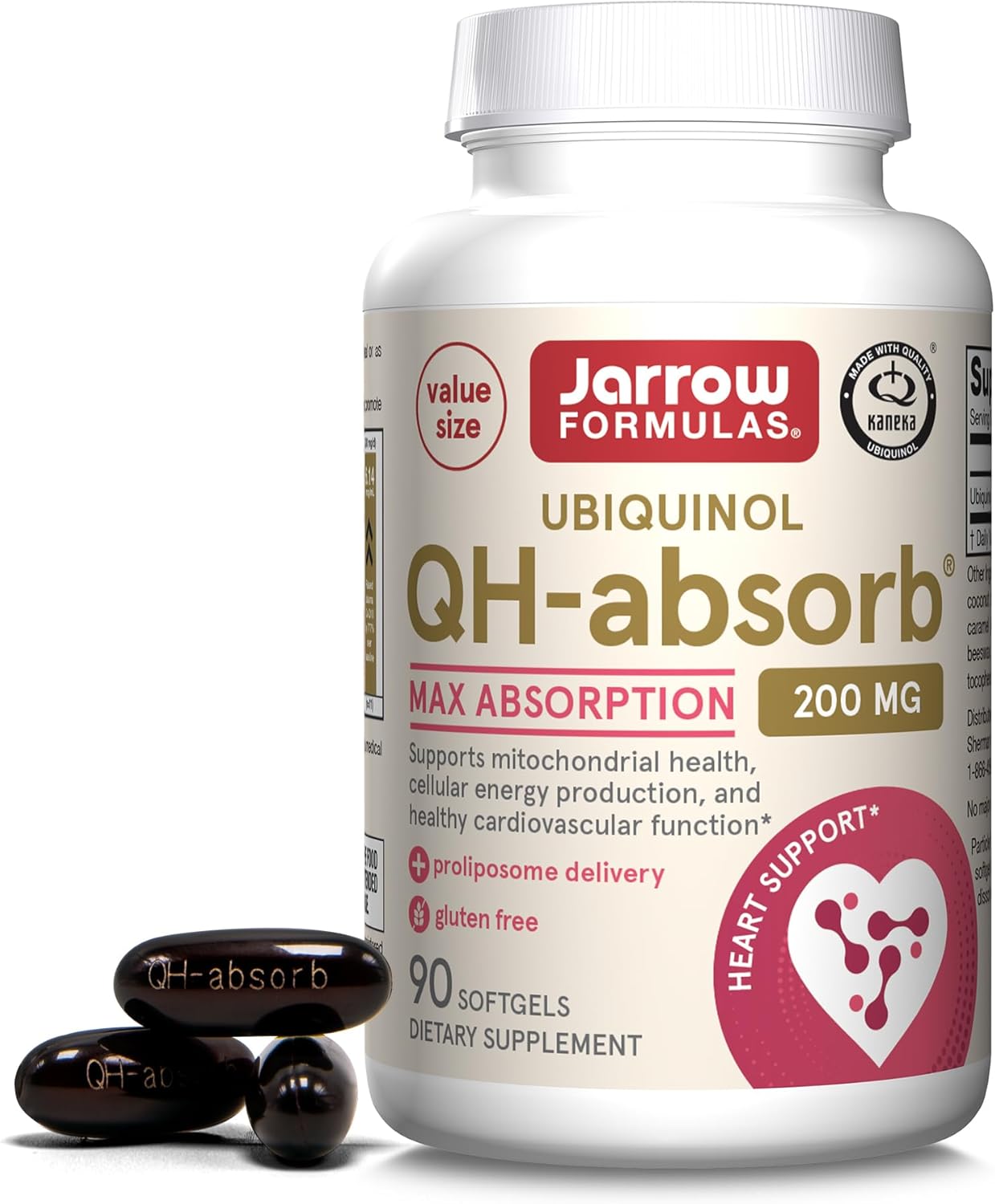
Jarrow Formulas QH-Absorb 200
Jarrow Formulas QH-Absorb 200 — 200mg ubiquinol (active, pre-reduced form), Kaneka QH source, proliposome delivery for enhanced absorption. 4.6★ (5,230 ratings).
- Significantly higher price per serving vs Qunol
- No USP or NSF certification
- Amazon price and availability can change over time
Affiliate link: If you buy through this link, we may earn a commission at no extra cost to you.
Buy Jarrow Formulas QH-Absorb 200
NOW Ubiquinol 200mg
NOW Ubiquinol 200mg — Kaneka QH ubiquinol, GMP certified, NOW Foods manufacturing reliability. 4.6★ (696 ratings). Confirmed in stock.
- Smaller review base than other options
- Some users report mild aftertaste
- Amazon price and availability can change over time
Affiliate link: If you buy through this link, we may earn a commission at no extra cost to you.
Buy NOW Ubiquinol 200mgCompare supplements with the same checklist we use.
Get the anti-aging supplement cheat sheet with evidence prompts, safety checks, and label-quality questions before you buy.
Comparison Table
| Category | #1 Qunol Ultra CoQ10 Qunol | #2 Jarrow Formulas QH-Absorb 200 Jarrow Formulas | #3 NOW Ubiquinol 200mg NOW Foods |
|---|---|---|---|
| Score | 9/10 | 8.6/10 | 8.2/10 |
| Best For | GLP-1 users wanting an evidence-supported, widely available, cost-effective CoQ10 with third-party verification and the largest real-world track record | GLP-1 users over 50, statin users, or those who prefer the pre-reduced active ubiquinol form at a higher dose for potentially superior bioavailability | GLP-1 users seeking the active ubiquinol form at a mid-range price with NOW Foods' manufacturing reliability |
| Pros |
|
|
|
| Cons |
|
|
|
What to Know About CoQ10 for GLP-1 Fatigue & Low Energy
If you've ruled out iron deficiency and vitamin B12 deficiency — the two most common nutritional causes of fatigue in GLP-1 medication users — and you're still experiencing persistent low energy, CoQ10 offers a third, mechanistically distinct intervention worth understanding. CoQ10 (coenzyme Q10) sits at the heart of the mitochondrial electron transport chain, where cells convert nutrients into ATP — the universal energy currency of the body. The mechanism here is different from iron (which transports oxygen in the blood) and B12 (which supports nerve function and red blood cell maturation). CoQ10's role is specifically in the efficiency of energy extraction at the cellular level: how well your mitochondria convert available fuel substrates into usable energy. The GLP-1 context is meaningful: when caloric restriction reduces total energy substrate by 30–50% of previous intake, the mitochondrial machinery is working with a smaller fuel supply. If CoQ10 concentrations are suboptimal — as may occur in older adults, statin users (statins block CoQ10 synthesis), or individuals with metabolic syndrome — the efficiency of extracting energy from that reduced substrate may be further compromised. The result can be a sense of fatigue that persists even after calories are adequate by nutritional standards. No clinical trials have yet tested CoQ10 specifically in GLP-1 medication users. The rationale is mechanistic and supported by CoQ10's evidence base in adjacent populations — including metabolic syndrome, general fatigue RCTs, and bioavailability studies.
This content is for educational purposes only and is not medical advice. These statements have not been evaluated by the FDA. This product is not intended to diagnose, treat, cure, or prevent any disease.
Key Benefits of CoQ10 for GLP-1 Fatigue & Low Energy
May support mitochondrial ATP production efficiency when caloric restriction on GLP-1 medications reduces total energy substrate available to cells — addressing the 'cellular energy extraction' mechanism distinct from haemoglobin oxygen transport (iron) or cobalamin-dependent synthesis (B12)
Evidence from RCTs in fatigue and metabolic syndrome populations suggests modest but consistent improvements in subjective fatigue with CoQ10 supplementation, relevant to GLP-1 users in similar metabolic contexts
Particularly relevant for GLP-1 users who also take statins — statins inhibit the mevalonate pathway required for CoQ10 biosynthesis, and CoQ10 supplementation is commonly recommended alongside statin therapy
How CoQ10 Supports GLP-1 Fatigue & Low Energy
CoQ10 (coenzyme Q10) is a fat-soluble compound that functions as an essential electron carrier in the mitochondrial electron transport chain — the series of protein complexes where cells generate ATP from the breakdown of carbohydrates, fats, and proteins. Without adequate CoQ10, electrons cannot be efficiently passed between Complexes I–III and onward to Complex IV, reducing the efficiency of ATP synthesis. The result is impaired cellular energy production. CoQ10 also functions as a lipid-soluble antioxidant: in its reduced form (ubiquinol), it neutralizes free radicals generated during mitochondrial electron transport, protecting mitochondrial membranes from oxidative damage that would further impair energy production. In the GLP-1 context, the relevance is through two intersecting pathways. First, caloric restriction significantly reduces the total substrate entering the mitochondrial machinery — fewer carbohydrates, fats, and amino acids arriving means fewer ATP molecules produced, regardless of mitochondrial efficiency. If CoQ10 is suboptimal, the efficiency of extracting energy from a reduced substrate is further compromised. Second, the GLP-1 population has high rates of statin co-prescription (atorvastatin, rosuvastatin, simvastatin are commonly prescribed alongside GLP-1 agonists for cardiovascular risk reduction), and statins inhibit HMG-CoA reductase — an enzyme in the mevalonate pathway that is also required for CoQ10 biosynthesis. Statin-associated fatigue and muscle symptoms are a recognized clinical phenomenon, and CoQ10 supplementation is one of the most commonly discussed approaches in this context. Endogenous CoQ10 production also declines with age — adults over 40 produce meaningfully less than younger adults — making supplementation a more rational consideration in the typical GLP-1 patient demographic (median age 45–55 in major clinical trials).
The most common nutritional cause — iron deficiency and GLP-1 fatigue rooted in haemoglobin oxygen transport — should be ruled out before attributing symptoms to mitochondrial energy inefficiency.
The link between vitamin B12 and GLP-1 fatigue is strongest in users co-prescribed metformin, which depletes B12 and produces a neurological and red-cell-maturation mechanism distinct from CoQ10's mitochondrial role.
What to Look For When Buying CoQ10
The primary decision point when buying CoQ10 is ubiquinone vs. ubiquinol. Ubiquinone is the oxidized form: less expensive, well-absorbed when formulated for enhanced bioavailability (like Qunol's water/fat-soluble system), but requires enzymatic reduction to ubiquinol inside cells to become the active antioxidant form. For younger adults with intact conversion capacity, ubiquinone works well. Ubiquinol is the pre-reduced, active form: more expensive, generally considered to have superior bioavailability particularly in older adults (over 50) and in statin users where endogenous CoQ10 synthesis is suppressed. A 2026 randomized crossover bioavailability study (PMID 41789786) confirmed superior systemic concentrations with a novel ubiquinol formulation versus standard ubiquinone. For GLP-1 users specifically: if you are also taking a statin, ubiquinol is the mechanistically preferred form — statins suppress the mevalonate pathway required for endogenous CoQ10 synthesis, and ubiquinol bypasses the conversion step that statin-impaired cells may perform less efficiently. For GLP-1 users not on statins who are under 50, Qunol Ultra CoQ10 (ubiquinone, enhanced absorption, USP Verified, $0.27/serving) represents excellent value with a very strong review base. Dose: most clinical trials studying CoQ10 for fatigue use 100–300mg daily. The products on this list cover 100mg (Qunol) and 200mg (Jarrow, NOW). Starting at 100–200mg is reasonable; higher doses have been used in some trials for specific conditions (heart failure, Parkinson's) but are rarely necessary for general fatigue support. Timing: CoQ10 is fat-soluble and should be taken with a meal containing fat for best absorption. This also reduces the risk of any mild GI discomfort that some users report on an empty stomach.
Dosage Guidance
Always follow your healthcare provider's recommendations. Dosages vary by individual health status, age, and goals.
Common CoQ10 Complaints (And How to Avoid Them)
Based on analysis of thousands of customer reviews across CoQ10 products.
"CoQ10 doesn't seem to be doing anything for my energy"
CoQ10's effect on fatigue is typically modest and develops slowly over weeks. If you haven't noticed any improvement after 12 weeks, consider whether iron or B12 deficiency has been properly evaluated — these have more direct and frequently larger effects on fatigue than CoQ10. Also confirm you're taking CoQ10 with a fat-containing meal (it's fat-soluble and poorly absorbed without dietary fat). If you're on ubiquinone and results are disappointing, switching to the ubiquinol form at the same or higher dose is worth considering, particularly if you are over 50 or on a statin.
"CoQ10 is expensive"
Qunol Ultra CoQ10 at $0.27/serving is the most cost-effective verified option on this list — USP Verified, with the largest real-world review base, at roughly the price of a stick of gum per day. If cost is the primary concern, Qunol at 100mg daily is a reasonable starting point before committing to higher-dose ubiquinol formulations.
Safety & Interactions
- Pregnancy and breastfeeding: Consult your healthcare provider before taking this supplement during pregnancy or while nursing. The safety of supplemental doses beyond dietary intake has not been established in pregnant or lactating women.
- Blood thinners: If you take blood-thinning medications (e.g., warfarin, apixaban, rivaroxaban, clopidogrel, or high-dose aspirin), consult your healthcare provider BEFORE starting this supplement, as it may have additive antiplatelet or anticoagulant effects.
- Kidney disease: If you have chronic kidney disease (CKD) or any significant kidney impairment, consult your healthcare provider before taking this supplement. Some supplements can accumulate to dangerous levels when kidney function is reduced.
- Gout: Individuals with gout should consult their healthcare provider before starting this supplement. Certain supplements (e.g., collagen, fish oil, niacin) may affect uric acid levels or trigger flares in susceptible individuals.
""CoQ10 is the most speculative of the three GLP-1 fatigue supplement options — less a 'you definitely need this if depleted' conversation (like iron or B12) and more a 'here's a reasonable adjunct if you're on a statin or over 50 and still fatigued after addressing other causes.' The evidence from fatigue RCTs is real but modest. My practical recommendation: address iron and B12 first through lab testing, then consider CoQ10 as a low-risk, reasonable adjunct for the right patient profile."
Frequently Asked Questions
Citations & Research
This page references peer-reviewed research indexed on PubMed/NCBI. Citations are provided for transparency. Always consult a qualified healthcare professional before making any medical decisions.
- [1]Tsai IC, Hsu CW, Chang CH et al. “Effectiveness of Coenzyme Q10 Supplementation for Reducing Fatigue: A Systematic Review and Meta-Analysis of Randomized Controlled Trials.” Frontiers in pharmacology, 2022. doi:10.3389/fphar.2022.883251PMID 36091835 ↗
- [2]Magalhães PLM, da Silva AMP, Maximiano MLB et al. “Effects of Coenzyme Q10 Supplementation on Depressive Symptoms and Fatigue: A Systematic Review and Meta-Analysis of Randomized Controlled Trials.” Journal of clinical psychopharmacology, 2026. doi:10.1097/JCP.0000000000002112PMID 41294251 ↗
- [3]Raygan F, Rezavandi Z, Dadkhah Tehrani S et al. “The effects of coenzyme Q10 administration on glucose homeostasis parameters, lipid profiles, biomarkers of inflammation and oxidative stress in patients with metabolic syndrome.” European journal of nutrition, 2016. PMID 26385228 ↗
- [4]Mei X, Zhu B, Soni K et al. “A Randomized, Double-Blind, Two-Treatment, Two-Period, Crossover Study Investigating the Systemic Bioavailability of a Novel Cocrystal Ubiquinol Formulation Compared with a Ubiquinone Formulation in Healthy Adults.” Clinical pharmacology in drug development, 2026. doi:10.1002/cpdd.70042PMID 41789786 ↗
Ready to Try CoQ10?
Our top pick for glp-1 fatigue & low energy. Third-party tested, highly reviewed.
Affiliate link: If you buy through this link, we may earn a commission at no extra cost to you.
Shop #1 Pick — Qunol Ultra CoQ10Continue exploring
- our CoQ10 guideSupplement overview
- best supplements for fatigueGoal overview
- see all glp 1 fatigue & low energy supplements we coverGoal overview
- Iron options for glp 1 fatigue & low energyAlternative supplement
- Vitamin B12 — an option to consider for glp 1 fatigue & low energyAlternative supplement
- CoQ10 options for blood pressure supportSame supplement, different goal
- see our CoQ10 picks for energyEditor pick
Get the evidence-graded supplement cheat sheet.
Evidence prompts, safety checks, and label-quality questions before you buy — free, straight to your inbox.
No spam. Unsubscribe anytime.