
Best Methylfolate Supplements for Cognitive Aging in 2026
About 40% of adults carry MTHFR variants that impair folate conversion, raising homocysteine linked to cognitive decline.

This content is for educational purposes only and is not medical advice. These statements have not been evaluated by the FDA. This product is not intended to diagnose, treat, cure, or prevent any disease. Always consult your healthcare provider before starting any supplement.
Best Methylfolate for Cognitive Aging in 2026
Ranked by quality, value, and clinical backing
Where available, we show when each product price was last checked so the list stays honest without overreacting to normal Amazon price movement.

Jarrow Formulas Methyl Folate 400mcg
Jarrow Formulas Methyl Folate 400mcg by Jarrow Formulas.
- 400mcg is a lower starting dose — may need 2–3 tablets for therapeutic homocysteine-lowering protocols
- tablet form only
Affiliate link: If you buy through this link, we may earn a commission at no extra cost to you.
Buy Jarrow Formulas Methyl Folate 400mcg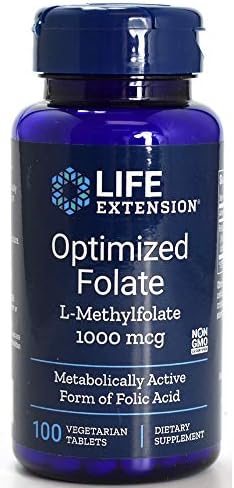
Life Extension Optimized Folate l-Methylfolate 1000mcg
Life Extension Optimized Folate 1,000mcg by Life Extension.
- 120 tablet bottles are large for trials
- calcium salt form slightly different from glucosamine-based Quatrefolic — both are bioavailable
Affiliate link: If you buy through this link, we may earn a commission at no extra cost to you.
Buy Life Extension Optimized Folate l-Methylfolate 1000mcgCompare supplements with the same checklist we use.
Get the anti-aging supplement cheat sheet with evidence prompts, safety checks, and label-quality questions before you buy.
Comparison Table
| Category | #1 Jarrow Formulas Methyl Folate 400mcg Jarrow Formulas | #2 Life Extension Optimized Folate l-Methylfolate 1000mcg Life Extension |
|---|---|---|
| Score | Not scored | Not scored |
| Best For | ||
| Pros |
|
|
| Cons |
|
|
What to Know About Methylfolate for Cognitive Aging
Folate plays a central role in the methylation cycle — the biochemical pathway that produces SAMe, recycles homocysteine, and synthesizes neurotransmitters including dopamine and serotonin. But the synthetic folic acid in most supplements and fortified foods is not biologically active. It must be converted by the MTHFR enzyme (methylenetetrahydrofolate reductase) into 5-methyltetrahydrofolate (5-MTHF), the active form the brain actually uses. Up to 40% of adults carry common MTHFR polymorphisms — most often C677T — that reduce this conversion by 40–70%. The result is a functional folate deficiency even when dietary intake appears adequate. Homocysteine accumulates. DNA methylation is impaired. And over years and decades, this biochemical bottleneck is associated with accelerated cognitive aging, white matter hyperintensities, and increased dementia risk. Methylfolate (5-MTHF) bypasses the MTHFR enzyme entirely. It is the active form — ready for use without conversion. For adults with MTHFR variants or elevated homocysteine, replacing folic acid with methylfolate is the evidence-supported intervention. This page explains the mechanism, reviews the clinical evidence, and compares the best products.
This content is for educational purposes only and is not medical advice. These statements have not been evaluated by the FDA. This product is not intended to diagnose, treat, cure, or prevent any disease.
Key Benefits of Methylfolate for Cognitive Aging
Methylfolate is among the most studied supplements for supporting cognitive aging.
Multiple human clinical trials have evaluated Methylfolate's safety and efficacy at common doses.
Methylfolate may be particularly relevant for adults over 45 seeking evidence-based support for cognitive aging.
How Methylfolate Supports Cognitive Aging
The homocysteine-to-cognitive-aging link is well-established. The VITACOG trial (Smith et al., PLOS ONE, 2010, PMID 20838622) is the most cited RCT: 168 adults with mild cognitive impairment were randomized to high-dose B-vitamins (including 800mcg folic acid, methylcobalamin, and B6) or placebo for 2 years.
What to Look For When Buying Methylfolate
We evaluated products based on: (1) 5-MTHF form — prioritizing Metafolin (calcium salt) and Quatrefolic (glucosamine salt), both with bioavailability data; (2) dose — 400mcg to 1mg range appropriate for general use, noting when higher doses require medical supervision; (3) third-party testing and GMP certification; (4) price-per-serving at a therapeutic dose.
Dosage Guidance
Always follow your healthcare provider's recommendations. Dosages vary by individual health status, age, and goals.
Common Methylfolate Complaints (And How to Avoid Them)
Based on analysis of thousands of customer reviews across Methylfolate products.
"I feel anxious or wired after taking methylfolate"
Overmethylation symptoms (anxiety, irritability, insomnia) are reported by some individuals who are sensitive to methyl donors — particularly those who are already methylating adequately. This is more common at higher doses. Try reducing to 400mcg and taking it in the morning with food. Some practitioners recommend starting with a quarter-tablet and building up slowly. If symptoms persist at 400mcg, discuss with your physician whether methylfolate is the right intervention or if other methylation pathway support is more appropriate for you.
"Why do I need methylfolate if I already eat leafy greens?"
Food folate (polyglutamate forms) and synthetic folic acid both require MTHFR conversion to become active 5-MTHF. If you carry MTHFR C677T variants — which reduce conversion efficiency by 40–70% — adequate dietary folate intake doesn't guarantee adequate 5-MTHF delivery to the brain. A homocysteine blood test (easily ordered by your doctor) is the most practical way to assess whether your folate and B12 status is functionally adequate. Elevated homocysteine above 10–12 µmol/L in a well-nourished adult often signals methylation impairment.
"Can I just take a regular B-complex instead of methylfolate?"
Most B-complexes use folic acid (synthetic) and cyanocobalamin (synthetic B12) — forms that require MTHFR and other enzyme conversion steps. For adults without MTHFR variants and with normal homocysteine, these forms are fine. For MTHFR carriers or those with elevated homocysteine, look specifically for B-complexes listing '5-methyltetrahydrofolate' or 'L-methylfolate' and 'methylcobalamin' on the label. These 'methylated B-complex' products exist but you need to read the label carefully.
Safety & Interactions
- Pregnancy and breastfeeding: Consult your healthcare provider before taking this supplement during pregnancy or while nursing. The safety of supplemental doses beyond dietary intake has not been established in pregnant or lactating women.
- Blood thinners: If you take blood-thinning medications (e.g., warfarin, apixaban, rivaroxaban, clopidogrel, or high-dose aspirin), consult your healthcare provider BEFORE starting this supplement, as it may have additive antiplatelet or anticoagulant effects.
- Kidney disease: If you have chronic kidney disease (CKD) or any significant kidney impairment, consult your healthcare provider before taking this supplement. Some supplements can accumulate to dangerous levels when kidney function is reduced.
- Gout: Individuals with gout should consult their healthcare provider before starting this supplement. Certain supplements (e.g., collagen, fish oil, niacin) may affect uric acid levels or trigger flares in susceptible individuals.
- Important: This supplement is not a replacement for prescription medications. It is supportive for individuals with low baseline status, not a treatment for diagnosed conditions (anxiety disorders, insomnia, hypertension, osteoporosis, etc.). Do not stop or reduce any prescription without consulting your doctor.
""As a registered dietitian, methylfolate is one of the most clinically important cognitive aging supplements that most people have never heard of — it's not a nootropic per se, but addressing methylation dysfunction and elevated homocysteine is one of the most evidence-grounded modifiable risk factors for cognitive decline. The evidence is moderate-to-strong: the VITACOG trial's 30% reduction in brain atrophy is genuinely impressive. My standard practice is to check homocysteine levels first rather than supplementing blindly, and to always pair methylfolate with methylcobalamin — giving one without the other is biochemically incomplete."
— Angelique Nicole R. Villegas, RND, Registered Nutritionist Dietitian · PRC Philippines · License #0023950
Frequently Asked Questions
Citations & Research
This page references peer-reviewed research indexed on PubMed/NCBI. Citations are provided for transparency. Always consult a qualified healthcare professional before making any medical decisions.
- [c1]Smith AD, Smith SM, de Jager CA, et al. “Homocysteine-Lowering by B Vitamins Slows the Rate of Accelerated Brain Atrophy in Mild Cognitive Impairment: A Randomized Controlled Trial.” PLOS ONE, 2010. PMID 20838622 ↗
- [c2]McCleery J, Abraham RP, Denton DA, et al. “Vitamin and mineral supplementation for preventing dementia or delaying cognitive decline in people with mild cognitive impairment.” Cochrane Database of Systematic Reviews, 2018. doi:10.1002/14651858.CD011905.pub2PMID 30383288 ↗
- [c3]Gilbody S, Lewis S, Lightfoot T. “Methylenetetrahydrofolate reductase (MTHFR) genetic polymorphisms and psychiatric disorders: a HuGE review.” American journal of epidemiology, 2007. doi:10.1093/aje/kwk047PMID 17074966 ↗
- [c4]Durga J, van Boxtel MP, Schouten EG, et al. “Effect of 3-year folic acid supplementation on cognitive function in older adults in the FACIT trial: a randomised, double blind, controlled trial.” Lancet, 2007. doi:10.1016/S0140-6736(07)60109-3PMID 17240287 ↗
Ready to Try Methylfolate?
Our top pick for cognitive aging. Third-party tested, highly reviewed.
Affiliate link: If you buy through this link, we may earn a commission at no extra cost to you.
Shop #1 Pick — Jarrow Formulas Methyl Folate 400mcgContinue exploring
- Methylfolate evidence overviewSupplement overview
- top-rated cognitive aging supplementsGoal overview
- where Acetyl L Carnitine fits for cognitive agingAlternative supplement
- the Alpha GPC page for cognitive agingAlternative supplement
- we tested supplements against food sourcesCompare options
Get the evidence-graded supplement cheat sheet.
Evidence prompts, safety checks, and label-quality questions before you buy — free, straight to your inbox.
No spam. Unsubscribe anytime.